Bonaire 2024. Salt Pier

My first time snorkeling Salt Pier was amazing! I’ll be honest; I was prepared to be underwhelmed, mostly because anyplace that everyone always recommends can be crowded. Since it is a pier, I was also skeptical of the depth problem when snorkeling. One of the earlier times I was in Bonaire, the ship was in, so I didn’t get to try it out on the days I had planned. This is a real issue, for obvious reasons.

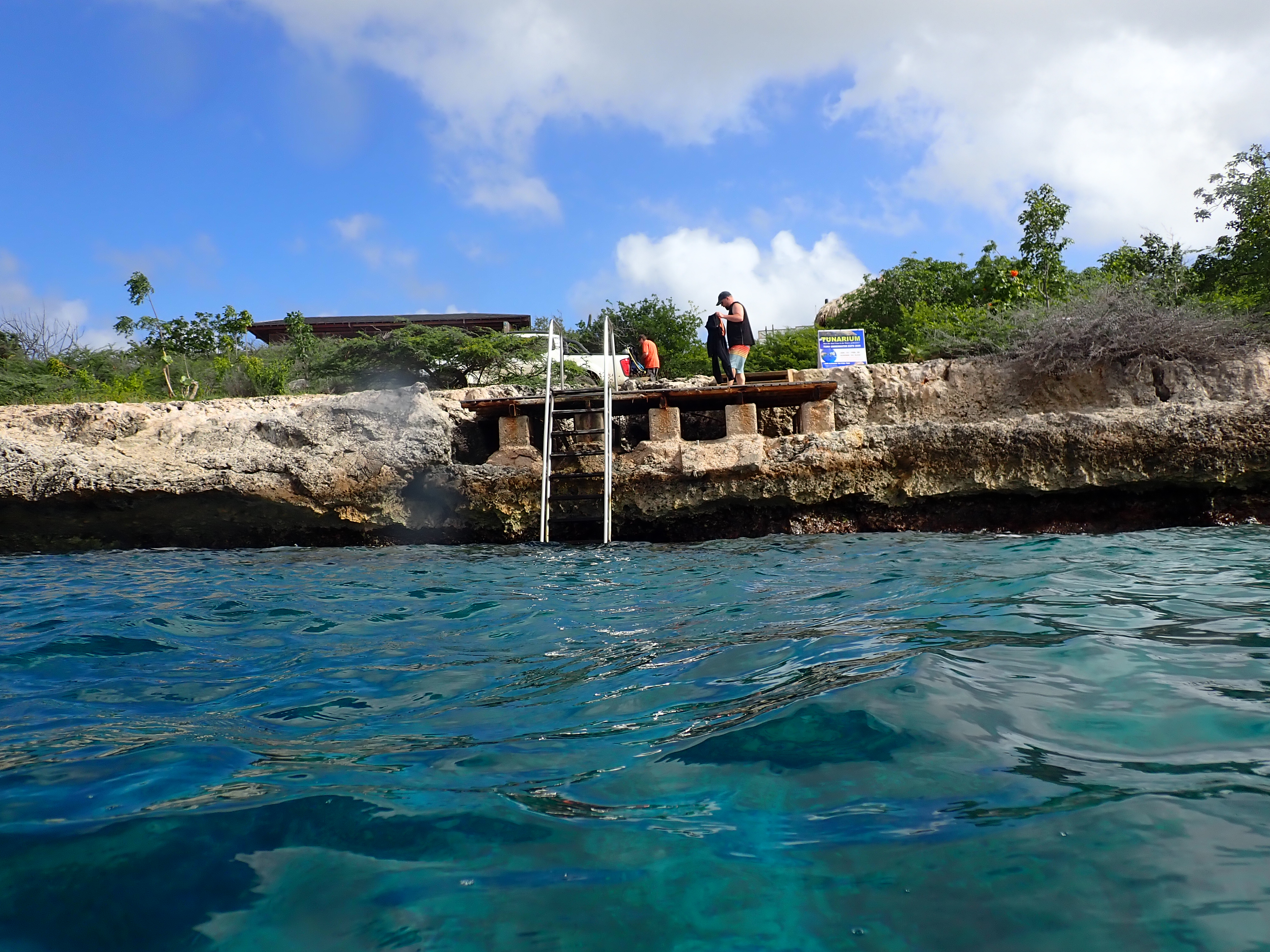
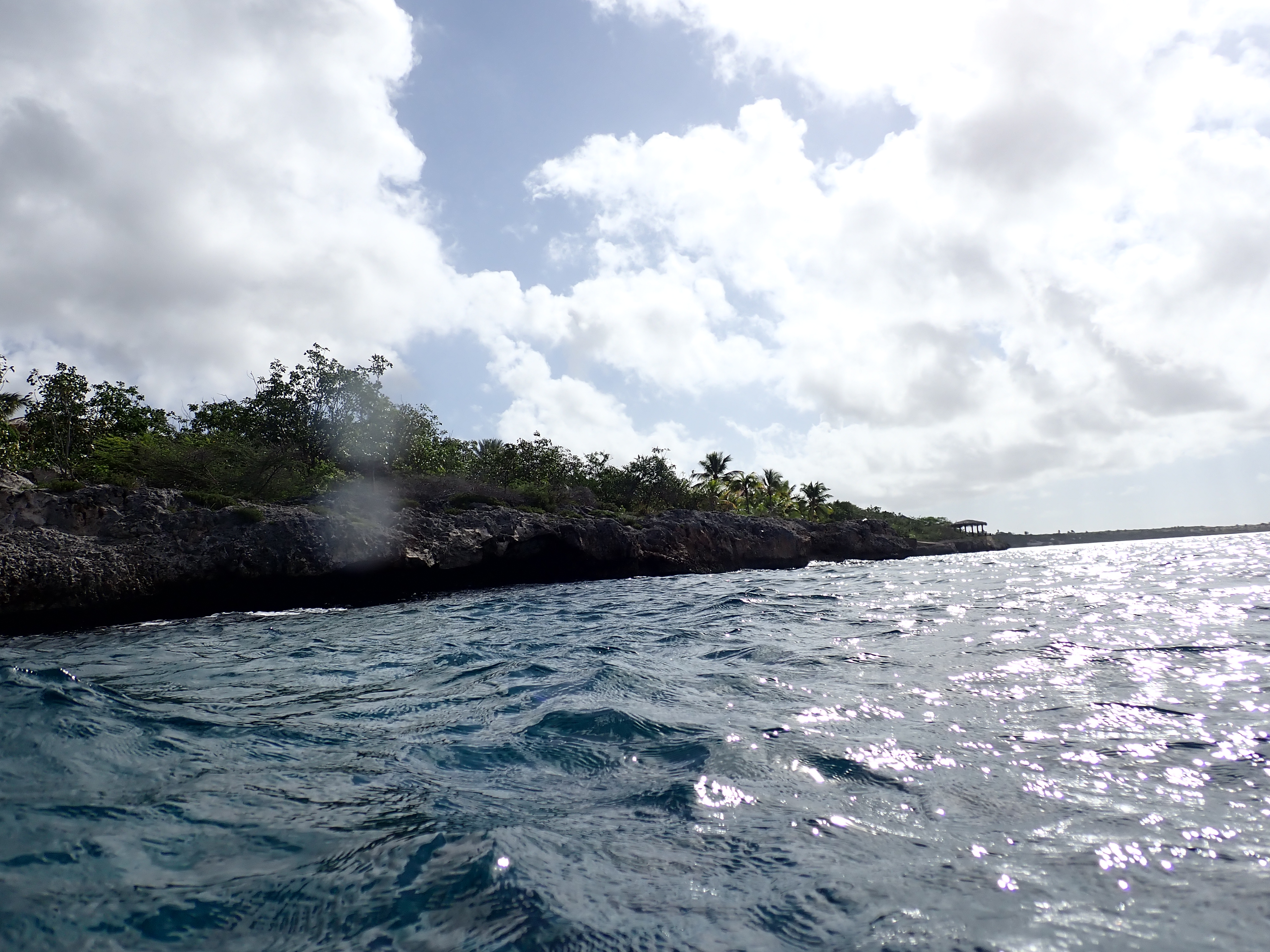
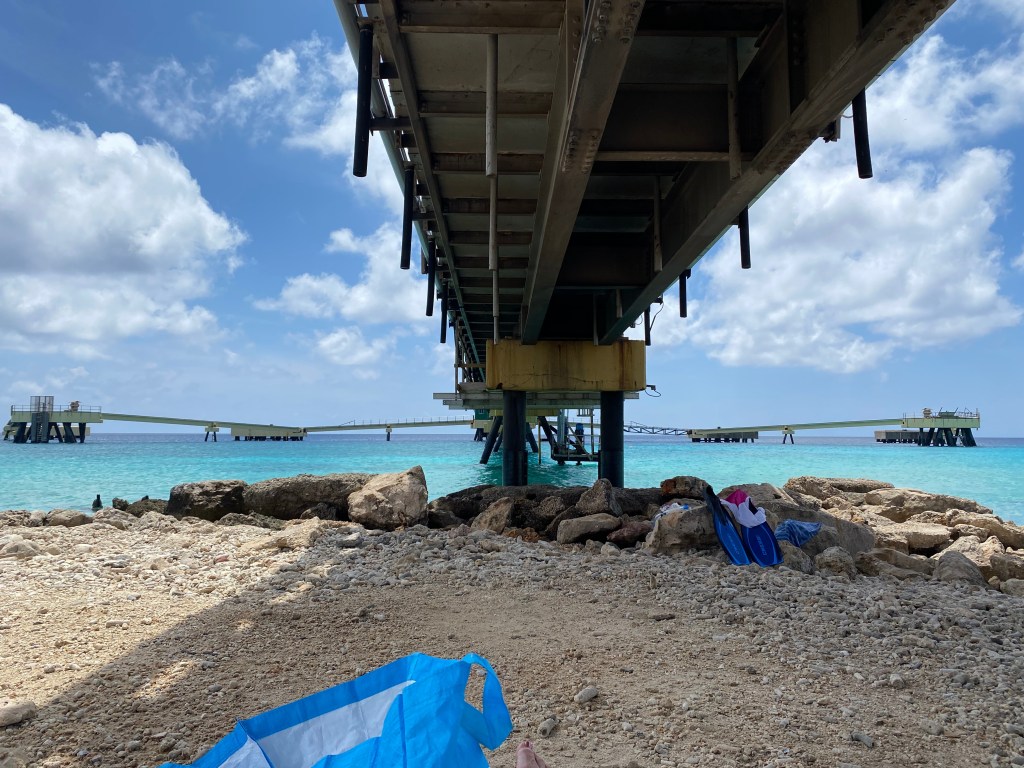
Salt Pier entrance area from a snorkeling perspective. The salt piles are actually across the street and quite far away. The line of trucks are vehicles from divers.
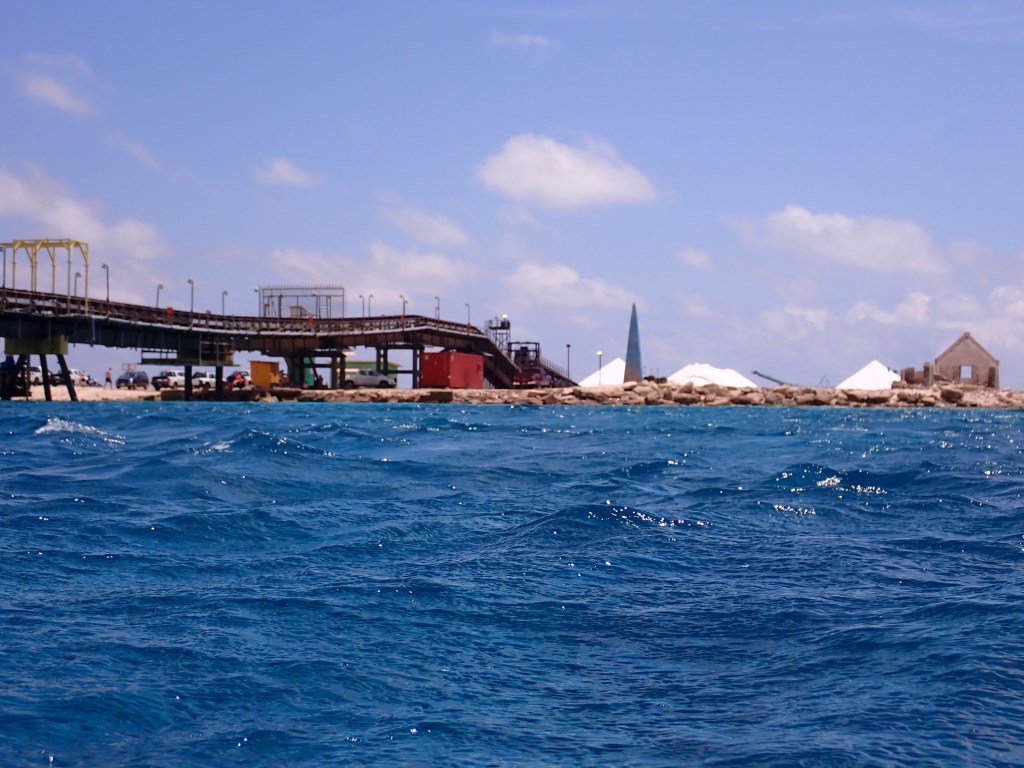
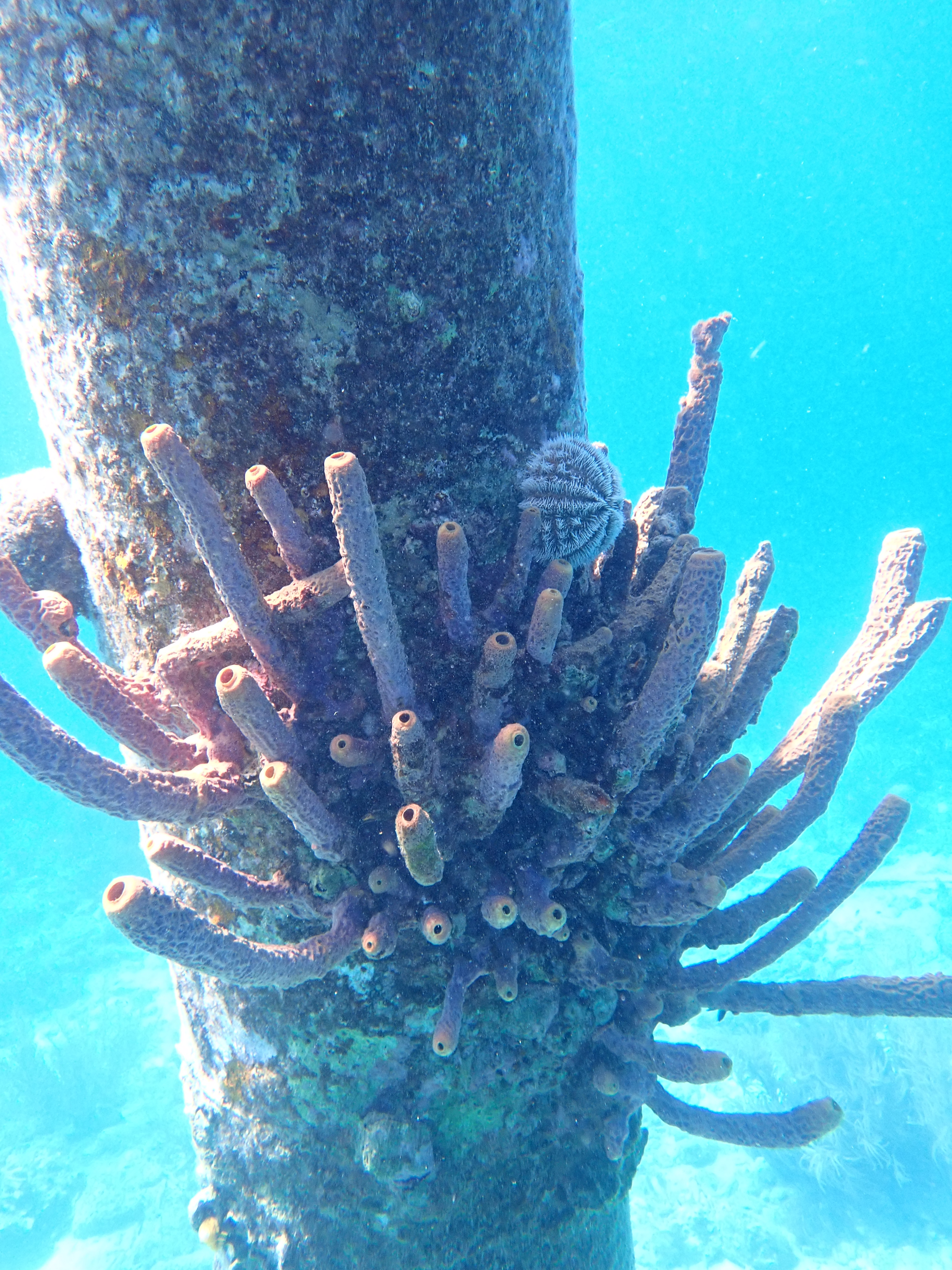
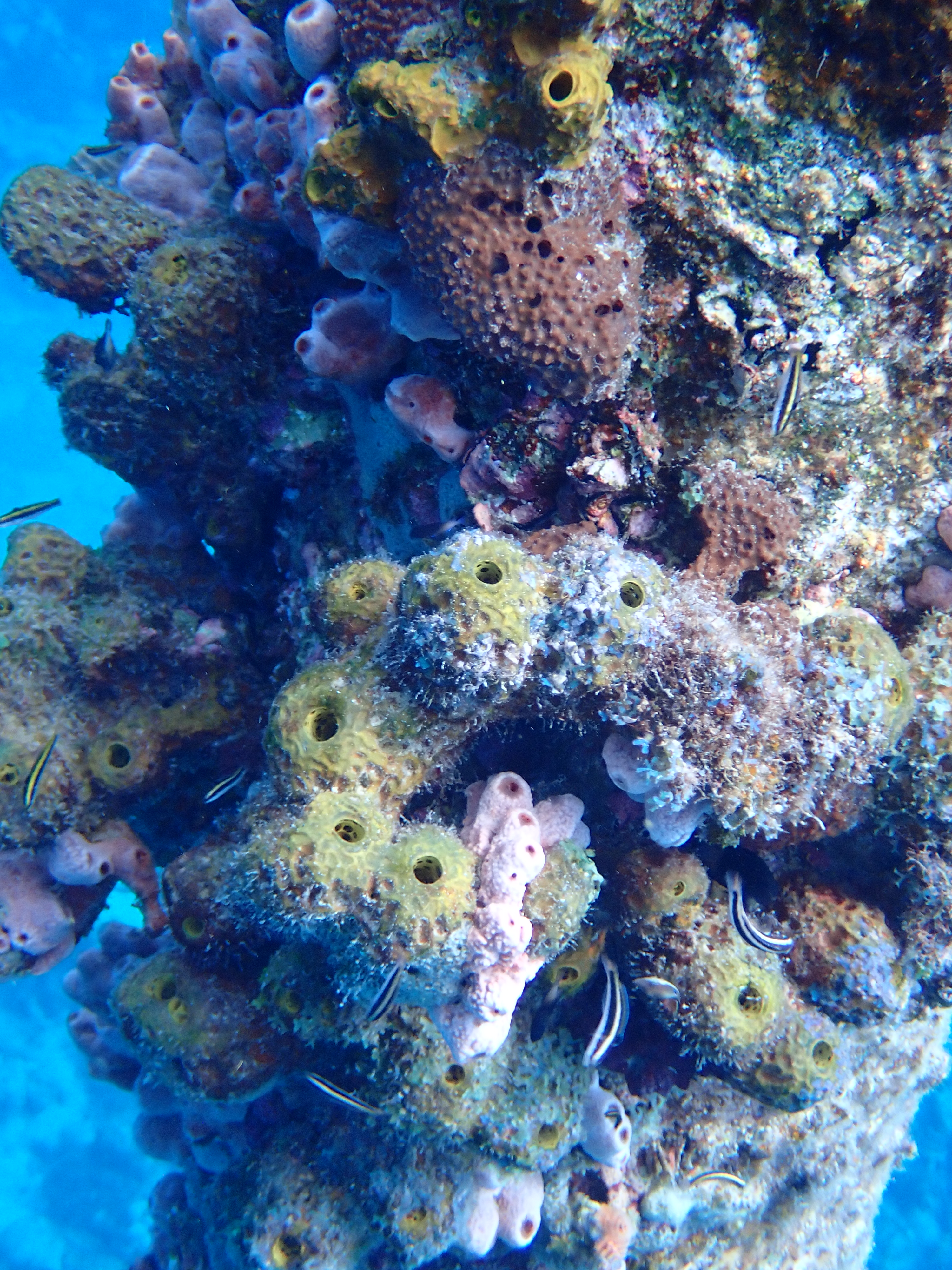
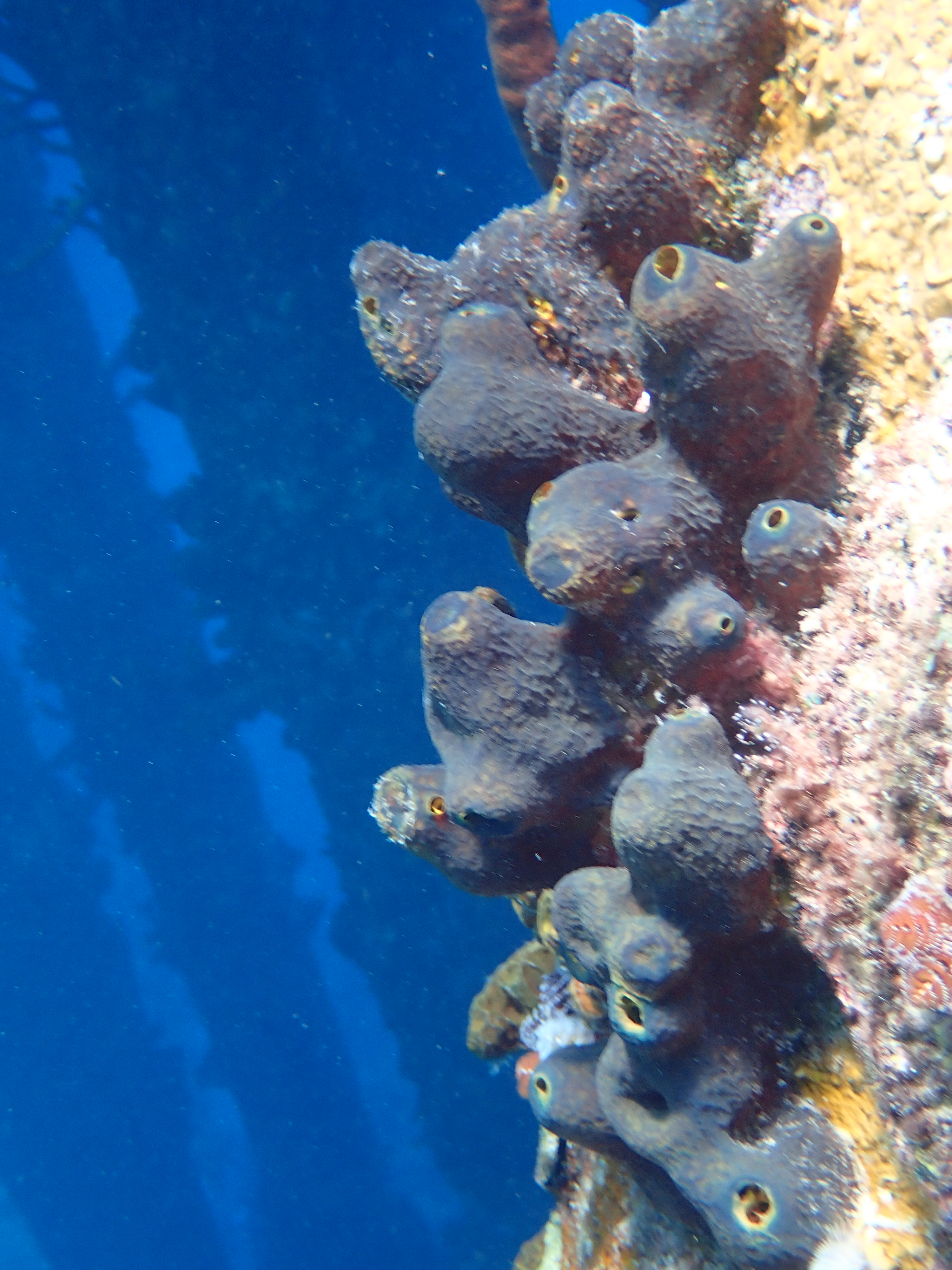
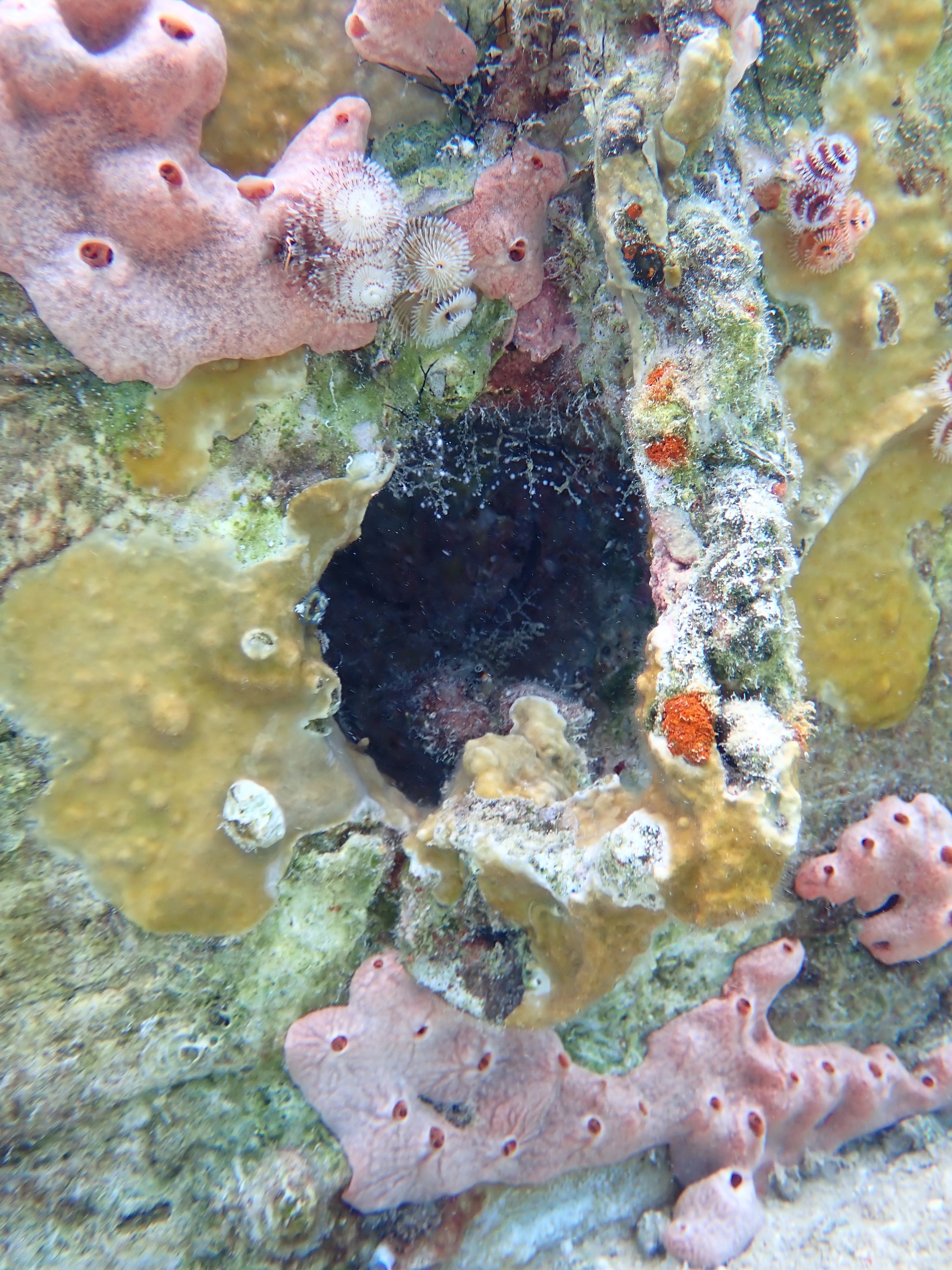
Frankly, I had such beautiful luck at other sites, I wasn’t motivated to keep trying. (You can check Bonaire.portcall.com to see list of ships and locations, or you can just ask in a Facebook group). But now I know! What is ah-maz-ing about Salt Pier are the pilings, the variety of sponges on them that are so uncommon at snorkel depths, particularly.
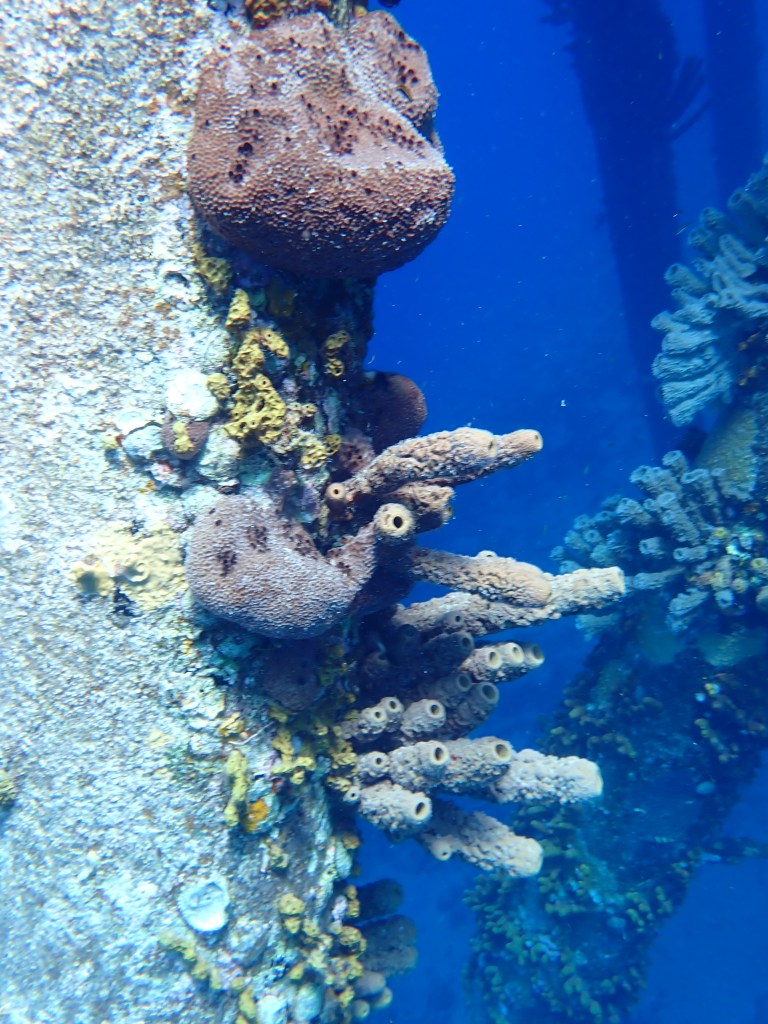
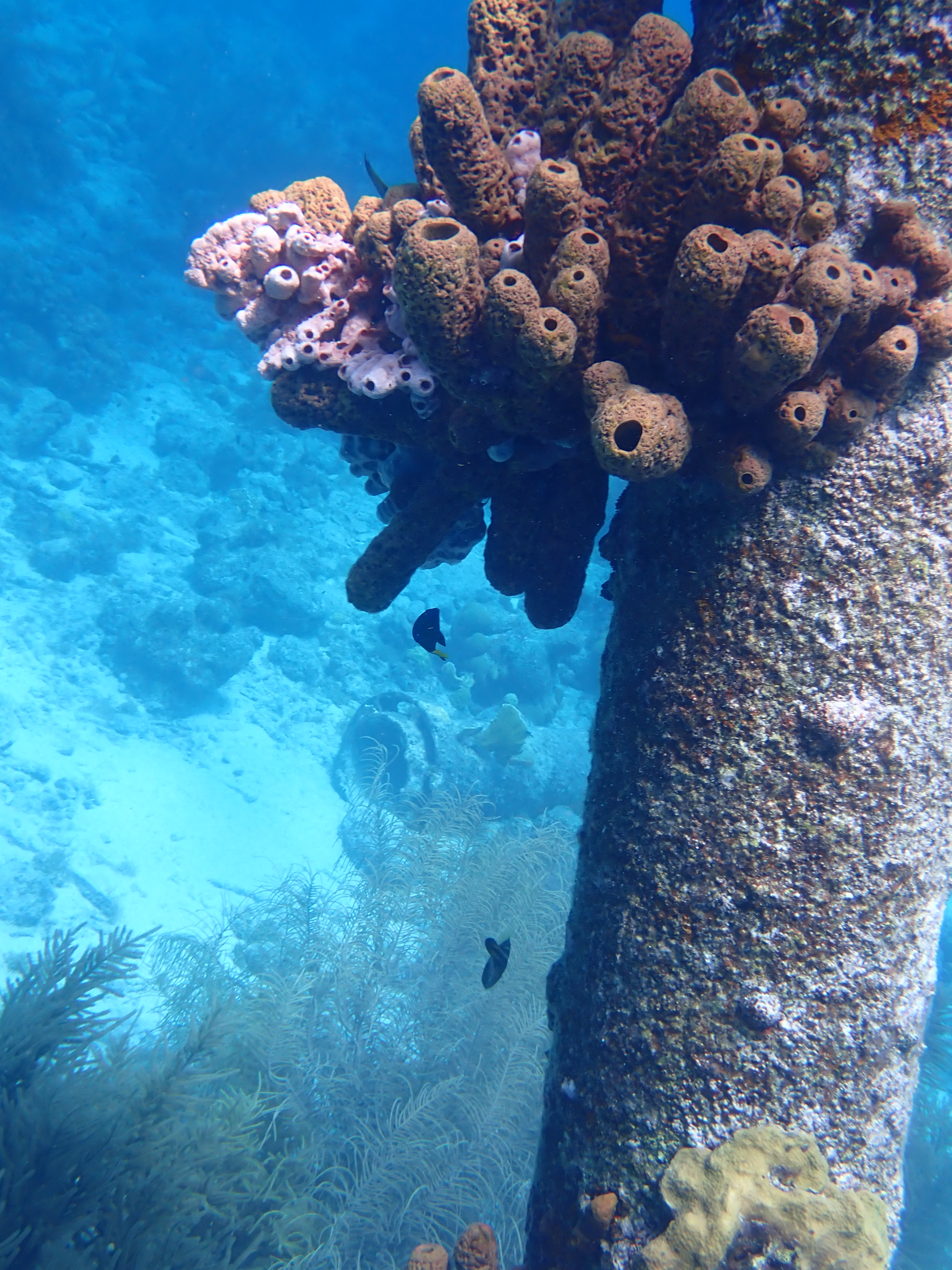
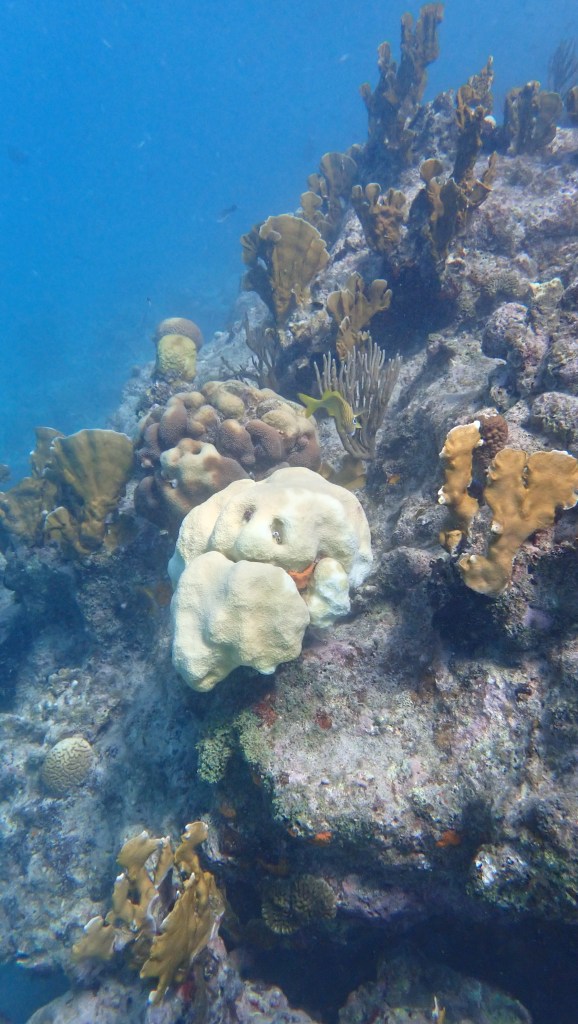
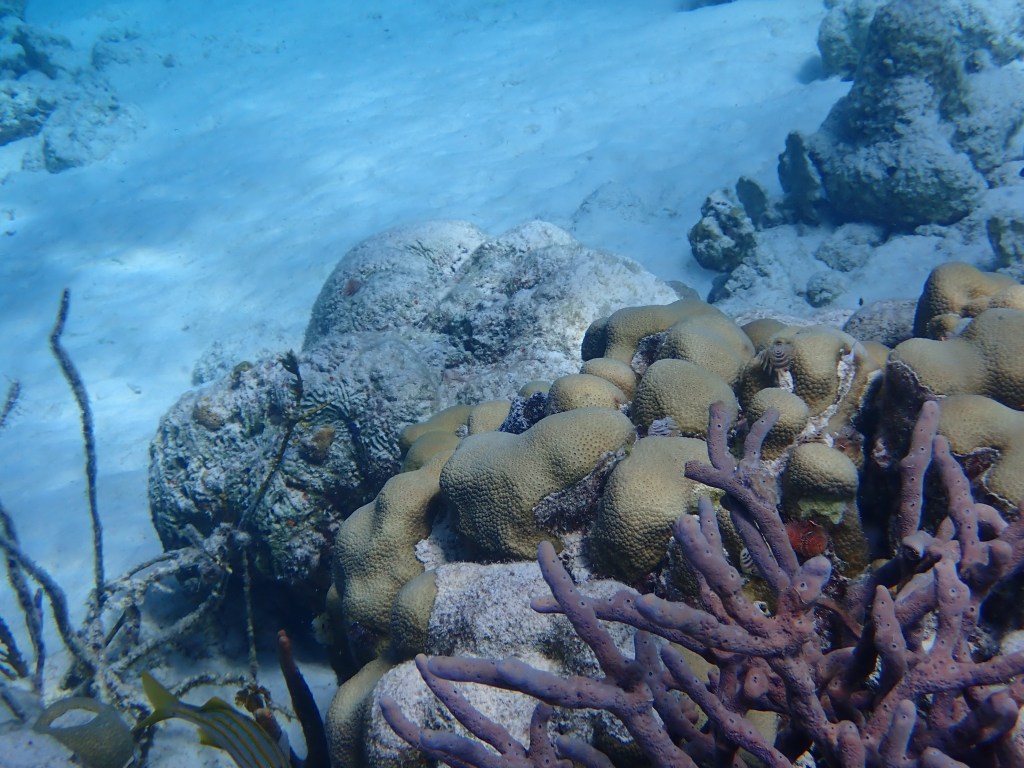
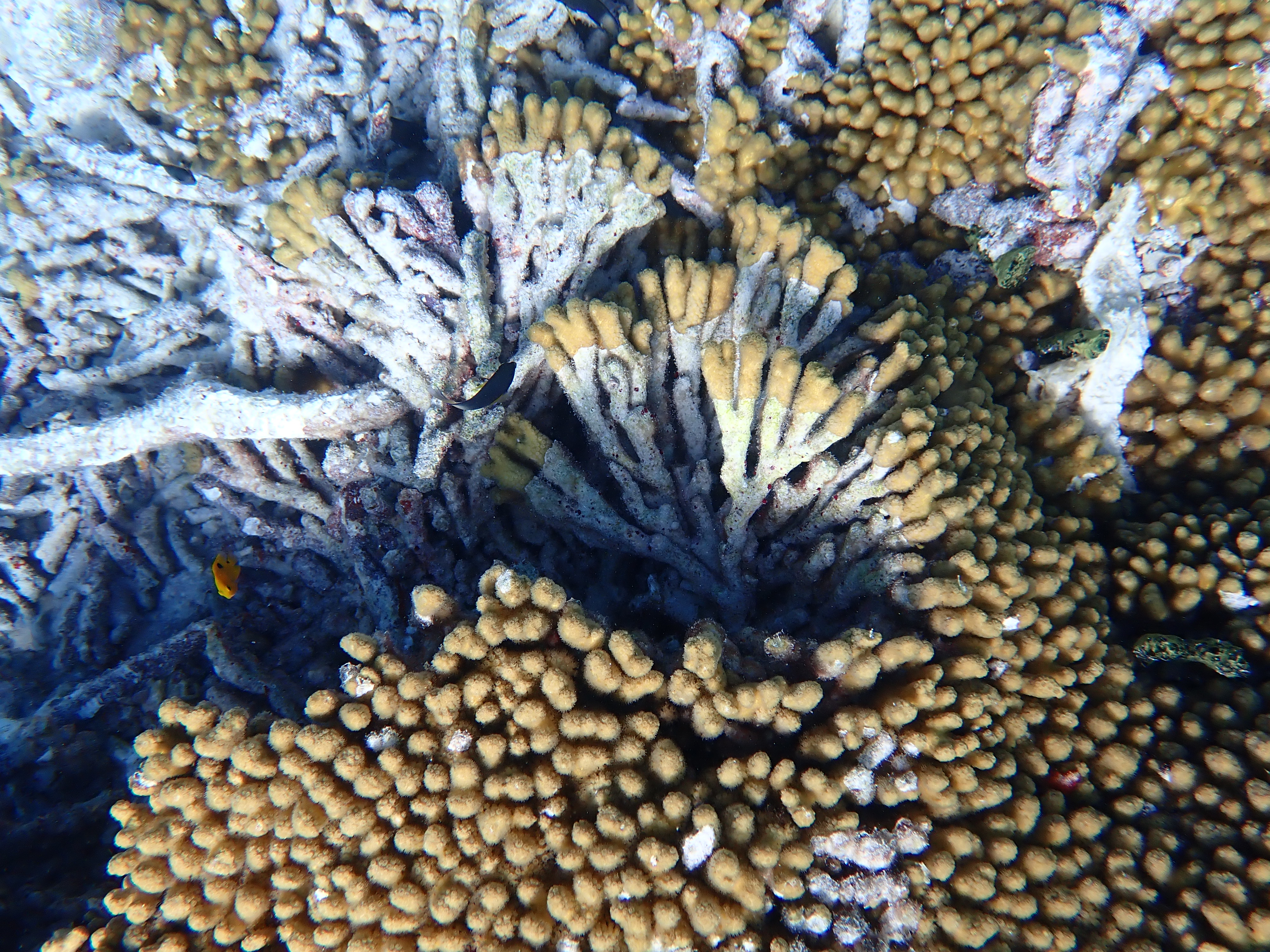
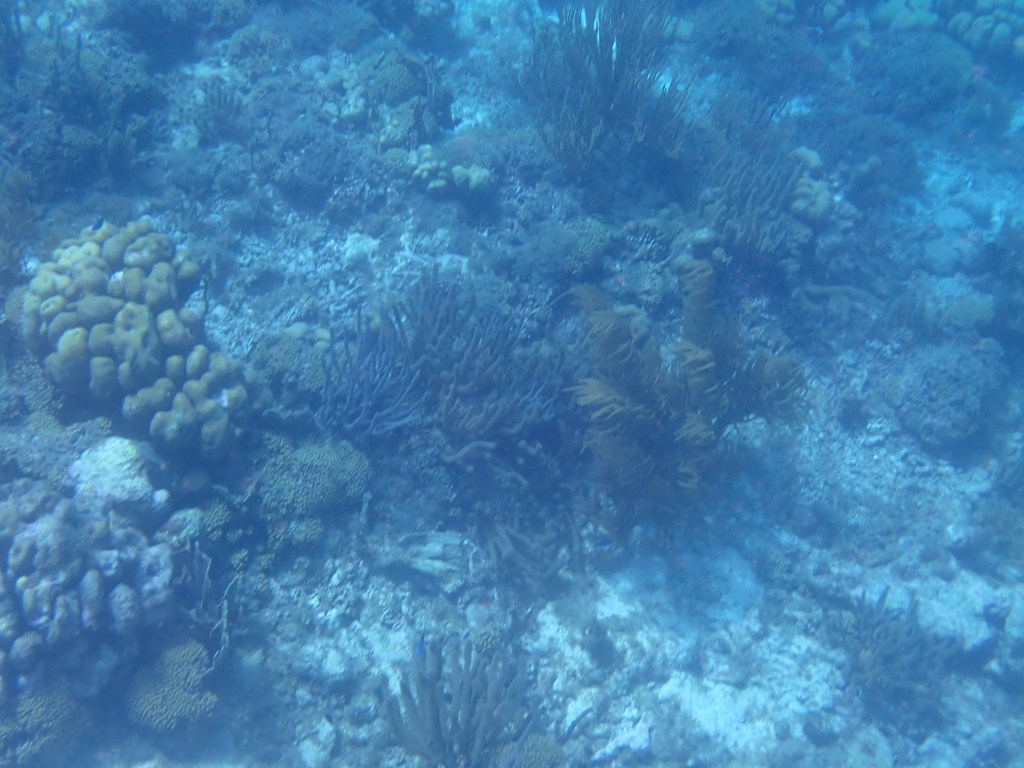
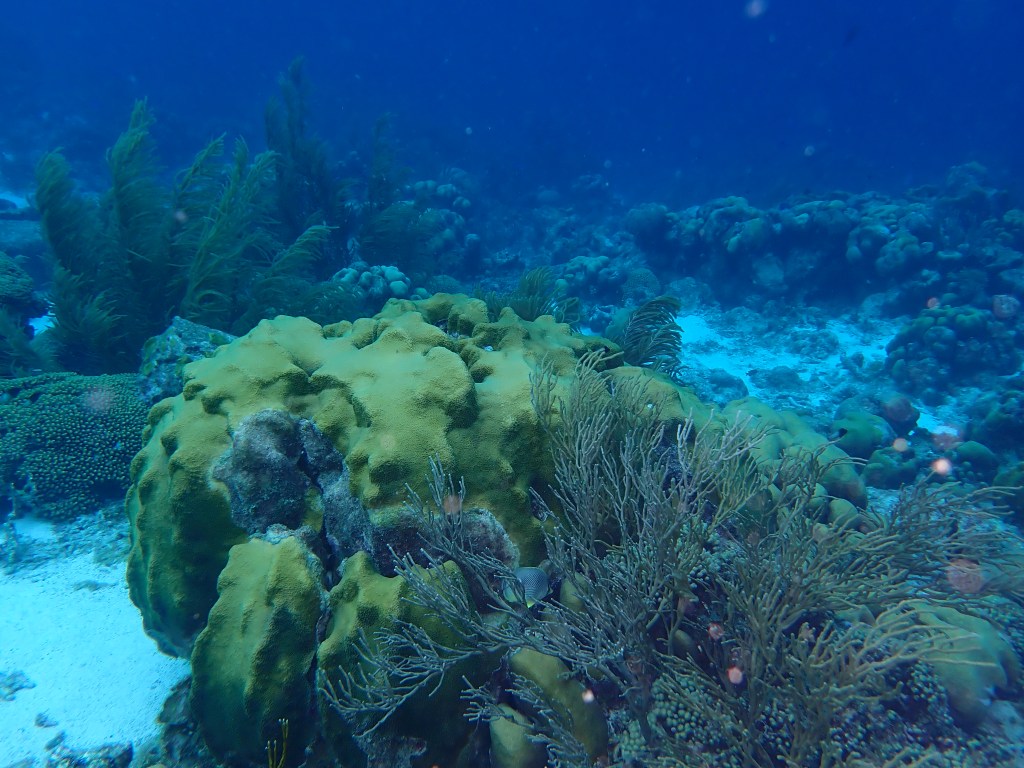
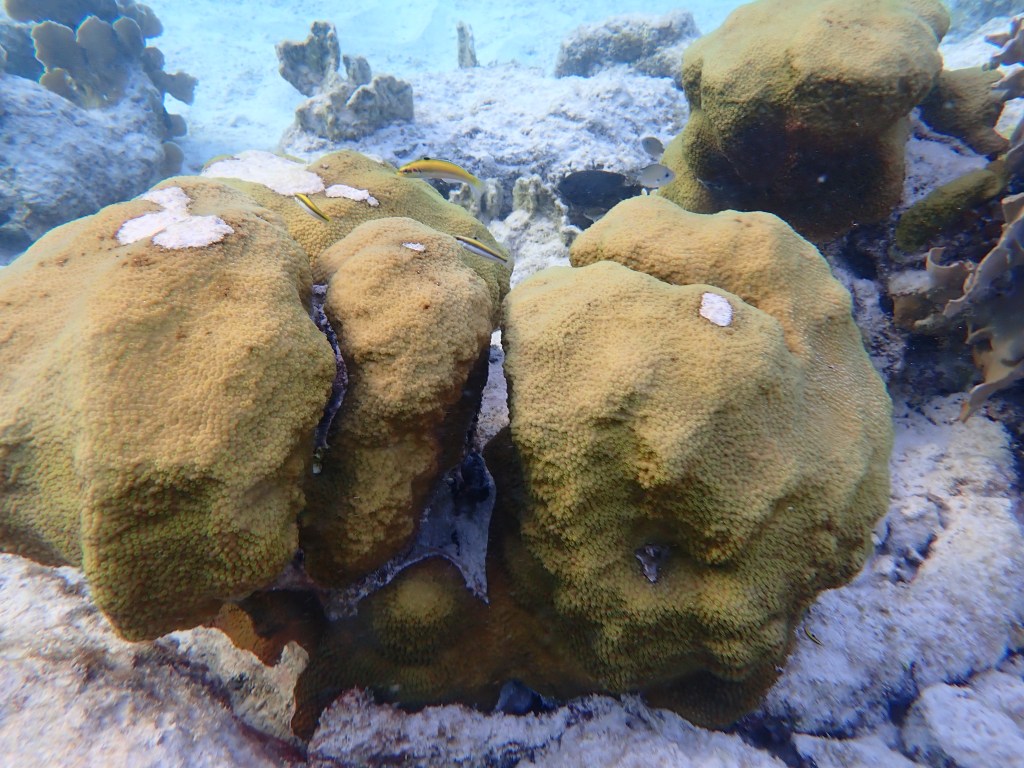
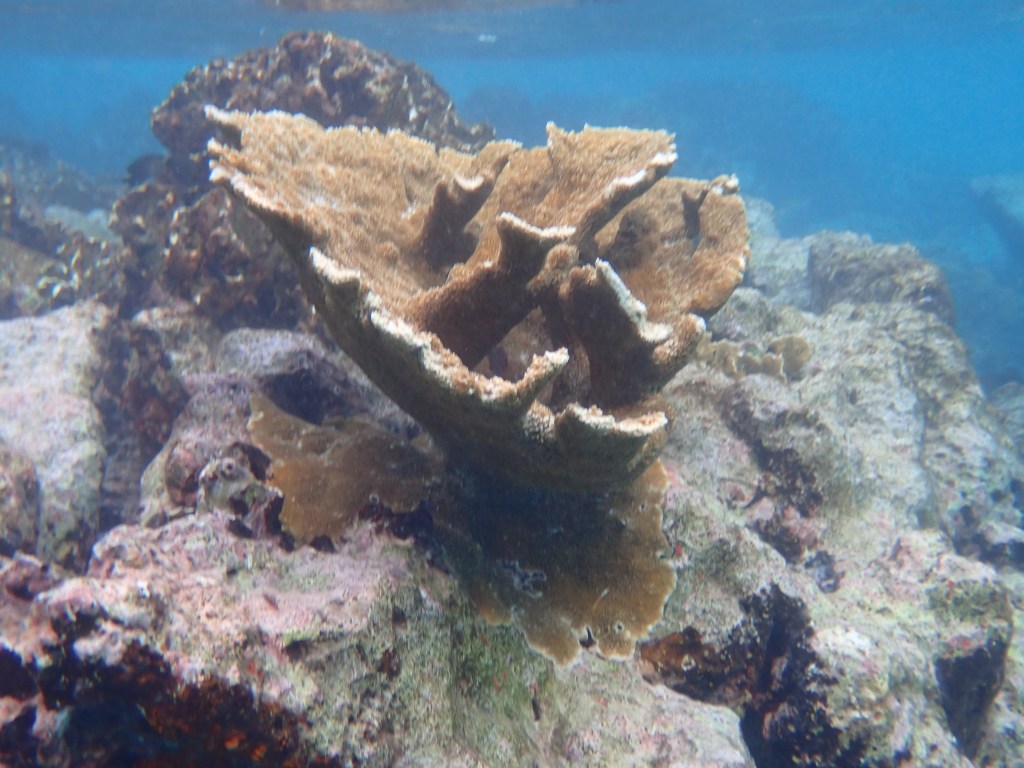
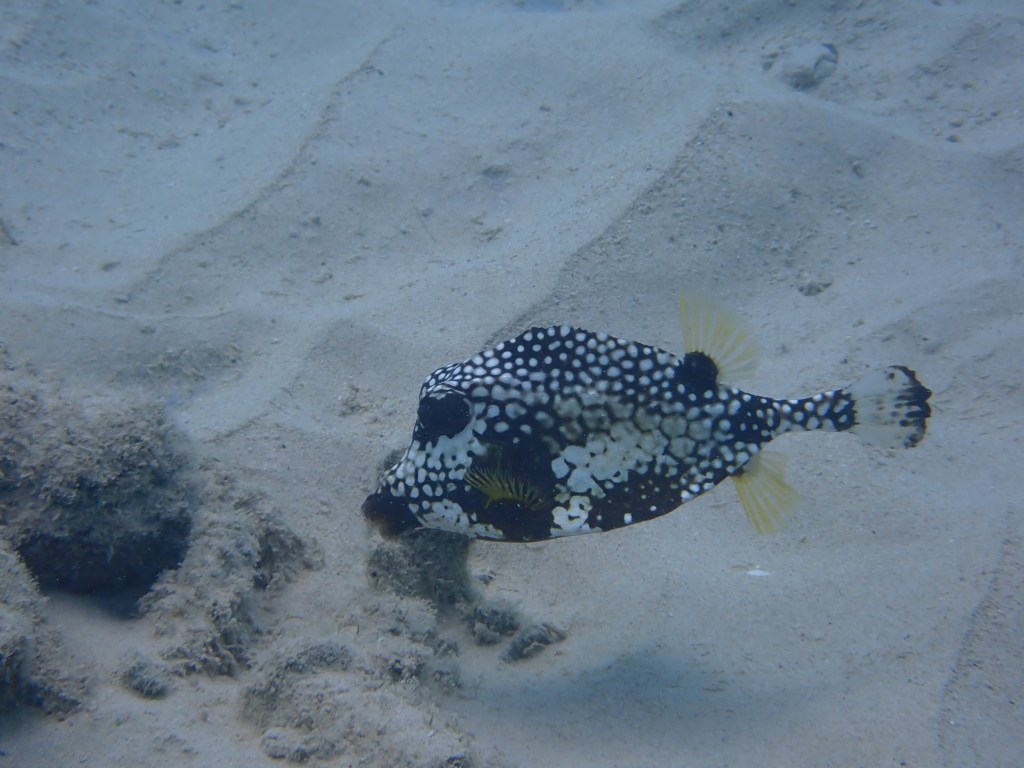
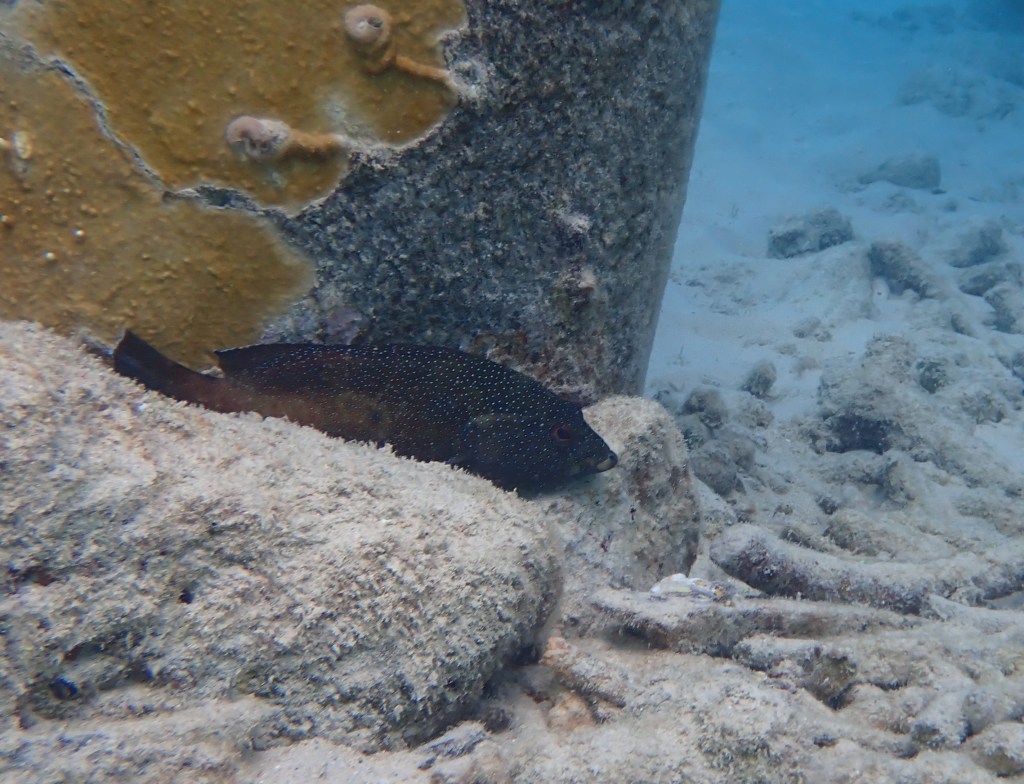
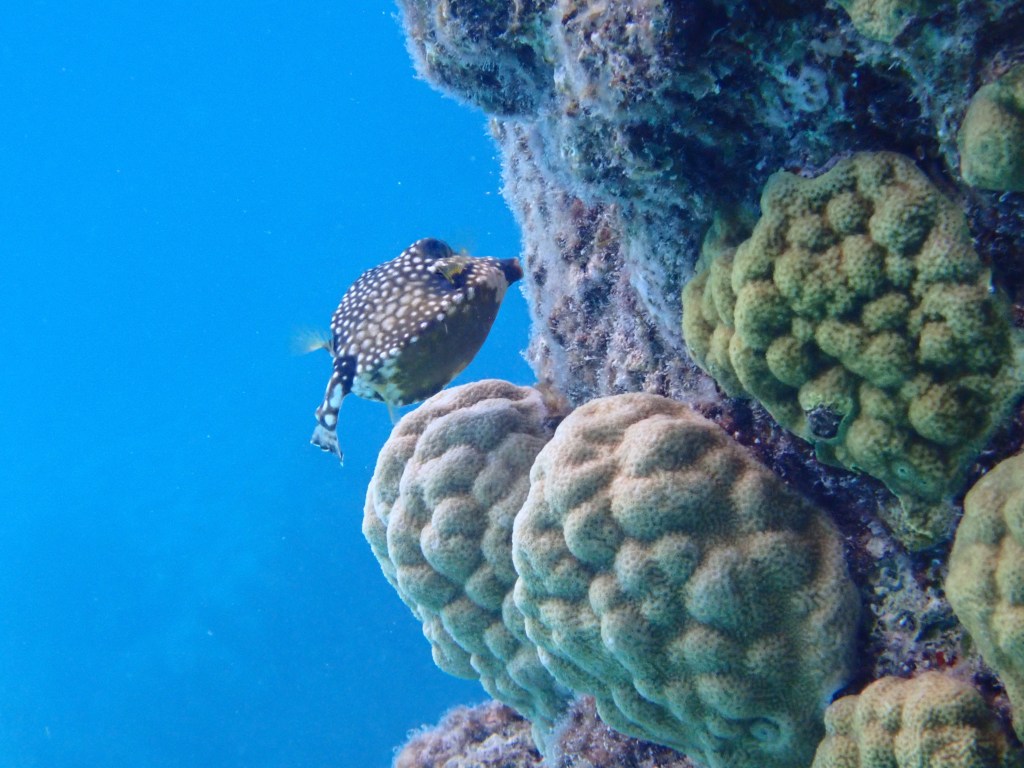
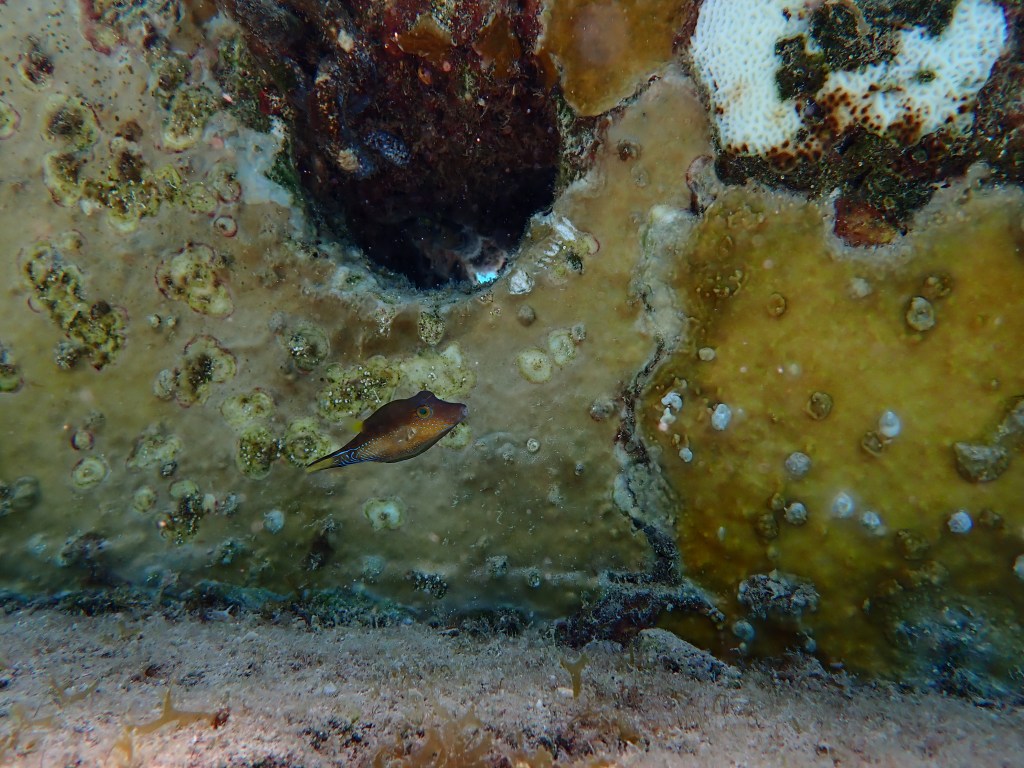
Well, to be honest, you can tell from the blue that I was free diving for the first picture. So maybe not snorkel depths for everyone. I caught this little smooth trunkfish on the way up a piling in shallower water. Notice how some of the mustard coral looks a more washed-out. That’s bleaching.
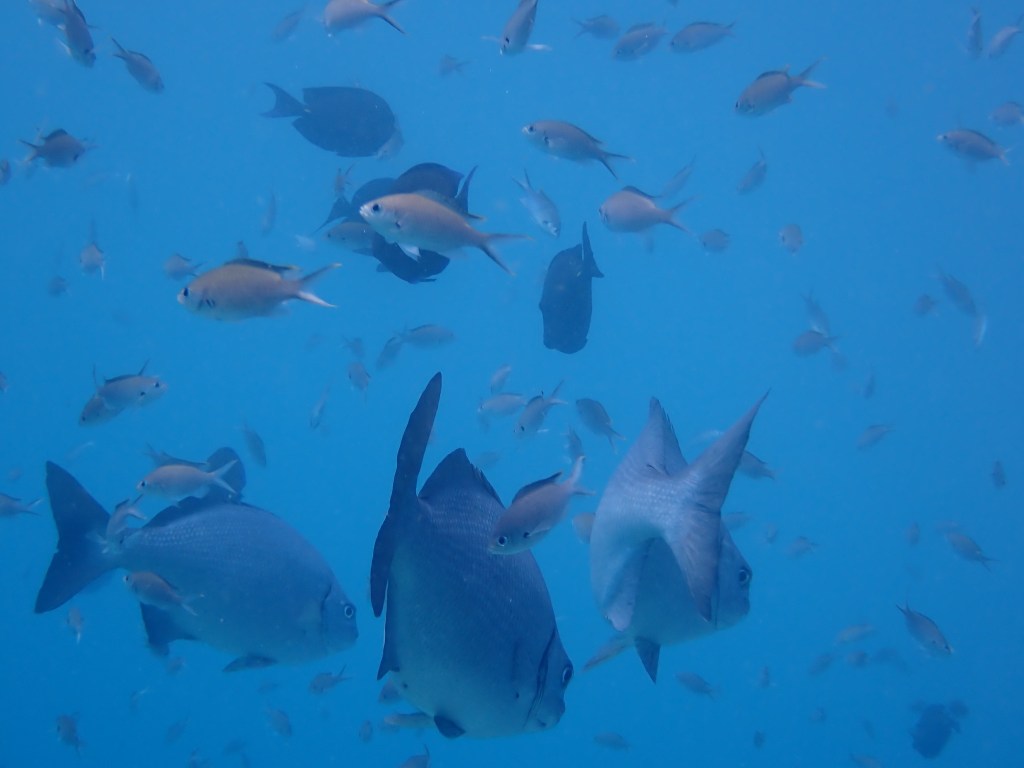
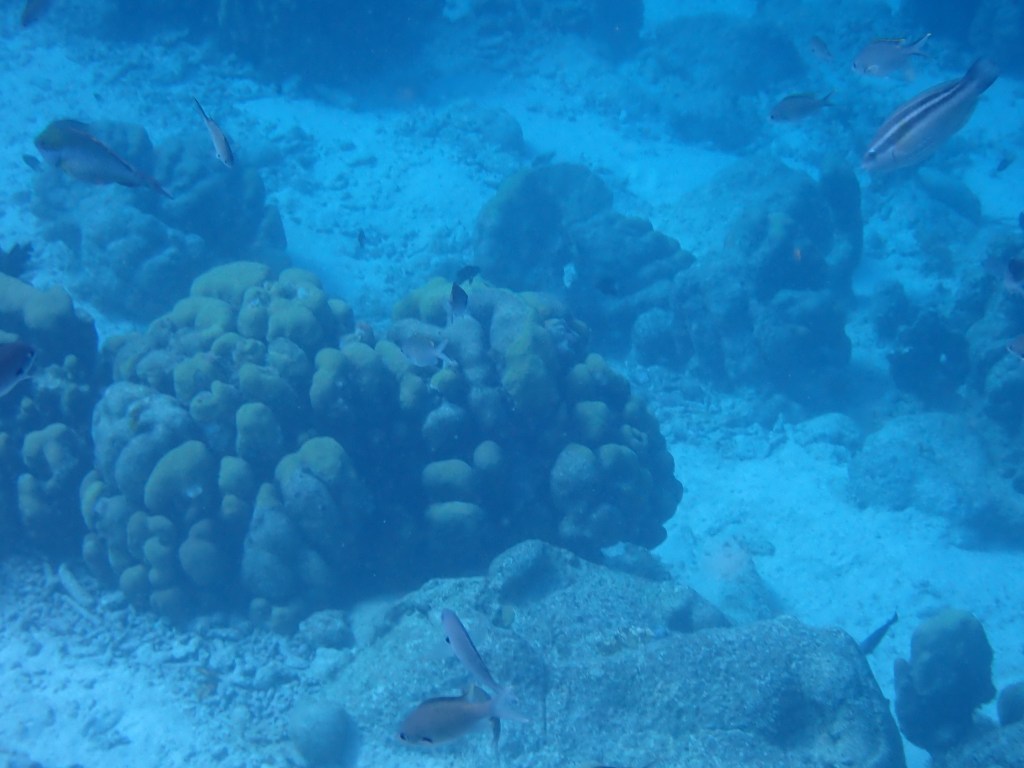
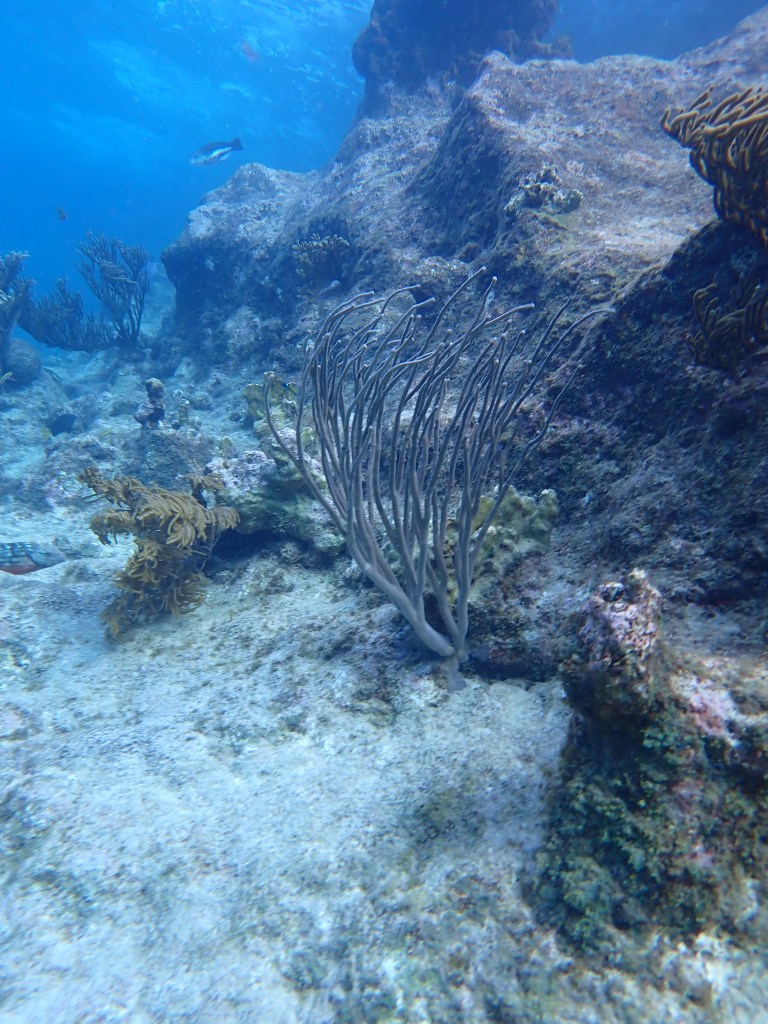
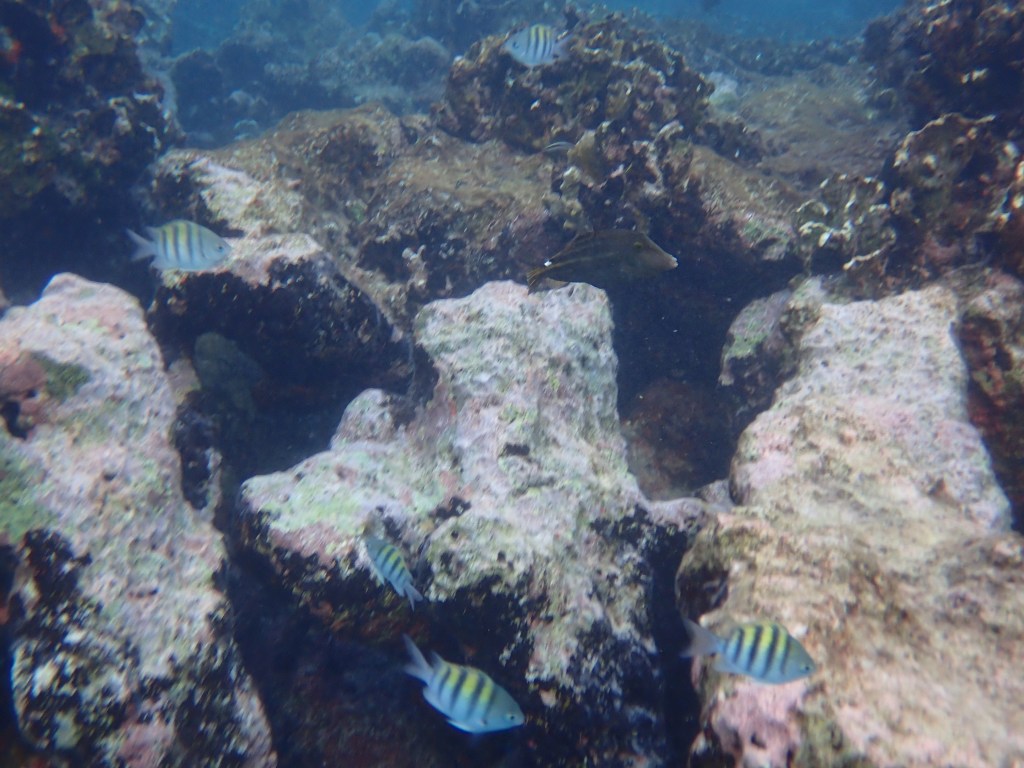
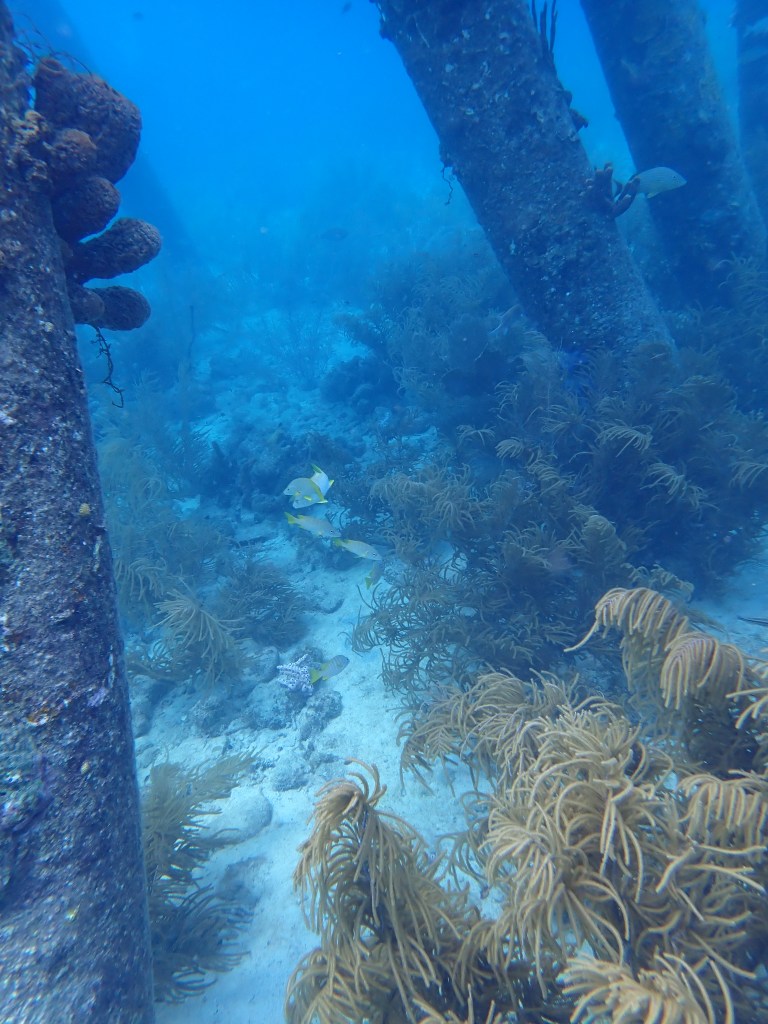
One of the other fun things about Salt Pier are the schools of chromis and sergeants in the deeper water that make me feel like I am in an aquarium. There are often larger schools of grunts and snappers in the deeper water under the pilings, along with the occasional barracuda. I think I’ve seen one every visit to the pier, but I tend to be respectful and give them a wide berth. My pictures of the big schools are too blue, but here’s a clear group of snappers that broke away from the school, a grunt up by the pilings, and some nice sea plumes at the bases.
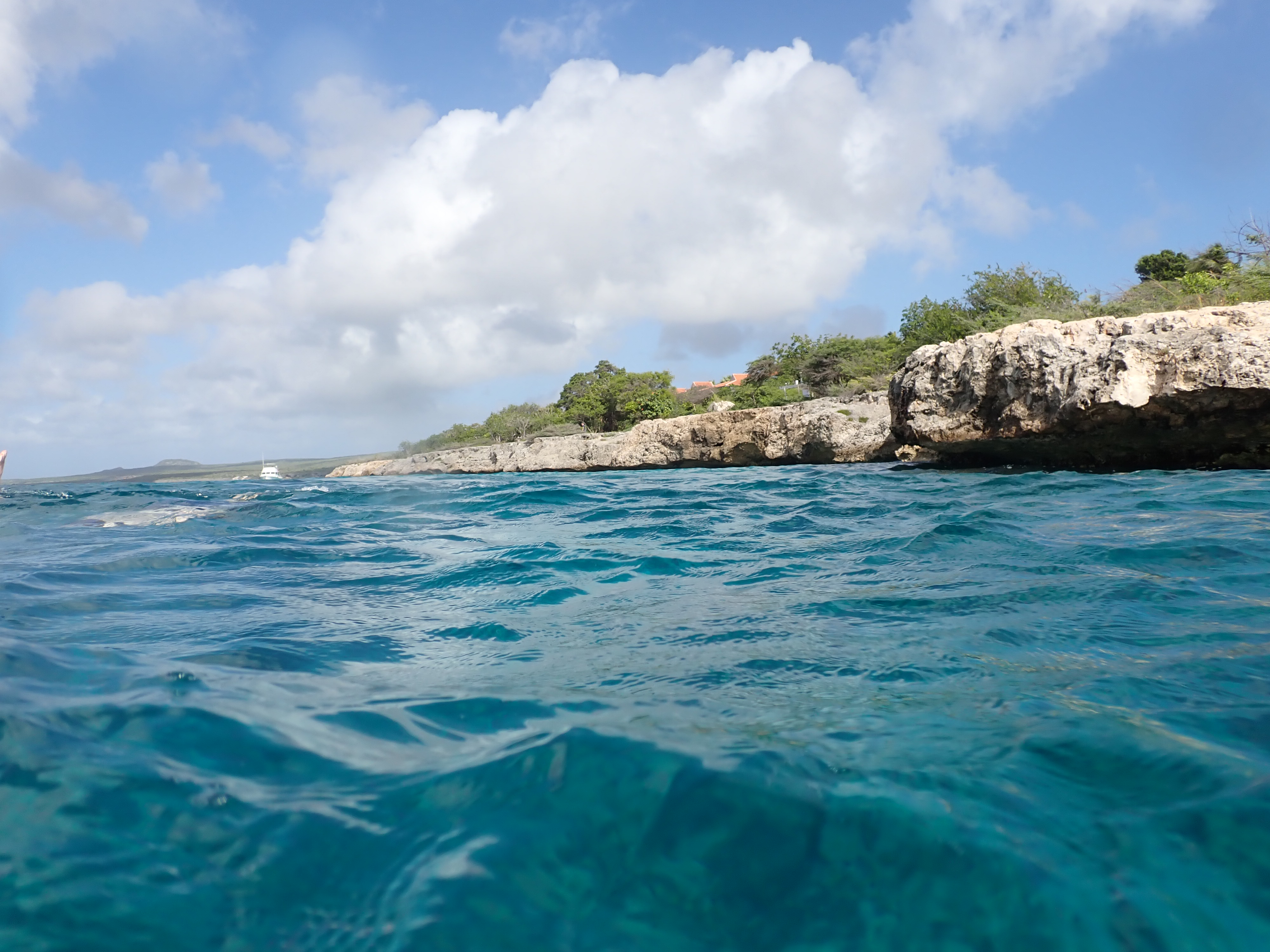
People always wonder about the beaches. Like most of Bonaire, the area here is largely what is known as ‘iron shore,’ or a crumbled/rocky mix of dead, broken coral and limestone. In a few places, there is some sand (or rather, pulverized coral and limestone), but not much. There’s an area in the shade to sit–believe me, this is underrated in this windswept area–if you like the industrial feel.
Curacao 2024. Westpunt and Playa Jeremi

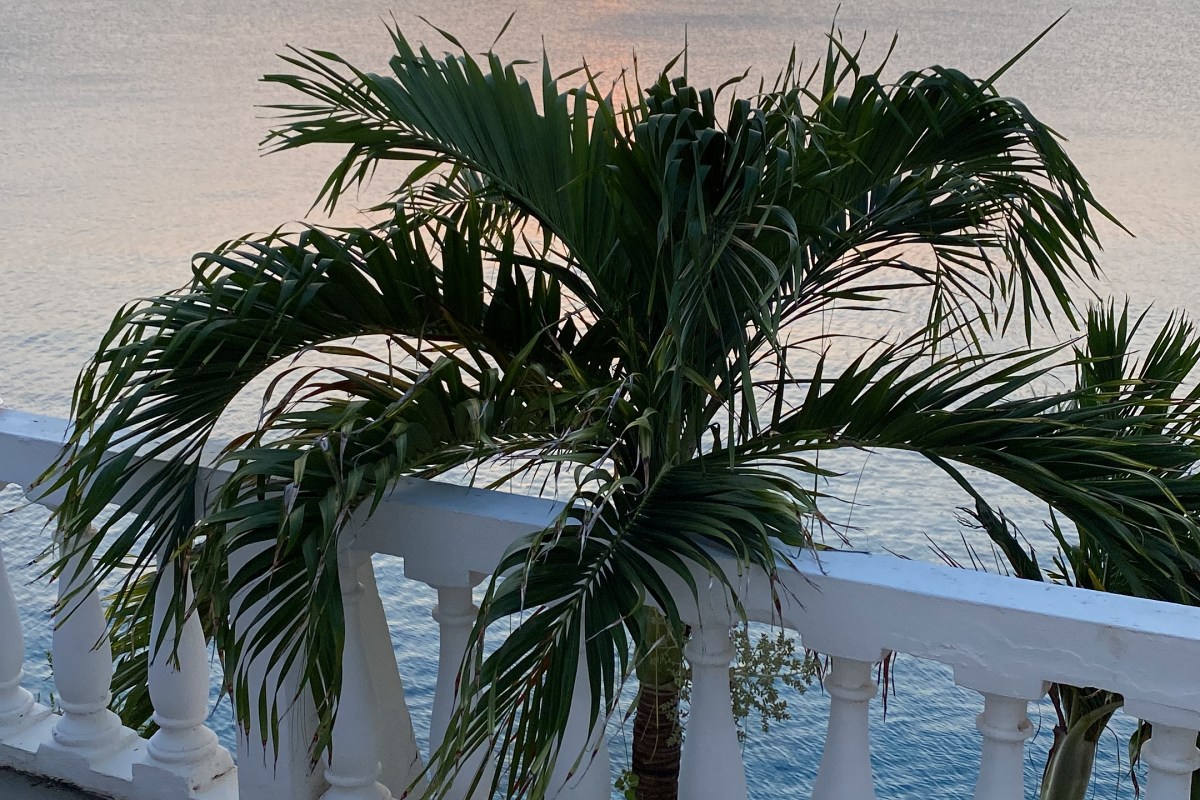
Not my first time in Curacao, but the first time staying up in Westpunt, the northernmost end of the island. It has a feel like Bonaire at this end, far from the busy vibe of downtown Willemstad and the vacationing area of Blue Bay.

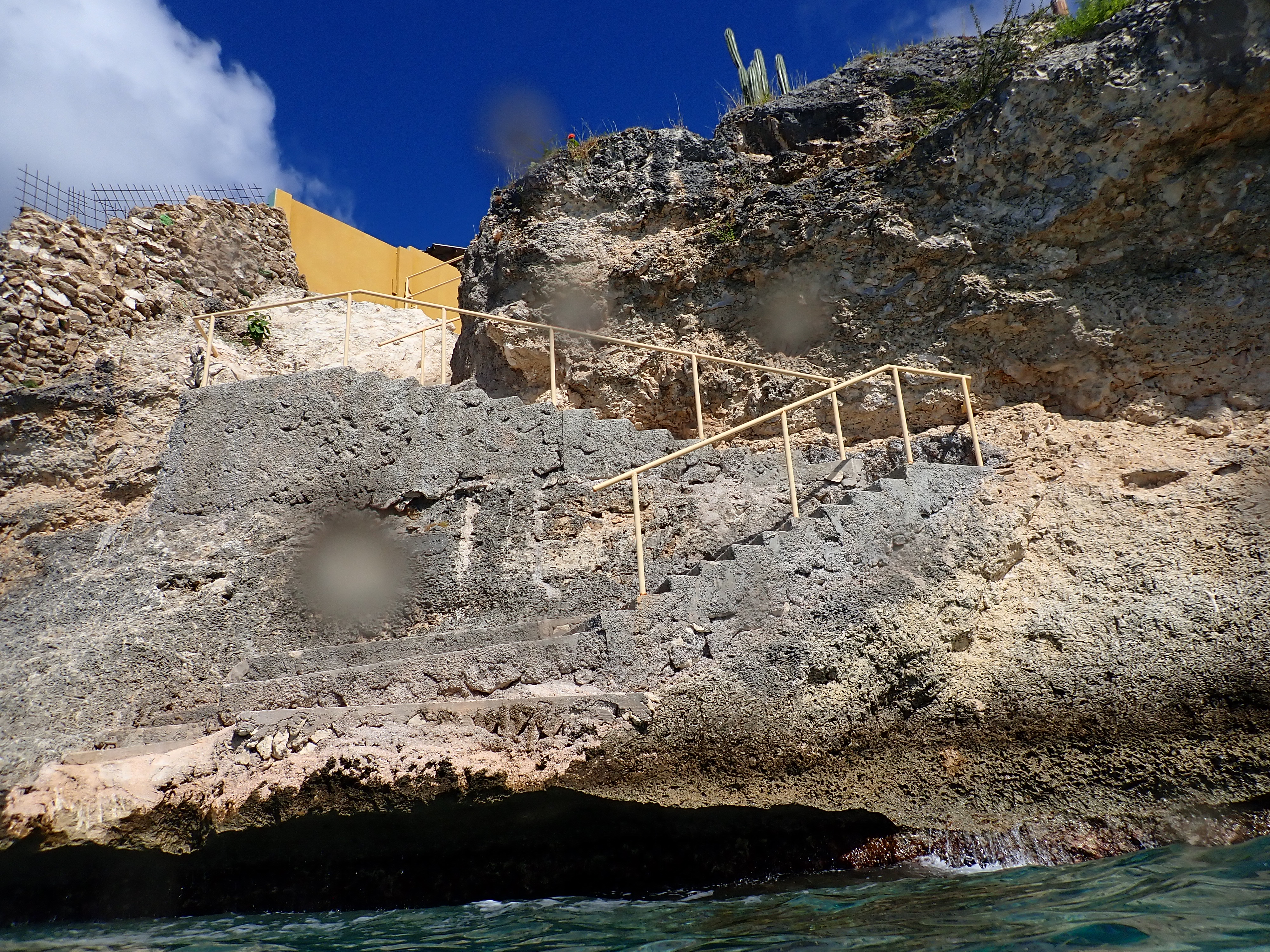
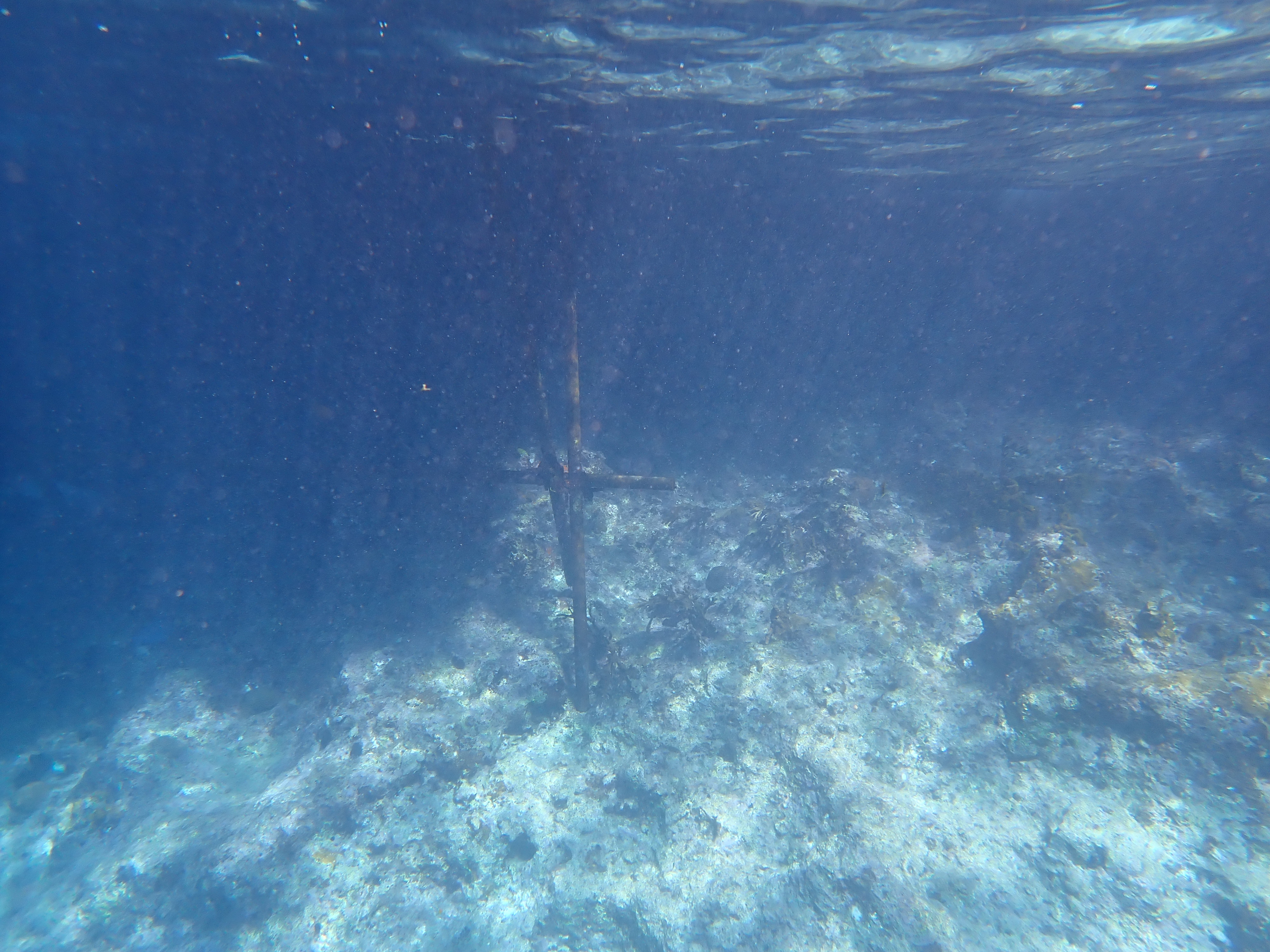
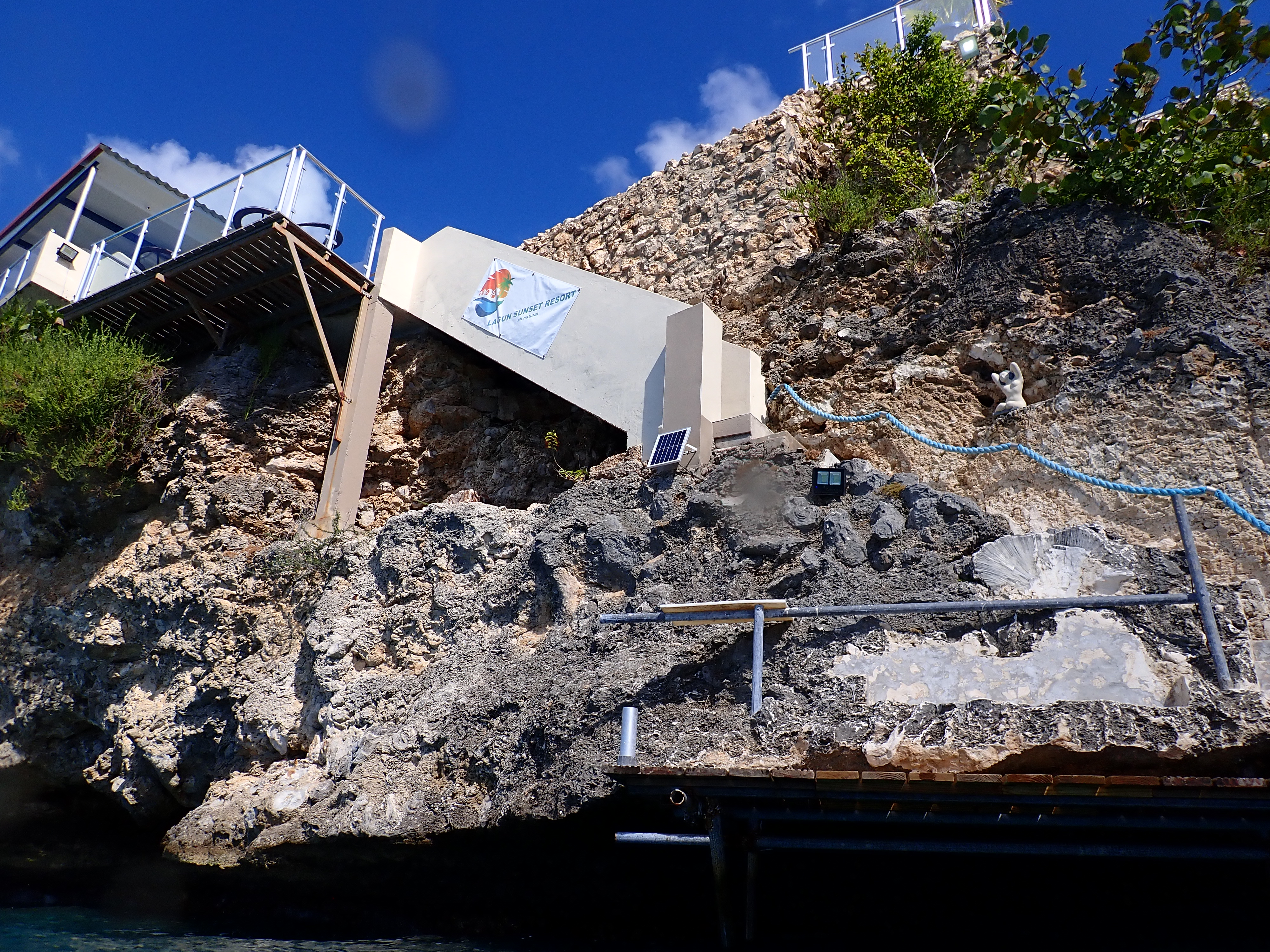
The back had a metal ladder that descended into the water. Rickety and not really feasible with snorkel gear but I succeed using some creative tucking (let’s just say that criss-cross straps can work for fins as well as suits).

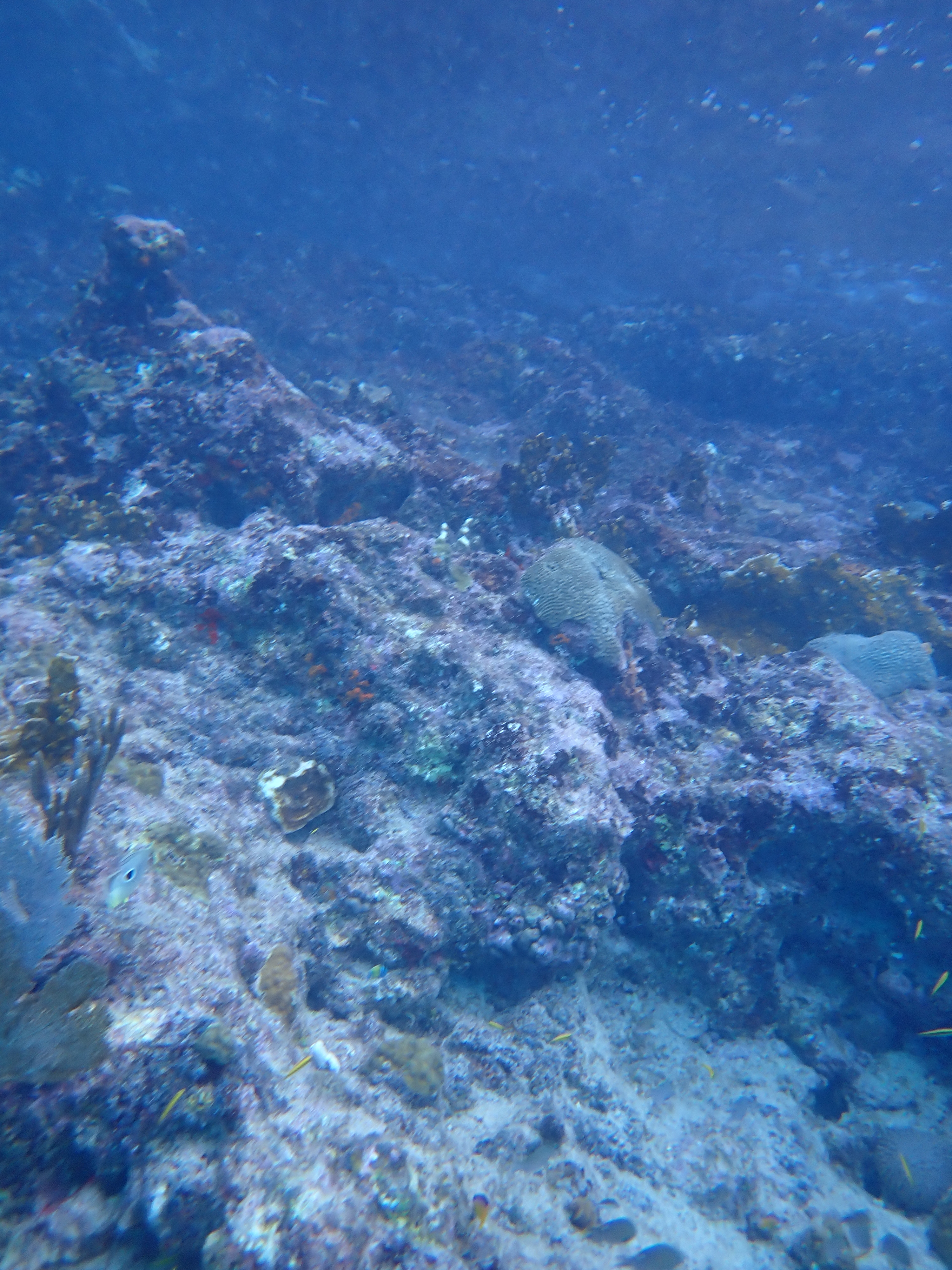
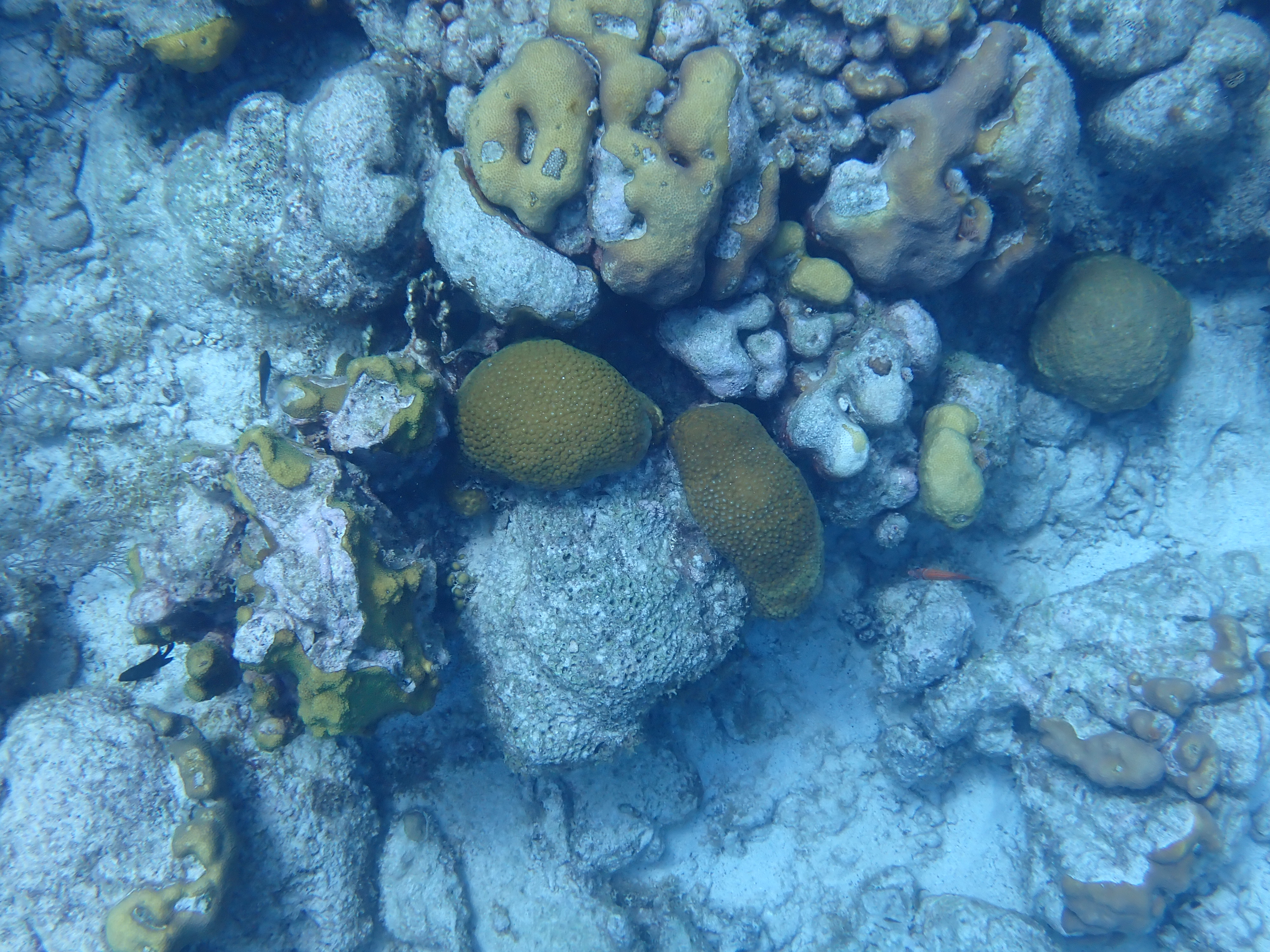
But it gave me a chance to get into the water the night of arrival and swim around the corner to Playa Lagun. The fire corals are in good shape here, but the star and brain corals are showing bleach stress. You can see how one is mostly white, and the other is a mottled purple-brown. That means that it has been warm enough that the coral polyps have ejected their photosynthetic buddies.

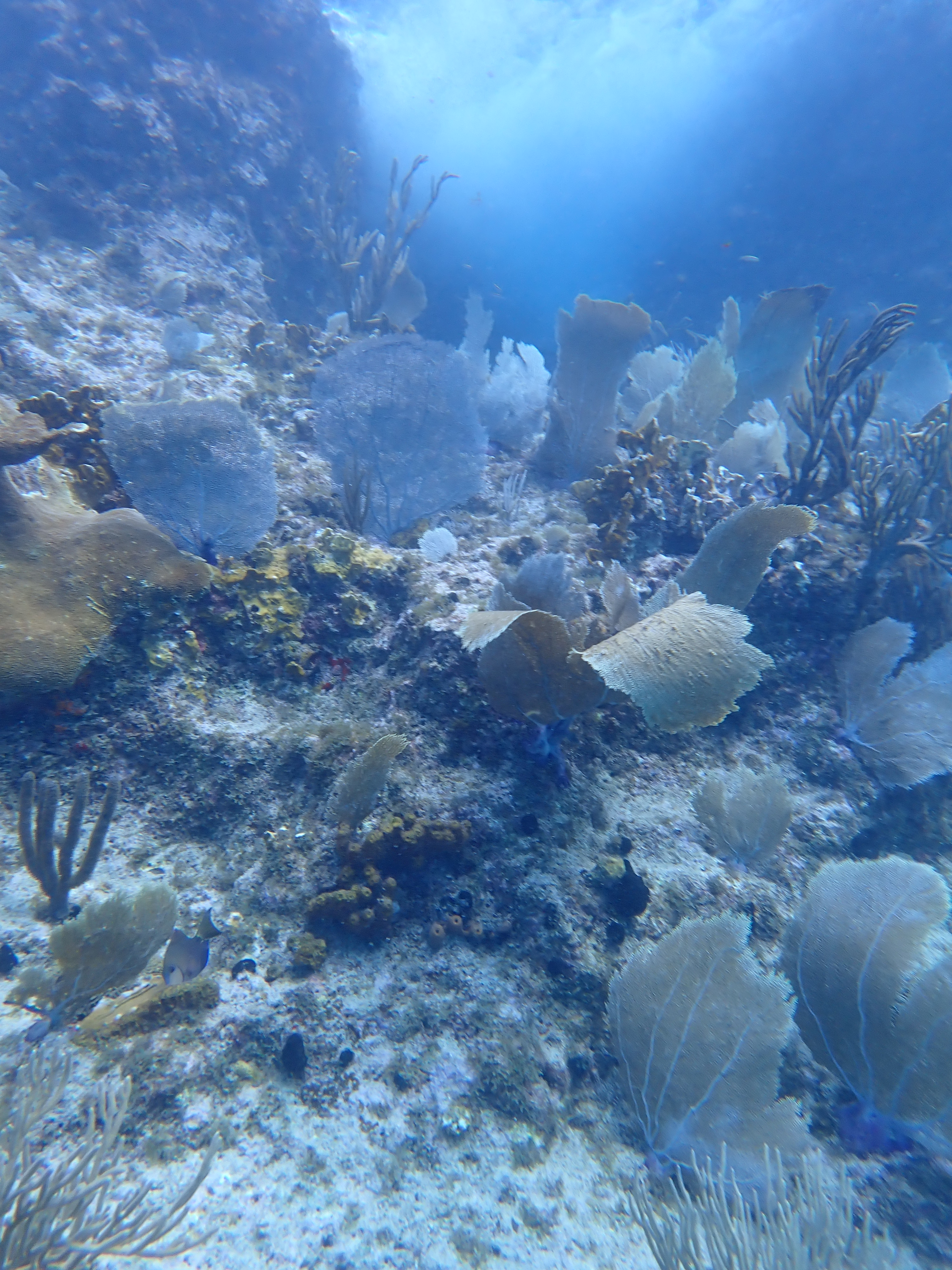
Playa Jeremi was on my agenda the next day. Jeremi was amazing in 2023. It was still amazing in some areas. One of the interesting things about Curacao is how much soft coral there is there–sea fans, sea plumes and Gorgonians waving in the water. Here was also have a couple of staghorns that I suspect were transplanted on some dead coral, and a brain coral in the background.

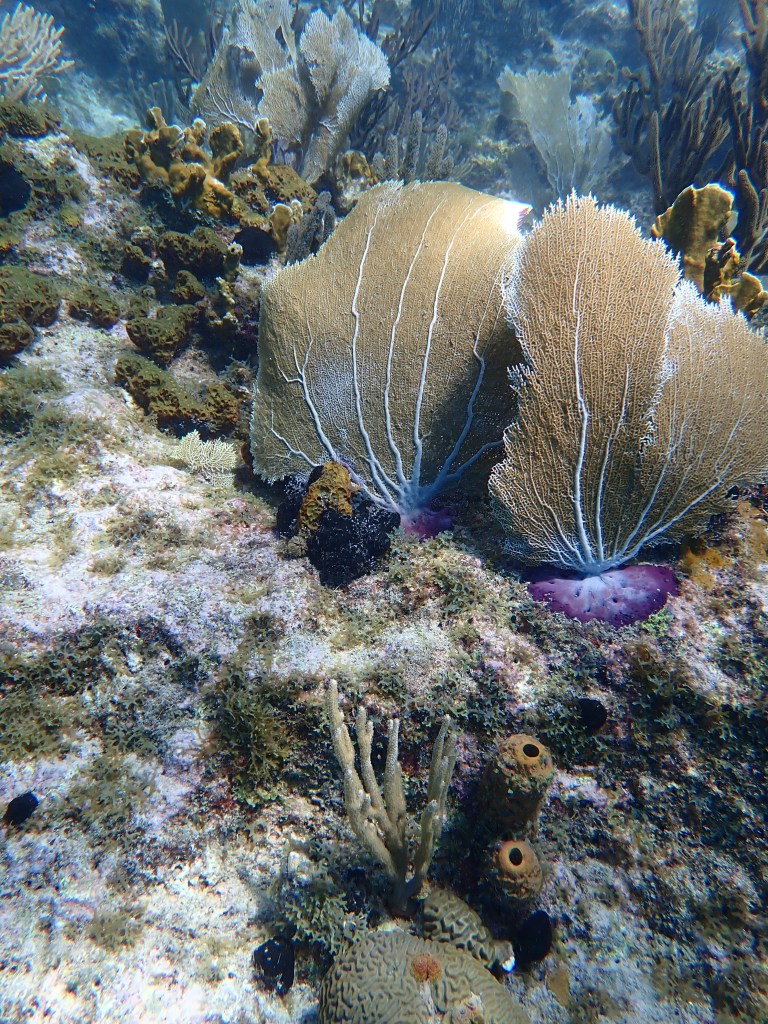
I was particularly fascinated by the nacre, or the purple substance the fan colony uses to adhere to rocks. It reminds me of oyster nacre.

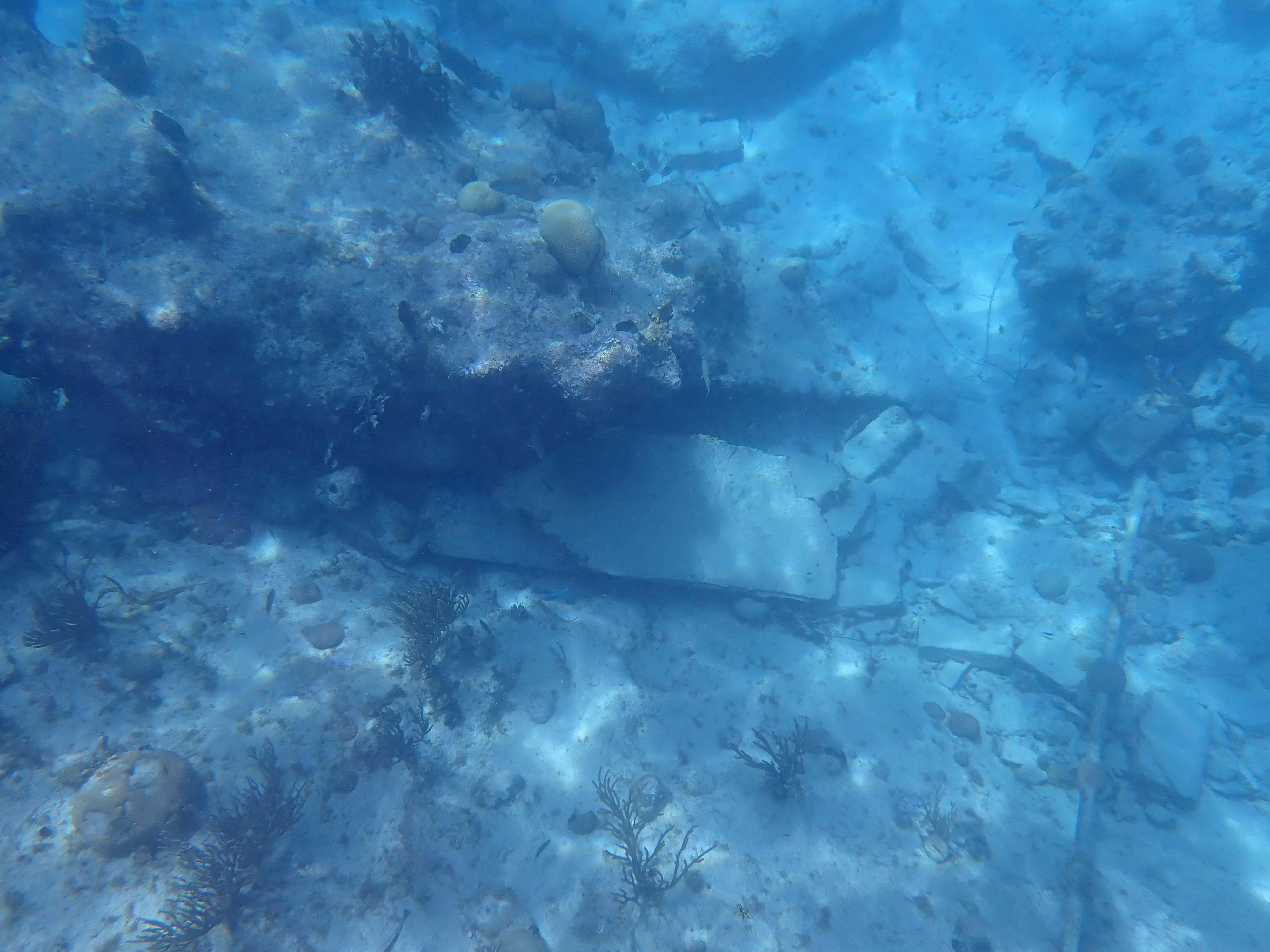
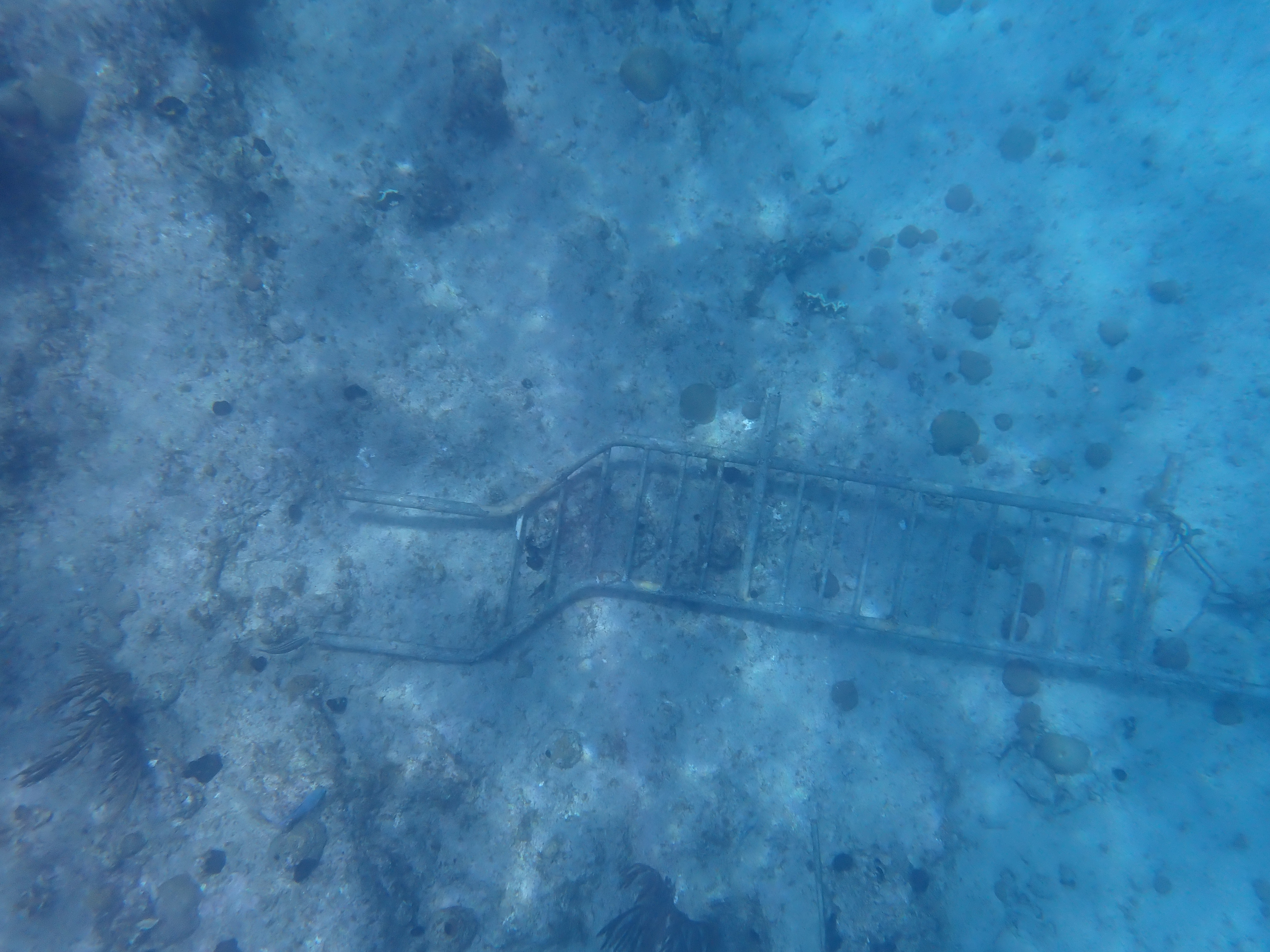
On the more southern side, a number of villas have gone up or been remodeled, and it is clear that local construction is not taking any care with their debris:

You can see how the diversity of fans and plumes has been lost. It was heartbreaking, and after documenting the destruction, I went back to our residence quite depressed.

Well, tomorrow is a new day, right?

Bonaire, Sept. 2024–it’s hot!

Ah, Bonaire! Back for September, and wow, was it hot. I’m from the midwest, so while we have summer heat and humidity, it isn’t often in double digits, and almost never for a week straight.

This was my first time in Bonaire regularly using the airco! Airco, for those used to central or window air conditioning, is mounted on the upper wall of the bedroom and usually used to cool a room for sleeping. The rest of the dwelling is usually open and uncooled, at least in less-Americanized places. I actually love this arrangement, and when I’m on the islands in winter, I rarely use it and rely on the ocean breezes through windows and open doors. But September was a whole ‘nother kettle of fish. I used it every night, and by the end of the trip, even used it for an afternoon siesta.

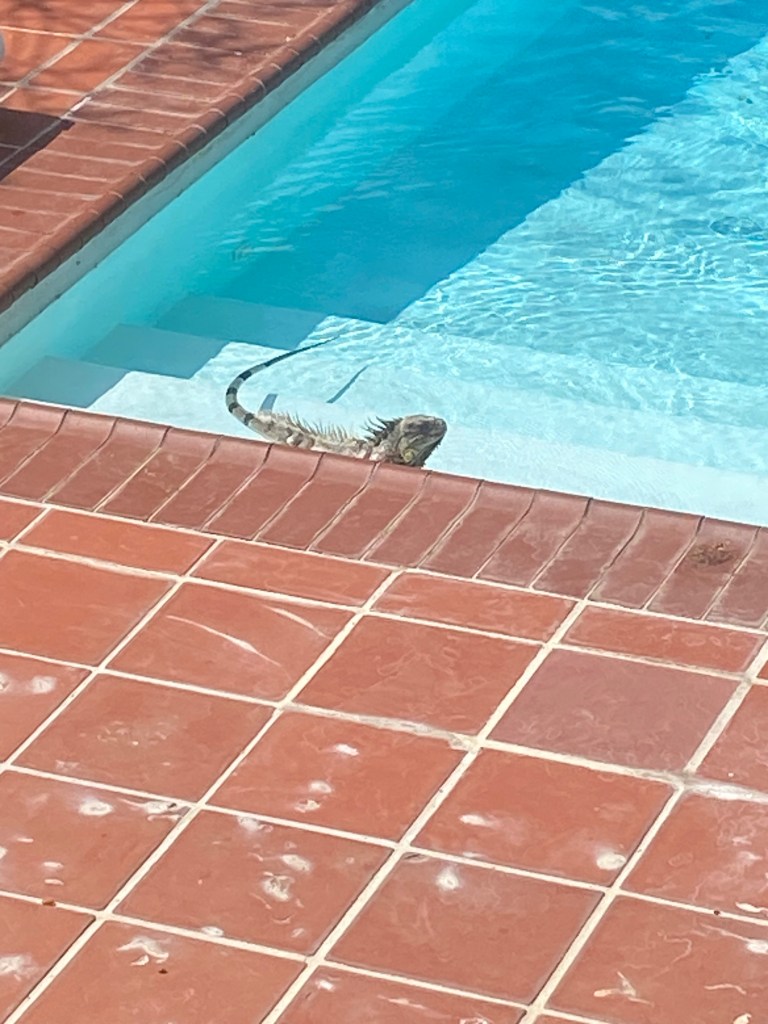
Our pool wasn’t cooled (this is a thing!) so while wet, it often did not feel very cooling. The iguanas loved it, though.

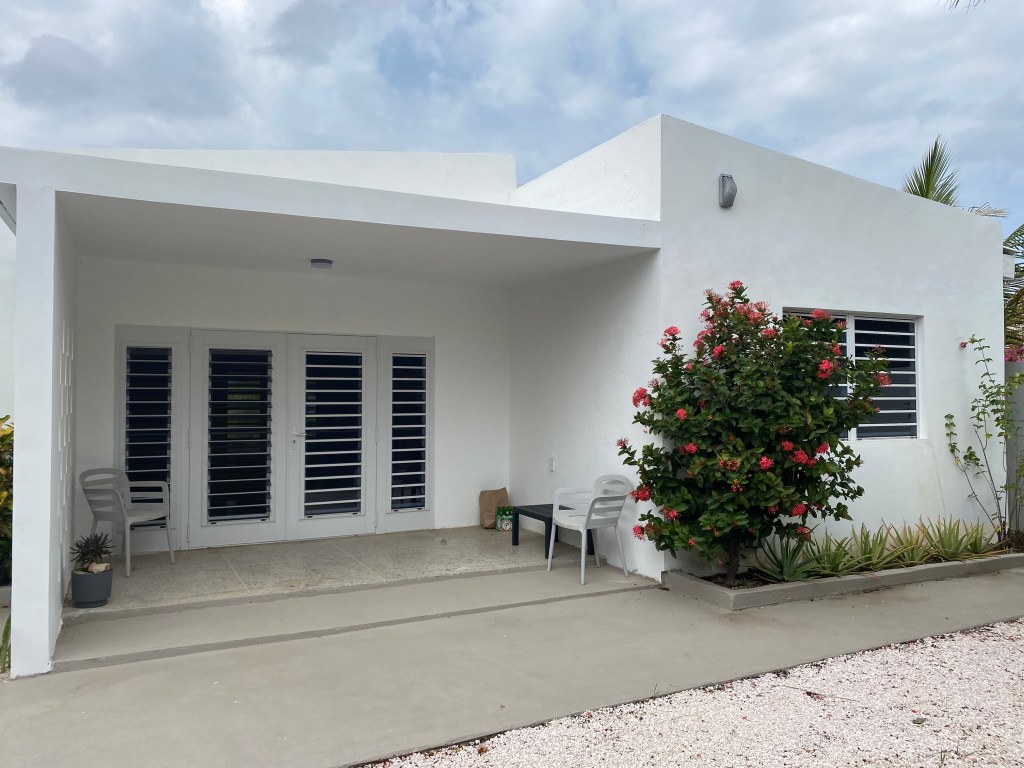
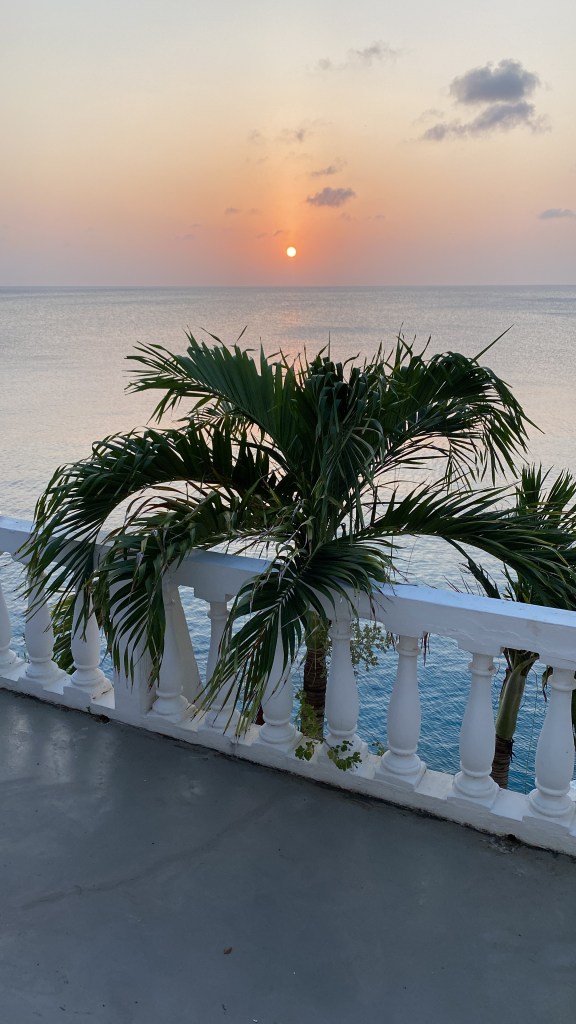
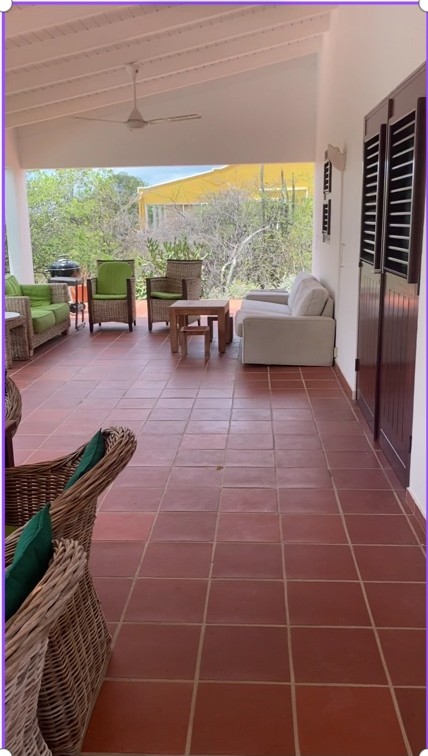
I believe in working with the climate, so I look for places I can stay with wide-open verandas and ceiling fans.

There are scattered, brief showers, but mostly just a lot of sun, so it is nice to have a porch that is always shady.

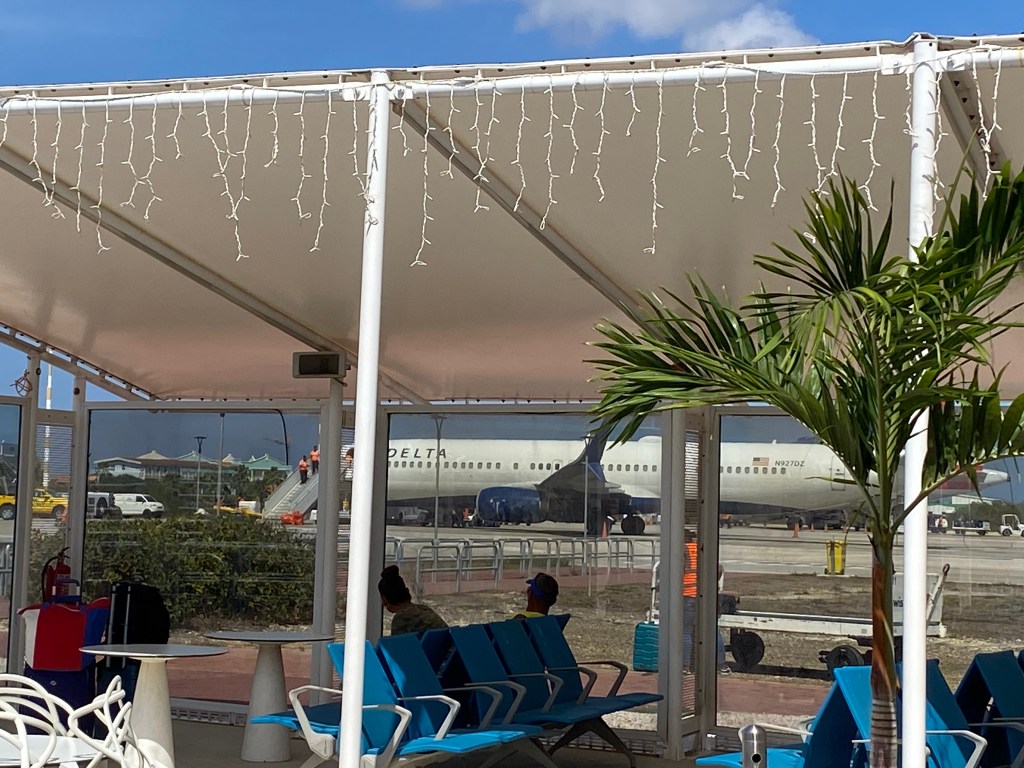
Even the airport does verandas.

Bonaire Feb. 2025. Something Special

Something Special is a dive site that is, indeed, something special. It can seem unremarkable to a snorkeler, except for two things: shallow patch reefs and a wall from surface to 25 ft depth. In 2023, I was excited to examine all the nooks and crannies. Unfortunately, in the time since, many of the larger corals had died off both in the patch reefs and on the wall.

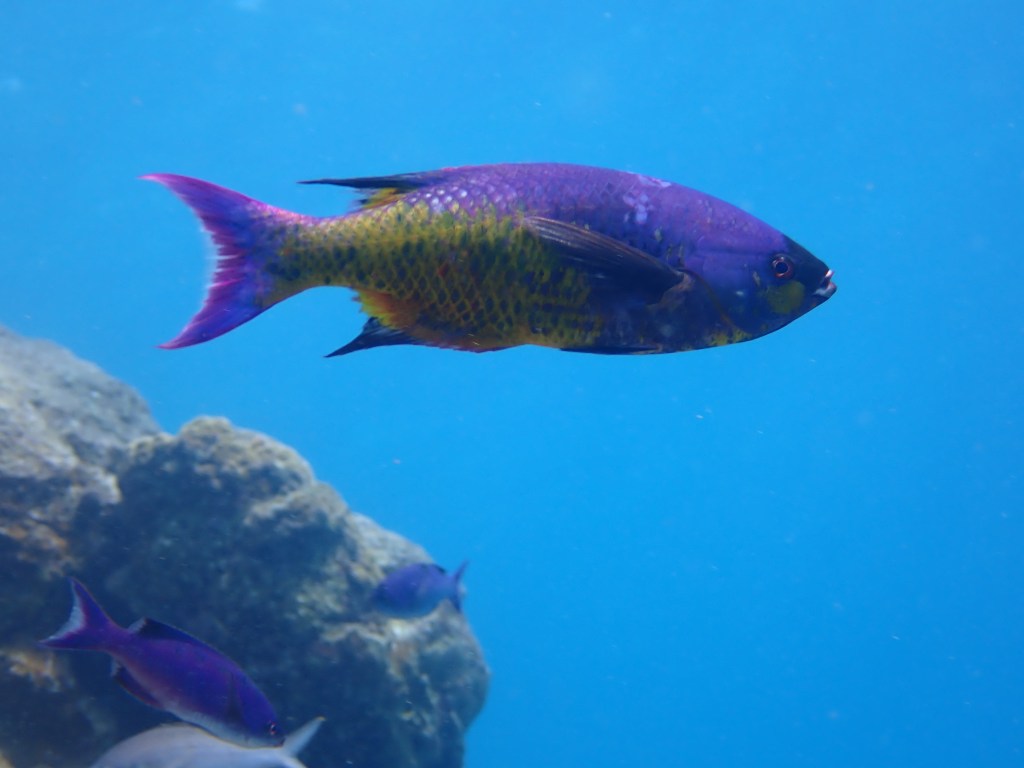
On the upside, I found a new-to-me species, the Creole wrasse hanging out at the wall in a school of blue chromis.

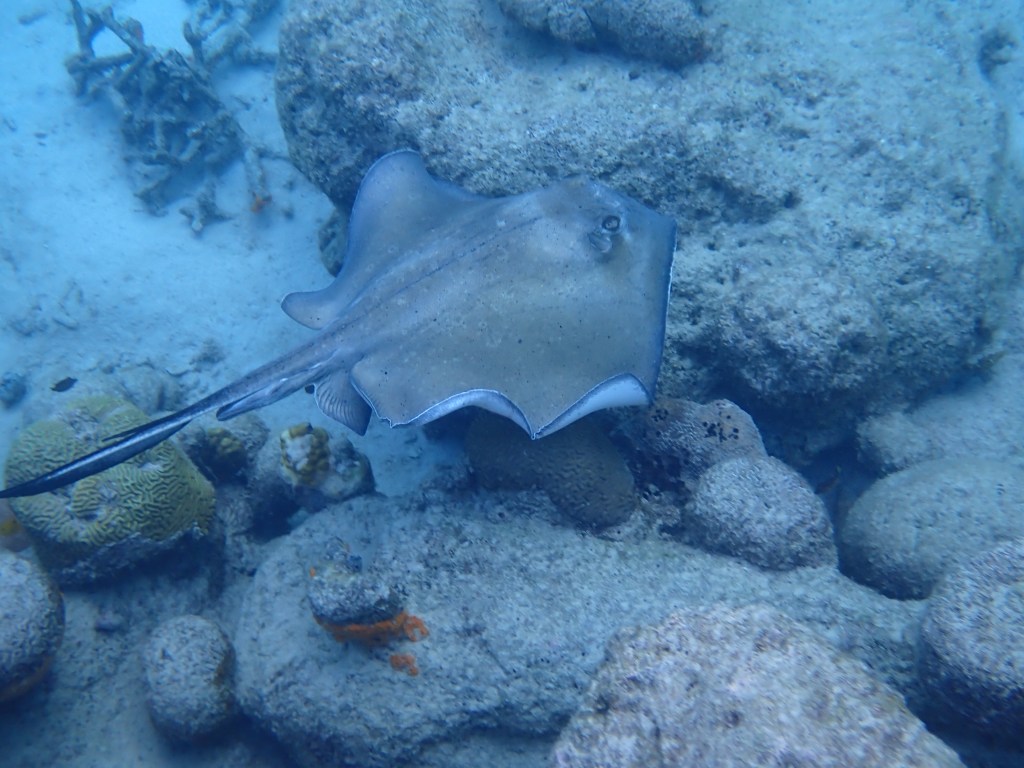
I also found my first Southern stingray on Bonaire. Very cool! Note how the bottom corals are mostly dead, although the one on the bottom left is trying to survive, along with a tiny enrusting of an orange sponge.

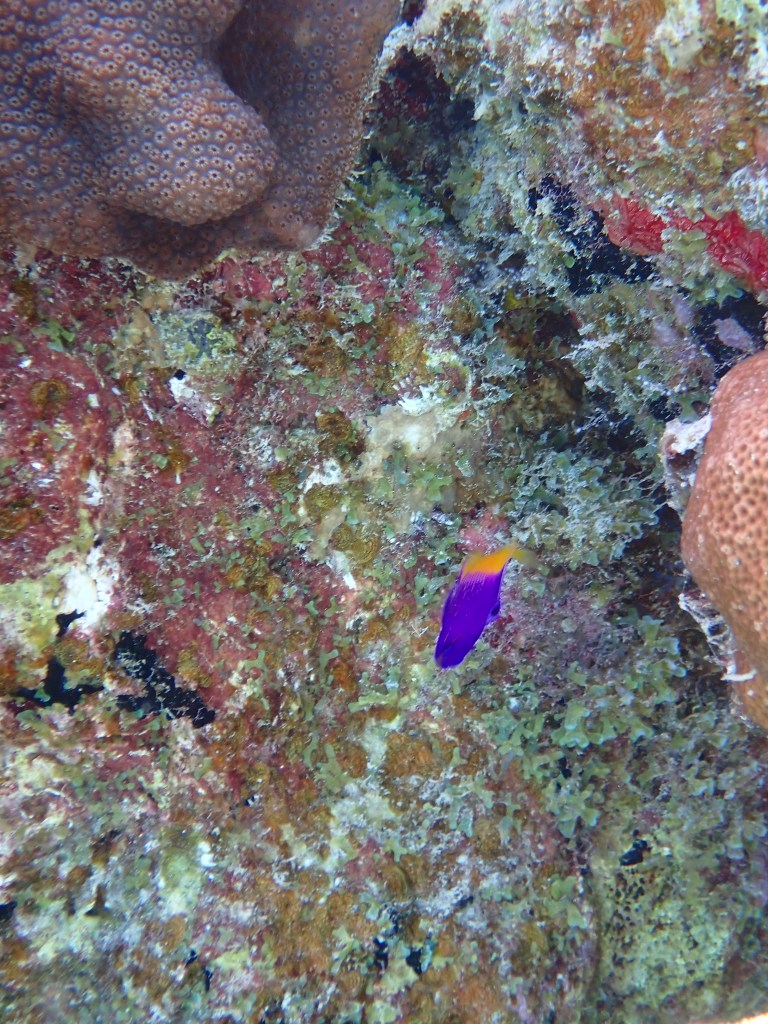
Last time I was there, I saw a pair of fairy basslets, a shy little fish that prefers deep water. I was pleased to find a pair still there. Notice the healthy (ish) coral in the upper left and lower right, but the rest of the algae-covered wall. Basslets are elusive and always look like they are blurry to me, but if you zoom in, you’ll see it isn’t the camera 😀

There was also a giant school of fish at the bottom of the wall, which made free diving something like being in an aquarium. One of the few times I wished I was in SCUBA gear.

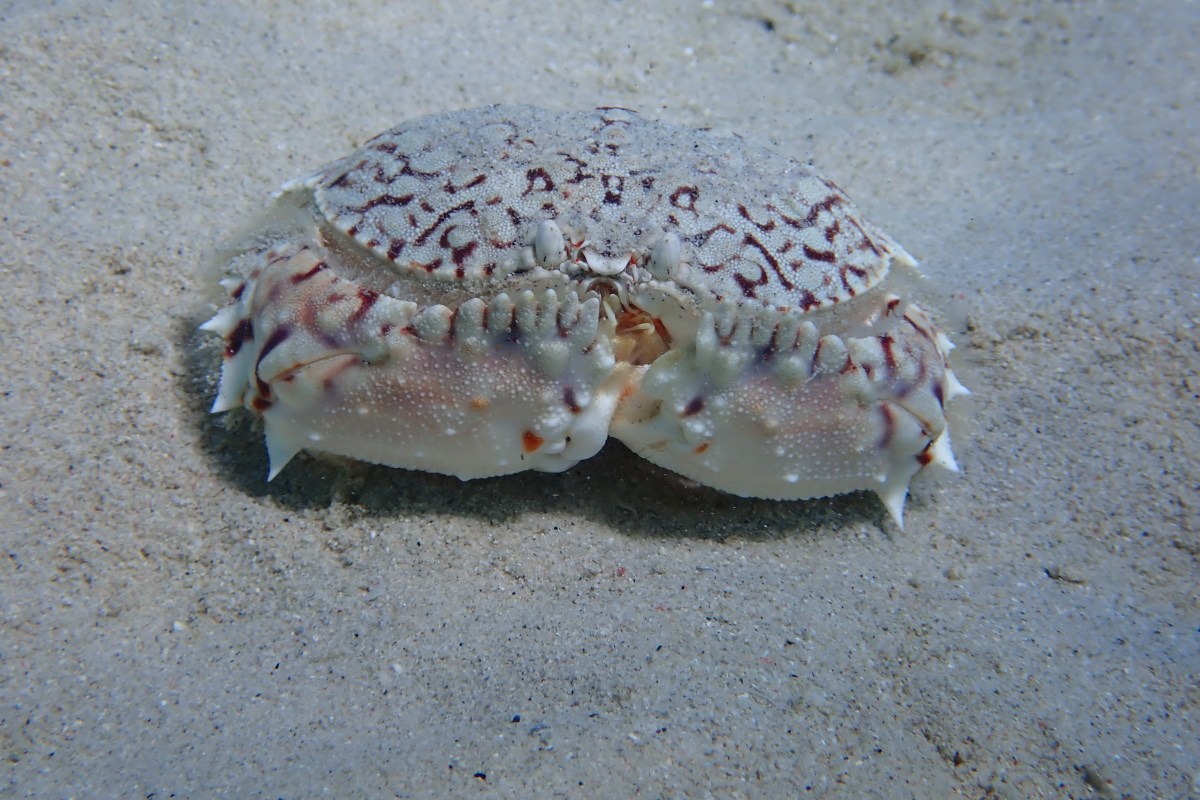
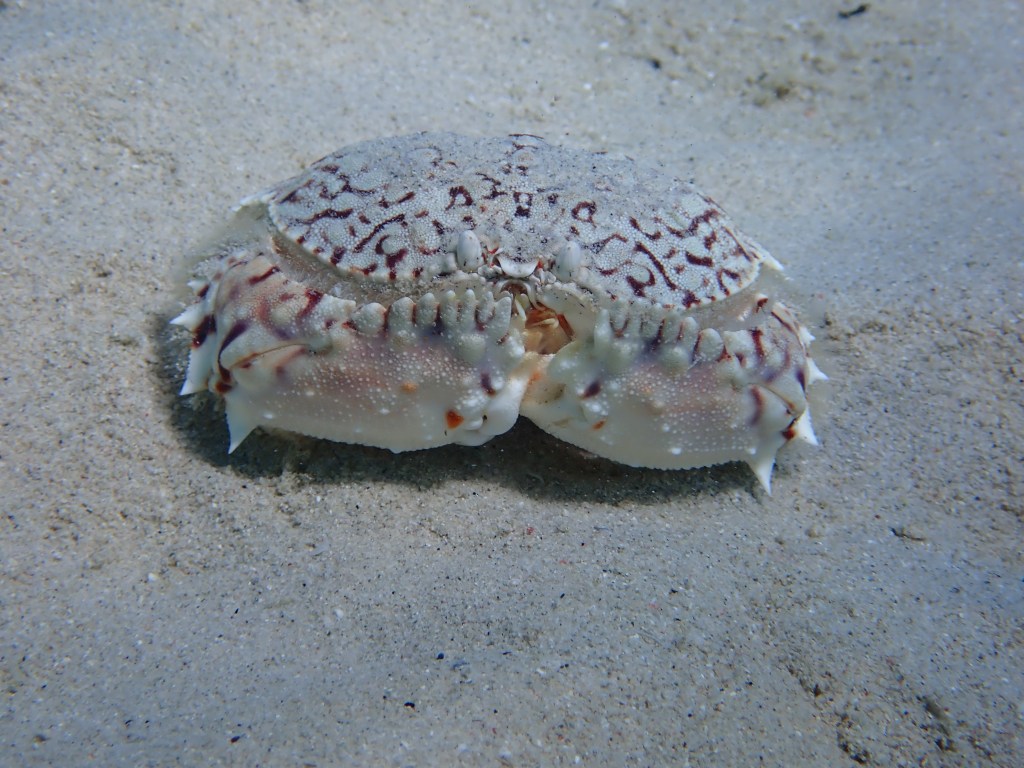
The shallow sandy areas also had some unexpected pleasures. I found another new-to-me species, the box crab! I think it is pretty obvious how it gets it’s name.

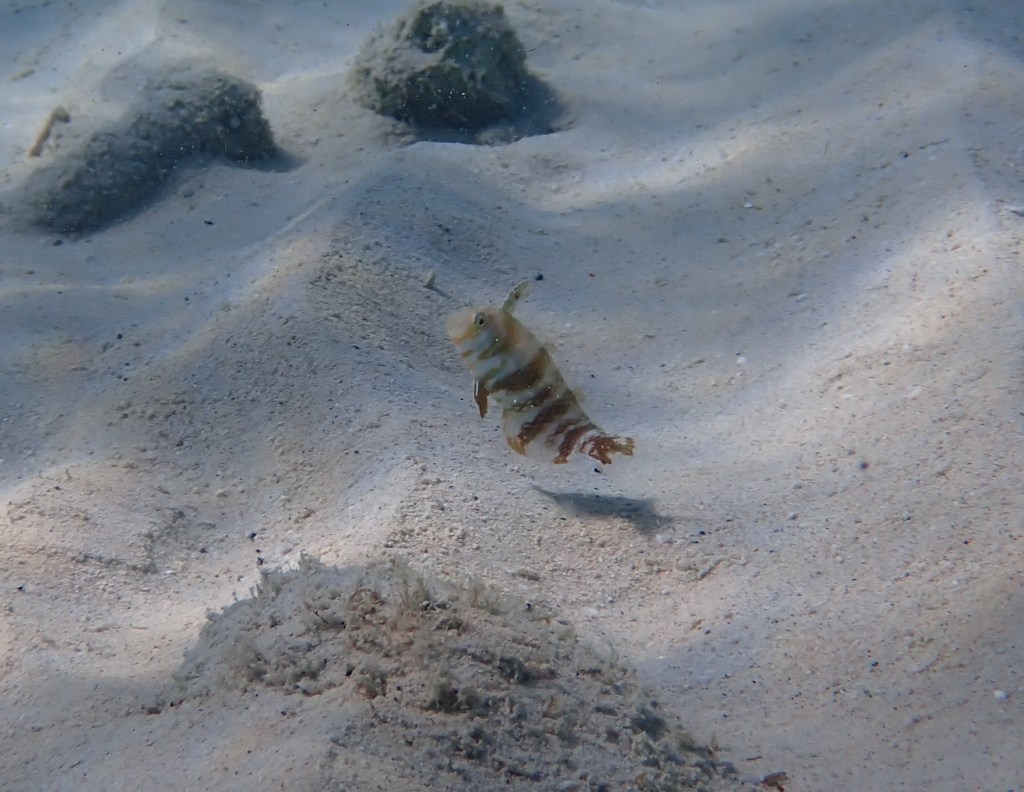
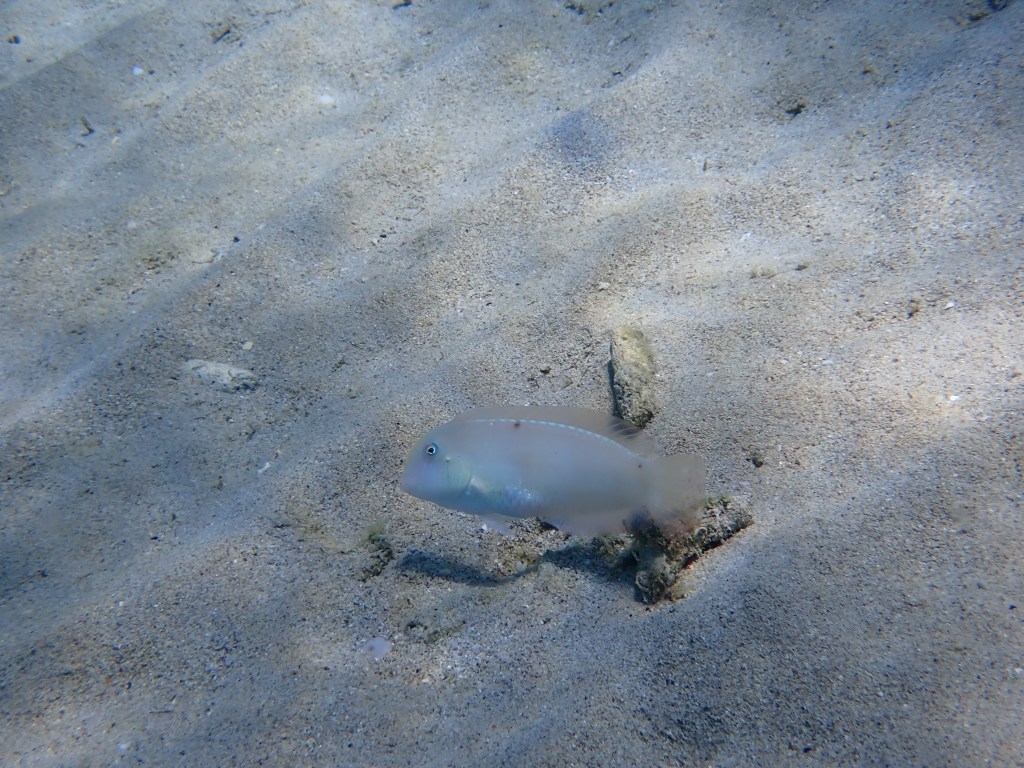
And remember that pearly razorfish from Fisher’s Pier? I found a juvenile! Which is one of the crazy things about identifying fish–many change patterns and colors through their life–not once, but multiple times.

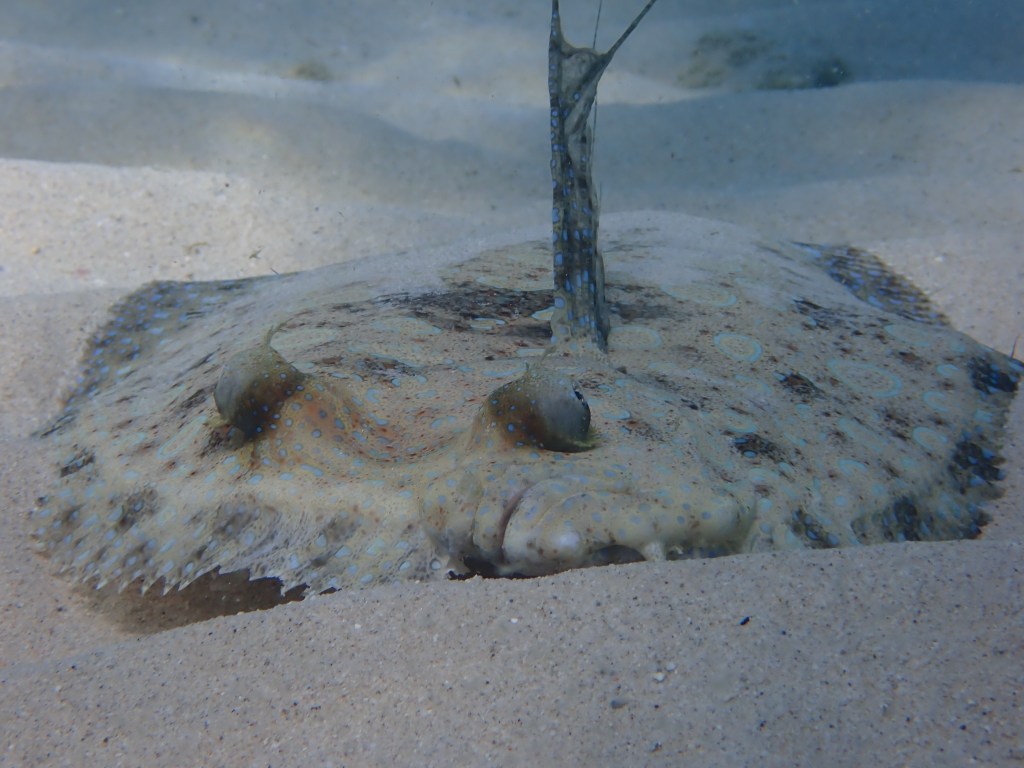
I was so distracted by this little guy that I almost missed the R-rated show behind me–two peacock flounders signaling they wanted to mate. I shot a couple pictures then backed off to let them get on with it.

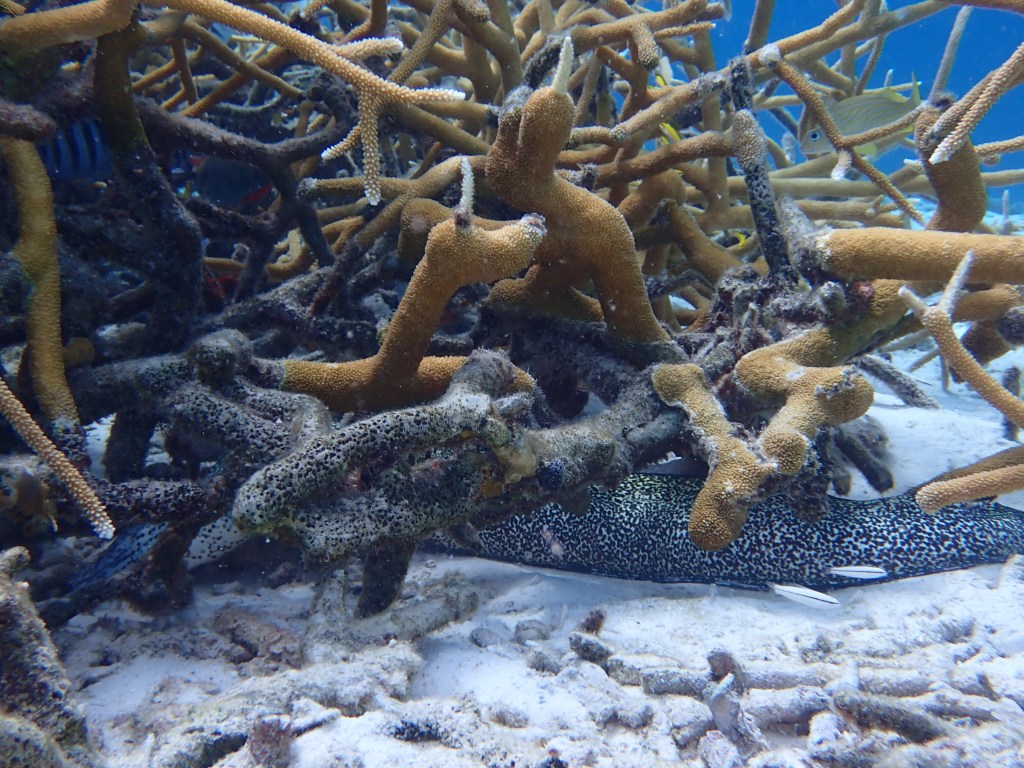
About 50-75 yards out from shore, the bottom starts sloping down. REEF Renewal has another group of coral trees in the area. I also saw my biggest eel yet, in a staghorn patch about 15 ft down next to a REEF tree. The pictures fail to give a view of just how thick it was, because I was too nervous to look for the head. You see that grunt in the top right corner looking at me? Those are about 6-8 inches.

Interestingly, my camera battery died shortly after I discovered the eel, leading me to discover just how important photography is to me. I glumly swam back to shore, dried off, drove to my apartment and collected the spare, then returned to the site. Luckily, the eel hadn’t moved, and hopefully, lesson learned. However, casual theft is an occasional thing, so I hadn’t wanted to take my spare. Good thing the island is so small.

Still, I don’t know that I would recommend it to the average snorkeler that doesn’t have interest in looking around a lot of sand. The depths near the shore are safe but sandy with iffy visibility, while getting to the wall requires a swim. Call it an intermediate to advanced snorkel site.

Bonaire Feb. 2025. Fishermen’s Pier and Te Amo

After the (mis)adventures of Salt Pier, I thought I’d give a shot at another favorite, Lac Cai. When I was there last fall, I was lucky enough to see a nurse shark! I made an attempt to go around the north part of the lake along Kaminda Road to get to Lac Cai Beach and wow, my poor little rental car could not handle the road. I’ve seen logging roads in better condition! So I turned around and headed south. I stopped at Barends Elshout as it looked like it may be a good launch spot, but after observing the large numbers of windsurfers spread out over the cai, I reconsidered and headed back to town. I spent the afternoon alongside the promenade, trying to improve some of my photo quality.

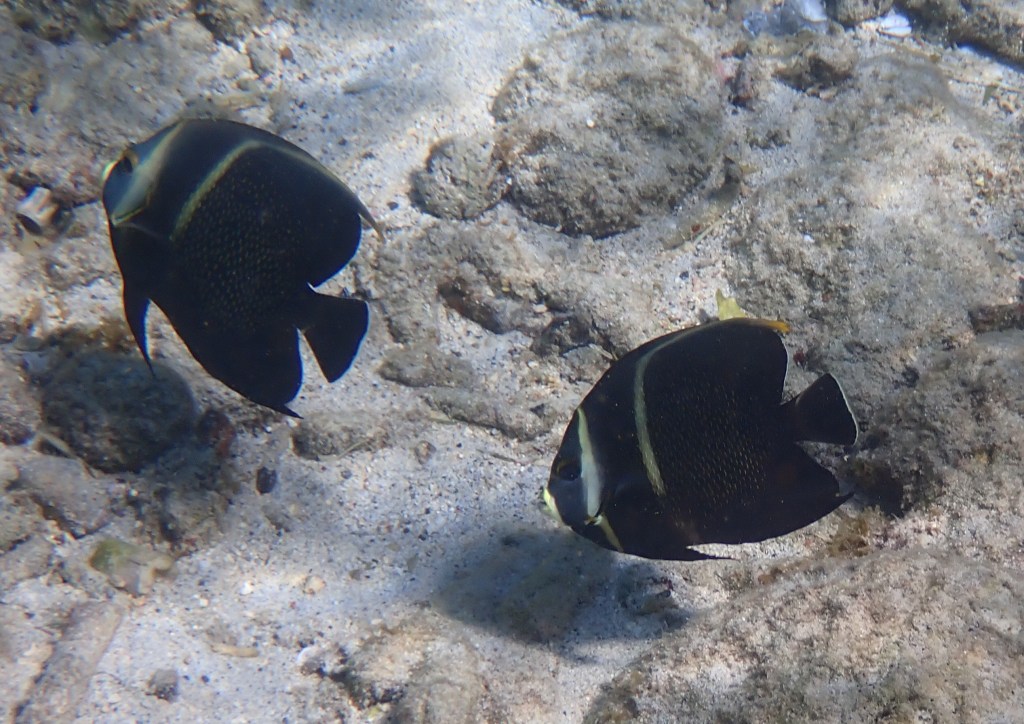
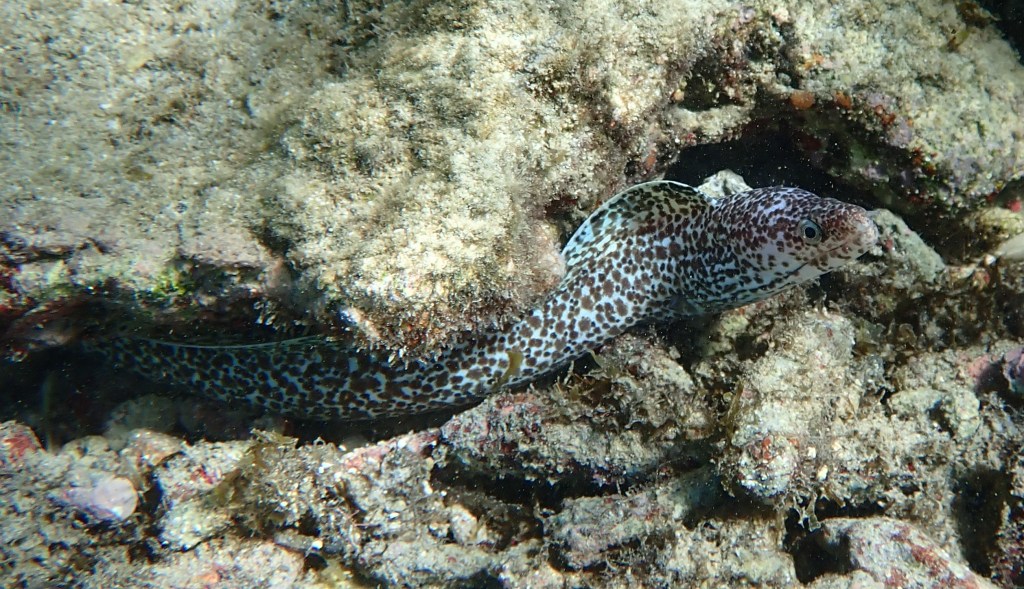
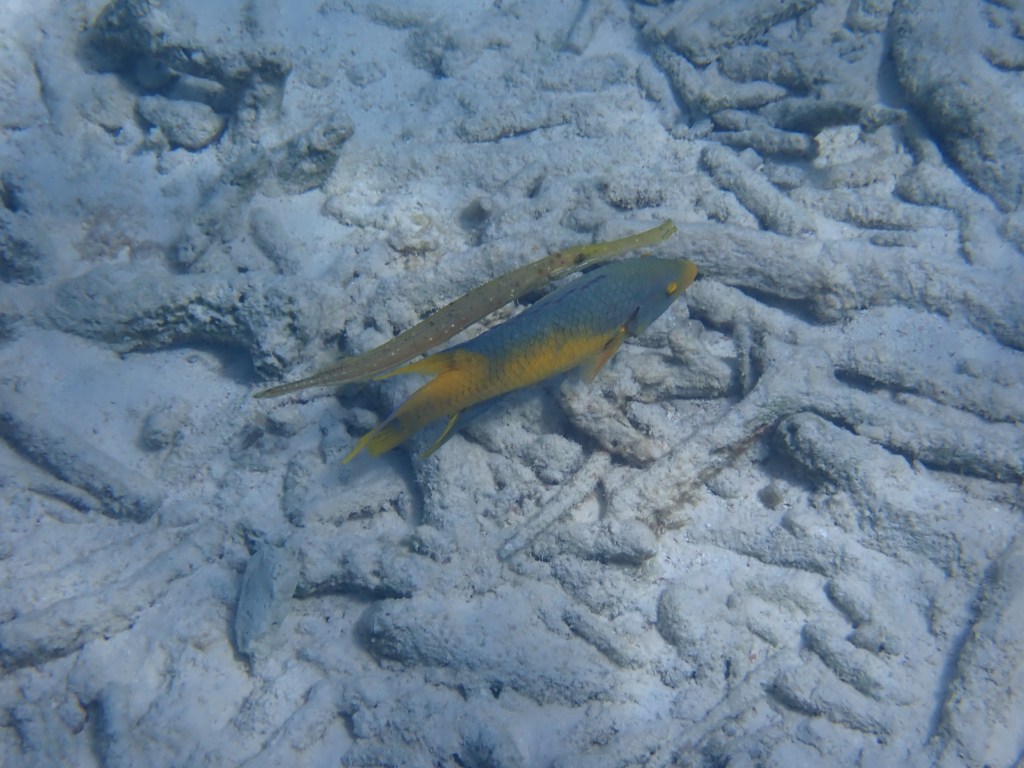
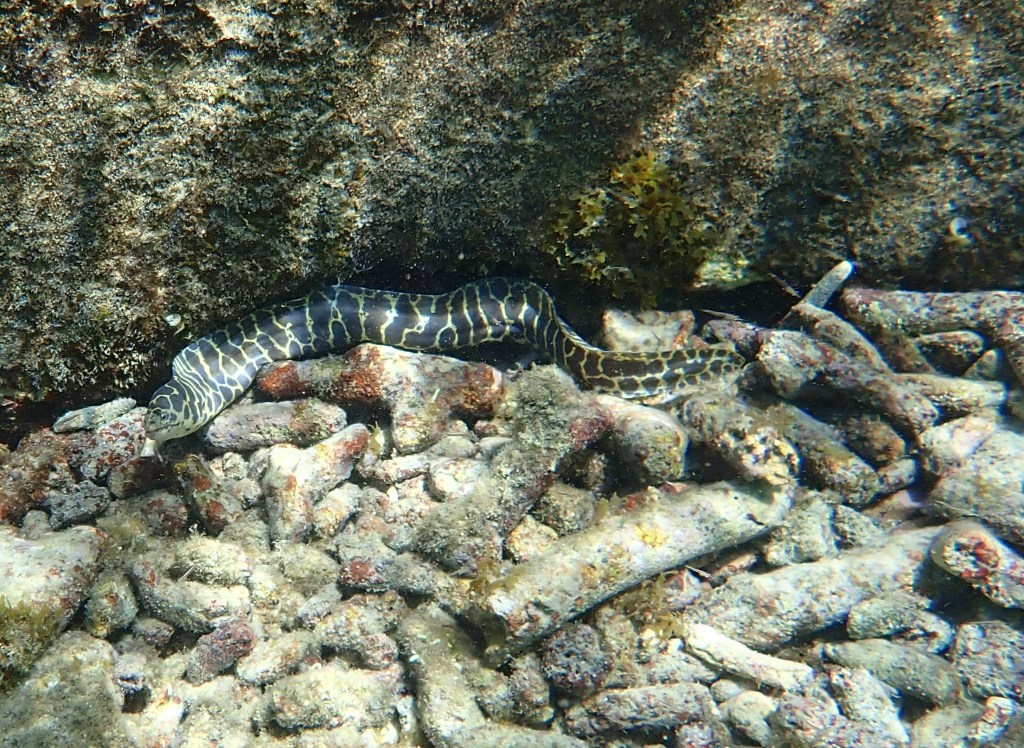
I got some great shots of bigger fish, including my first-ever pearly razorfish, a pair of transitioning French angels, a nice chain moray eel, a trumpetfish ineffectively concealing itself, and a chain moray eel.
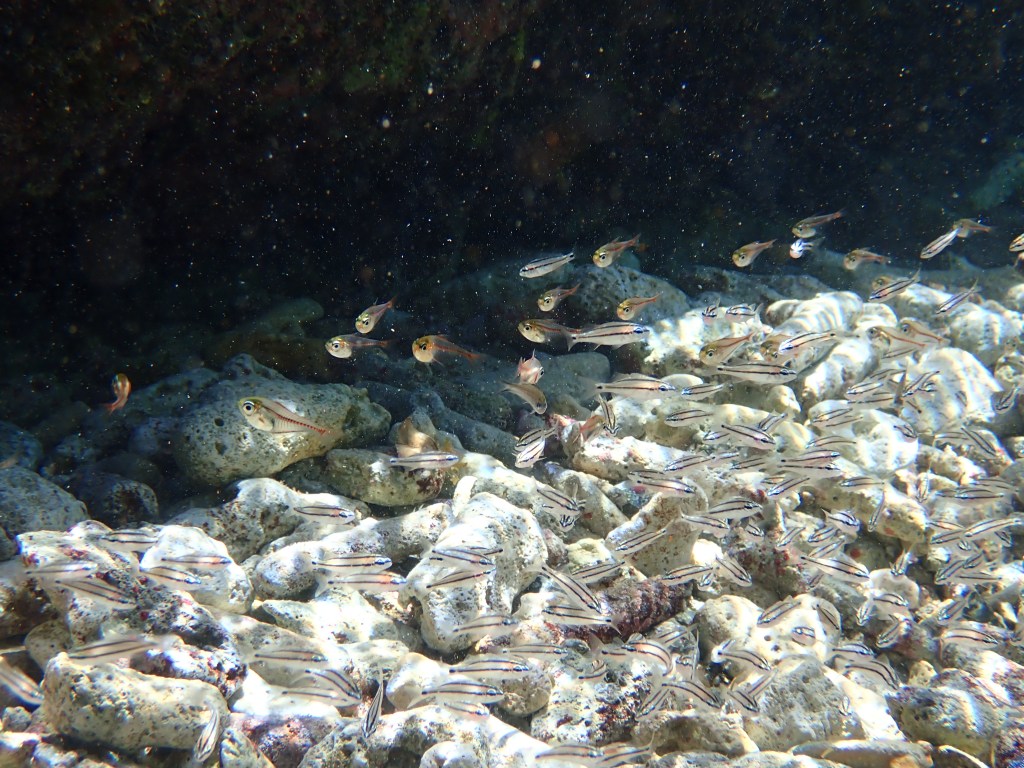
Some amazing shots of copper-colored sharpnose, a small goby with another fish inside, a tube worm family, and some juvenile glass sweepers in the surge, which excited me to no end.

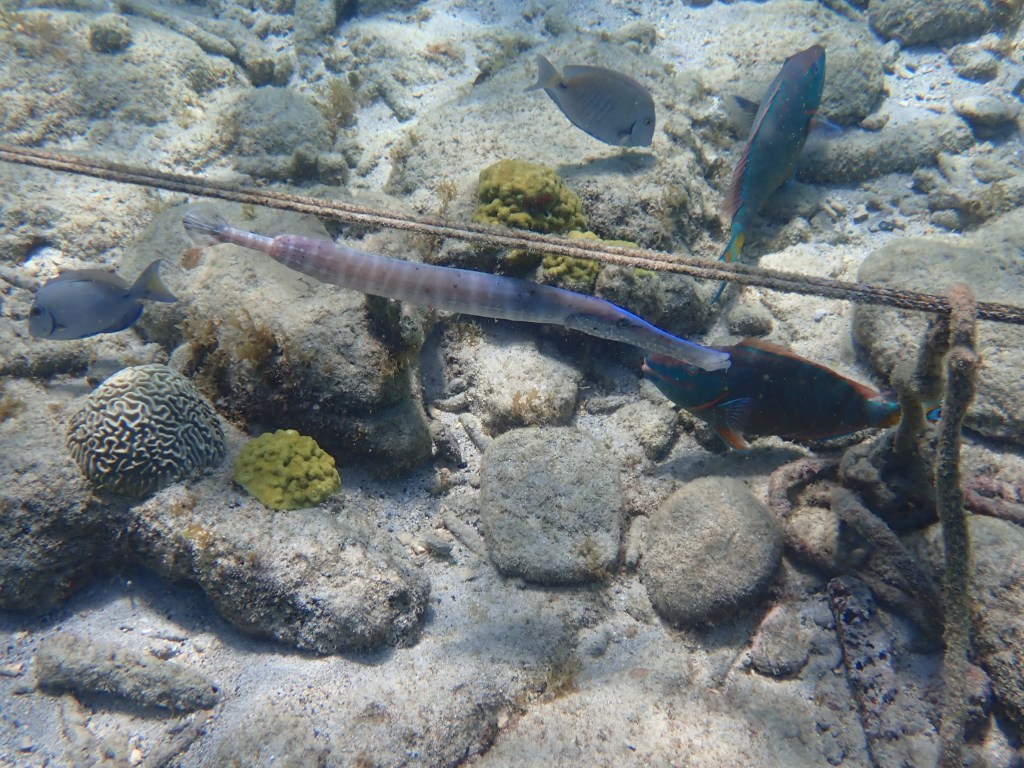
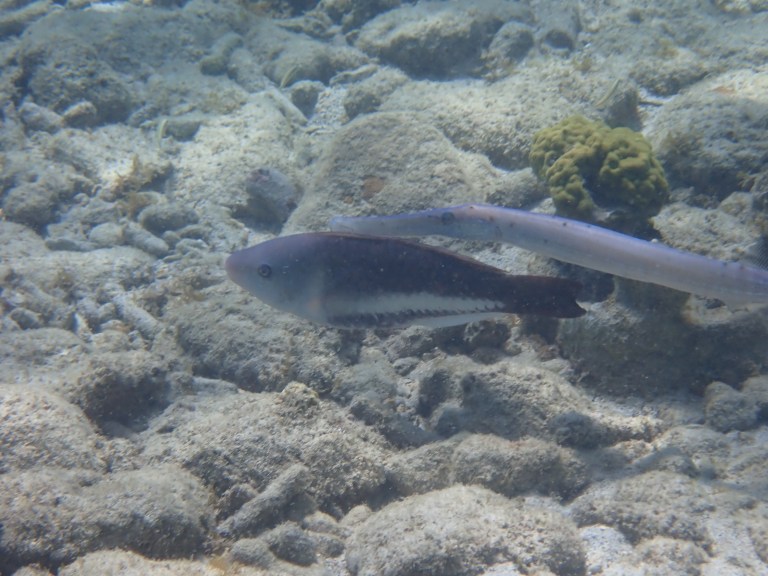
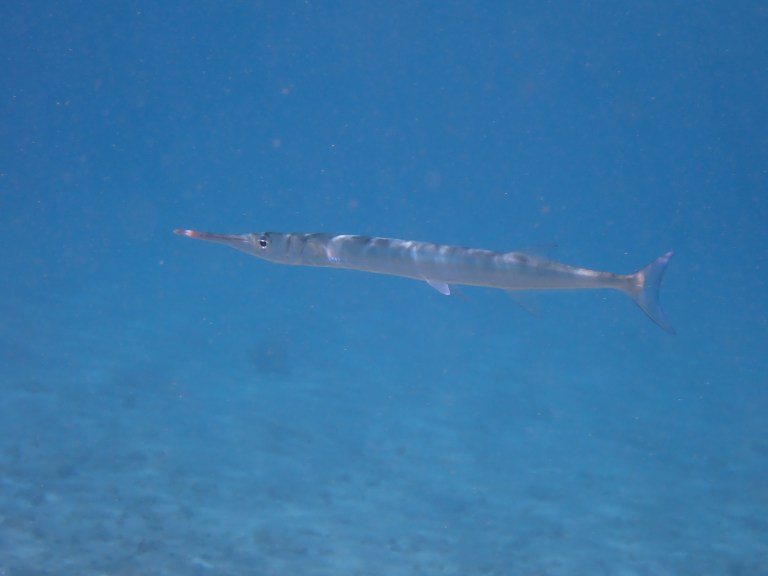
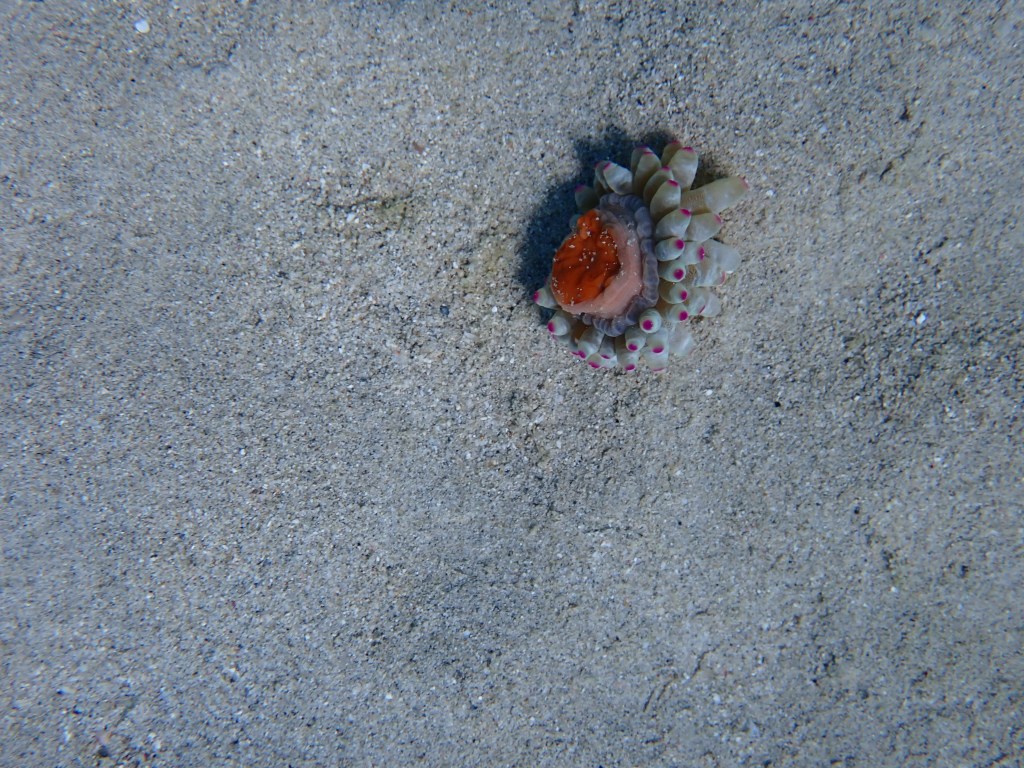
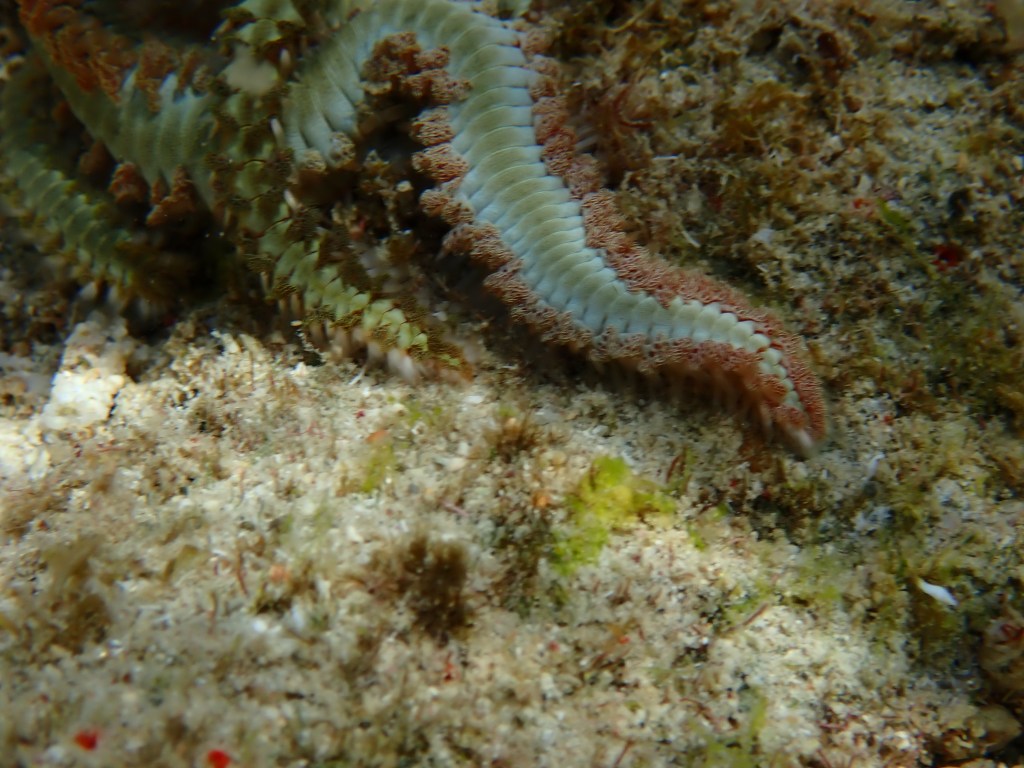
And some curious behaviors, like a trumpet stalking a parrotfish, a needlefish stalking me, a rambling anemone, and one of the most disgusting things I’ve seen, a mass of fireworms wrapped around some fish scraps.

I hadn’t checked out Te Amo yet, so I stopped and had lunch at Stoked Food truck which is conveniently right next to the beach. Warning: the parking lot for Stoked/Te Amo has the worst surfacing I’ve ever seen, so as soon as you pull in, slow down to a crawl. Te Amo is all sandy, so visibility was significantly worse than at the pier, especially as the wind gusts were increasing.

Te Amo is a beautiful sandy beach, the kind you think of when you think tropical beaches. There is a reef parallel to the shore that is in awful shape. Most of the coral is dead, but there are a few live patches.

However, there are still a wide variety of fish hanging out and hunting for crustaceans, I suppose.

Beyond the reef wall is a downslope to the deep, so it can be interesting to go along there and note some deeper-water fish.

I did also get a hilarious picture of a redlip blenny who looks like he’s posing for a dog show.

Freediving

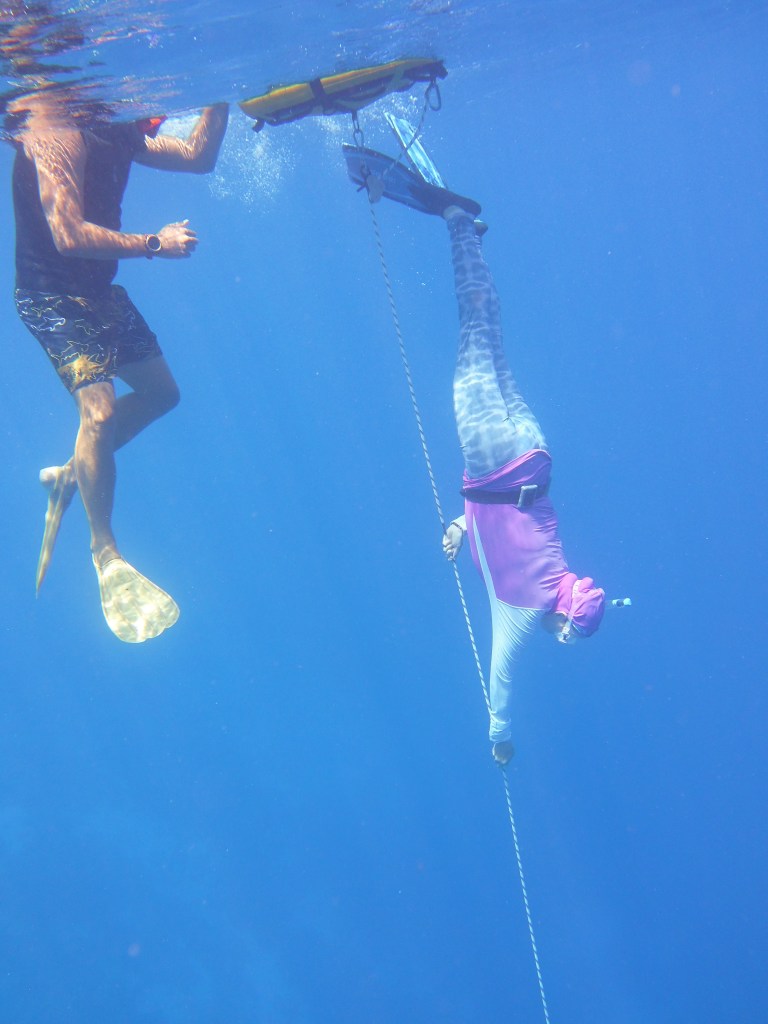
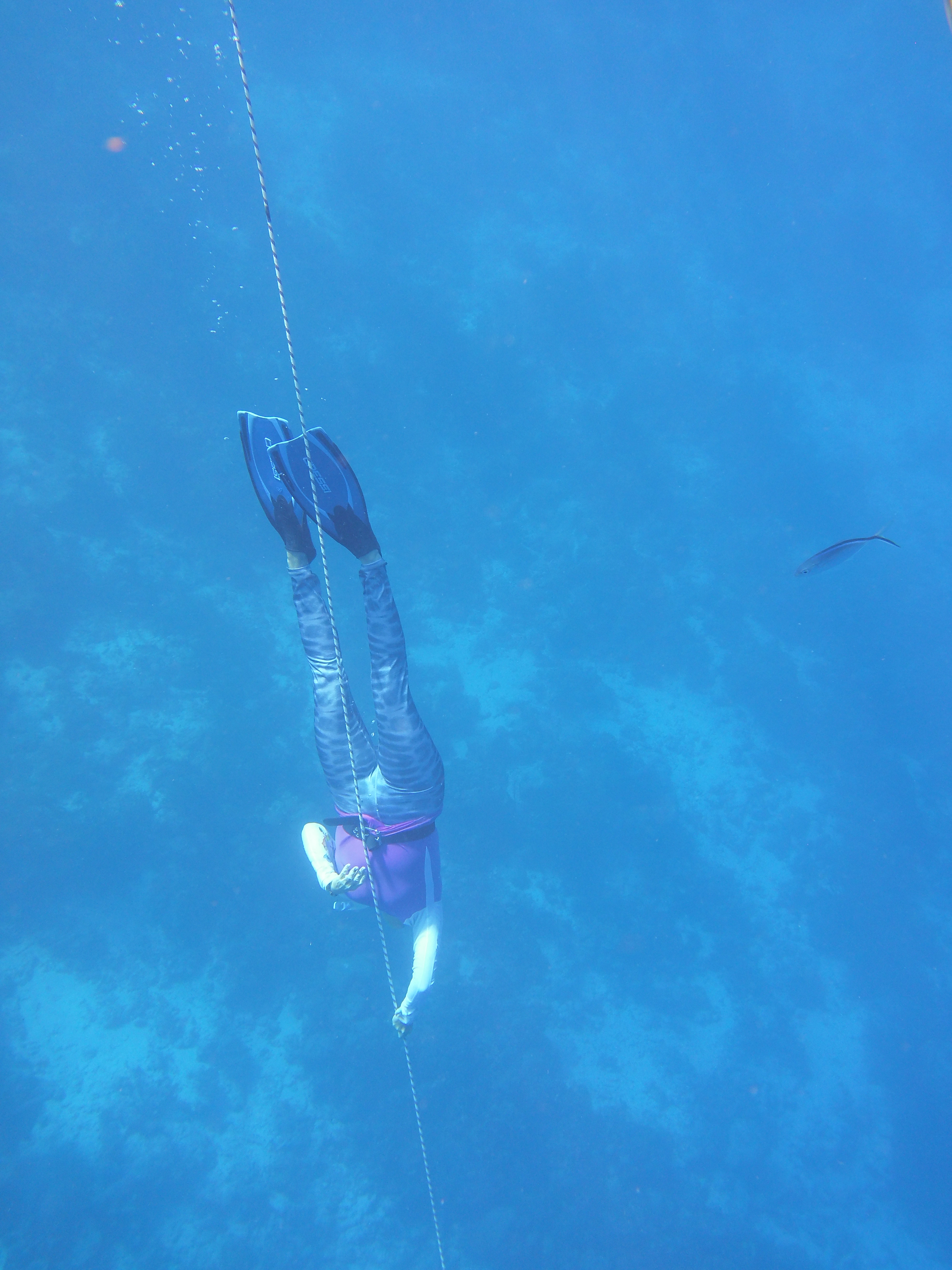
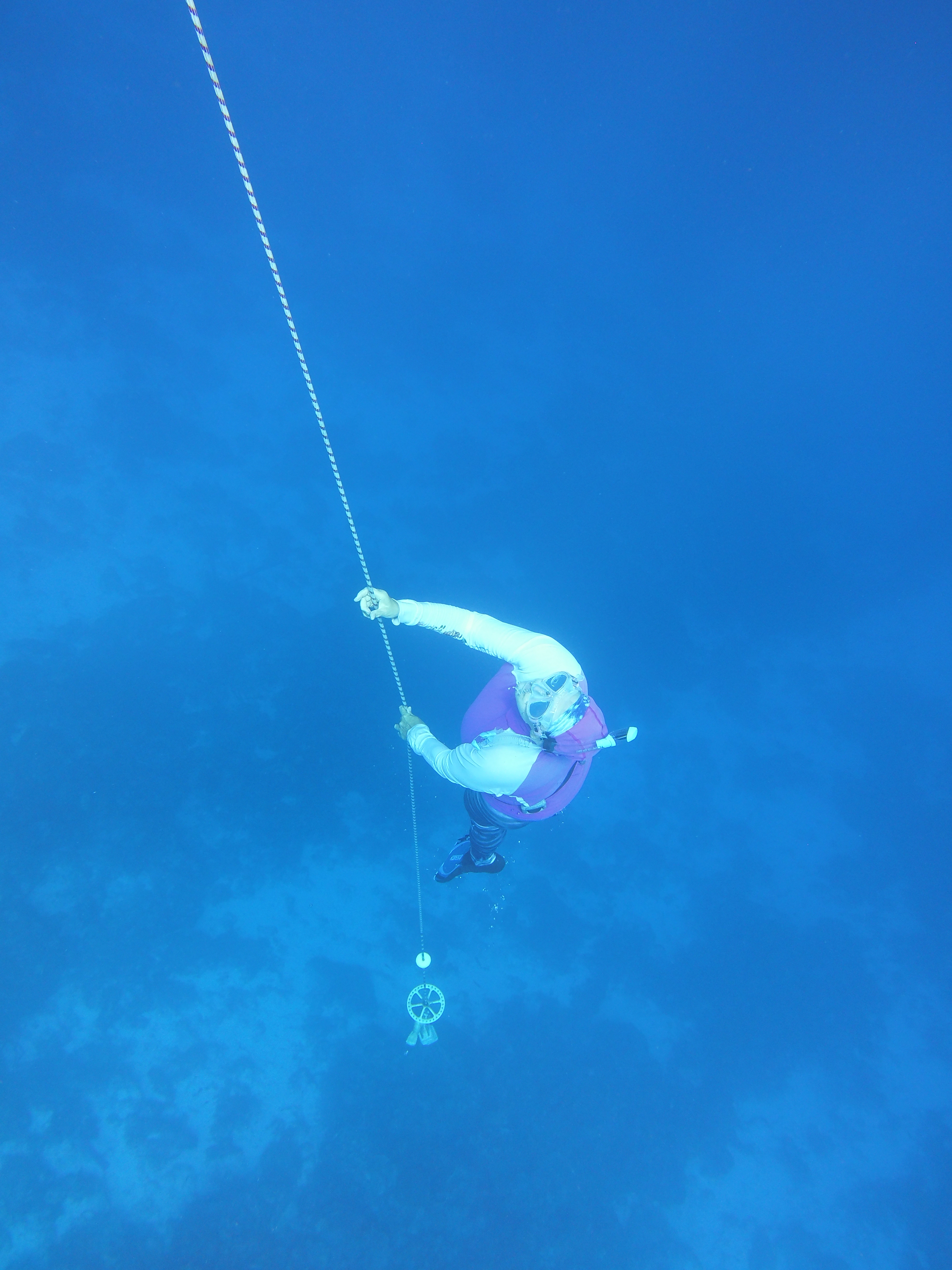
Freediving is the art and science of diving underwater without SCUBA gear. I never intended to be a freediver, exactly, but I did want to get up close and personal with my photos. It started to occur to me that there were probably techniques to make it easier, and more importantly, safer. A number of online friends mentioned it, but as I’m in farm country, I have to save practice for vacation. Last September, I started the AIDA Freediving course.

First we did some meditation on the beach, then we practiced breath-holding.

On to the actual diving!

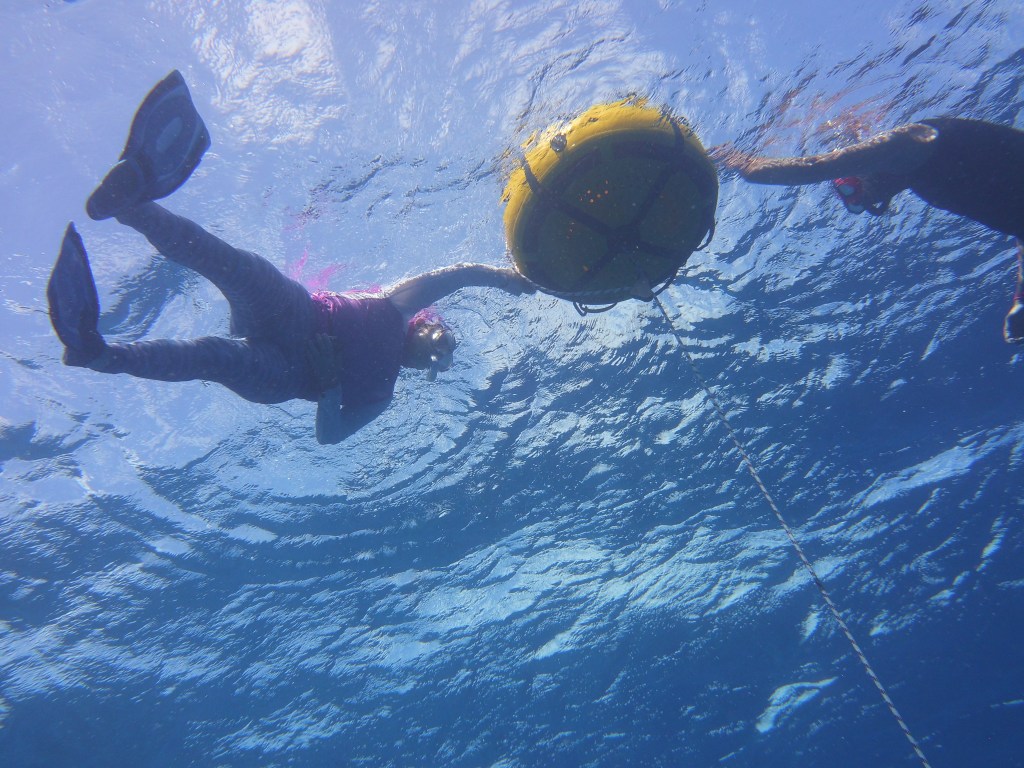
As you advance in freediving, the AIDA course is focused on increased time and comfort level of breath-holding. My impression is that it helps one safely identify their limits. However, diving deep is just not where my focus is. so I decided I did not want to pursue it farther at this time. I do have a much better idea of what safe swimming means, however, and how to approach my multiple 8 to 15 foot dives.

Bonaire 2025. Salt Pier

I’ve been lucky when abroad to find other snorkelers. This visit, I met someone from the Netherlands who suggested Salt Pier, where the Cargill Salt ships dock to be loaded up with salt from the saltwater flats. If a ship is docked or due, they will close the area around the pier for the day. In general, Salt Pier is quite deep and basically open ocean, which means that when it is windy, you will feel it. When I went, I think the wind was 19-20 mph with gusts, so besides the choppy swim, the clarity was significantly reduced for photography.

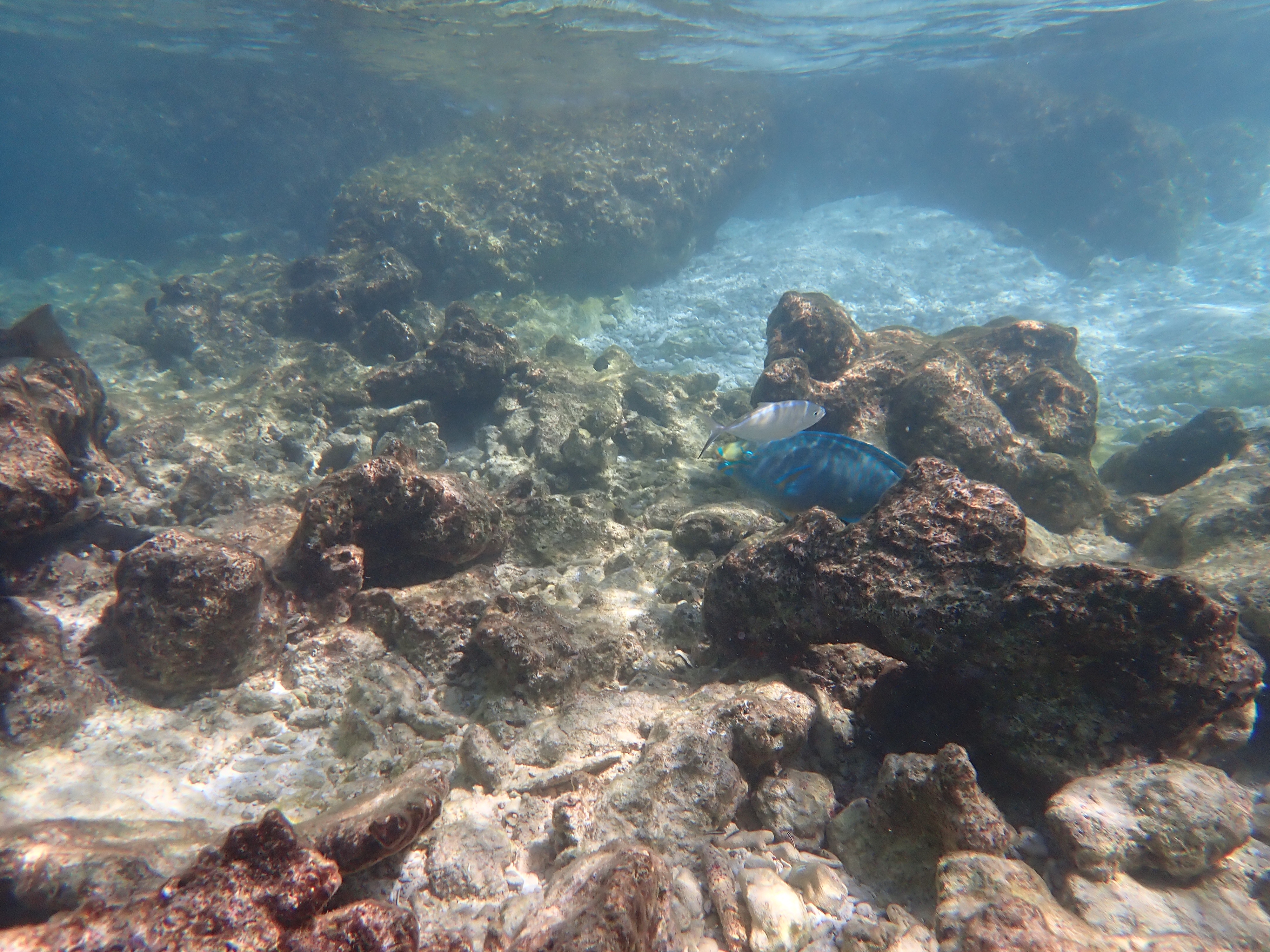
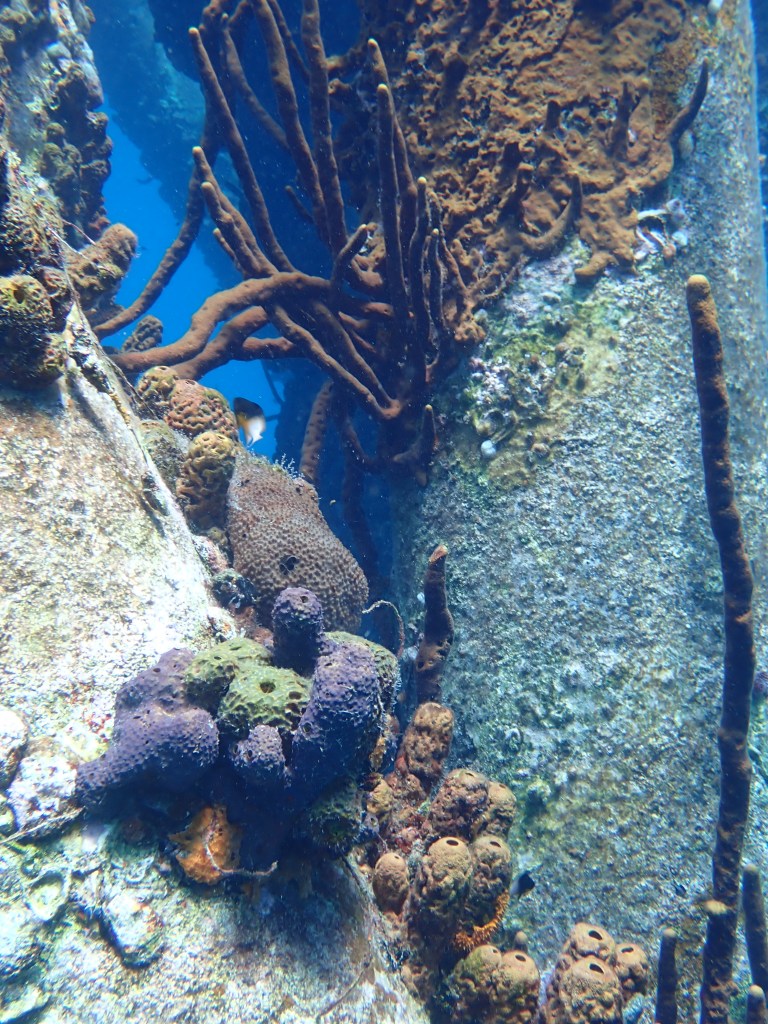
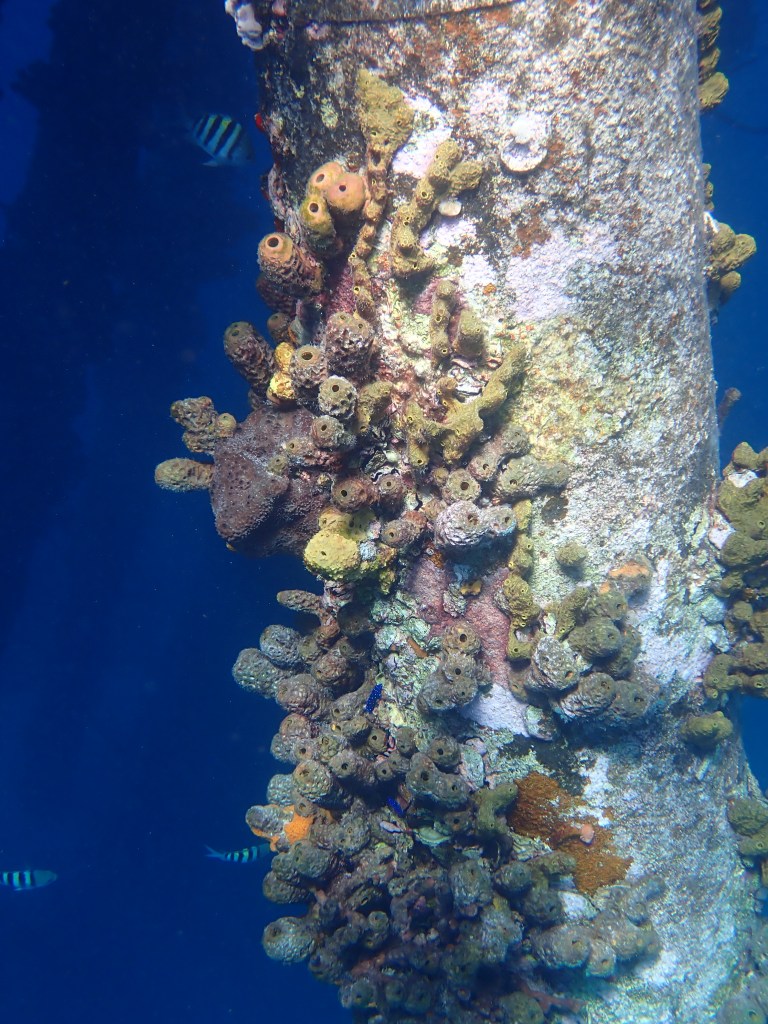
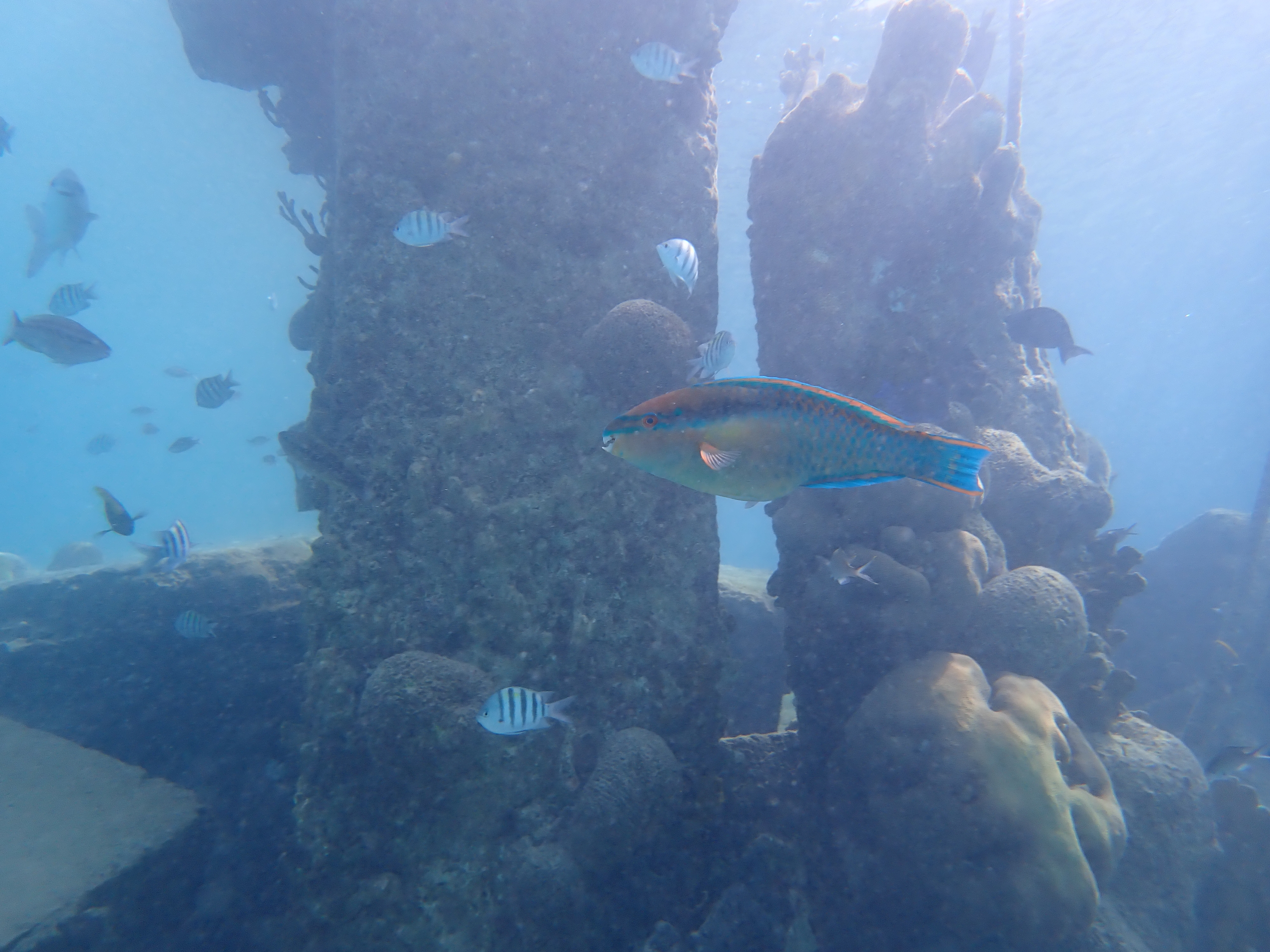
I absolutely love the area around the pier pilings, the ghostly shapes in the depths and the wildly colorful sponges on the close pilings. Salt Pier is often mentioned as a place to see turtles, but I had never seen mentioned the marvelously diverse amount of sponges growing on the giant pilings.

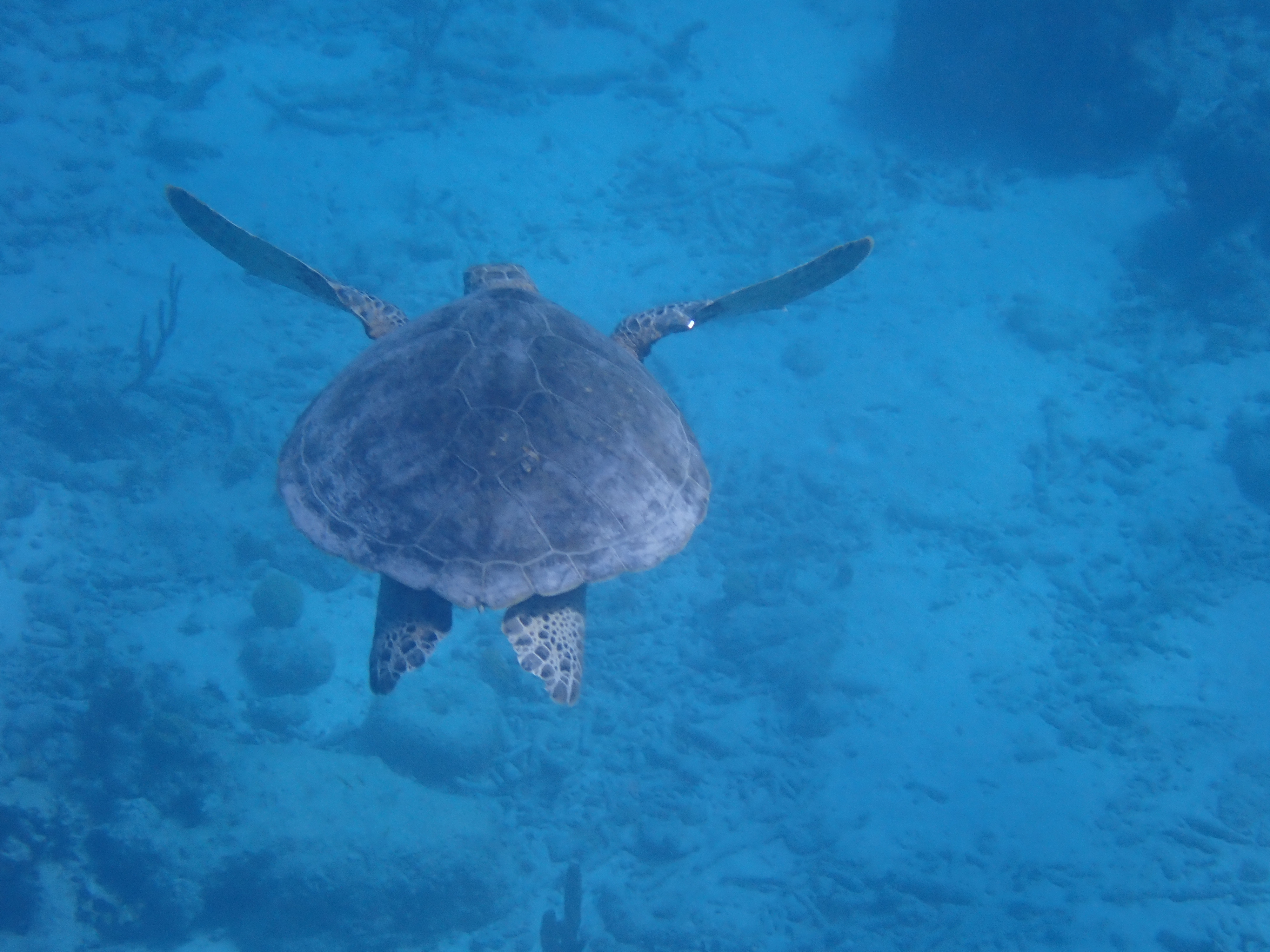
It is an area known for turtles, interestingly. I’m not sure what draws them there over other places. I saw a very small one as well as a larger tagged one on this run.

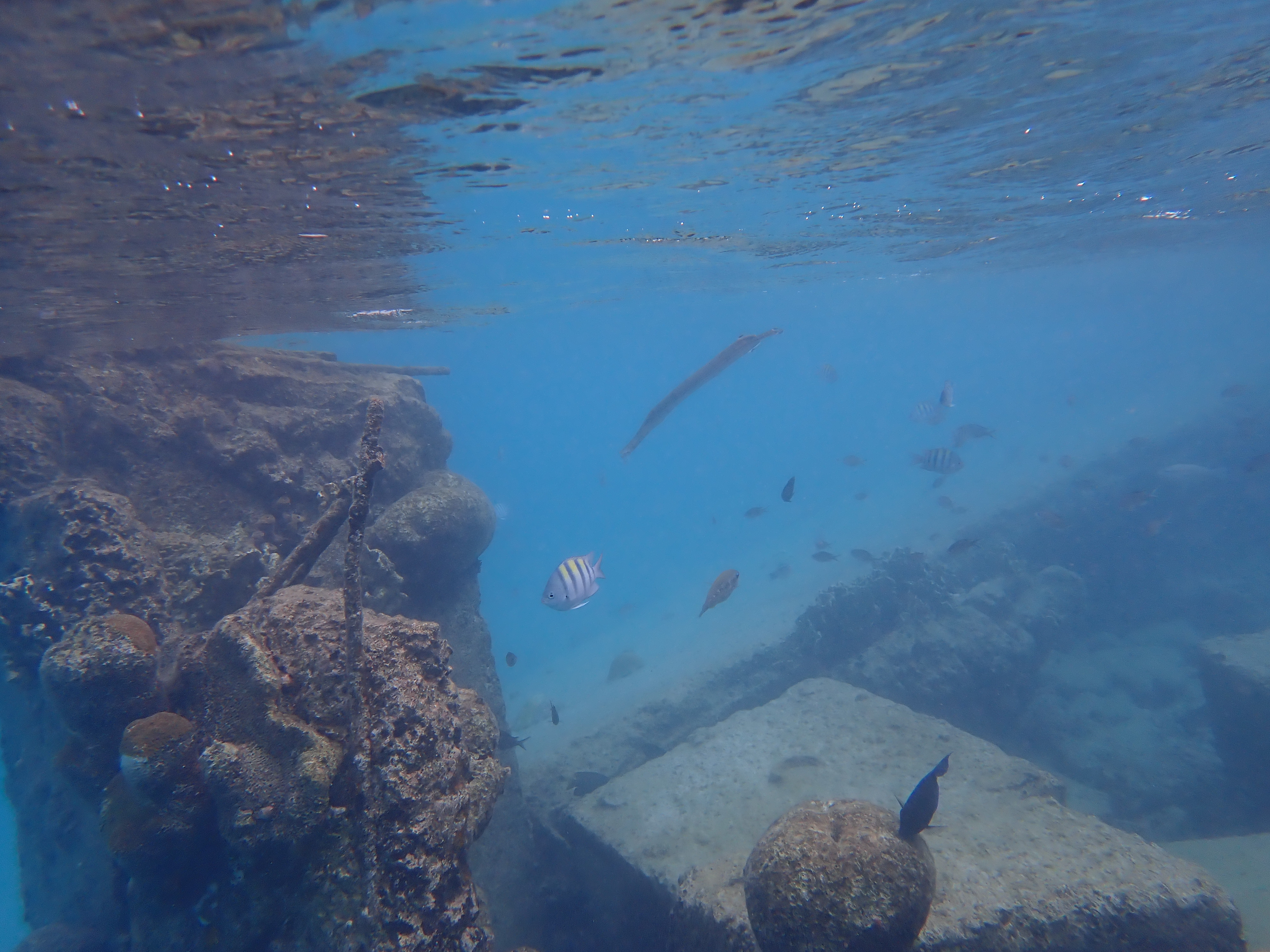
Also because of the deeper water, I usually see a barracuda as well as larger schools of larger fish, sheltering under the pilings. This picture isn’t great, but you can see the barracuda swimming through. Though numerous sources suggest a snorkeler has nothing to fear, unless wearing shiny bits of metal, I try to keep a respectful distance.

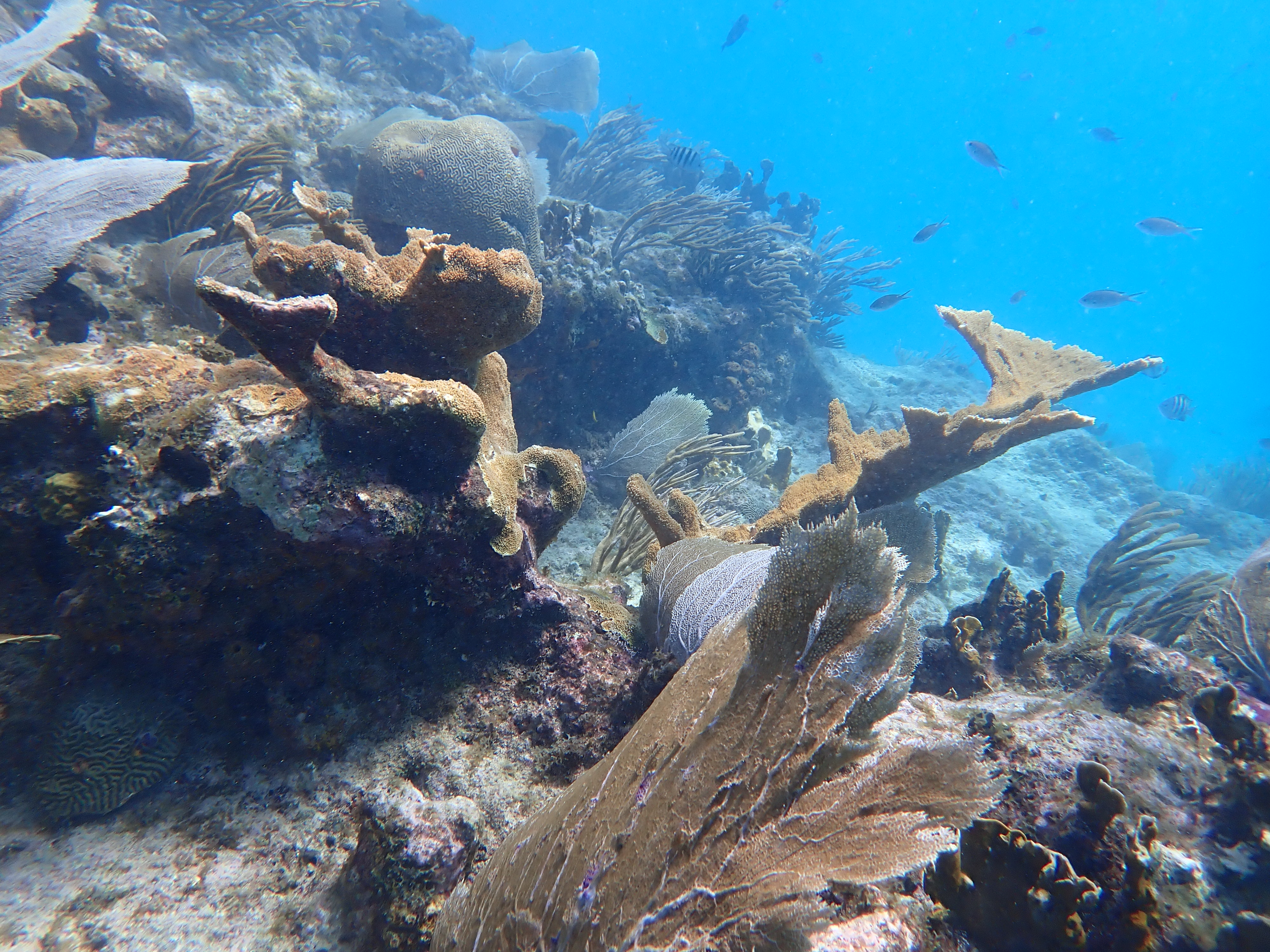
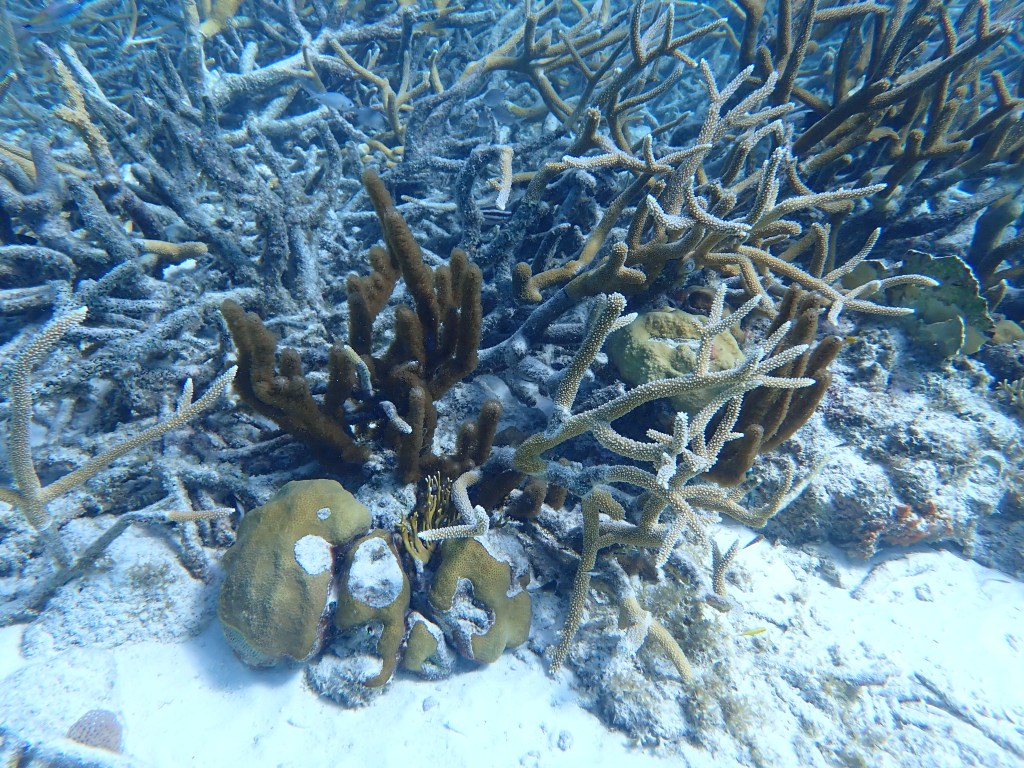
Unfortunately, most of the shallow areas have experienced a lot of coral die off. To the right of the pier is an area that used to be covered with staghorn coral. I was happy to see there was some surviving, but as you can tell, it is struggling.

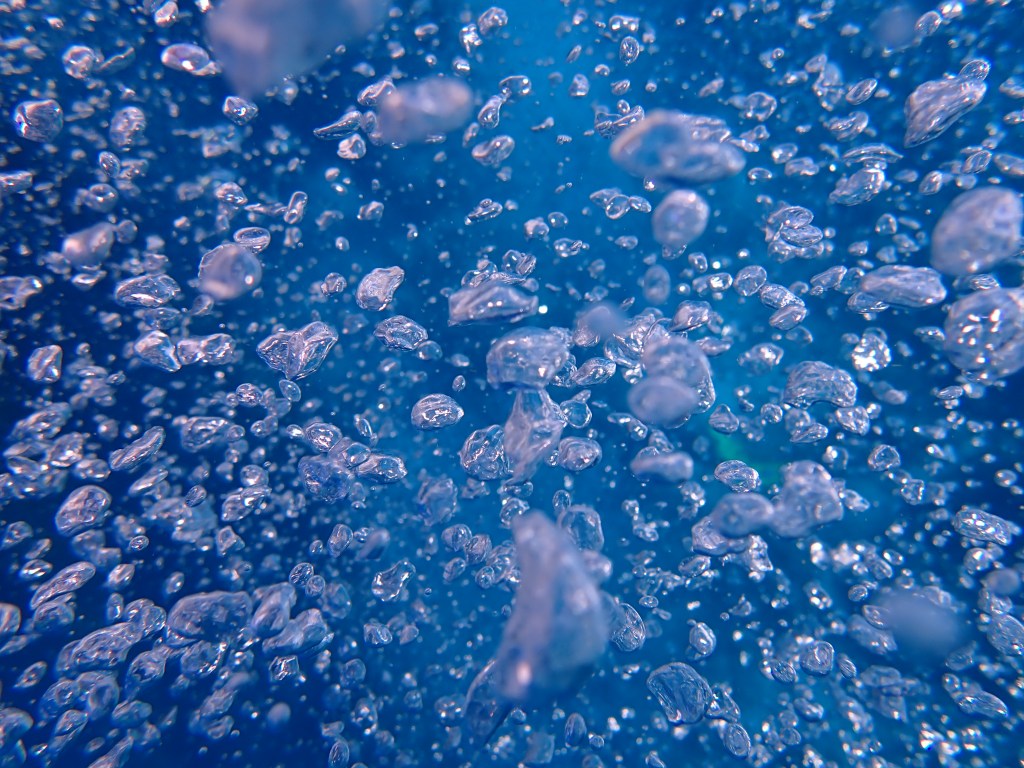
Salt Pier also has a LOT of divers. My friend and I had fun playing in their bubbles as they swam underneath us at the pilings.

Getting out was a challenge, as waves had picked up. I got shoved into the limestone boulders, and was extremely glad of my full-body rashguard from Waterlust. Only my hands and feet got scraped. That was probably the worst scrape-up I’ve ever had.

Hello World!

I’m a devoted snorkeler and swimmer who has finally found a way to share some of my pictures. I have hung out on Bonaire and Curacao Facebook and Reddit groups, particularly for snorkeling, and now that I’ve been to both a few times, I find myself sharing some of the same thoughts. How much simpler to share in one place! Plus, pictures!

One of the most challenging things about snorkel trips is how reports vary. I think this is–of course–due to our perspective. I’ve only been tropical snorkeling since about 2018 or so, so my perspective is very different from people that have been doing it much longer. There are a number of reliable studies that show clear, marked decline in Caribbean coral, for various environmental and epidemiological reasons. I’ve learned for many people, they go on cruise ship type excursions and are interested in megafauna (turtles) or places with ‘lots of fishes,’ so their reports differ quite a bit from the ones I’m always looking for. I’m a swimmer, freediver, and an amateur biologist and photographer, so I’m always looking for a more diverse experience.

I’ve also travelled to the Florida Keys and St. John, USVI, finding both kind of a bust for snorkeling (although I did run into a pod of manatees heading to a bridge channel, which was freaking amazing!) Interestingly, for two of those three trips, I dealt with Tropical Storms/predicted hurricanes (perhaps another blog post), so I’d be willing to give them another chance. That is one of the joys of Bonaire and Curacao, in that they lie outside the hurricane belt.

I will probably never scuba dive, because after one of my Florida snorkeling trips, I developed a deep vein thrombosis that turned into blood clots in my both my lungs. I recovered just fine and my lungs and heart are healthy, but there are so many physiological stresses that go into diving that I don’t feel like pushing it. Reports that are coming out of Hawai’i about flash pulmonary edema in snorkelers–and that have probably happened in Bonaire and Curacao as well, judging by the occasional articles of divers and snorkelers dying–should remind us that us air-breathing humans can’t take our physiology for granted, particularly when coupled with air travel.
Anyways, I welcome feedback about the site. I was using the ‘slideshow’ format for some of these pictures, but I discovered it wouldn’t work on my mobile version of WordPress, so I’ve moved away from that feature, though I liked it as a way to incorporate a group of pictures under a theme.

As I’ve snorkeled more, I’m getting more comfortable with taking videos to give a full-reef feel, although I am definitely not skilled in video editing. So I’m open to requests there as well.

I’m also open to hearing about your experiences in the areas, or in general. I love learning!
a peacock flounder signaling romance on its mind

Bonaire Feb. 2025, Oil Slick and Bari Reef

A week-long, solo adventure in January. I stayed north of the main town, a few minutes walk from Oil Slick dive site. Unfortunately, it was quite windy, 18-21 mph the week I was there. A lot of the dive sites are unprotected from winds, including Oil Slick. It is about 8-10 feet deep right off the platform, so you have to be comfortable with a ladder and with putting on gear while treading water.

One of the main reasons I wanted to scout around Oil Slick is that I donated money to Reef Renewal Bonaire create a coral tree. In the past year, Reef Renewal has been growing the organization and exponentially increasing their efforts to outplant coral through in-ocean propagation. In the old days, they created floating ‘trees’ often made of PVC. Most trees focused on staghorn coral, a type that is friendly to this propagation and is often decimated by storm events. I don’t think I found my tree, but you can see what they look like. It looks like RRB is giving brain or maze corals a try.

Oil Slick is really too deep for enjoyable snorkeling, but had a lovely bottom with large boulder corals and giant sea plumes. In many of the pictures you can see how the coral is struggling with disease, no longer a uniform color. Due to the wave action, there’s lots of particles blown up in the water even though there is relatively little exposed sandy bottom.

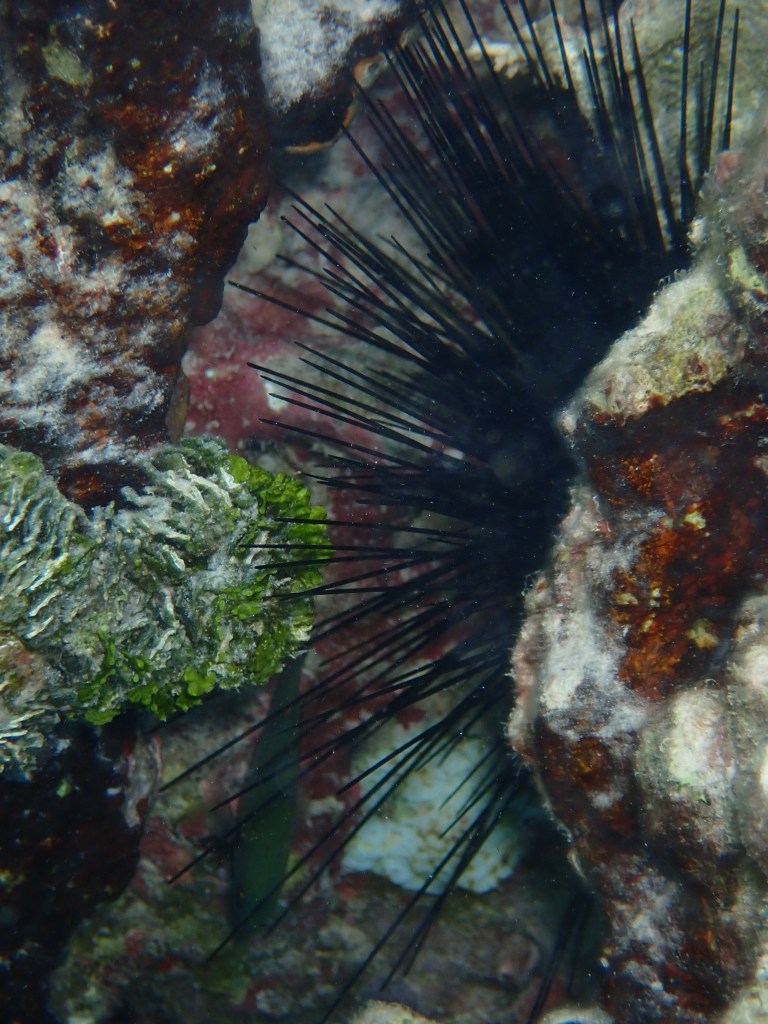
First stop for me is always Andrea I, historically one of my favorite areas to snorkel on Bonaire. Unfortunately, Stony Coral disease has continued to make inroads on the larger boulders and to my surprise, the fire coral as well. When I first arrived on Bonaire, I was surprised by how much fire coral there was. On my last visit, it seemed to be remaining healthy, but on this one, I saw definite die-off along with bleaching heat-stress. I think there is significantly more algae growth. It still has a lot of parrotfish and damselfish which love to eat algae. Sea urchins also seem to be making a comeback, which is probably good as they are algae eaters as well.

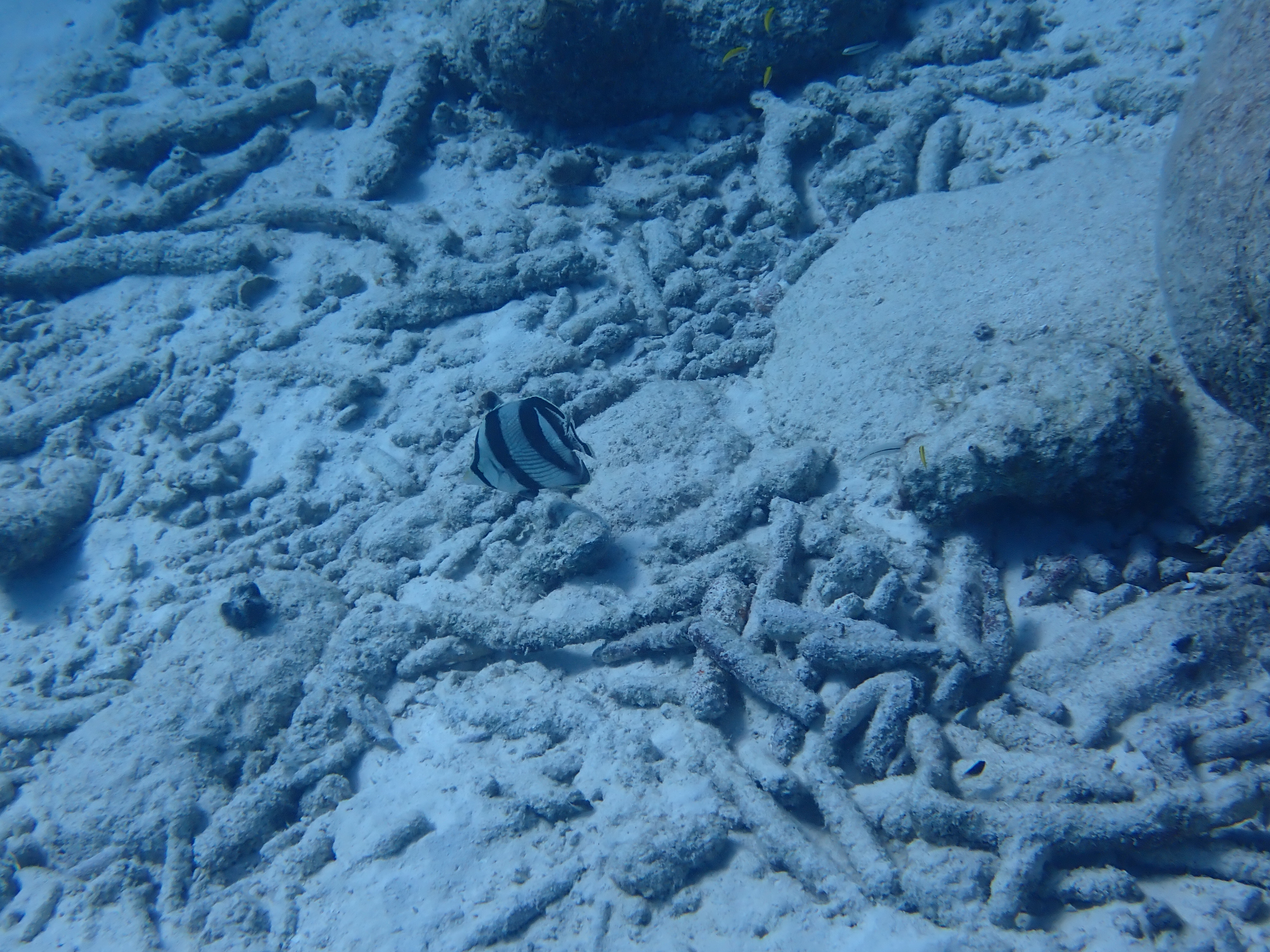
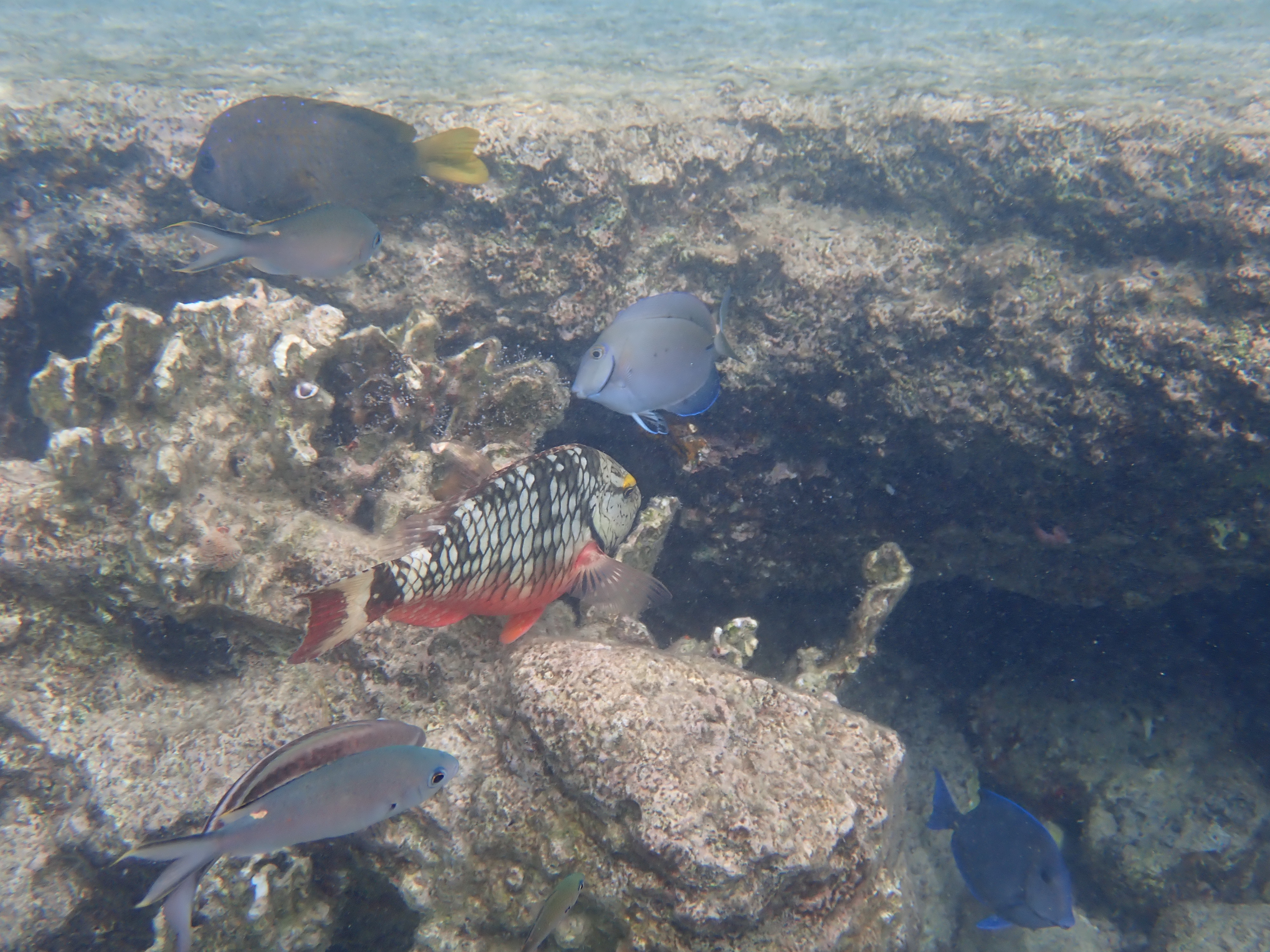
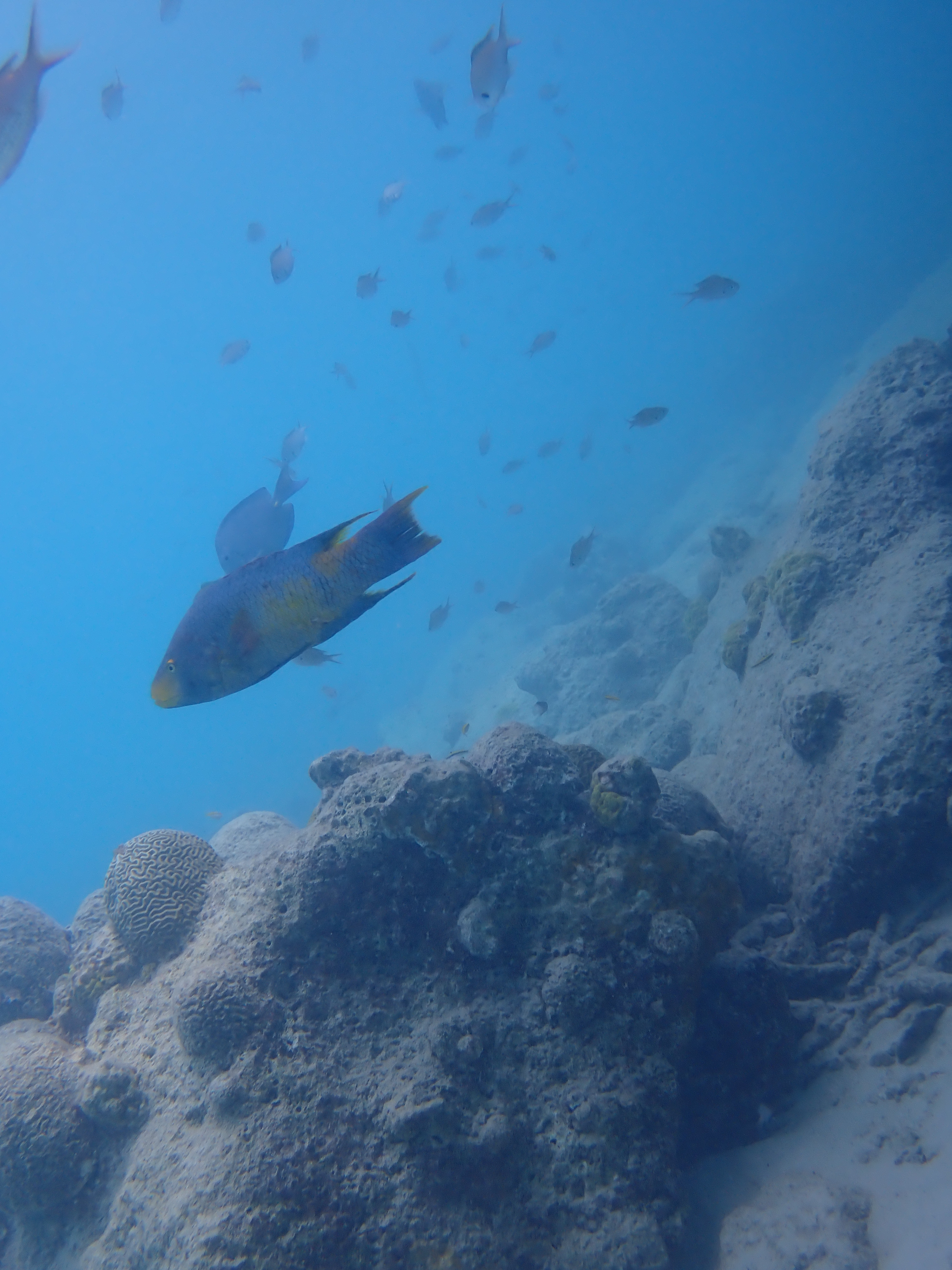
There was decent fish diversity, with a number of different parrotfish–yellowtail, redtail, Queen, princess, and rainbow–damsels, a few spotted trunkfish and orange spotted filefish, lots of tangs, sergeants, grunts, and goatfish, a few yellowfin mojarra and bar jacks, and even a pair of banded butterflies, a Bermuda chub and a scorpionfish.

The next day I stopped into town and my now-favorite dive shop, Private Divers Bonaire, and picked up some weights. They are incredibly easy to deal with and rely on a delightfully old-fashioned honor system. Weights help me freedive. More on that in a separate post, but hopefully you’ll notice improvement in photos. I certainly did.

Since I was in town, I went to Isidel Beach Park, a new park with a disability ramp into the water to check it out. I think the area in front used to be called Bari Reef, which also extends to the front of Chogogo Beach Resort. Chogogo is a monstrous money-making resort that did not do just stewardship towards beach construction. They trucked in tons of sand for a sandy beach, and promptly lost it to the first storm that went through. The water quality shows here, with poor visibility in photos with any distance. However, there’s an artificial reef to the left of the walking ramp that attracts a nice variety of fish. I’ve noticed structures of any sort provide a basis for corals, sponges and algae to cling to, which in turn attracts more fish.

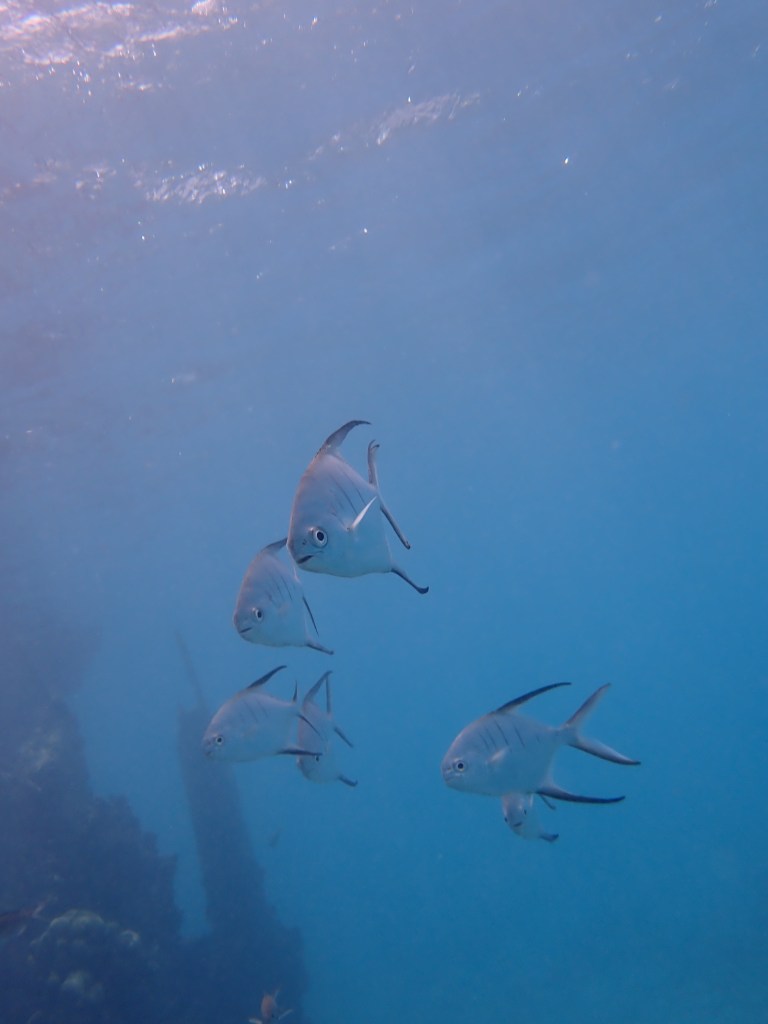
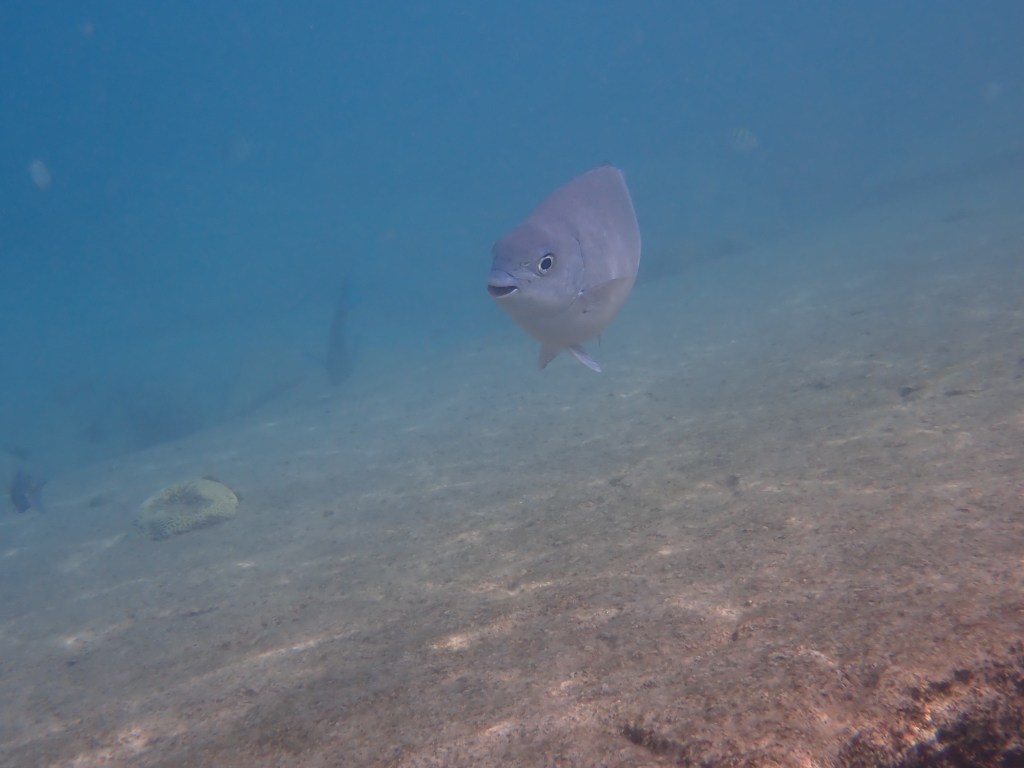
Actually, I found the fish hilarious. They were definitely accustomed to snorkelers, and acted more curious than frighted. I acquired a school of palometas that seemed confused by me being below them.

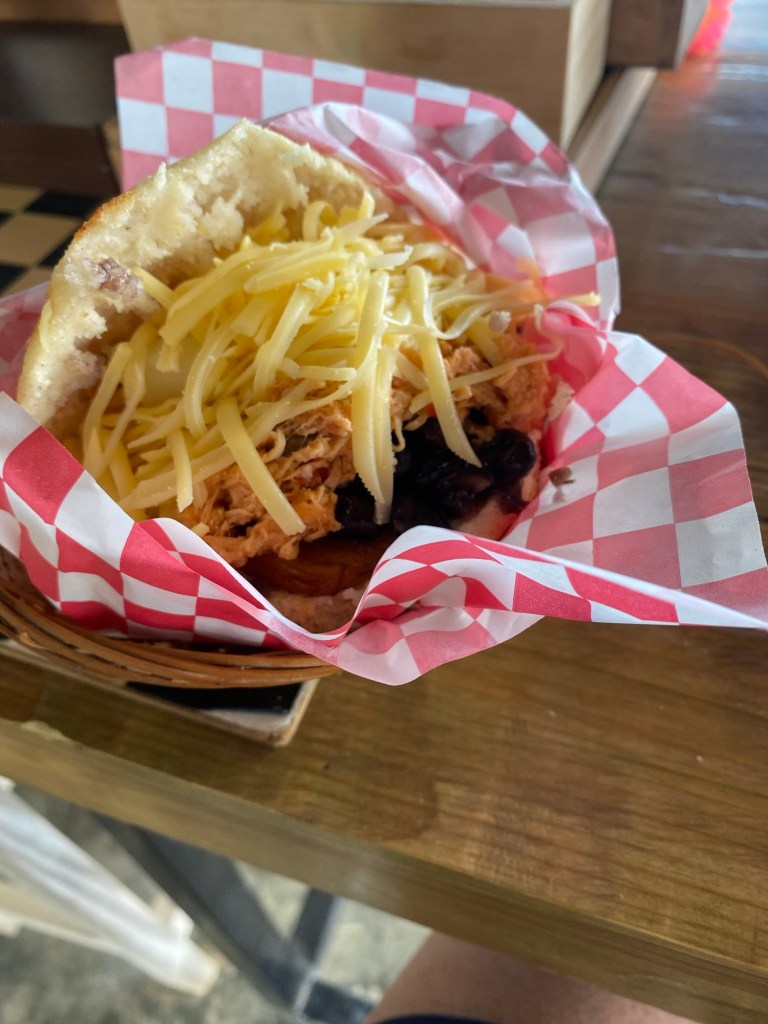
A very filling lunch at Yanni’s Arrepas, a popular and inexpensive spot,