
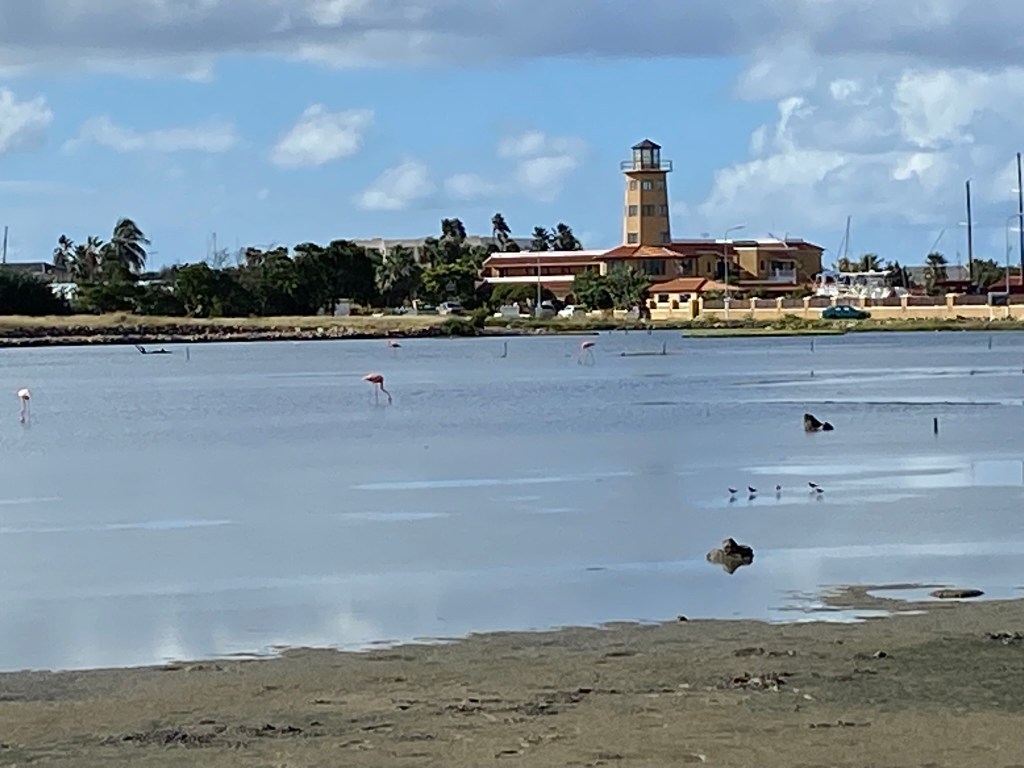
My first time on Bonaire, I decided to hire a local guide. I had some ideas where to go, but what I wanted was someone who knew the ocean landscape: currents, depths, wildlife, and maybe even biology. Our first stop was a water retention pond in town known for flamingos. The marina is across the street here. It’s hard to get close, because there are mud flats leading up to the water area.
When you ask people where to go in Bonaire, they will almost universally recommend 1000 Steps. There aren’t really 1000 steps; the story goes that it just feels like it after a long dive and when carrying scuba gear. Lucky for me, it was only a bag of snorkel gear. Beautiful-Bonaire has a picture that captures the access.

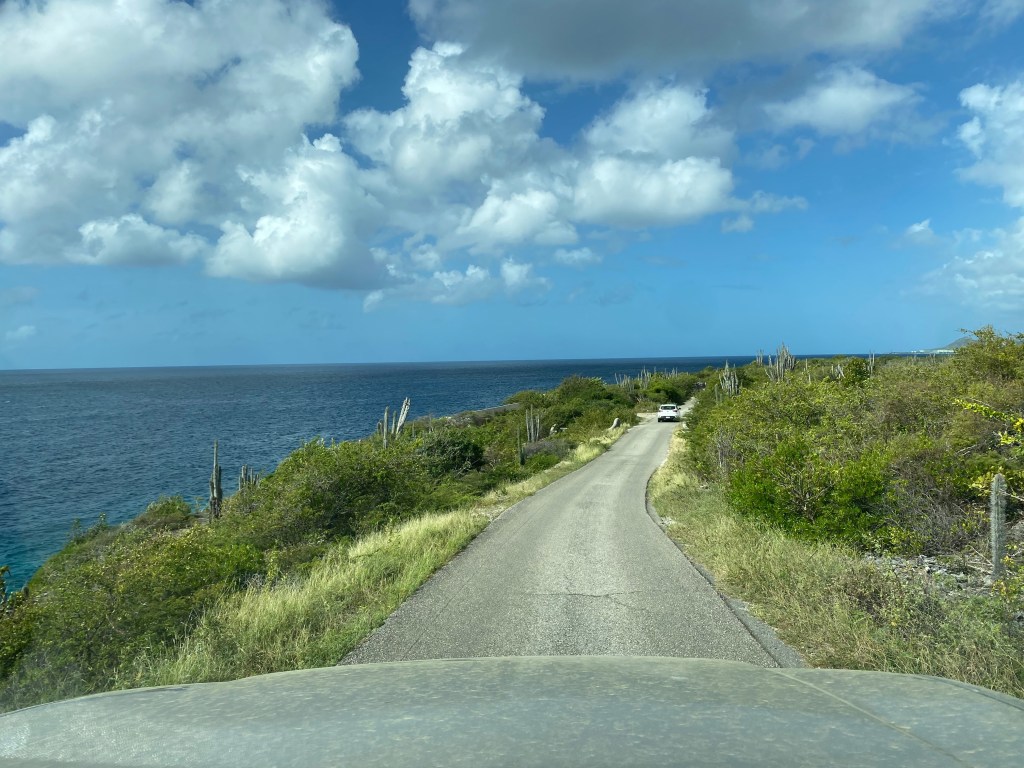
Because it is so recommended and has a sandy apron making water entrance easy, it is extremely crowded. Below are people starting to park along the road on the approach, as the small parking area is easily overwhelmed.

You can also see how delightfully narrow that road is. Technically, it is two way, but past this point it becomes one-way, committing the driver to a long route through Rincon and around the eastern side of the island back to Kralendijik.
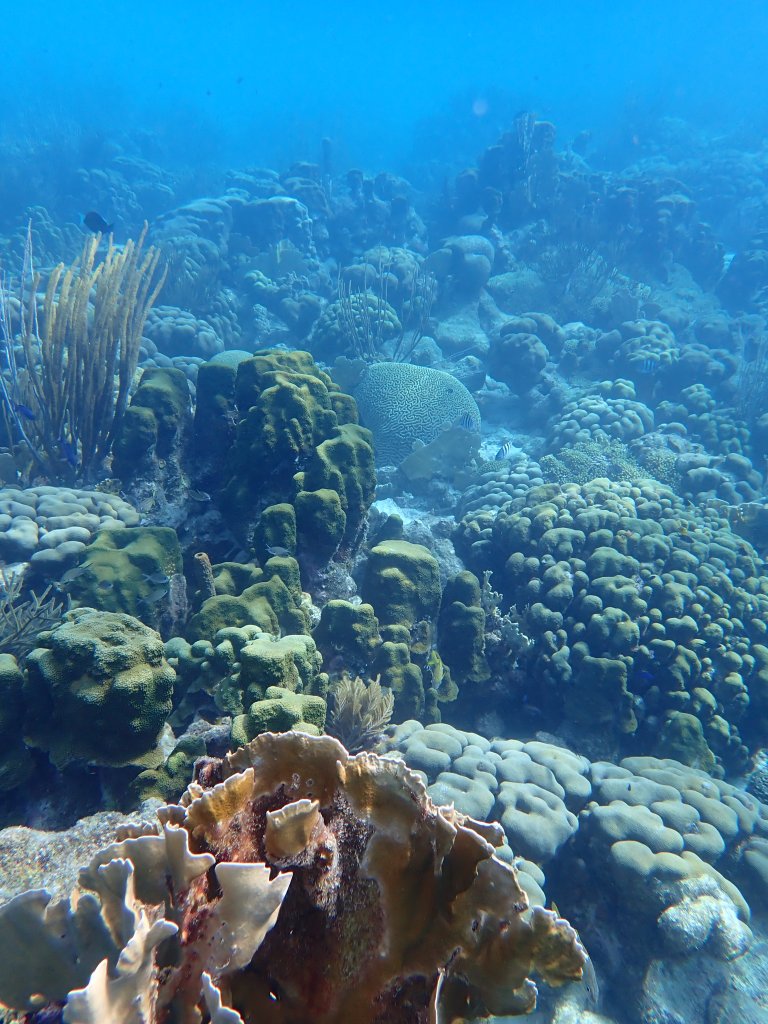
I enjoyed our snorkel, but it was too deep for me to really love it (picture below is ranging from 15-20 feet or so). Still, it was amazing in the diversity and the size of corals (note this is 2023). Boulder corals (big green ones), huge brain corals (center picture), sea fans (in front of brain coral), a Gorgonian (tall, left side and branched, front corner), stovepipe sponges and fire coral all show a wide diversity. Some have a lovely deep color, others look a little too light; perhaps signs of recovery after heat stress the prior summer.
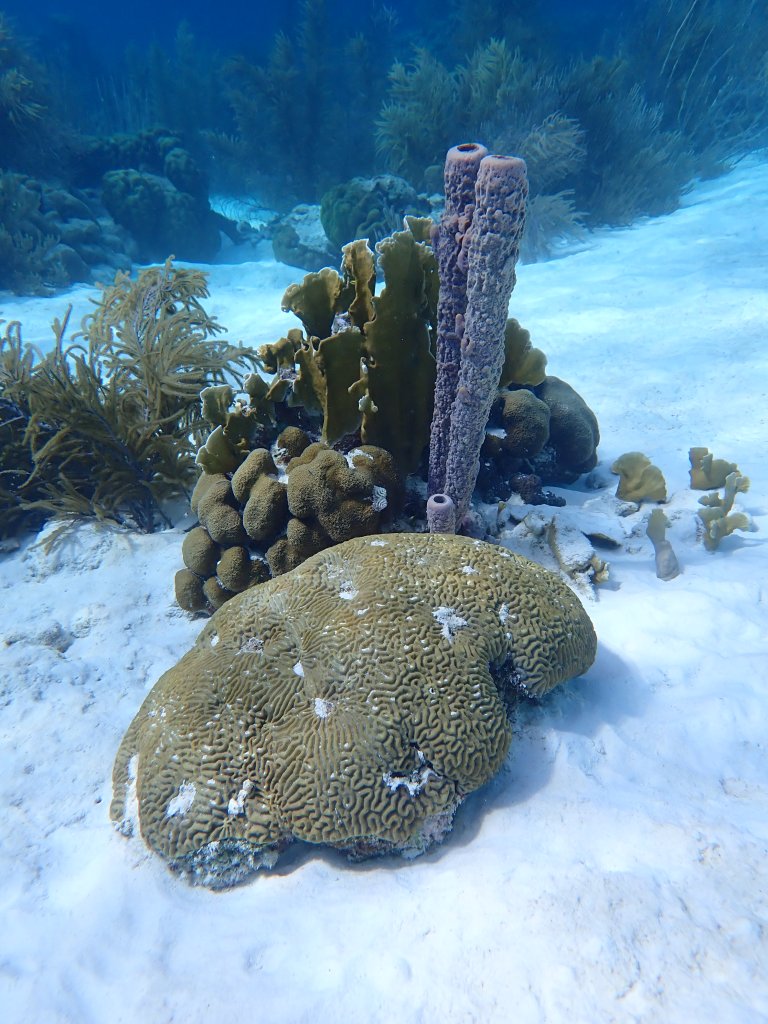
This was before I discovered weights and freediving, and had to rely on my own skills to keep me at depth. Below is a nice patch of diversity, about 12 feet or so.
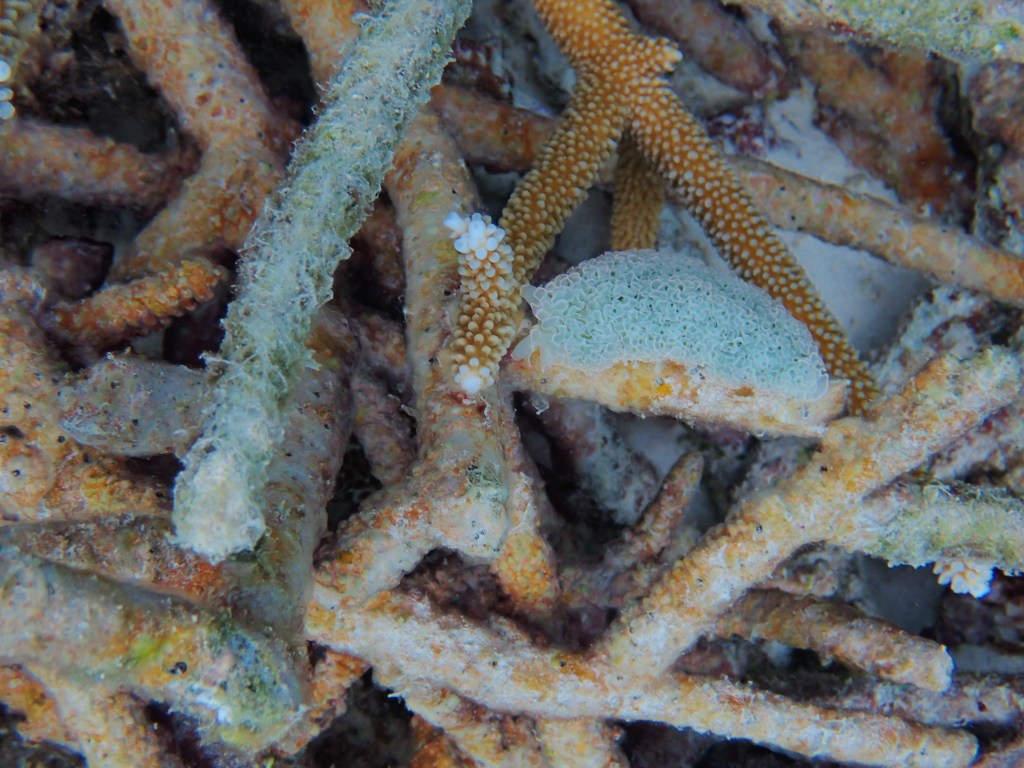
However, even doing duck diving, I still managed to find a cute little lettuce nudibranch on some dead staghorn coral. You can see the healthy stuff with the nobbies above it.
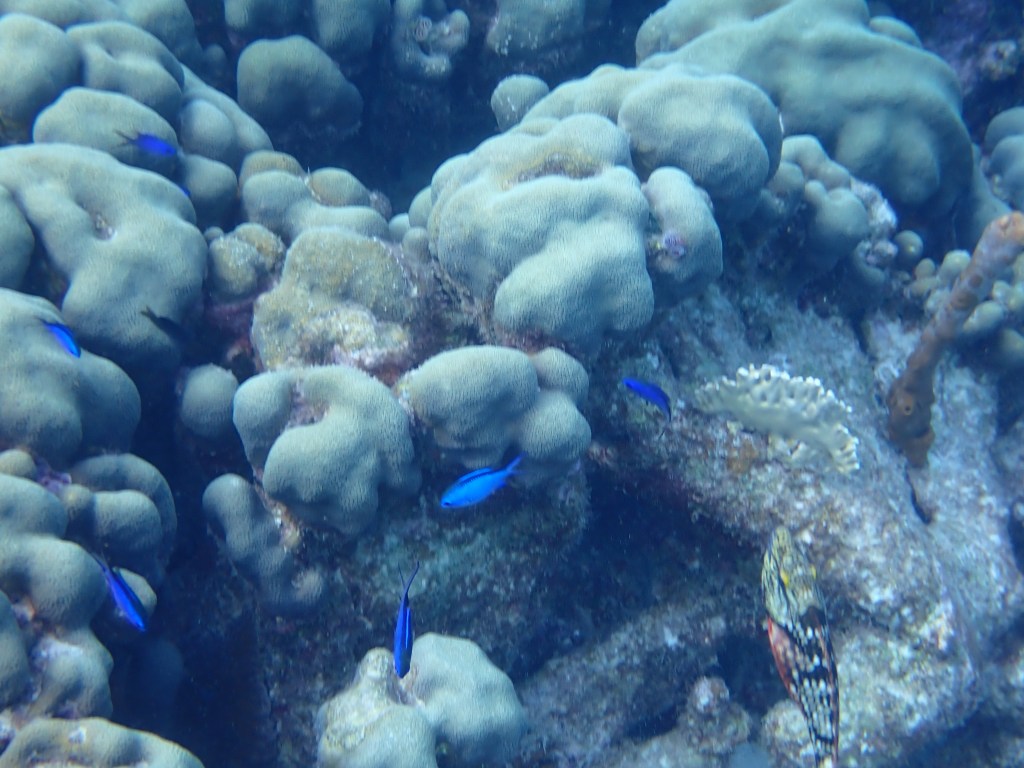
This is also where I saw my first schools of blue chromis, a gorgeous little fish that prefers deeper waters.
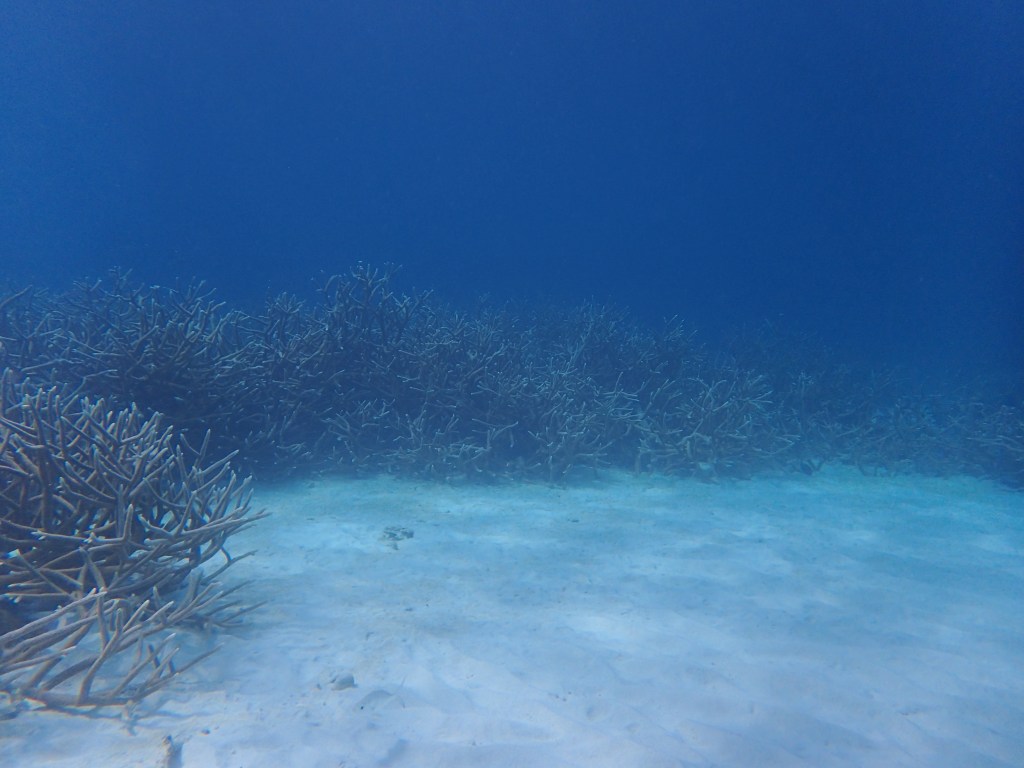
It was also my first glimpse of an extensive staghorn field. I am told that there used to be acres of staghorn until a hurricane/weather event in the mid 2010s broke much of it up. These coral patches act the same way a grove of trees between farm fields do–they offer protection from predators and a concentration of sea life that allows for easier feeding, along with potential nesting sites, as many fish eggs need something to attach to.
But this was only the first dive stop. On to Cliff!
 Snorkeling Adventures