
I will be forever grateful to Nicole and Galen at Tropicalsnorkeling.com for putting together detailed snorkel guides. I used their ebook on Bonaire to help me narrow down the 86 official dive and snorkel sites. Andrea I and II were on my priority list, and ended up being so much fun, and so beautiful, that I returned here a number of times on multiple trips.
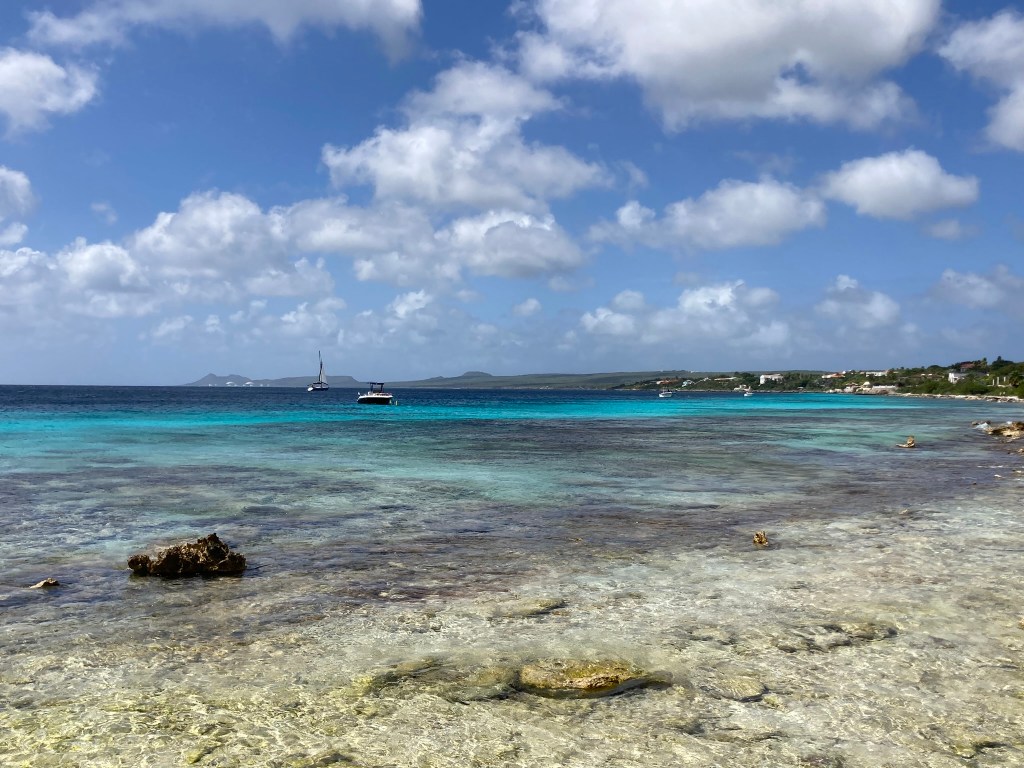
This is me in the light blue water on the left! You can see limestone and dead reef at shore edge. The darker blue near shore is the coral and rock shelf, then there’s a sandy area, showing light blue, and then the deep dark blue.
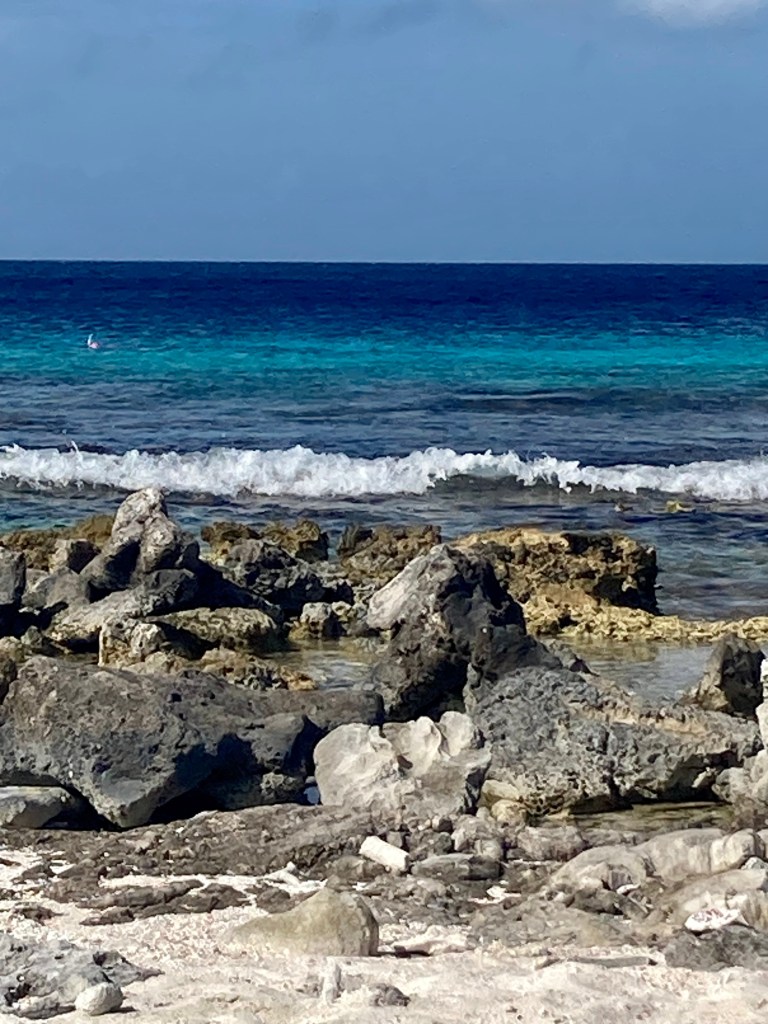
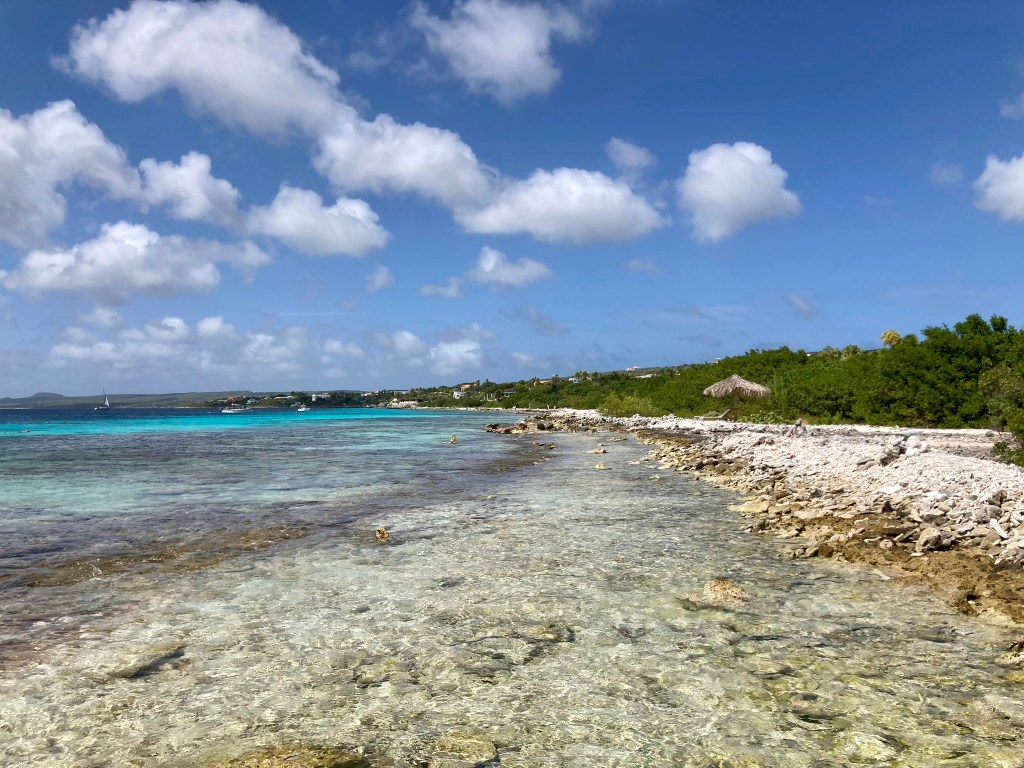
Andrea has a very long iron shore (thus the division into Andrea I and II), with a narrow band of finely ground stone/sand slightly inland from the iron shore. It also has a thick patch of bushes behind the sandy area, hiding numerous expensive villas and maintaining the illusion of a quiet public beach.
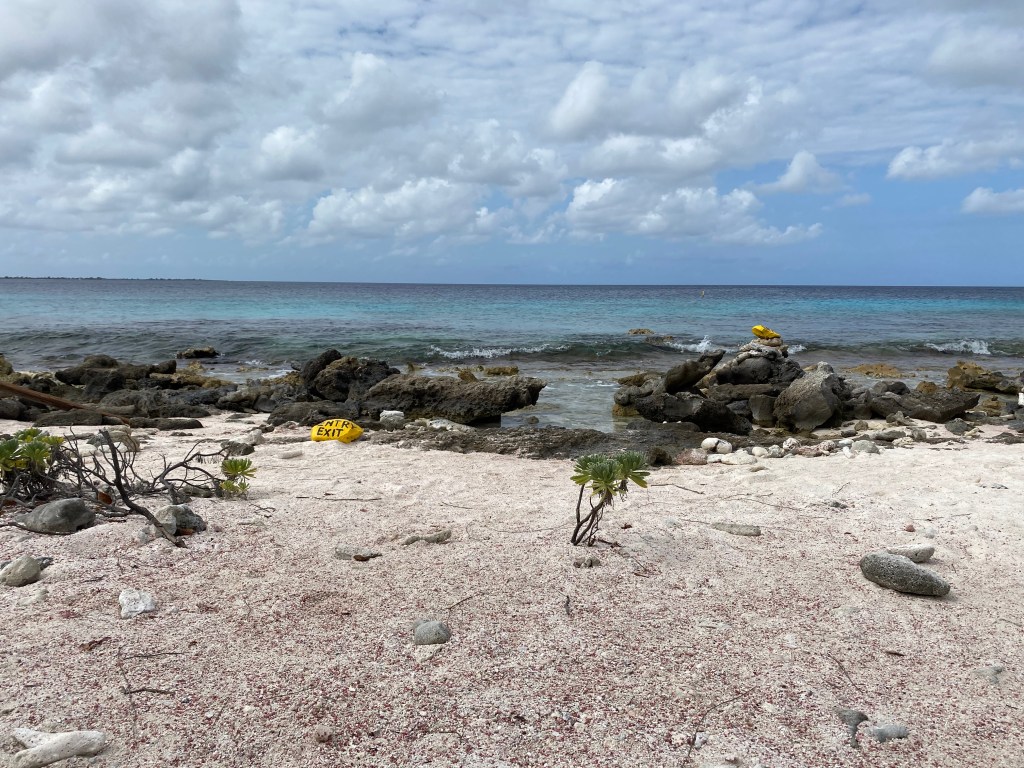
There are a couple of yellow markers showing you the best spots to enter the water for minimal coral damage (the sea urchins don’t listen to this, though, so still be careful).
Snorkeling was amazing. There were many hard corals, some soft corals, and a wide variety of fishes. There’s a large shelf near shore filled with corals, then patch reefs in a mid-ground, about 8-10 feet deep, then a field of plumes and boulders as you hit the slope and diver depths.
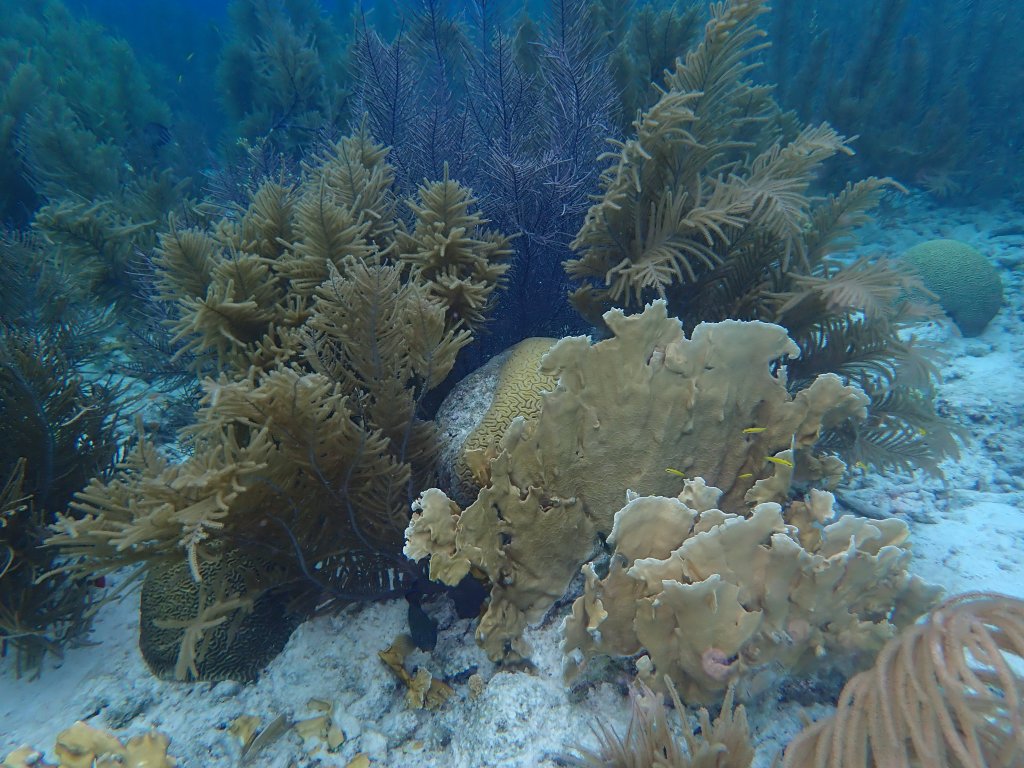
Here you can see the edge of the shore shelf reef and start of the patch reefs, filled with healthy boulder coral (the round greenish ones), slightly stressed but plentiful fire corals, a trumpet fish and grouper, a school of chromis (far left), a tall sponge (bottom right).
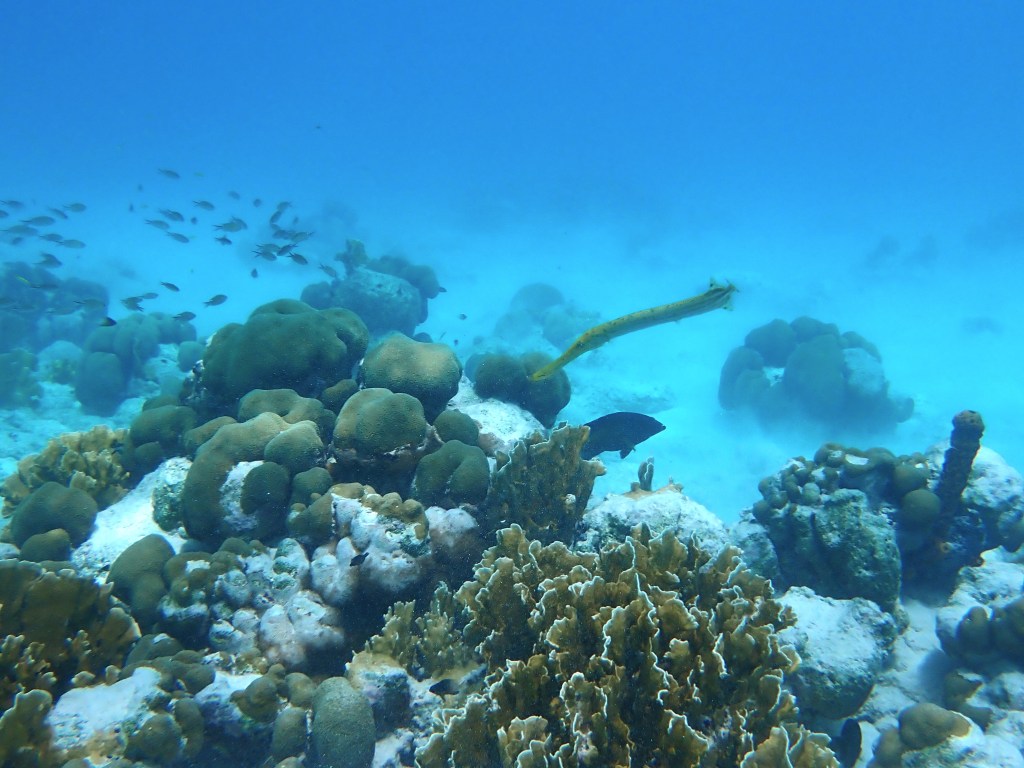
A patch reef with a trumpet fish, a four-eye butterfly (bottom right), a grouper (bottom left), boulder coral, a brain coral and a sponge.

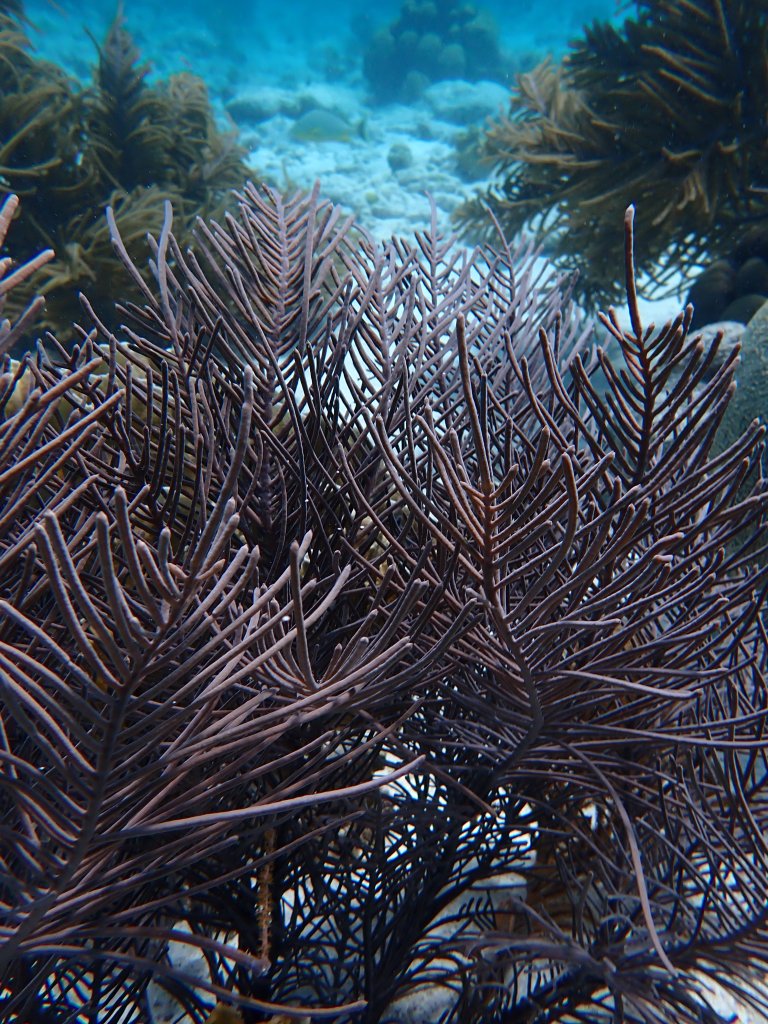
Purple bipinnate sea plumes with likely Atlantic sea plumes behind, with a hardly visible Caesar grunt in the background.
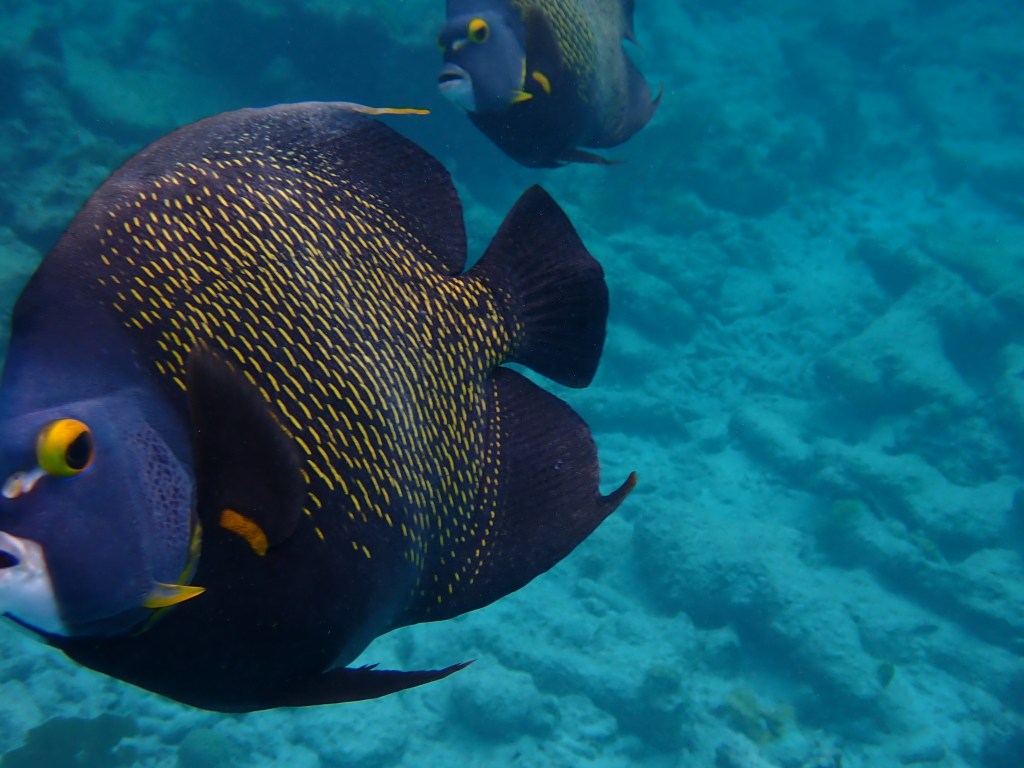
There was an area by Andrea that had extremely friendly fishes. I was guessing someone was feeding them because they had zero fear. I actually think I saw the same angelfish pair the next couple of years, and have dubbed them ‘Bob and Helen,’ because they seem to be a self appointed welcoming committee.
Bob the angelfish stopped by on 80% of my snorkels at Andrea I for the next two years. He usually has Helen in tow, but she tends to hang back a bit.
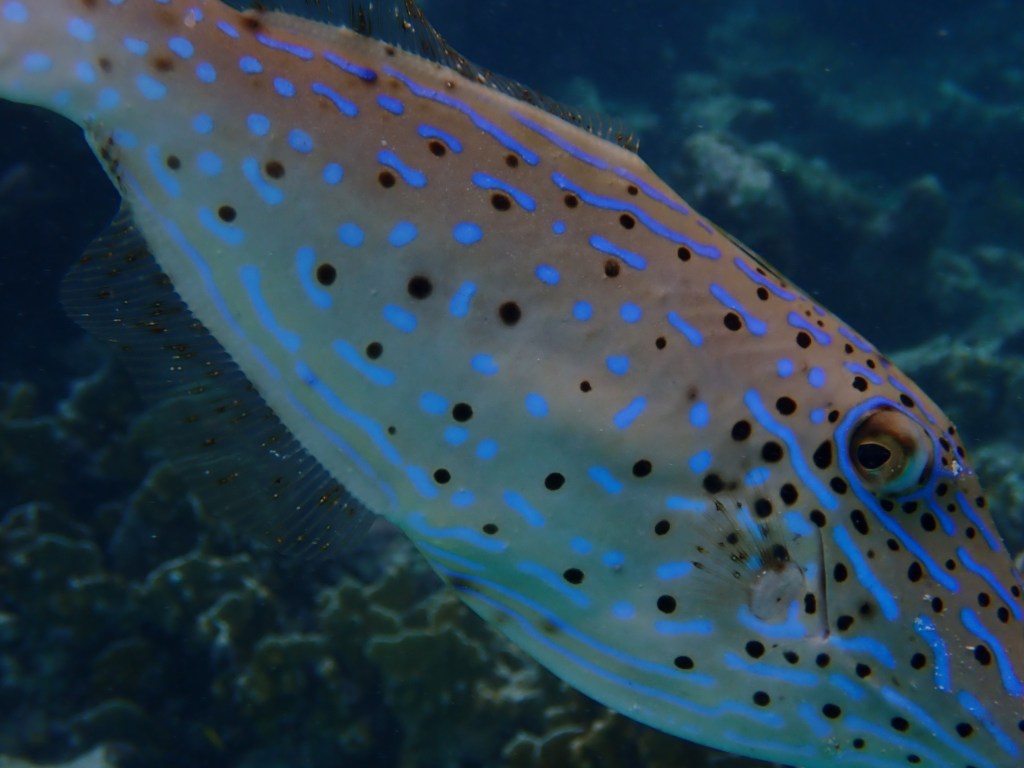
Filefish tend to be shy, so it was an utter surprise to have this scrawled filefish come so close. That’s when I started to wonder about feeding.
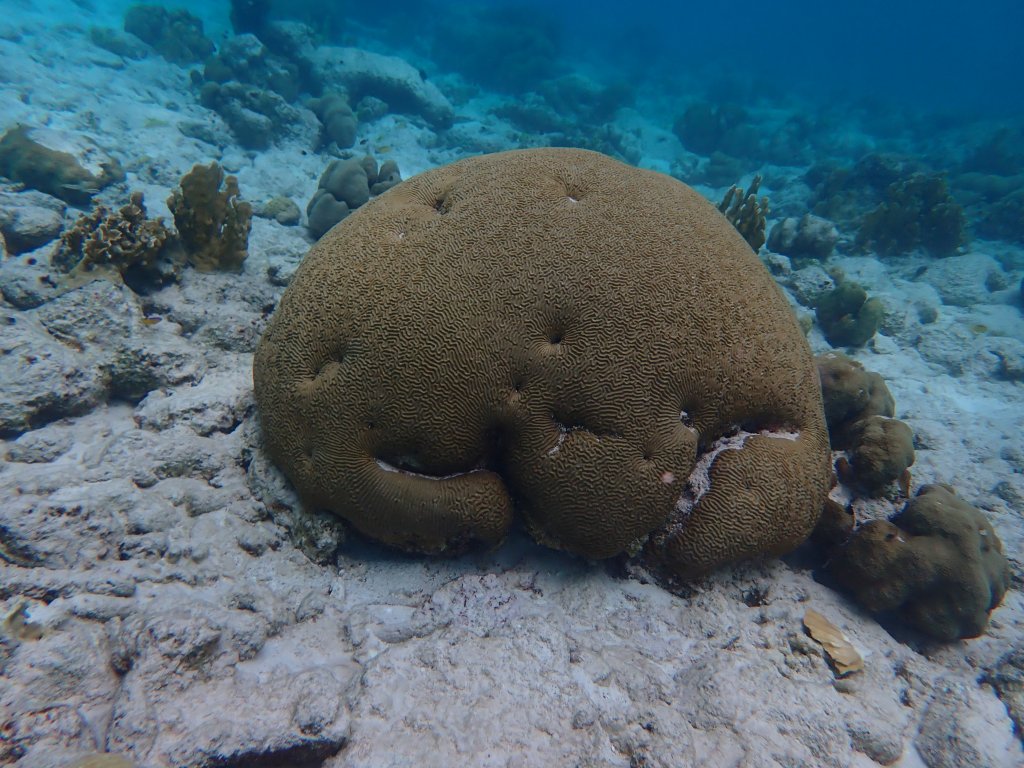
Andrea had some great corals! Here’s a giant brain coral with some fire and boulder corals alongside.
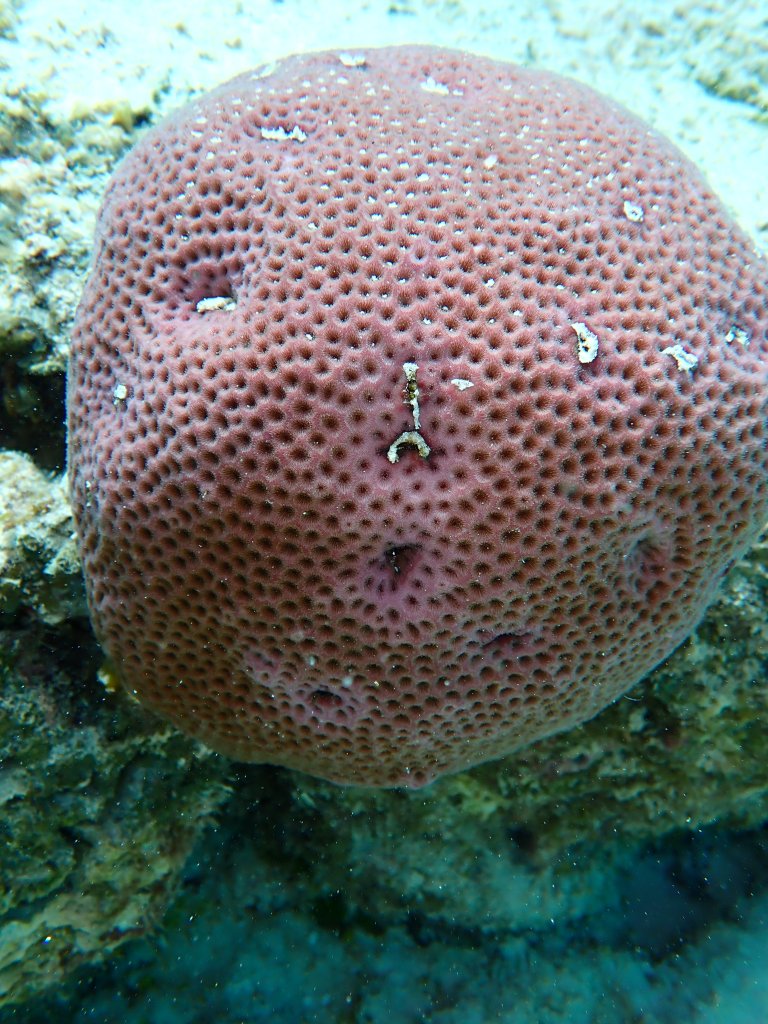
A beautiful, large pink starlet coral
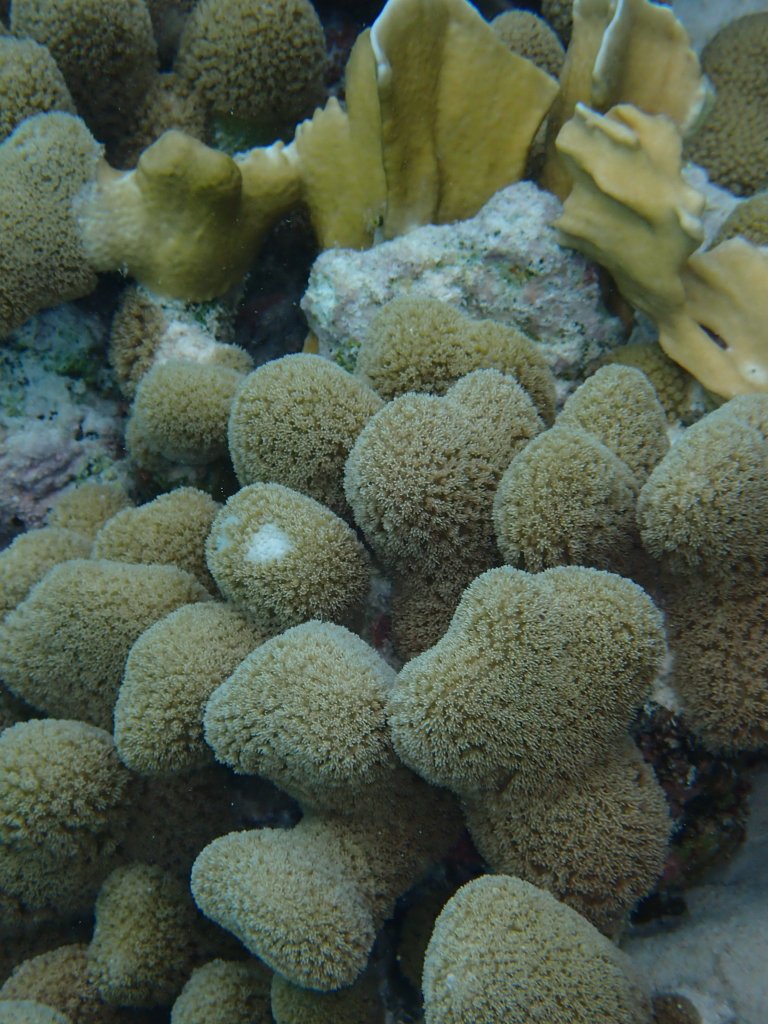
Pillar coral. Endangered.
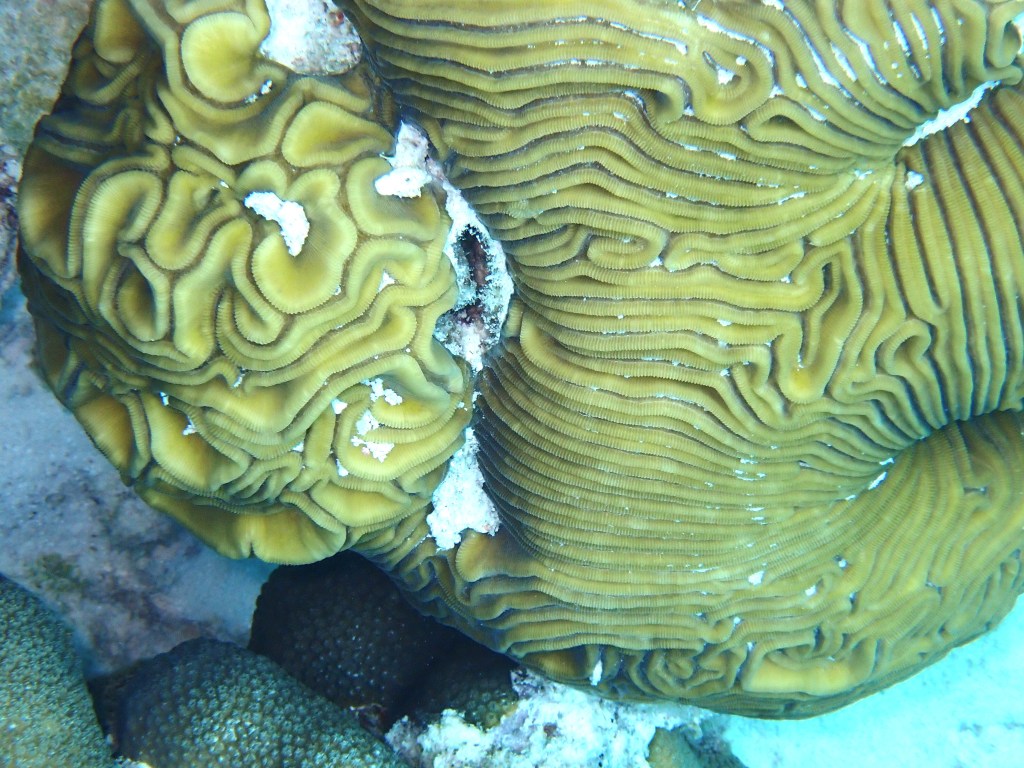
Some weirdo brain coral with star coral at the bottom. I am guessing that wave action might have affected growth pattern, but it might have been a virus or mutation.
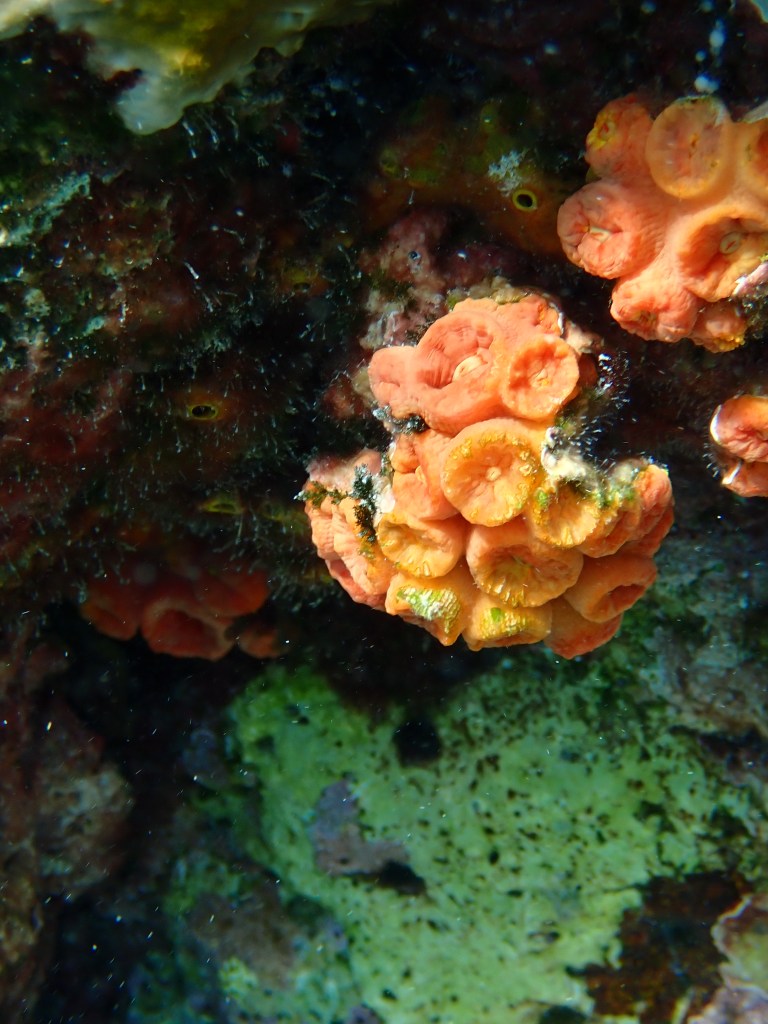
Orange cup coral. Never very plentiful, you can see small patches like this that look like innie belly buttons. They open up at night and look like tiny anenomes.
It also gave me a chance to work on my macro photography. WordPress isn’t being kind to my high-definition star coral, but you should get the idea.
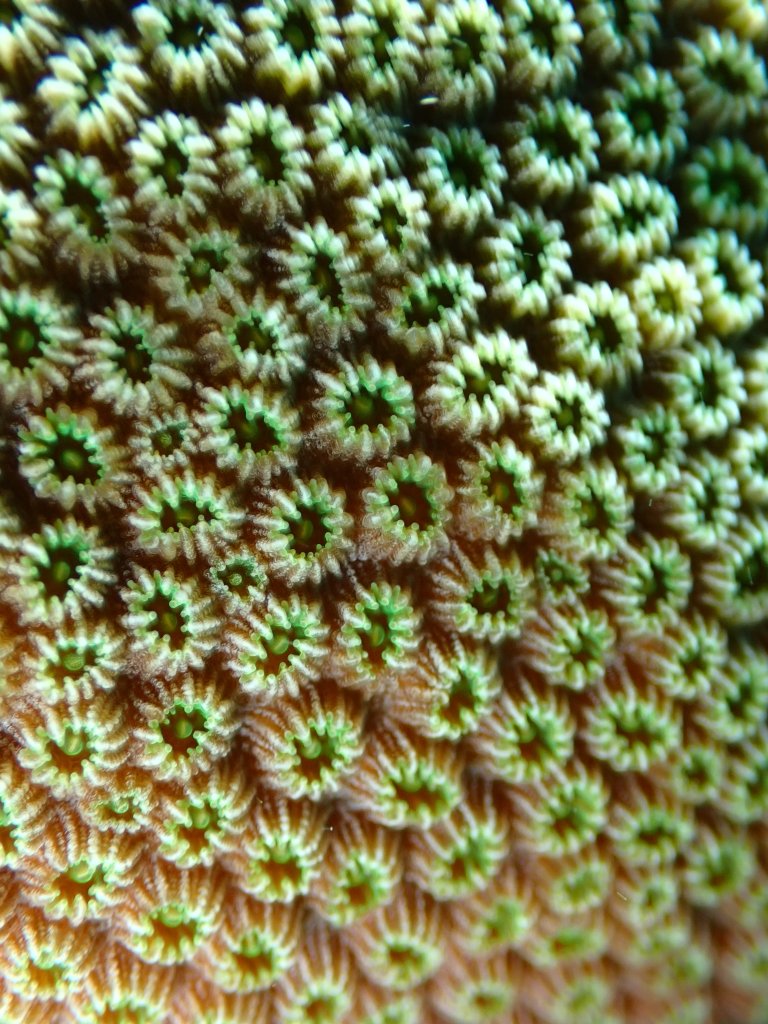
Brain coral detail.
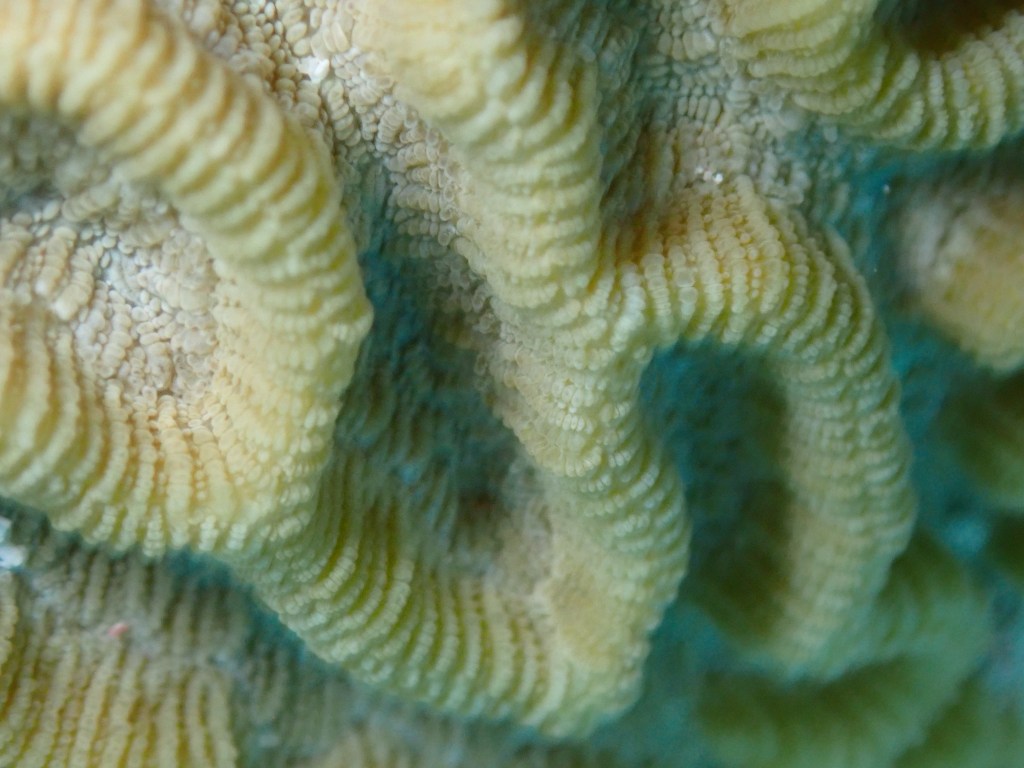
Staghorn coral. Staghorn used to play a pivotal reef-building role around Bonaire, but legend says heavy storms and hurricanes (although we don’t normally think of Bonaire in the hurricane belt) resulted in significant mortality that has never recovered. So it was kind of thrill to see some healthy-ish patches in 10-12 feet deep water.
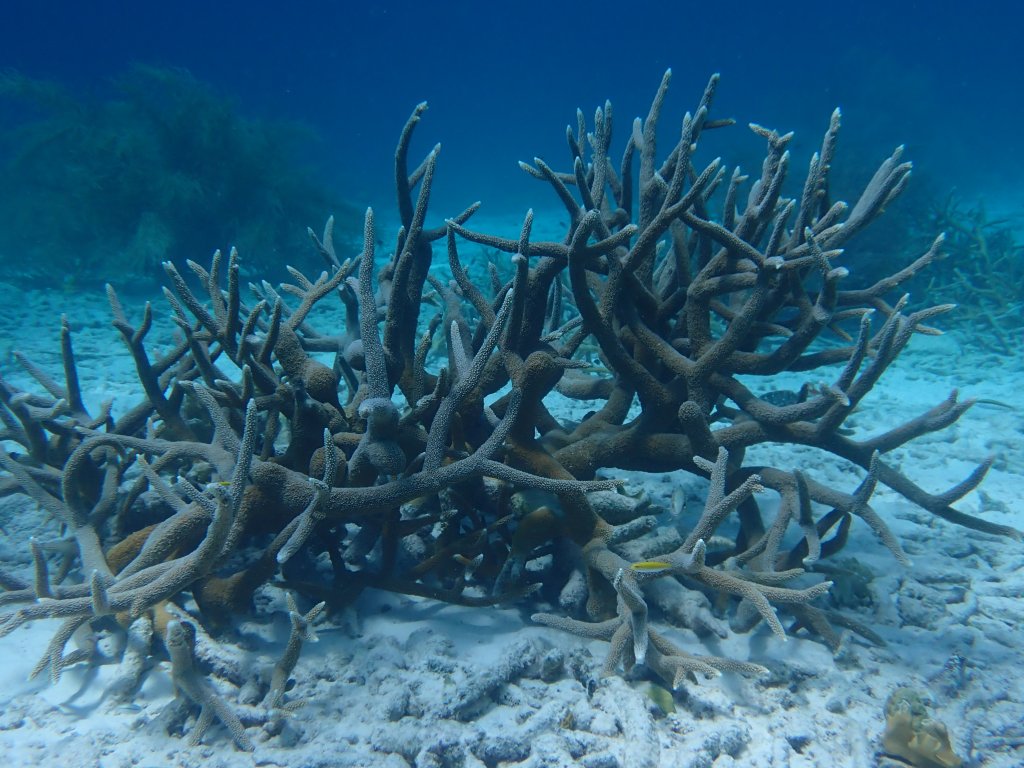
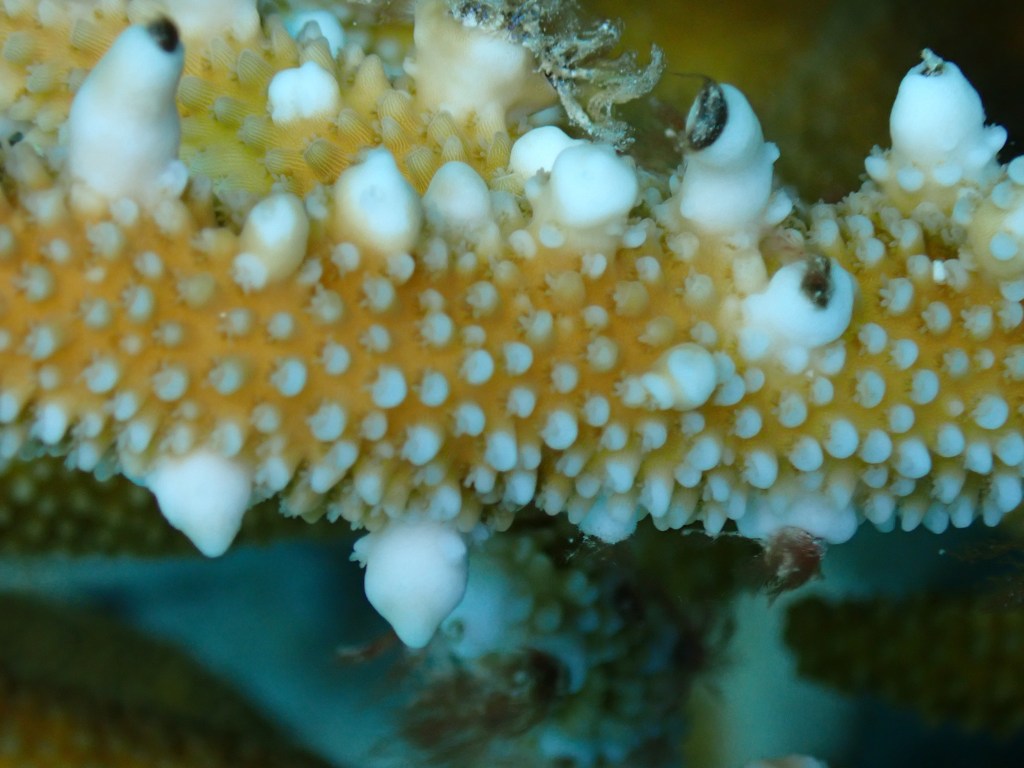
Patches meant I could get close without touching other coral, since there was empty sea floor around me. Much easier for photography when I don’t have to worry about bumping into coral! You can see tiny little polyps extended on the white nodules.
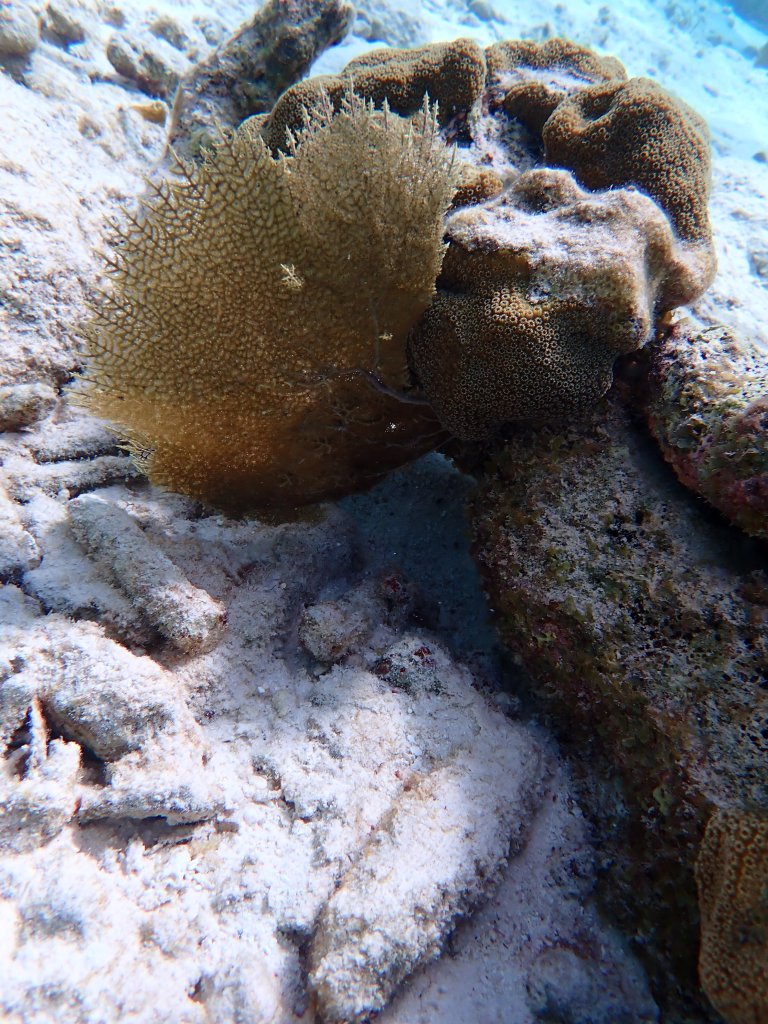
Here’s a sea fan next to a diseased star coral. Sea fans are a type of soft coral in the Gorgonian genus. They are communal coral polyps arranged in flat groups, each contributing to secreting gorgonian proteins to build the internal structure they all live on. Some Gorgonians use calcium in their structure, so like all coral species, ocean acidification is a serious threat (further interesting detail at Santa Barbara Museum of Natural History).
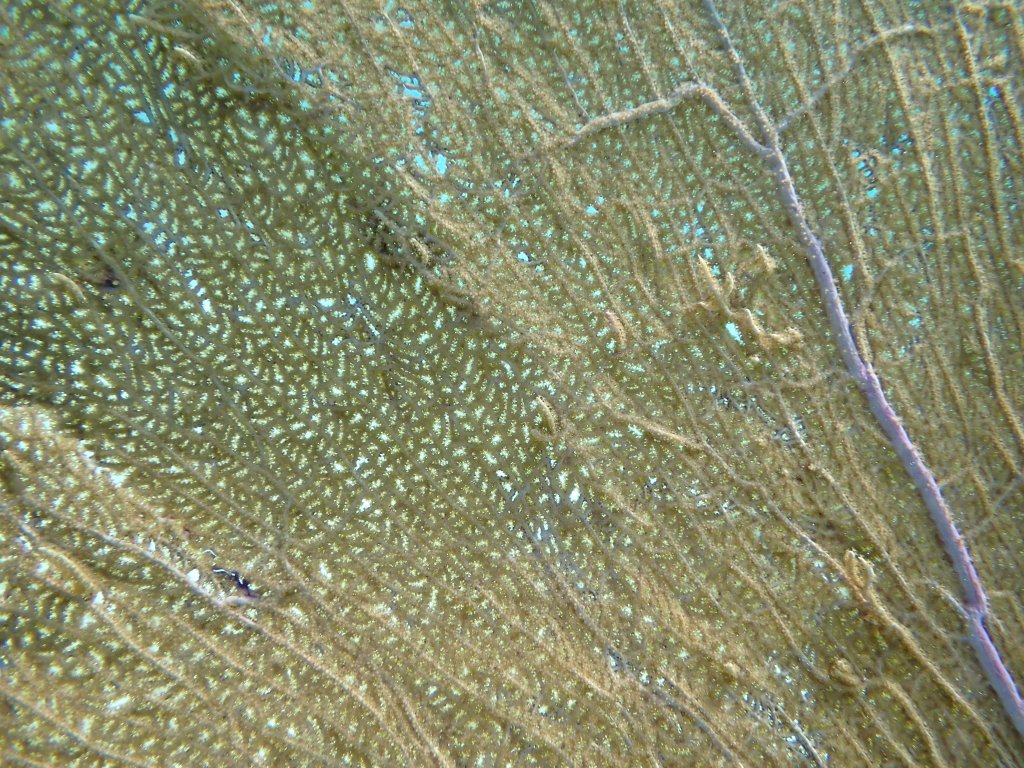
Detail of the fan
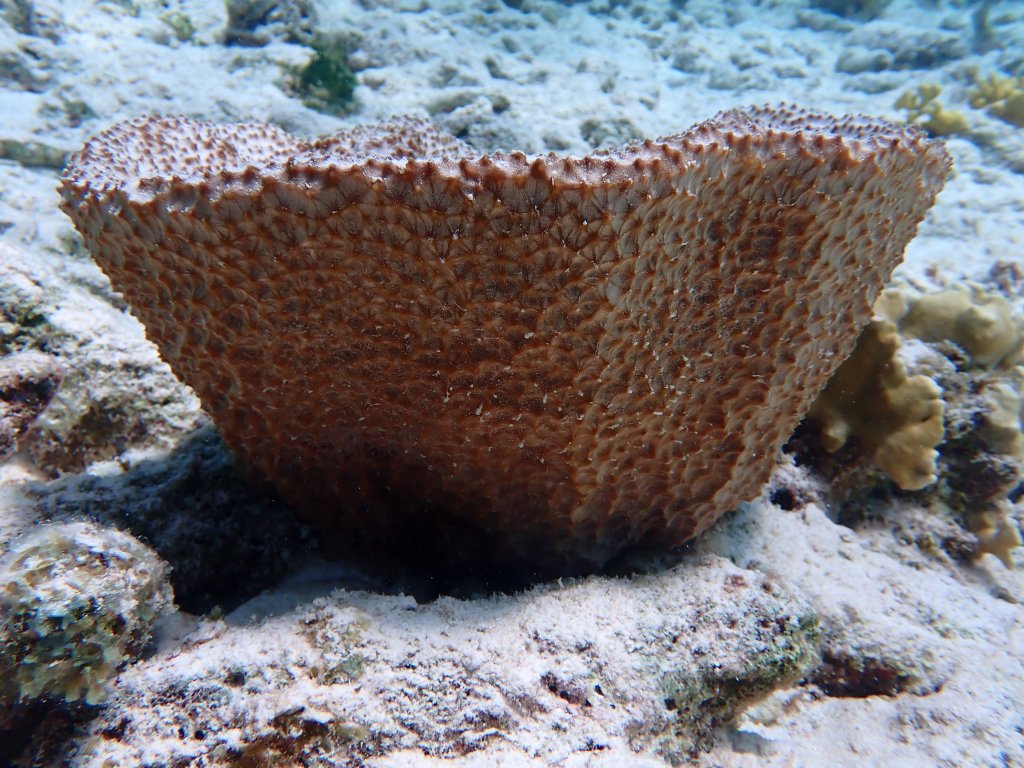
A cool bell sponge! Sponges are cool, and confusing to identify. They come in so many shapes. One of the earliest multicellular animals, they have a few specialized cells for feeding, reproducing and structural support. Water flows through many pores and canals to allow it to trap food (find more info at wikipedia). I have learned that identification is tricky even for professionals, and in some cases, requires lab equipment to accurately identify. Still, a few are obvious, like this bell sponge.
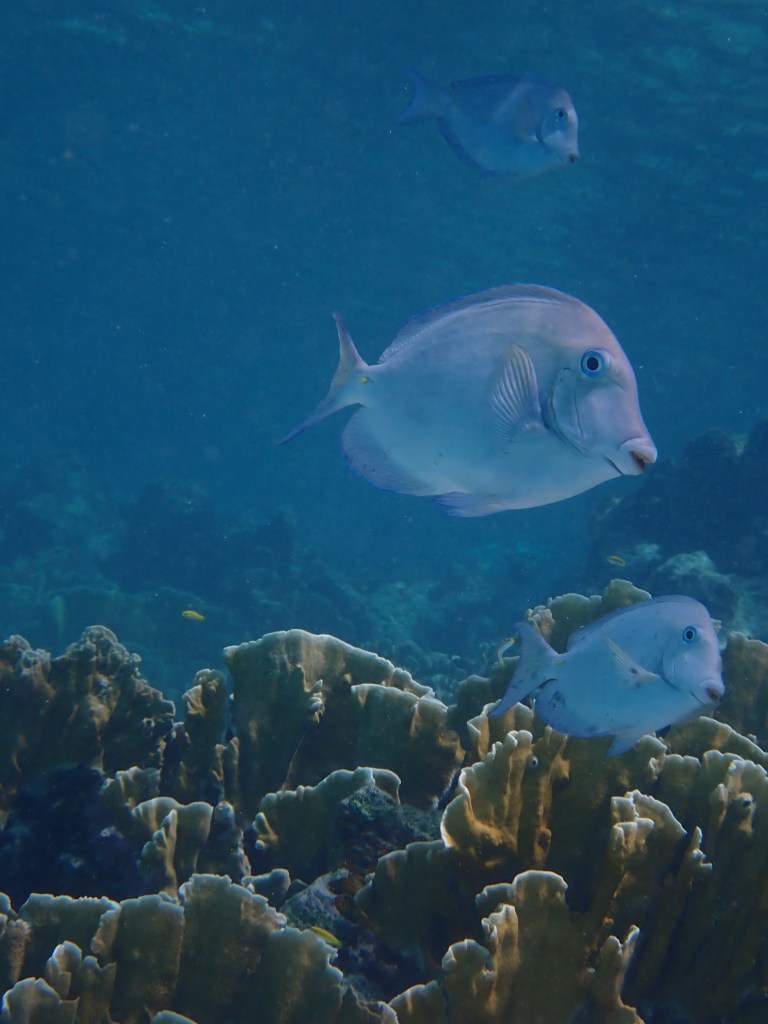
And there were some fish! The three stooges giving me the side-eye (just kidding, blue tangs).
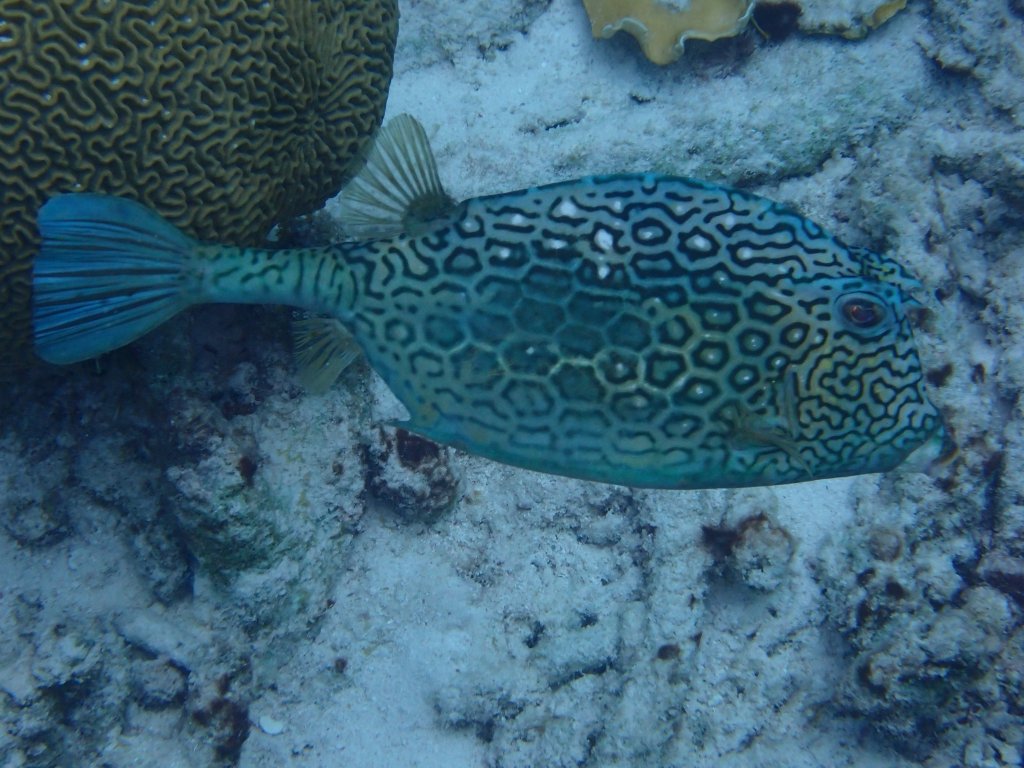
I followed a honeycomb cowfish and got to watch it change colors as it moved from plumes to corals to sea bottom. Pretty clear where it gets the honeycomb name. You can just see the tiny horns above its eye.
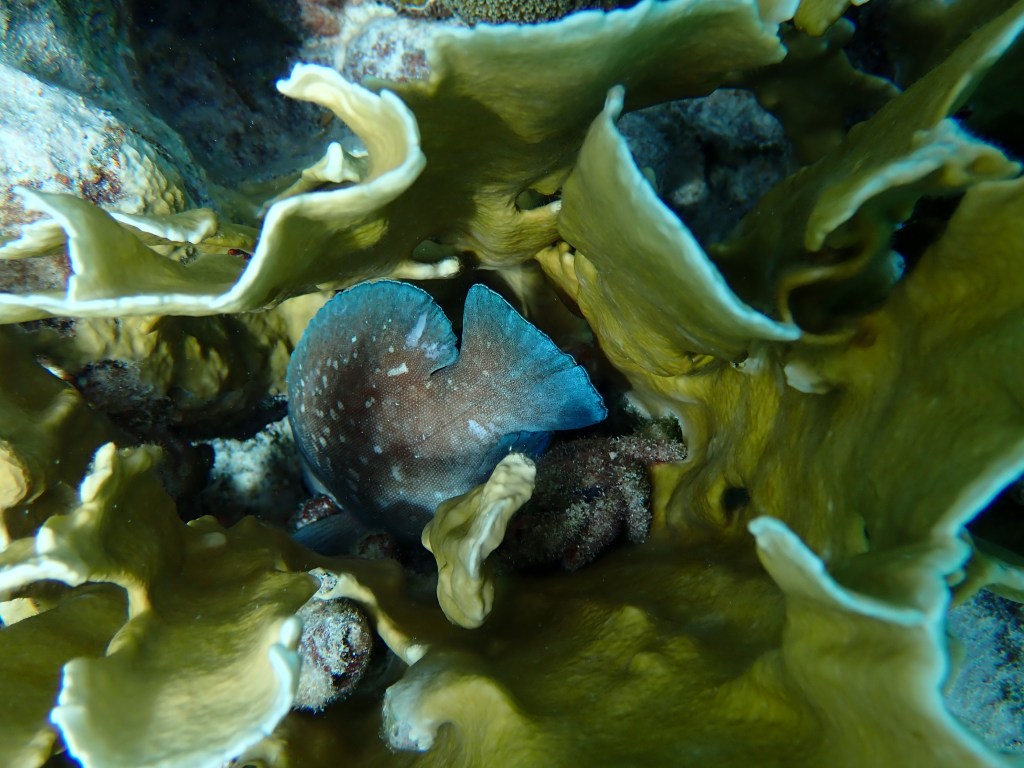
Soapfish aren’t the smartest fish in the tank, and apparently assume that if they can’t see you, you can’t see them. Here’s one in some fire coral. I thought it was hilarious.
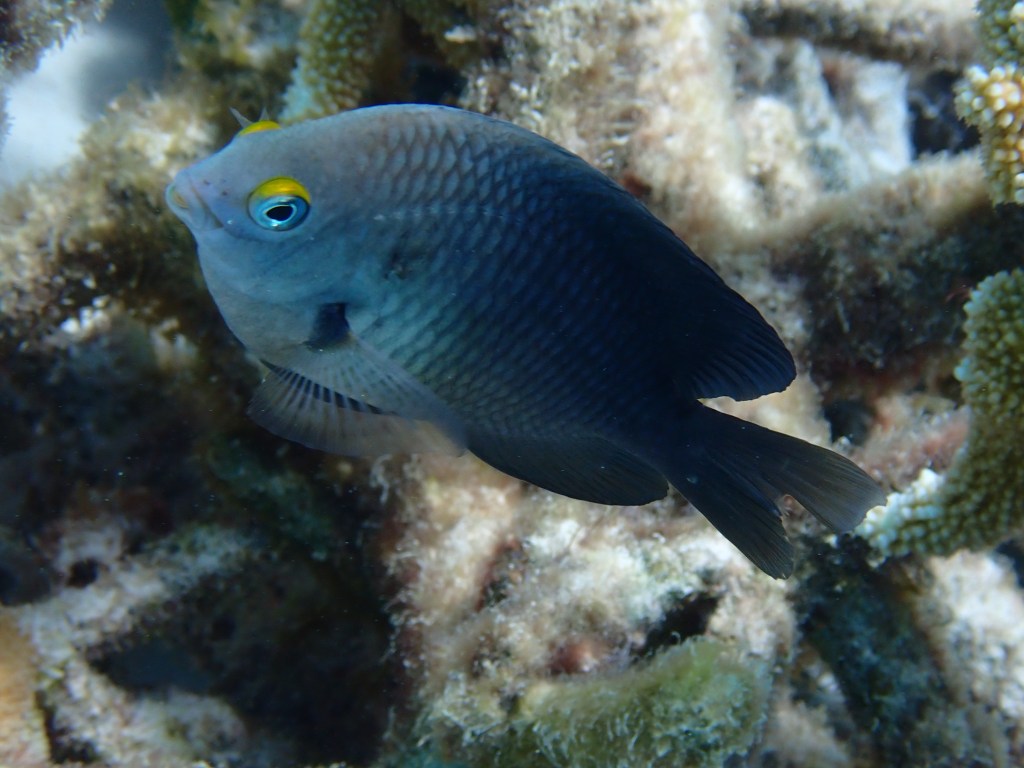
There were a LOT of damselfish. We won’t even talk about how many shots it took to catch this one in some staghorn coral. Damselfish are highly territorial, particularly when they are guarding eggs, and will harass other fish/ animals/ humans. Some of them are known for grooming tiny patches of algae ‘farms’ and will protect those as well.
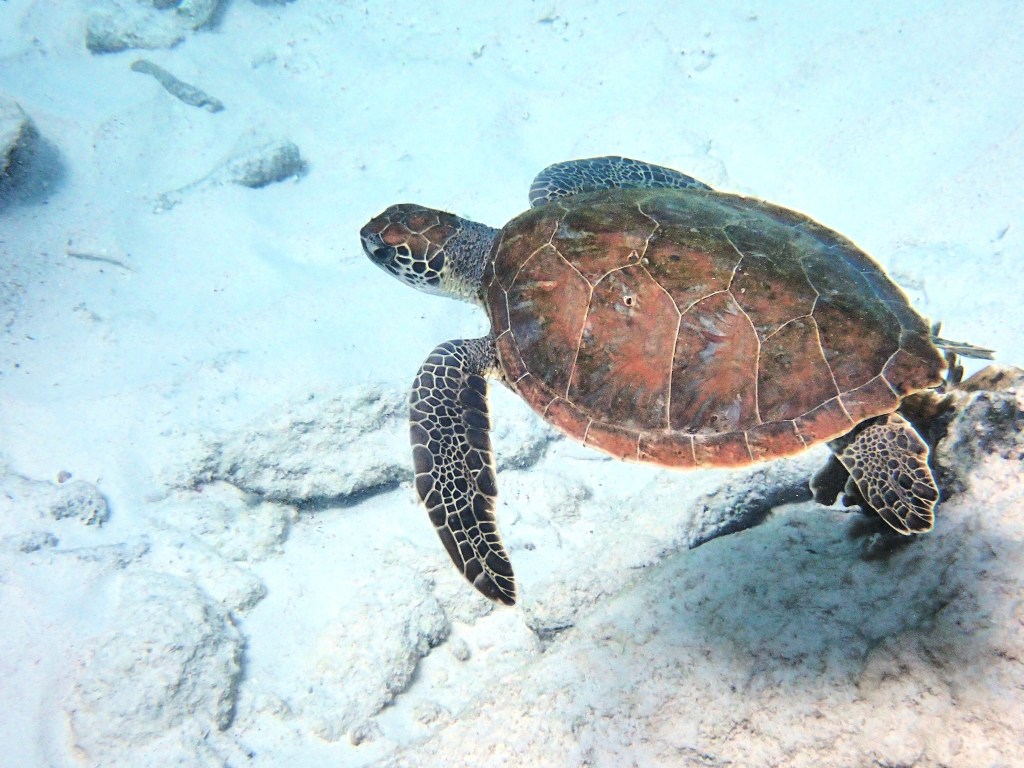
Oh, and everyone’s favorite, it seems. A turtle! I think they are definitely cool, but as someone who has had pet turtles in the past, I’ll also note they aren’t the sharpest tool in the drawer. They mainly eat, sleep, and breathe so watching them is an exercise in Zen meditation. I also saw so many in Maui that I got used to them. Still, they have such interesting shell patterns.
 Snorkeling Adventures