Bonaire and Curacao: Which Should I Pick?

Bonaire and Curacao. Both part of the ABC islands of Aruba, Bonaire and Curacao. Originally all Dutch territories, they’ve changed over the years to each become their own thing. My #1 advice is to think about the vacation you want and then go to the island that fits it, rather than going for the notch in the island belt. I can’t speak for Aruba, which I hear is very Americanized, but both Bonaire and Curacao are vacation-rental type islands, stemming from their long relationship with the Netherlands. They are not all-inclusive, pay for an excursion type of places. If you want that, I would suggest considering other places. The value in both spots is the walk-off-the-beach access to reefs, which safes boat fees and leads to a more reliable water experience (as opposed to Florida Keys, where almost all reefs are excursion-based. Three-foot waves? I’m not going).

Me? I’m a former competitive swimmer, citizen scientist, former lifeguard, baby freediver, and photographer.

Way back when, each island renegotiated their relationship with the Dutch government. Curacao gets money from the Netherlands, but does more of their own governance. Bonaire has its own governor, but basically has greater connection to The Hague, as they say, with the idea they also get governing help and more money. Does this translate into different things? I think so. It means that Curacao is going all-out on mass tourism as well as carving up their land and selling to the highest bidder. Bonaire is more conservative, and recently put a hold on issuing new building permits. Bonaire has more wild coastline, and to date, appears to be doing a slightly better job of protecting it. Bonaire has a giant marine part surrounding most of the island. Fishing is with excursions or for lionfish. Curacao has no particular protected area. They also do not allow spearfishing.

Why do I care about these kinds of issues? Because everything is related. That coral you come to see is affected by development and run-off. Those fish you come to see are affected by harvest numbers and size limits. That beach you want to sit on? Sandy beaches don’t go great with coral. What does go great with coral is scrub bushes and mangroves up to the shore, because it protects it from sediment and pollution run-off in rainstorms (ask Hawai’i how it knows this). Bonaire is terribly rocky and largely consists of ‘iron shore,’ a term used to describe a mix of rocks and broken coral. Curacao has far more sandy shores. When wind comes up (as it thankfully does), sand gets dispersed in the waves, making for better or worse water quality. It’s also important for coral growth–some cloudiness might have a sunshine protective effect, but too much cloudiness prevents a coral from getting it’s sunshine.

Water: Bonaire is largely a curved shoreline, but without many ‘inlets.’ Curacao, on the other hand, has quite a few carved into its shoreline. This makes the snorkeling much easier, being protected by wave surge and wind. Bonaire is less protected, and indeed, the bottom half of the island is largely a straight open shore. You will be snorkeling in open water. To date, Maui has been my standard for tough snorkeling. Between the surge and the current, it was *work* to snorkel there. Bonaire and Curacao? Easy-peasy in comparison–in places. Curacao is largely easy-peasy on the western shore. But you have to feel comfortable following the cliff lines, which means going around bends away from the beach. Bonaire, well, the current doesn’t feel *significant* in most places, but it is there, increasing as you go to either the northern or southern edges of the west shoreline. As a competent swimmer, I take a careful approach towards the southern half of Bonaire (basically anyplace south of Salt Pier) and of Curacao (Tugboat is protected, but I haven’t gone around the edges there yet).

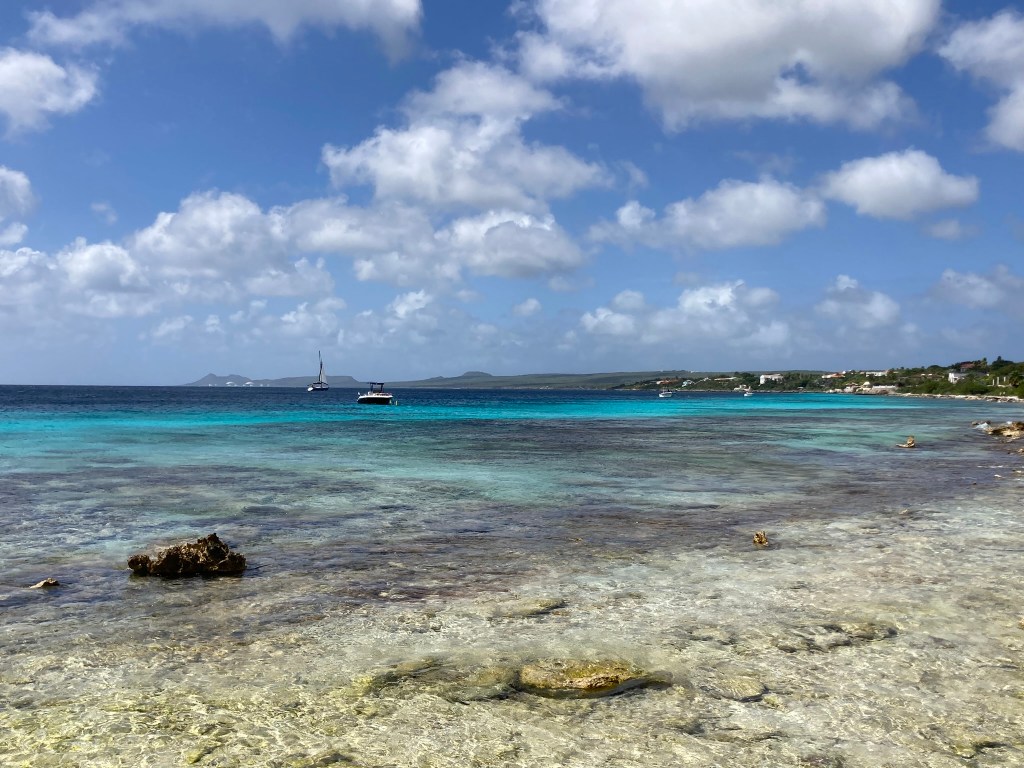
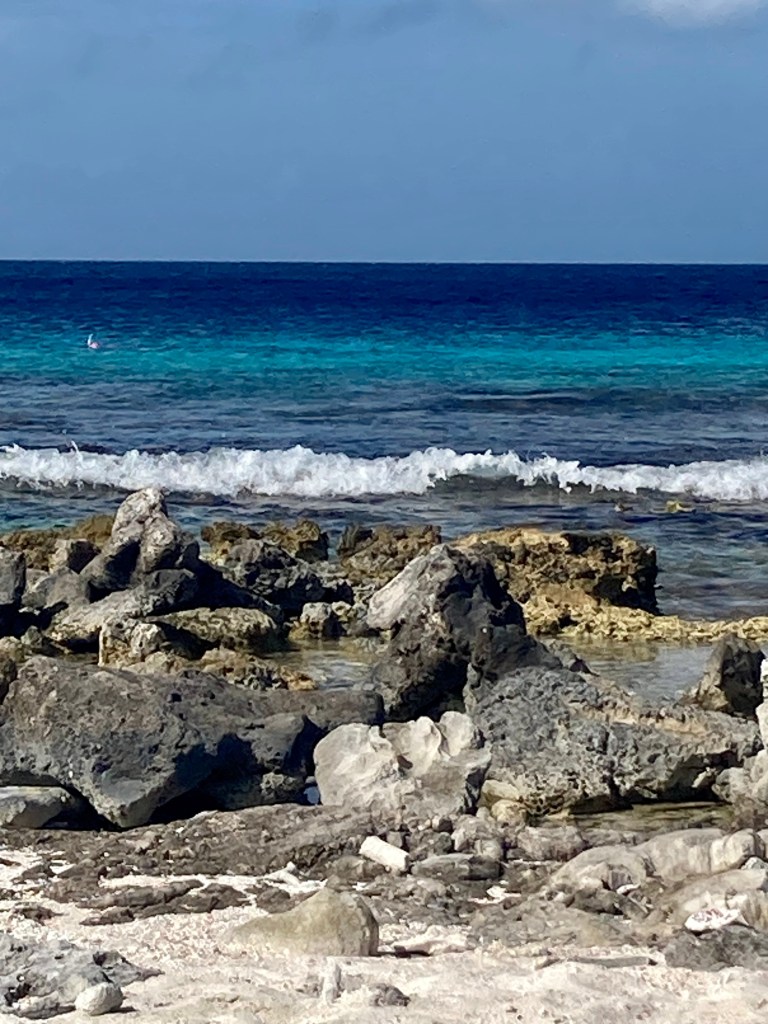
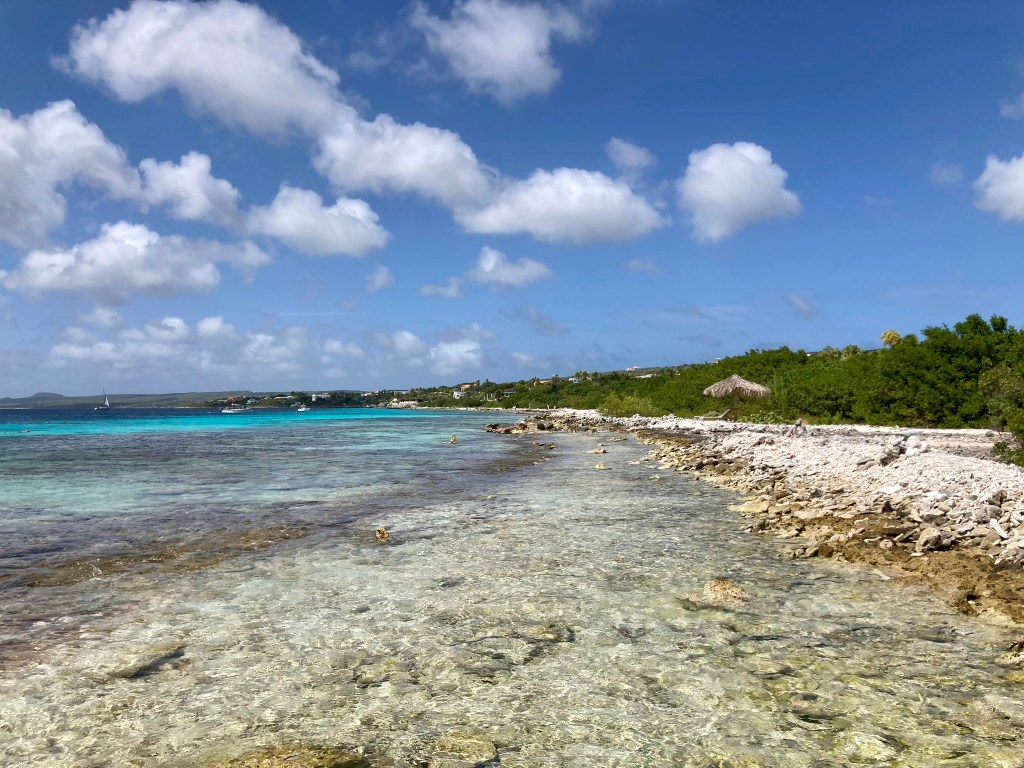
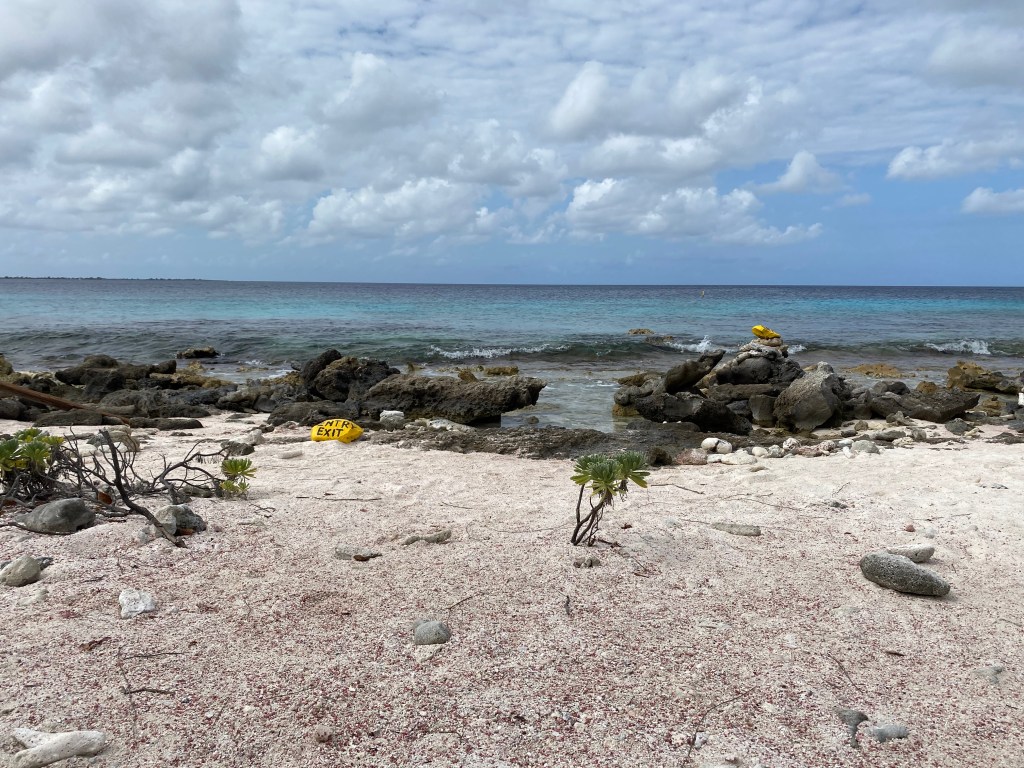
Shore: As mentioned, Curacao has inlets. Lovely, sandy inlets for the most part. Bonaire is almost entirely ‘iron shore,’ a term that means broken coral and limestone. Even the ‘sand’ in some places is more like ground-up coral and limestone. Soft sandy beaches? Found more often on Curacao and, I am told, Aruba. My guess is it has to do with the wave action and the ability for the shore to keep it’s sand during storms. Curacao’s inlets are more helpful here. Bonaire, with it’s wide-open shoreline, has only a couple, aside from artificial beaches that have to be replaced after storms (looking at you, Chogogo). Te Amo, Bachelor’s Beach are the two main, public access ones that are sandy. What do I do? I wear water shoes into the water, then change into my fins. Yes, it’s cumbersome. But I freedive and need those fins.

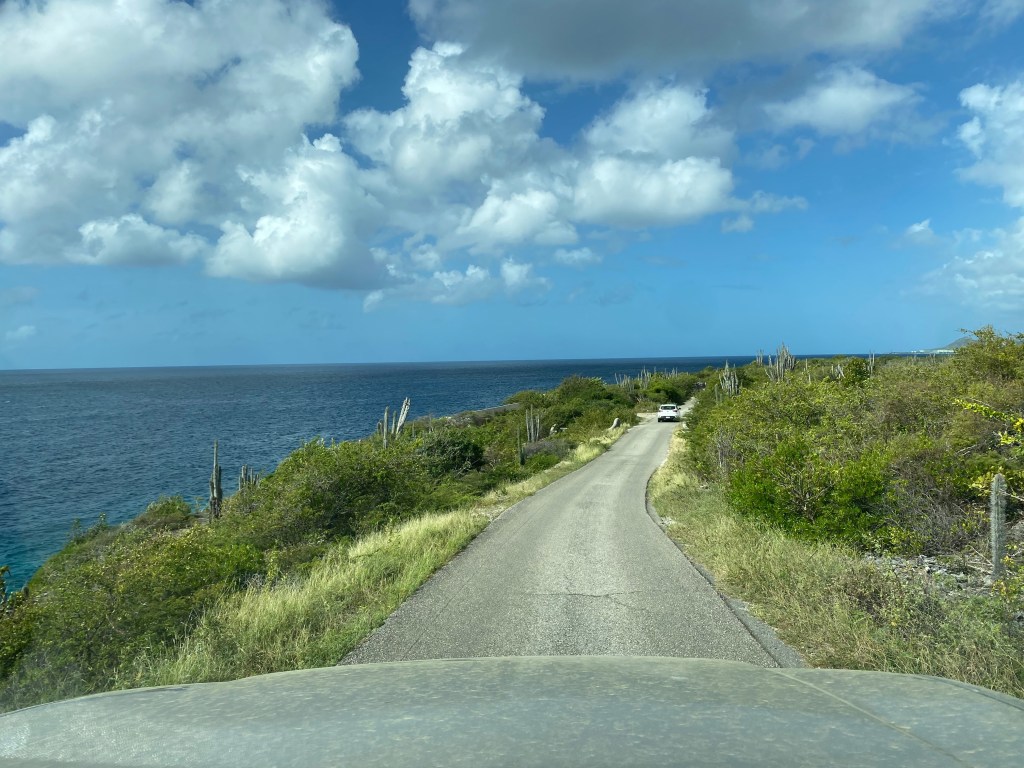
Getting Around: Both places have well-maintained main roads. By ‘main,’ I mean the ones traversing most of the country. I need a car to get to all the different snorkel sites I am going, and to the grocery. Curacao has an underdeveloped taxi system, and I am not sure Bonaire has any. People rent scooters, but traffic goes faster than most scooters. Dutch people love to bike, and when I noted a couple biking back to their place without helmets and lights yesterday evening, I was scared for them. In Bonaire, many roads are virtually one way, and you pull over and drive on the edge or wait if someone is coming the opposite direction. Main roads keep to the philosophy of minimalism and have just enough space for two cars side by side. Golf carts? Sure, but they’ll mark you as a tourist, you’ll be hot, unable to keep up with traffic, limited to day hours and subject to rain from passing showers. Again, locals don’t have tolerance for this, and will try to pass. In my car, I got passed twice last night, while going speed limit.

Where To Stay? By the end of this year, I will have gone to Bonaire twice and Curacao once. Until this year, I have always stayed in some version of an AirBnb. A house, villas, a bed and breakfast, an owner-occupied house. Both places are about the outdoor living, so I look for a large porch or outdoor pool. I don’t do resorts because I am an introvert and love peace and quiet. Almost no houses have central air, but with good design, you don’t need it. Almost all bedrooms have A/C, done with an AirCo machine, and those have been enough to cool me down to sleep if needed. A/C is hugely expensive and each island is reliant upon importing their energy–there’s a real deficit of wind and solar here–so only places catering to Americans and businesses have it. My routine is to go to the grocery on the first day, get a car, grab a list of under 15 essentials, then hit the water. People say they don’t want to cook or do dishes, but I do minimal of either–I wash the dishes I use and the only thing I ever cook is eggs or grilled cheese if I want a change from a cold sandwich.

My advice to you? Think about what your goals are and what you are prepared to deal with.

Handy chart

BonaireCuracao
Fishbiggersmaller
Corals, hardsmall to mediumsmall to medium
Corals, softdepends on the siteprevalent
Currentyesnot really
Sandy entryrareprevalent
Windprevalent 15-19 mphprotected inlets
Surgedepends on the sitedepends on the weather
Snorkel excursions?to Klein Bonaire, private guidesto Klein Curacao, private tours
Drivingyesyes
Public transportnoerratic bus
Population25k250k
VisitorsDutch, Americans, cruiserscruisers, Americans, Dutch

Bonaire Cliff in ’23 and ’24

Many people would not think of Cliff for snorkeling. I didn’t, but my guide on my first visit in 2023 suggested a quick snorkel that paid off.

There’s a nice pier at Cliff that makes water entry decent. You do have to descend about 6 wide stairs behind a dive shop, or use a ladder by Hamlet Oasis.

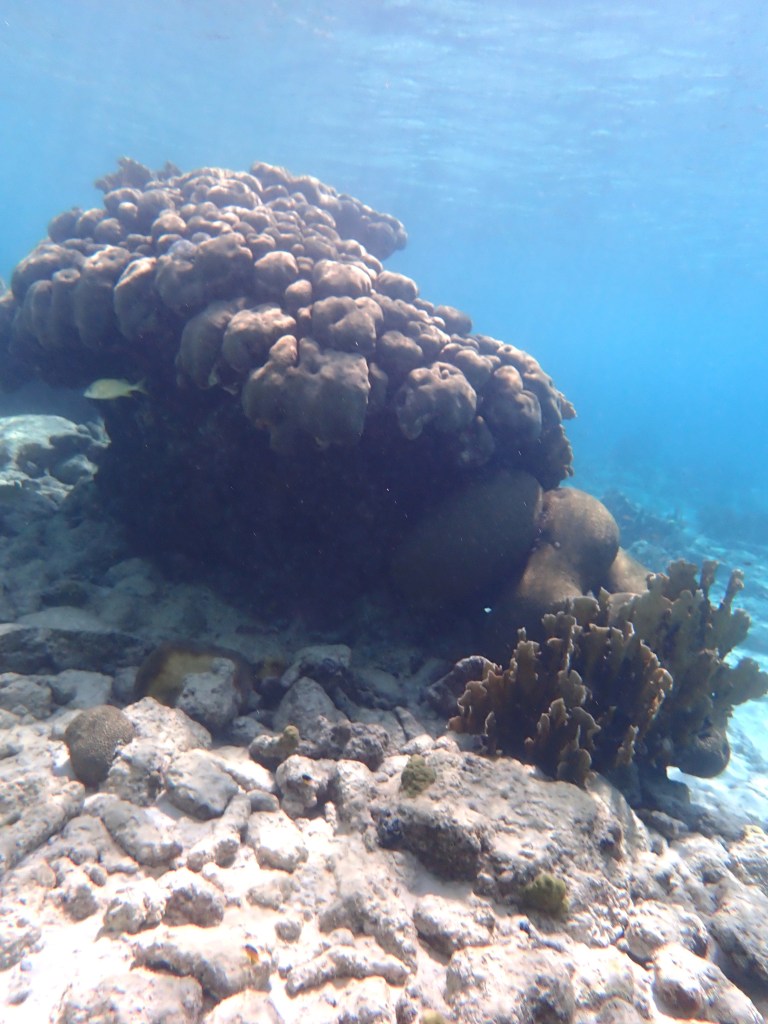
Cliff gets its name from a steep underwater drop-off not too far from the shore. Historically, this was a nice wall of corals. In 2023, I could see some of what appealed to divers. The left edge of the picture is probably 20 ft deep and falling rapidly toward the right.

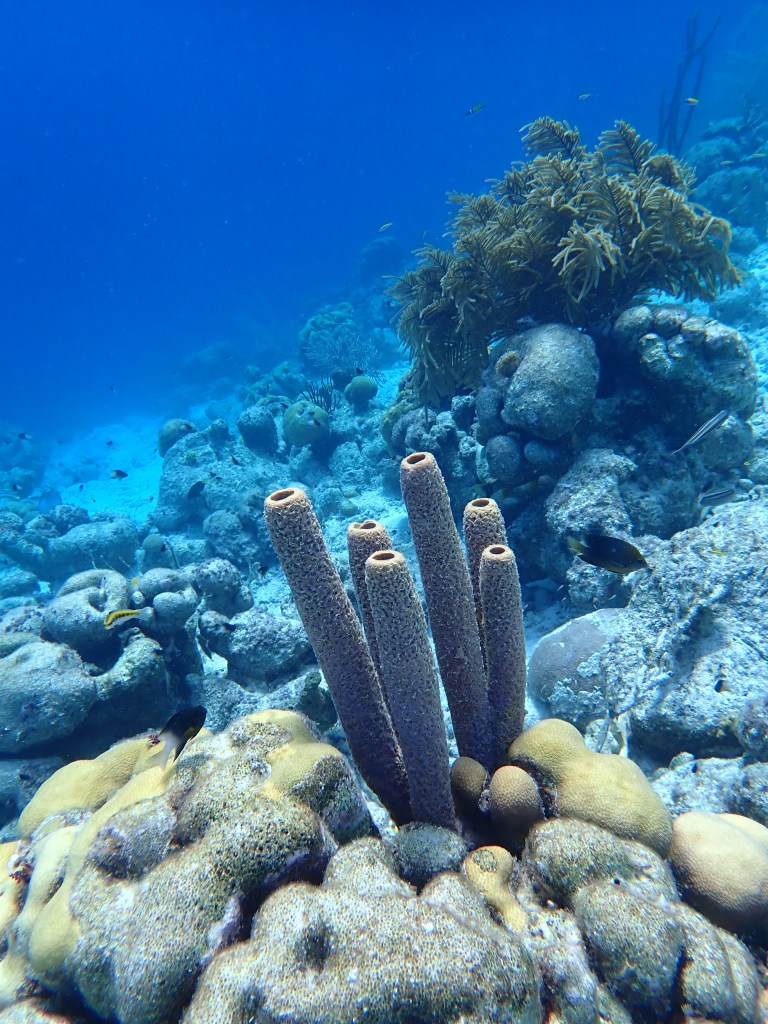
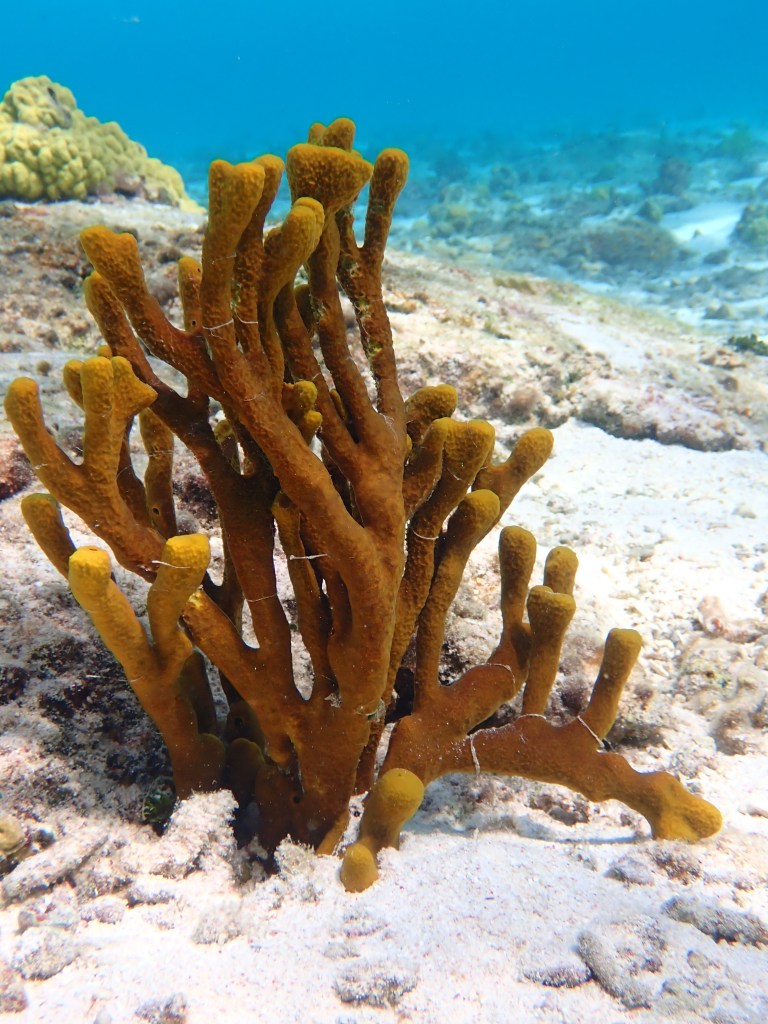
The first time I was at Cliff, I hadn’t yet discovered weights and freediving, so pictures took much more effort to get. Diving down, I captured this stovepipe sponge in the middle of some lobed star coral and a diverse bunch of sea plumes and rods. There’s a school of chromis in the distance (brown with one blue chromis).

I saw my first barracuda, which was intimidating! I’ve since seen them much more frequently and am better about not being intimidated, although I do give them their space. I suspect when they are in shallow waters, they tend to be active and on the hunt, as opposed to in deeper pier areas where they hang motionless in the gloom.

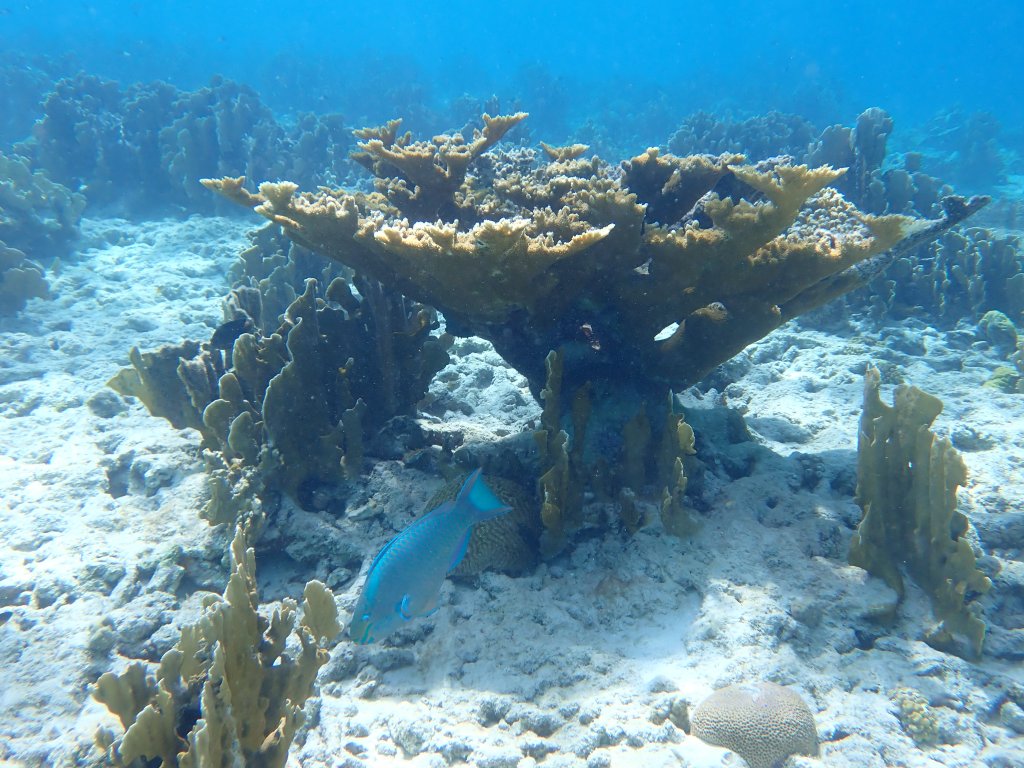
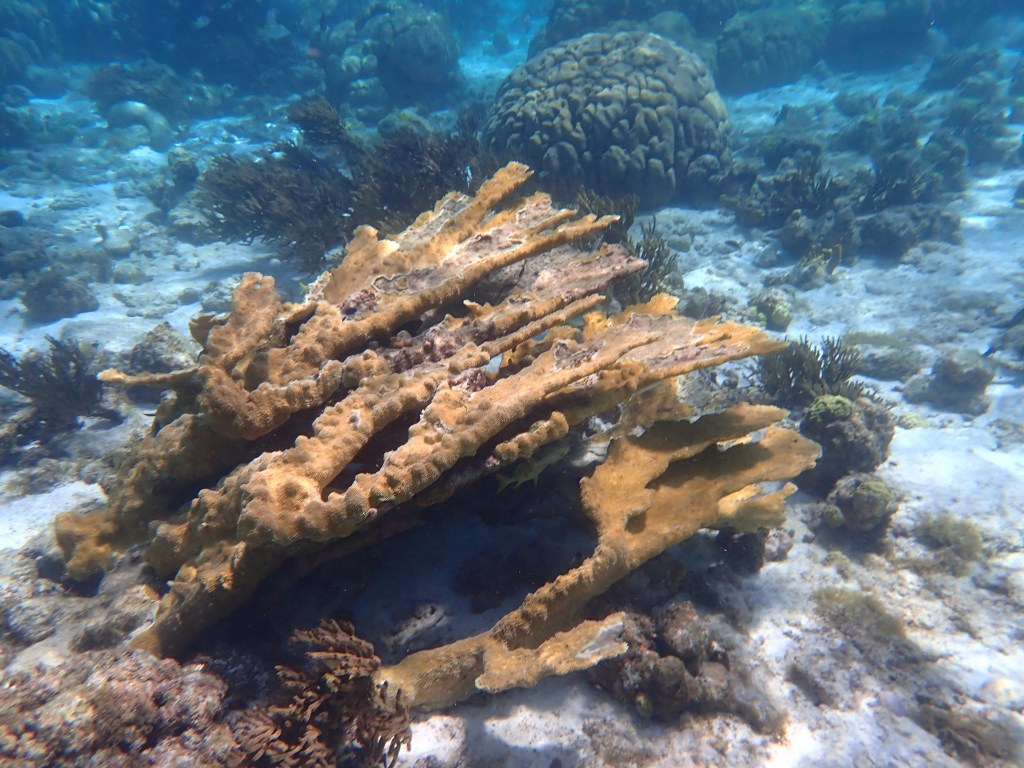
There was a lovely elkhorn coral, surrounded by fields of fire coral. Fire coral is so named because its polyps have specialized “stinging” polyps containing nematocysts, which release a fun little neurotoxin (sarcasm font). Yet another reason to not touch the coral. Here a ubiquitous Princess parrotfish searches for a bite under the elkhorn.

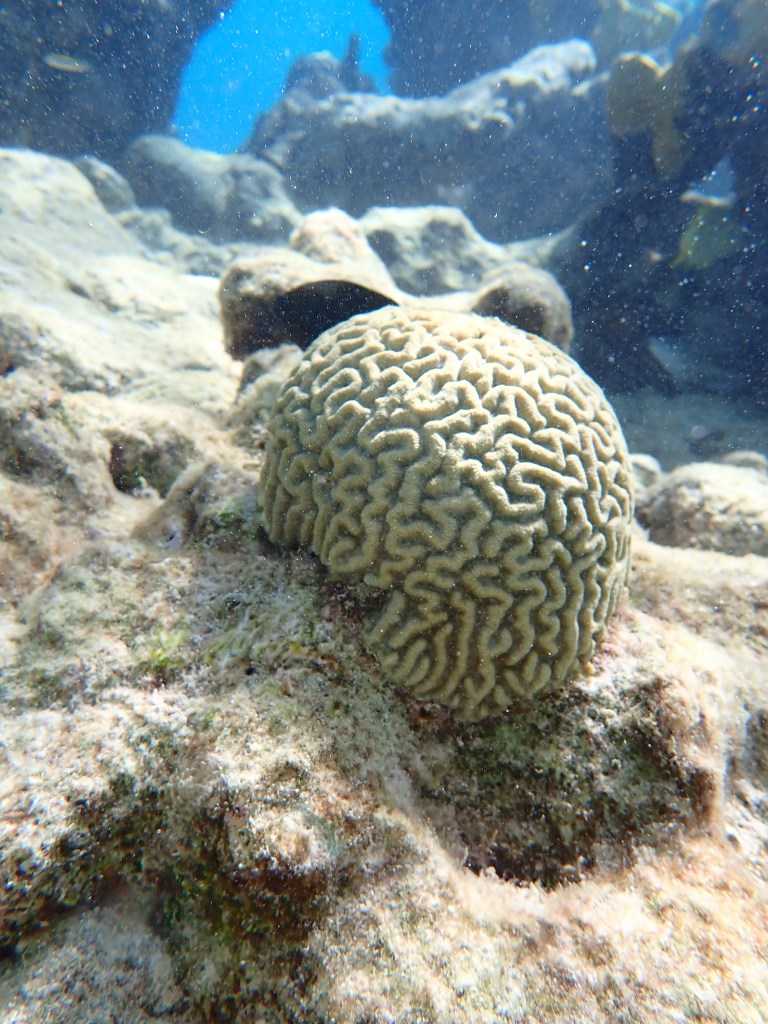
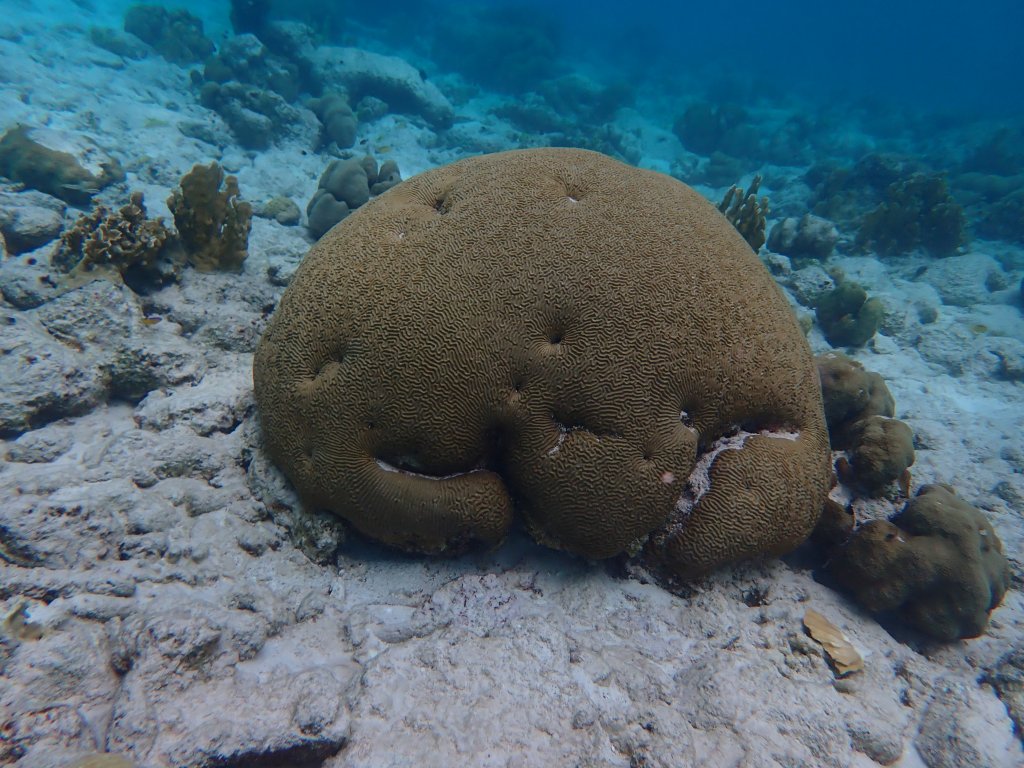
There were some nice sized and healthy brain corals here. Here I was chasing down a shy grouper, so they weren’t the main focus of my picture. That’s unfortunate, as this was pre-SCTLD.

There was also a lot of lobed star coral. They seem to prefer slightly deeper waters, and I’d guess I’m around 12-15 feet. The grunt hiding in the shadows is a fish that is around 6-8 inches, which helps provide size reference for this large outcropping.

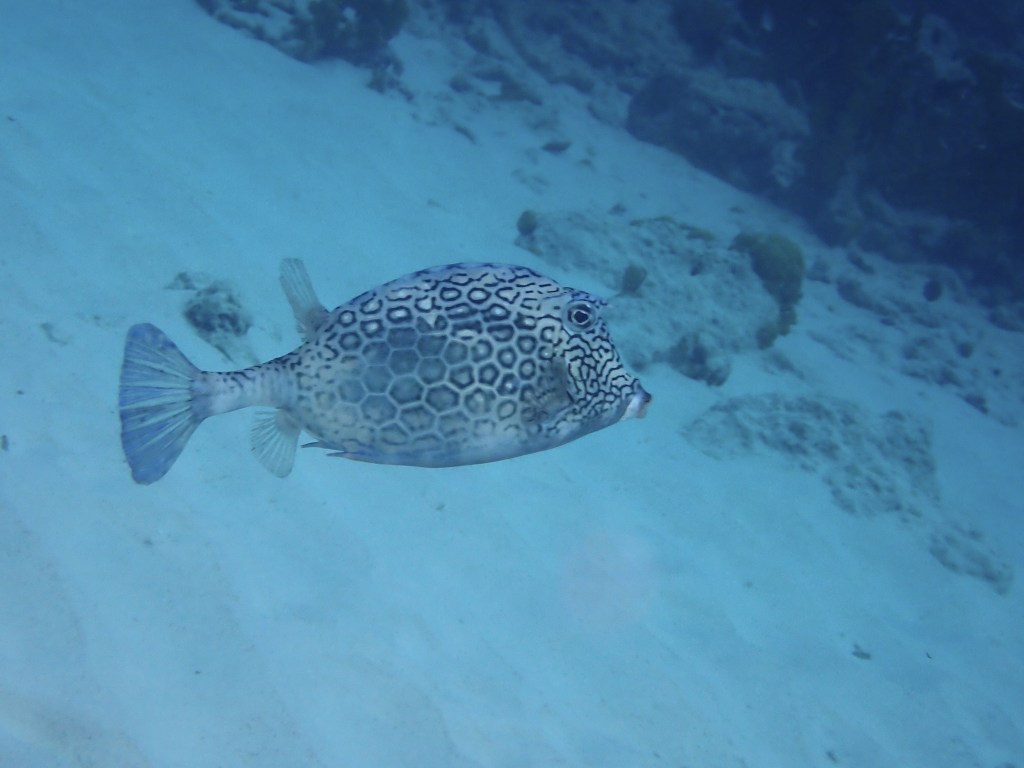
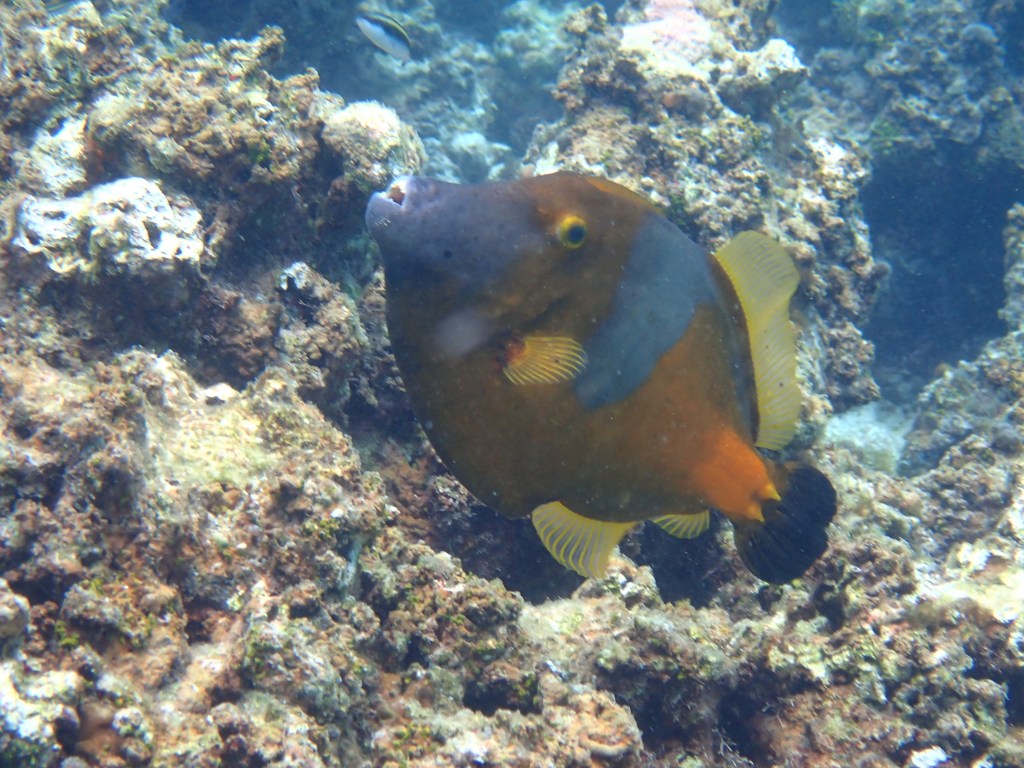
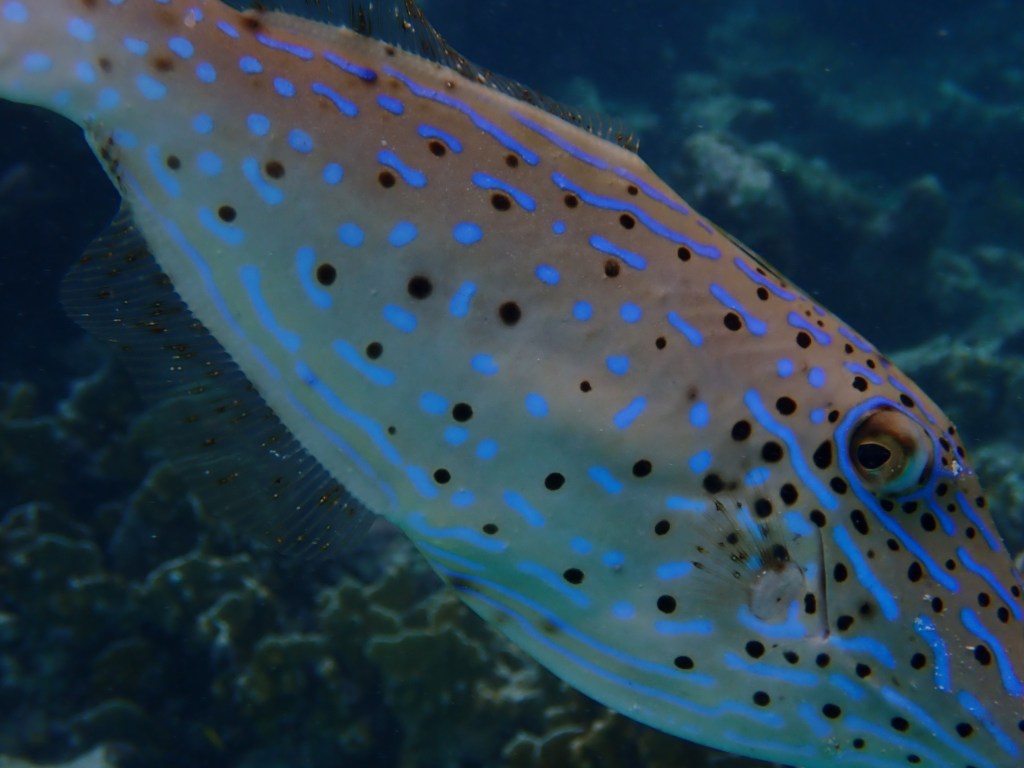
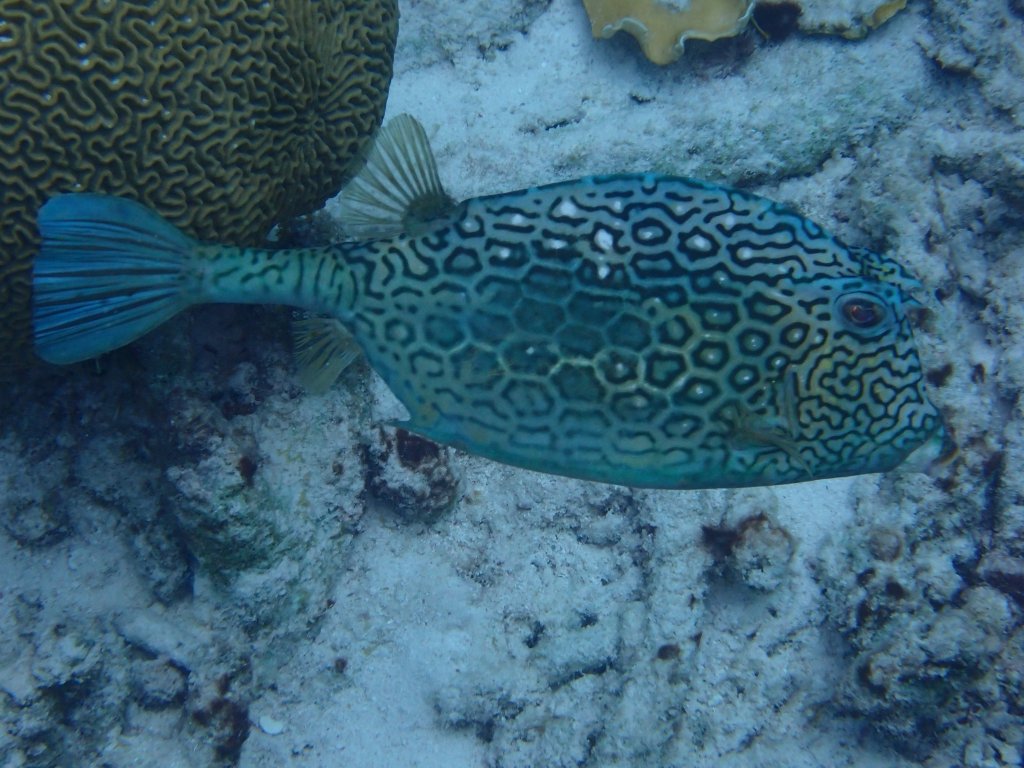
I found my first honeycomb cowfish. No mystery how it got it’s name.

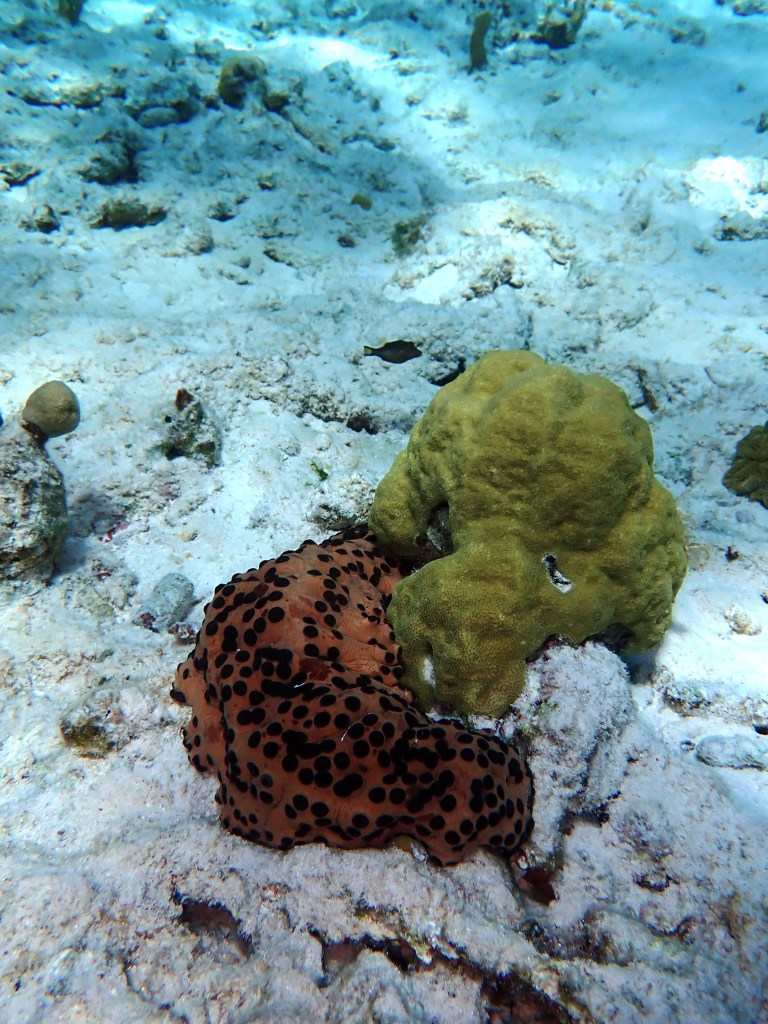
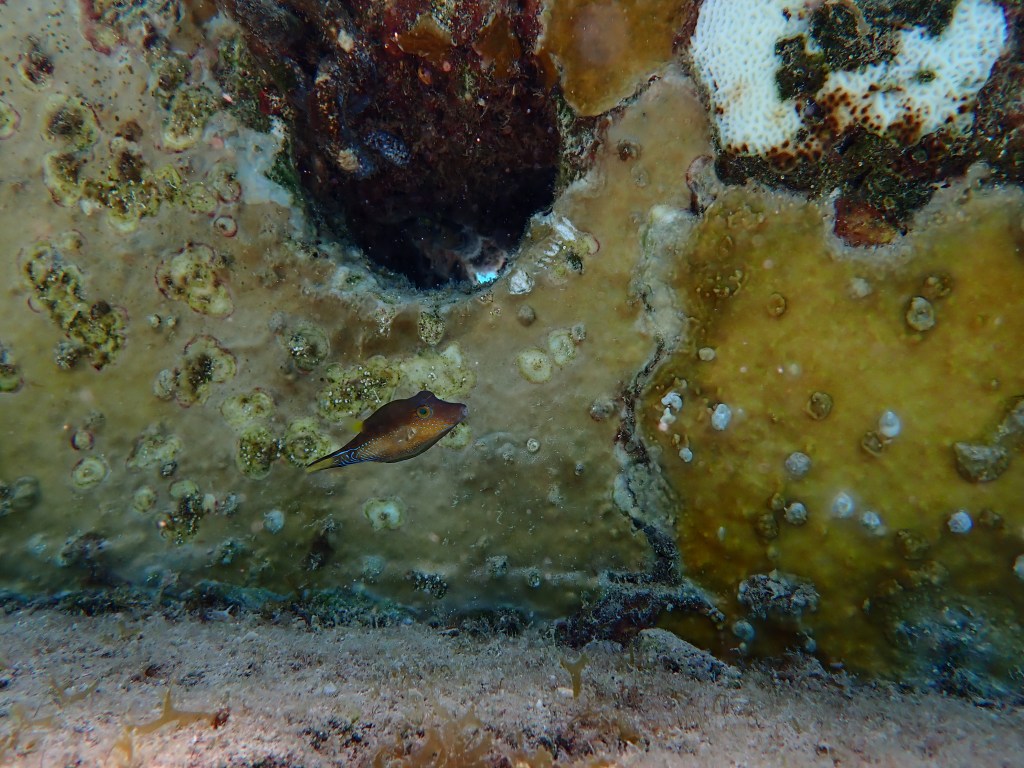
in 2023, I also saw one of the only sea cucumbers I’ve ever seen on Bonaire. I don’t know if it is generally inhospitable environment, or there is a trade in them. In Maui, legal and illegal human over-harvesting is a significant problem, so you don’t see many large ones. This one is huge (the 2 inch sharpnose puffer above the coral helps provide size reference), so I wonder if it is more a local environment issue.

CLIFF IN 2024 was a different kettle of fish. Or coral. Actually, less fish, with damaged and dying coral.

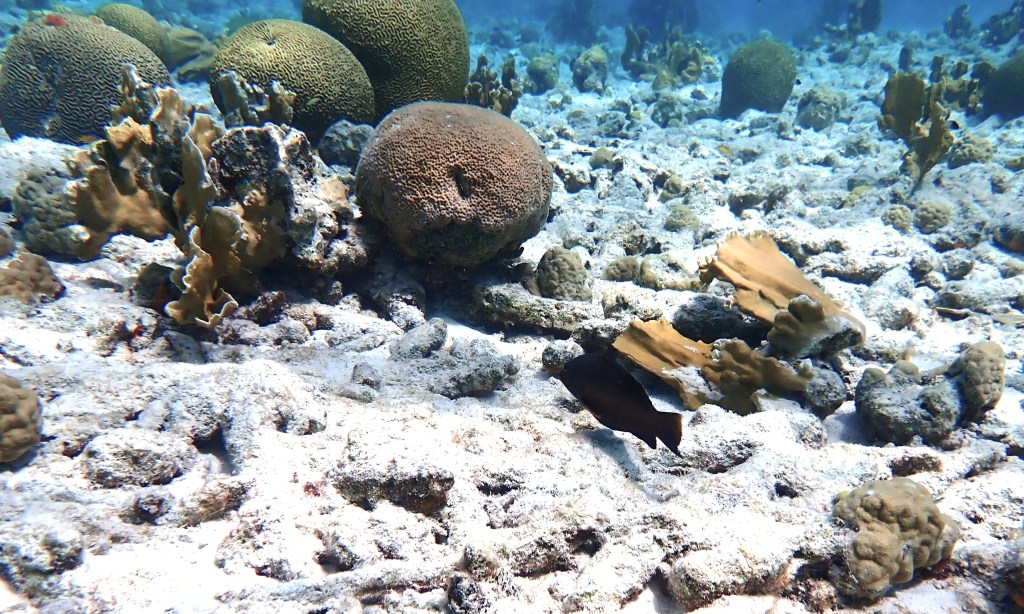
Upon entry, I immediately headed to the left, toward a large fire-coral reef. What a difference a year makes! Once again, I was faced with a 17-19 mph wind conditions, which weren’t awful but did cut down visibility. Here’s a dead brain coral foreground to bare reef.

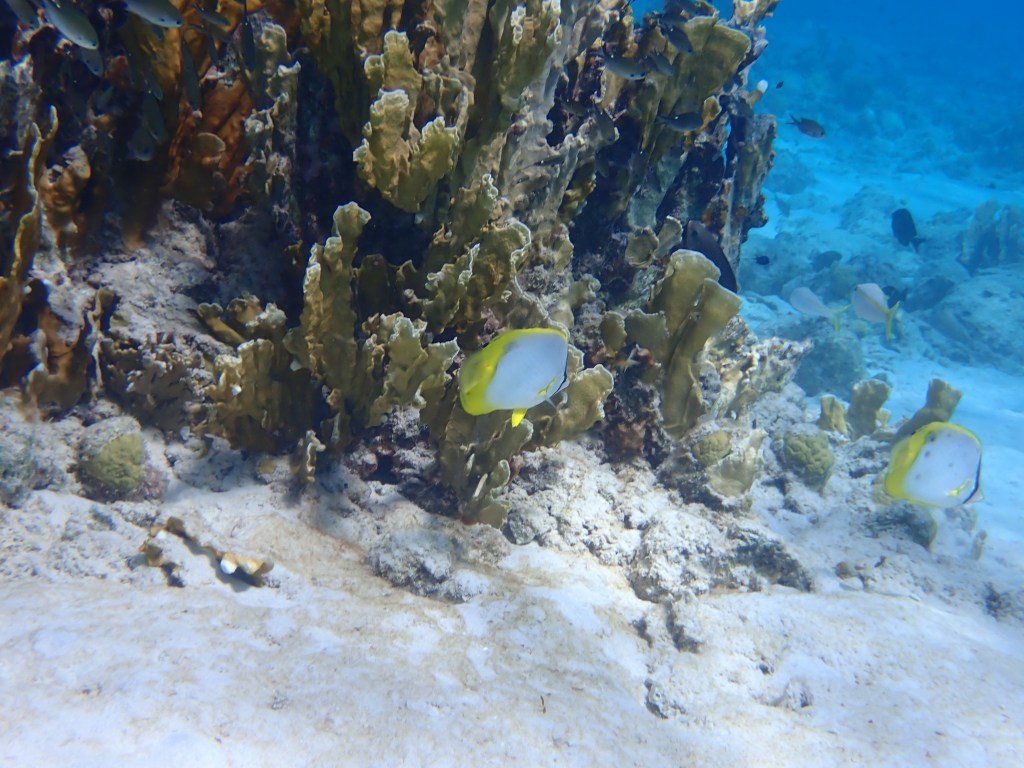
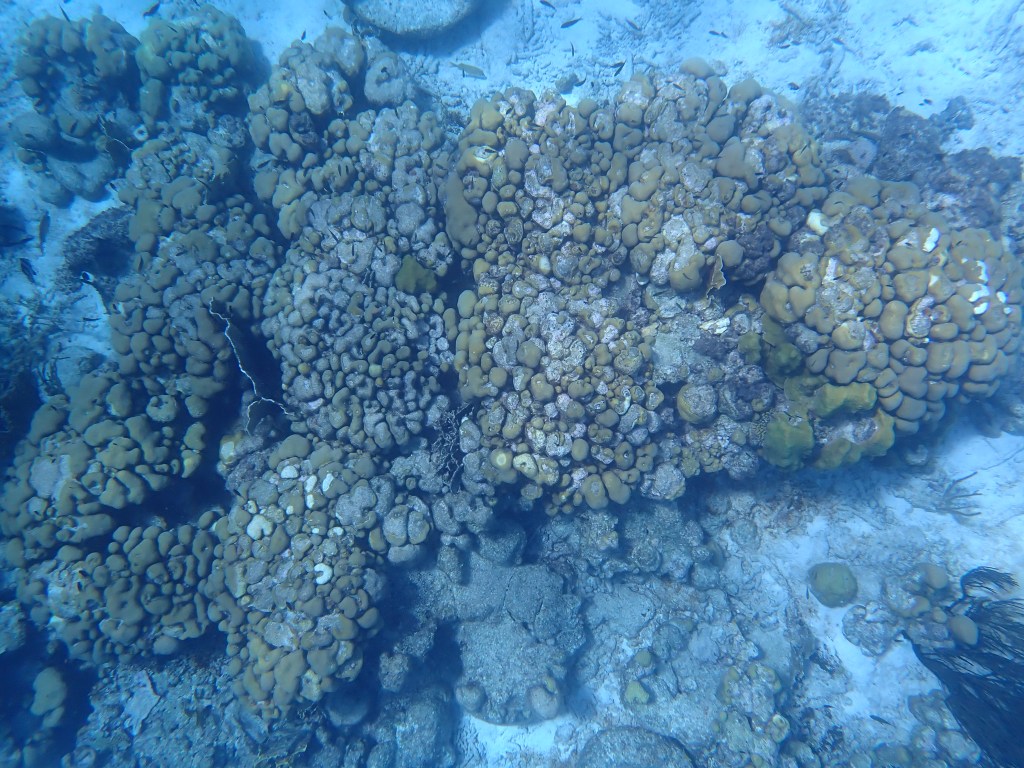
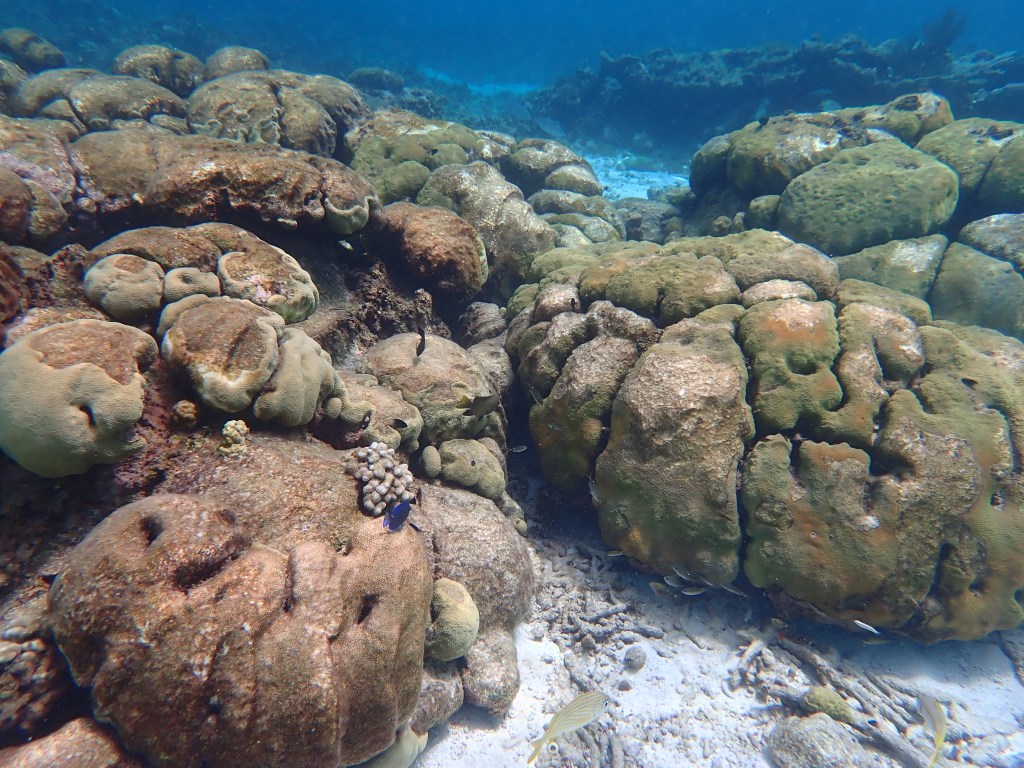
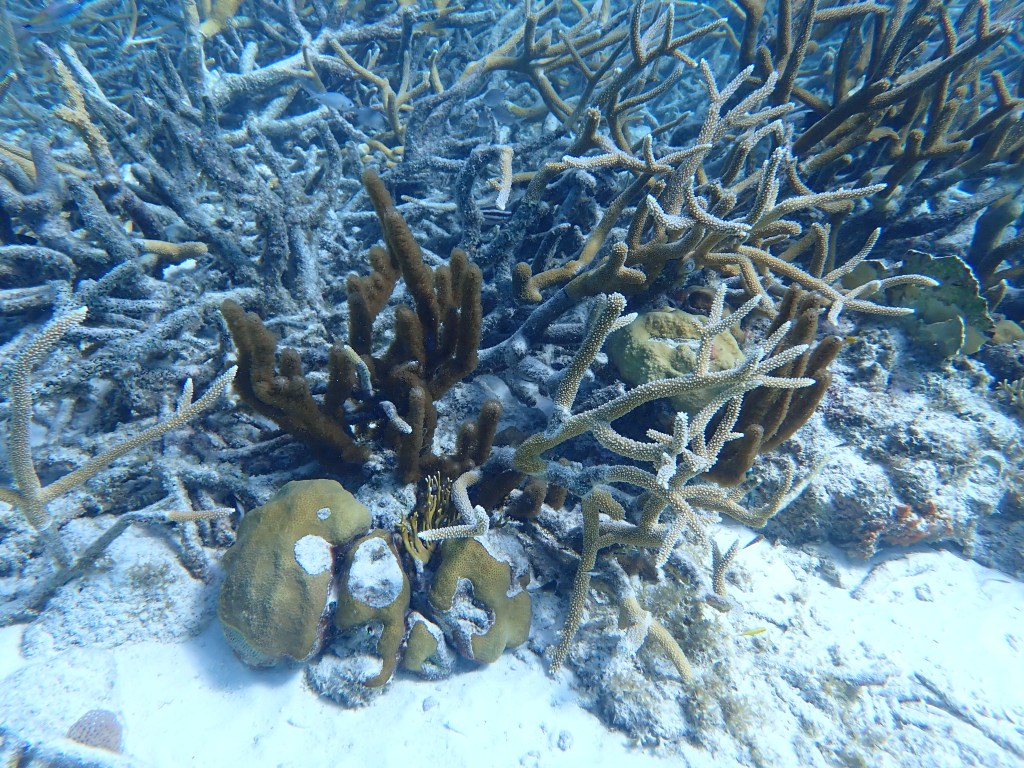
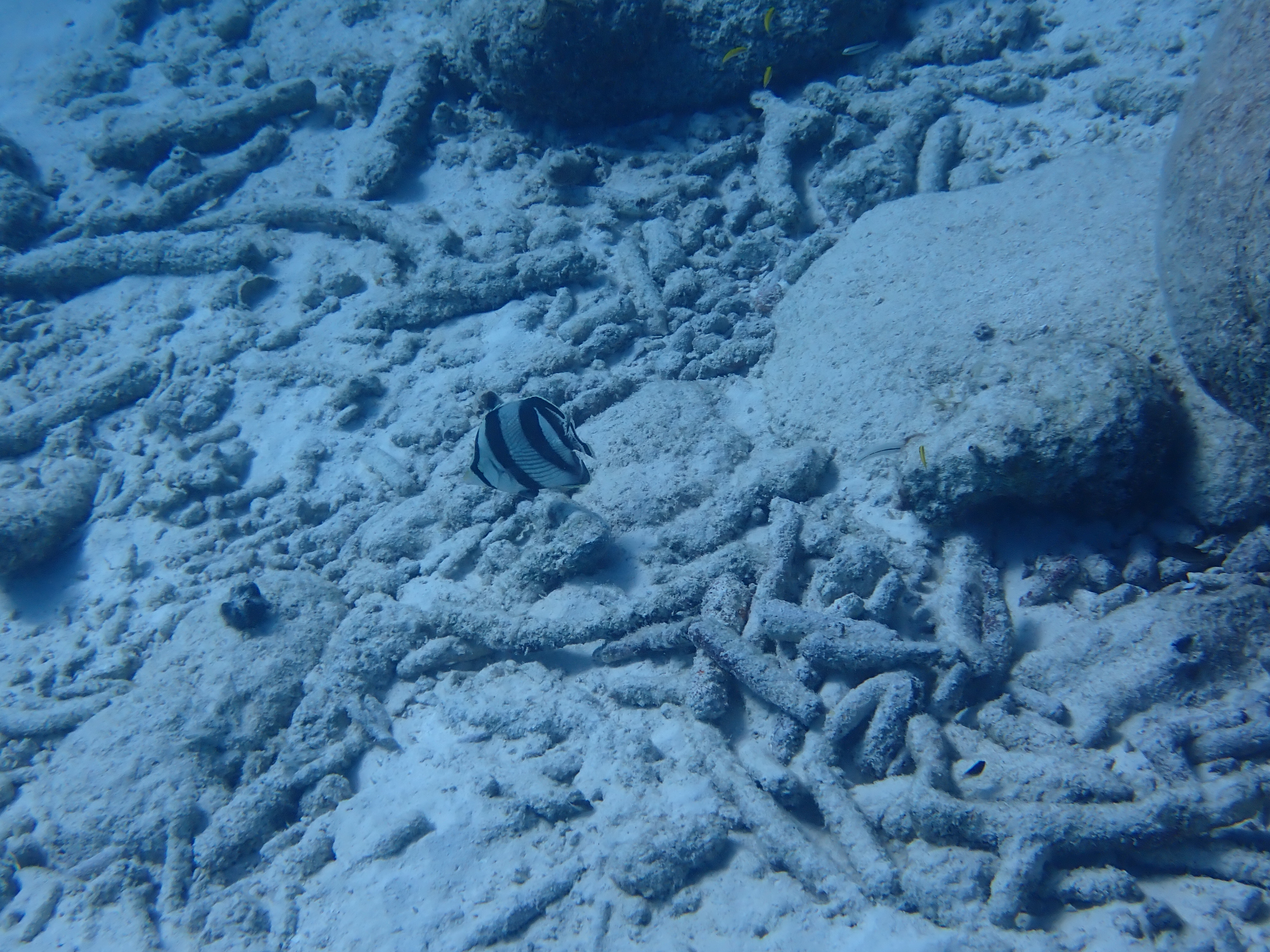
I chased this butterflyfish pair for a bit, trying to get a shot with both of them in it. I was dismayed to see the disease spots on the rightmost one. This picture also shows the condition of the fire and mustard coral, two species that seemed indestructible to me. To the left is some lovely colored fire coral, getting paler and more diseased towards the right. You can see the mustard coral, the small mustard-yellow round bumps on the bottom left and bottom right. They also seem like they are everywhere, but are clearly suffering here. Usually they form a solid ball like mass. You can see the white dead stuff surrounding these two.

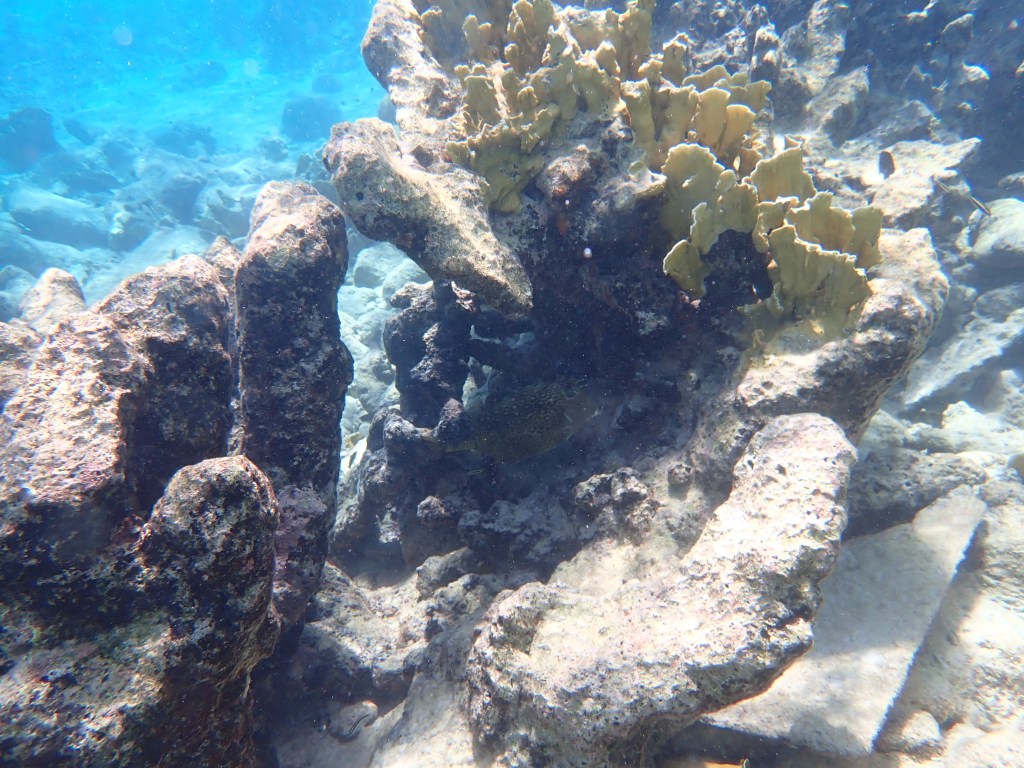
I was following this honeycomb cowfish who decided to hide under an overhang (as they do). I didn’t zoom in, because I think this is another one of those that shows the reef condition. Washed out fire corals on top and an absence of life around it.

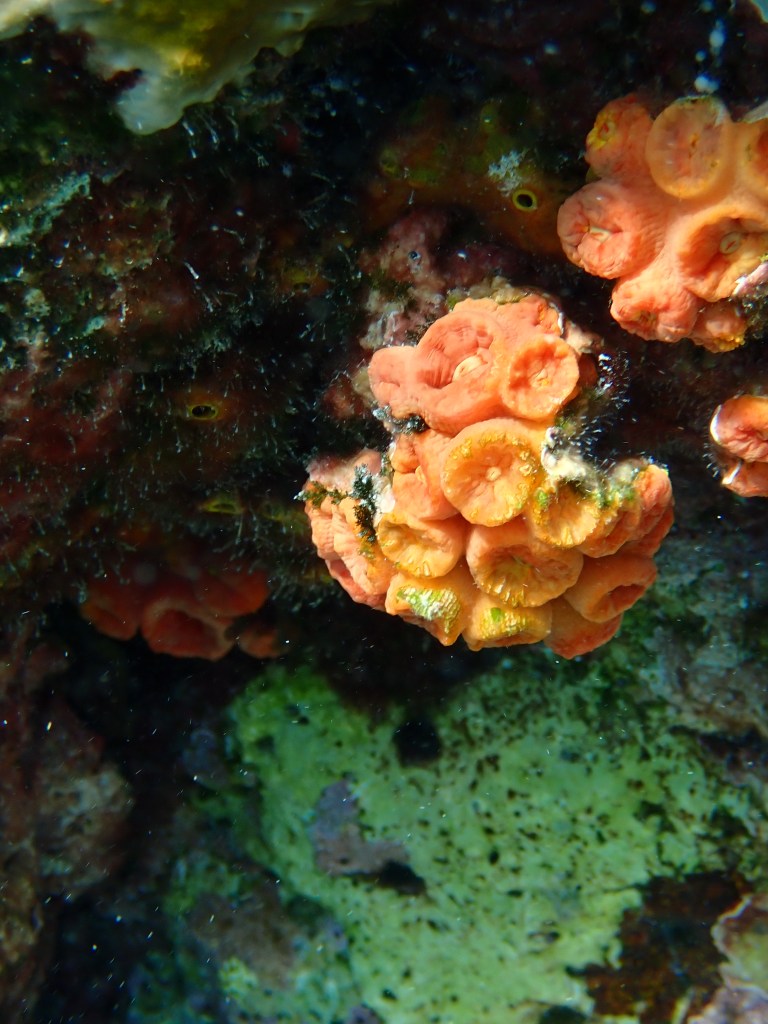
I did find a small cluster of orange cup coral, which cheered me up.

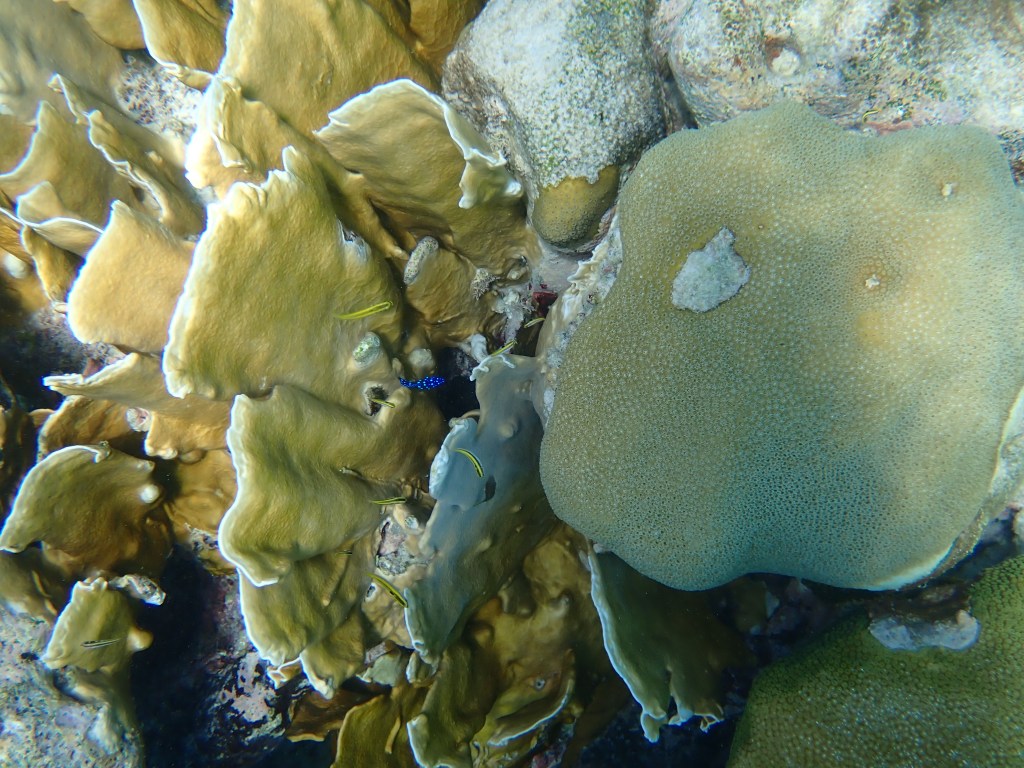
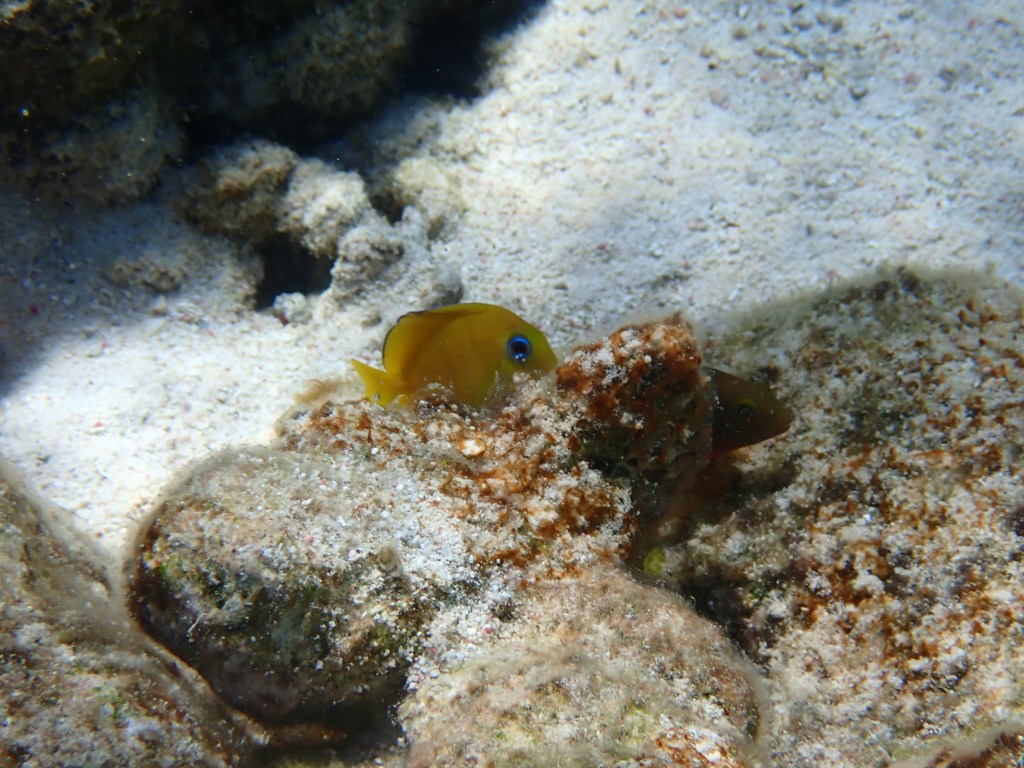
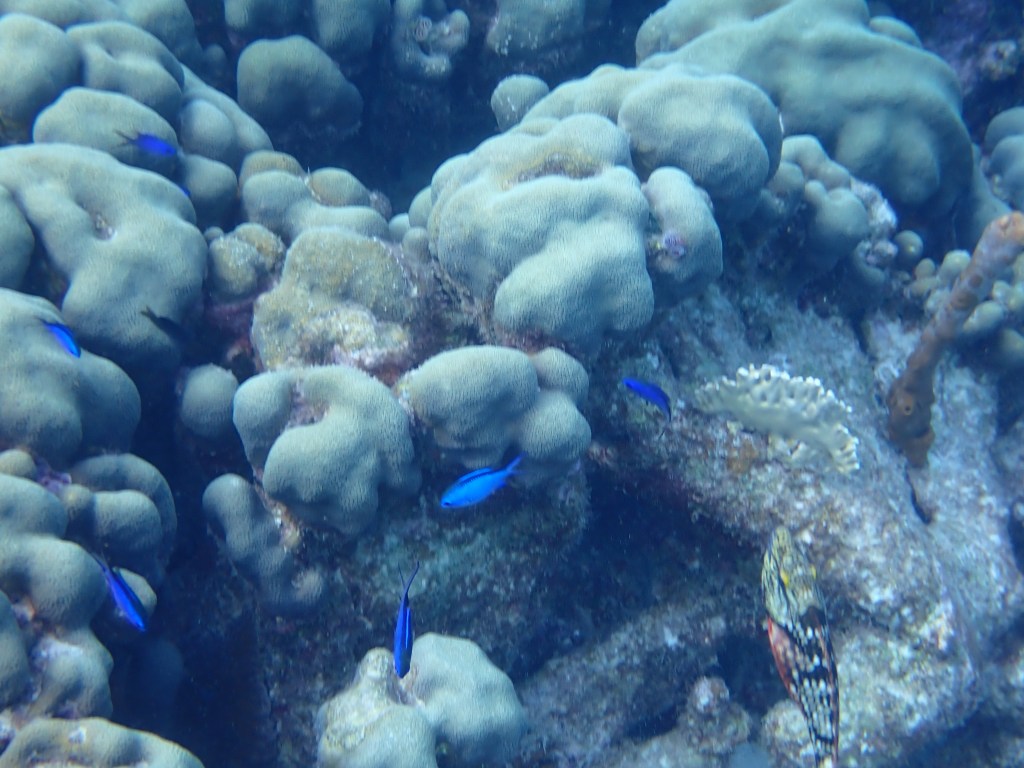
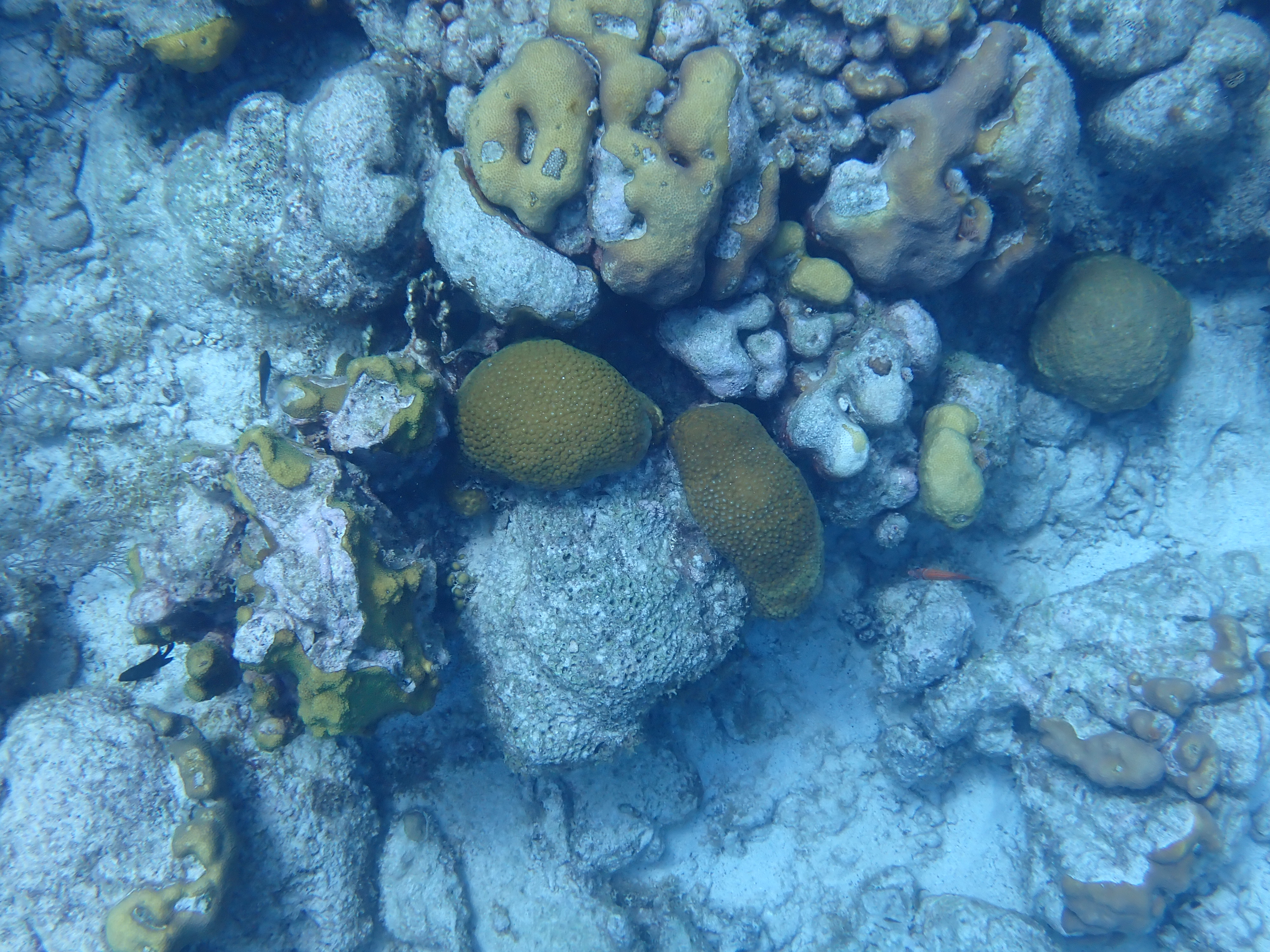
Here’s a few ‘littles’ (juvie damsel, gobies) in some very bleached out but alive fire coral, and a bleached but healthier star coral. Notice the color on the coral is deeper as the depth increases.

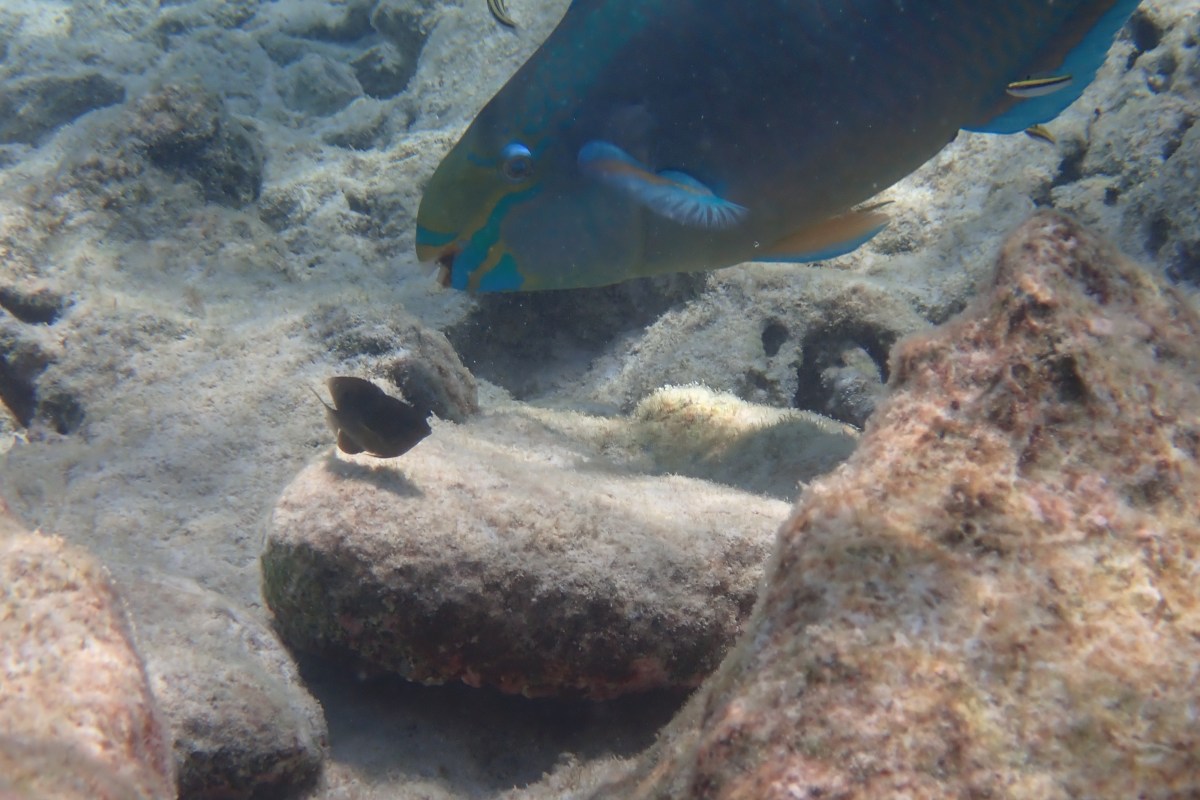
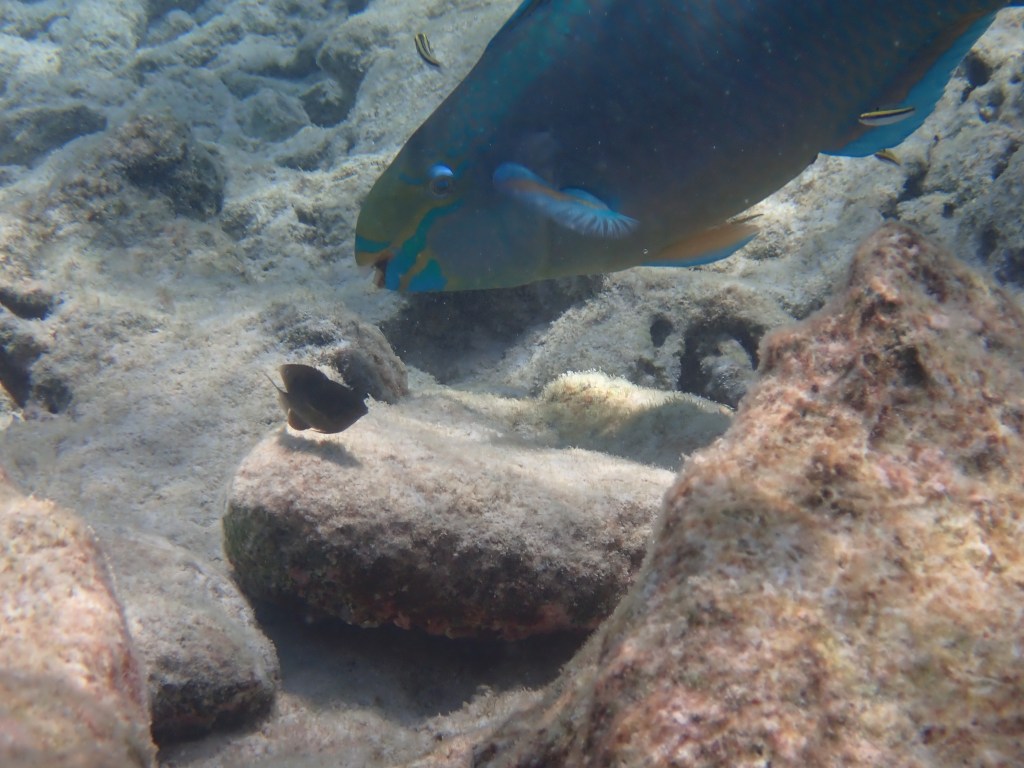
I always try to capture fun shots of the fish I see. I thought this Queen parrotfish looked like it was talking to the damsel. Undoubtedly the damselfish, known for being highly territorial, was saying, “piss off, pal!”

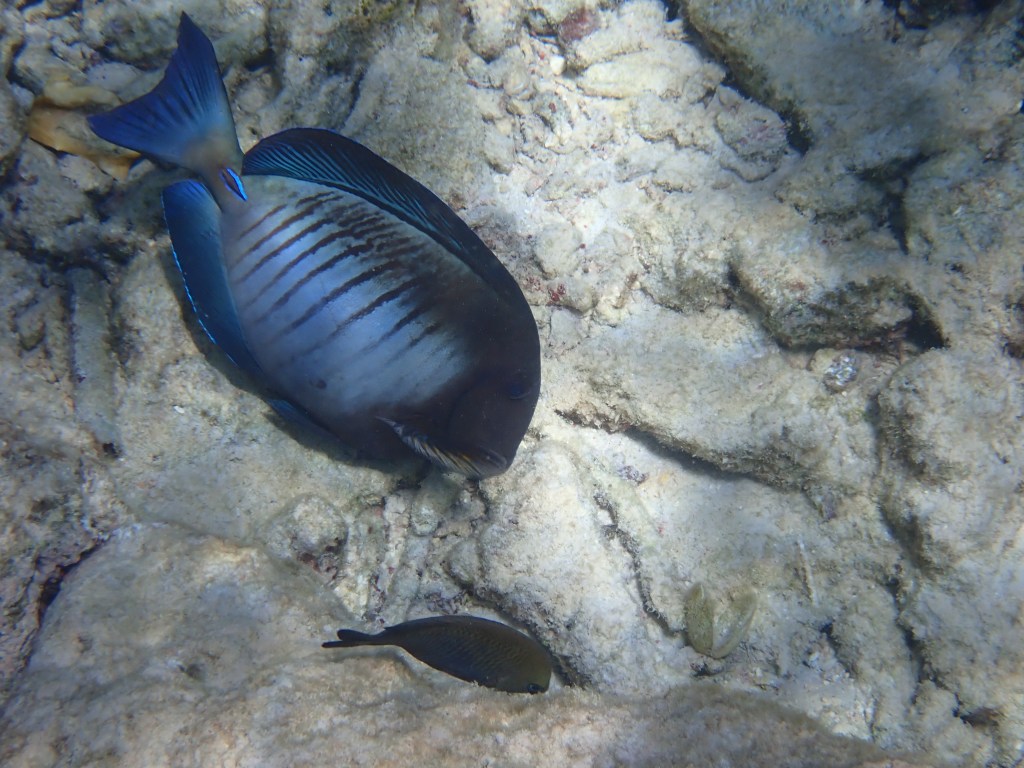
I also found a very large, very dark-patterned doctorfish, very striking with tiger-like stripes. I don’t usually see them this dark.

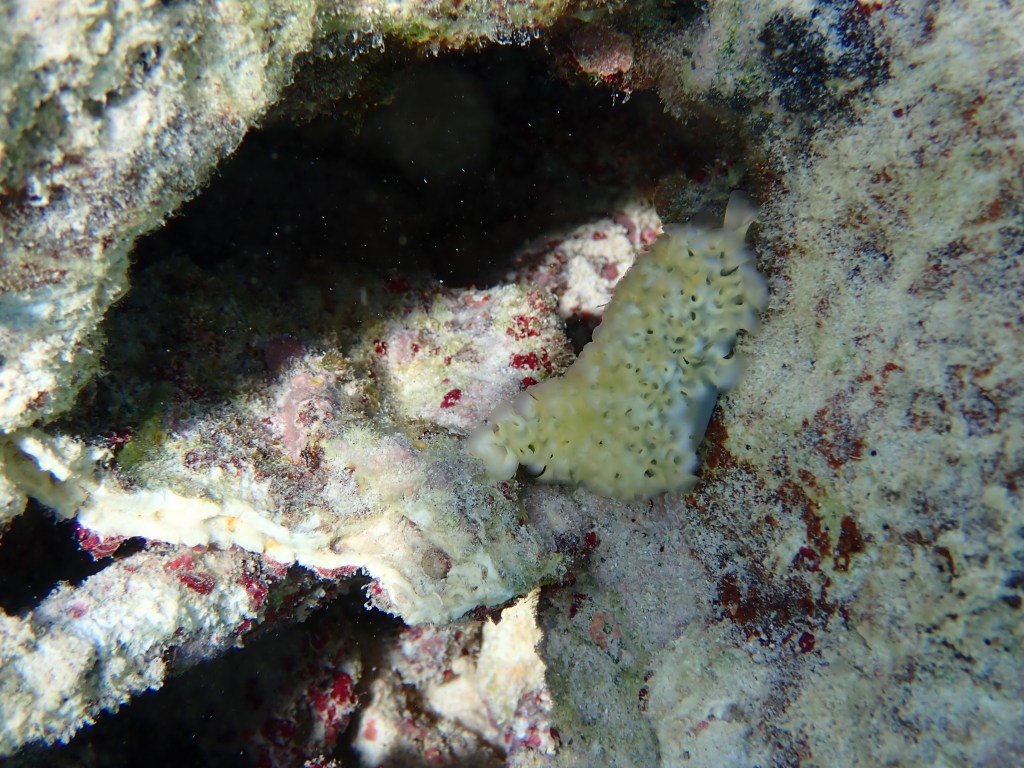
I was excited to find a lettuce nudibranch. I haven’t found them very often in the Caribbean.

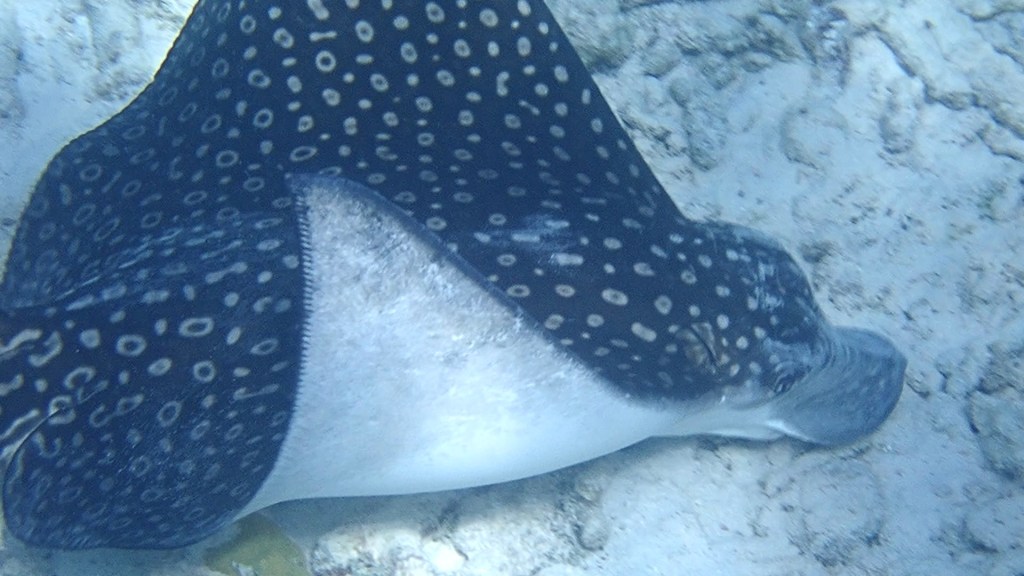
I did a swim over the drop-off as I was following an eagle ray, my first ever! It was very focused on feeding. Initially I followed far behind, having no idea how timid it may or may not be. It seemed to display no concern about me (I credit my whale shark pattern rashguard set from Waterlust), as well as the fact that I was about 15 feet above it, so gradually I relaxed enough to focus on getting good pictures (not just any picture). It would swim for about 25-50 yards, then do a turn, then head in a new direction. I got this shot on one of the turns. Isn’t that vertical eye amazing?

The ray preferred the depths, eventually leading me over the slope down to the deep. I tried to take heart from the percent of green-colored coral down there. Maybe even as high as 30%, which, you know, isn’t 0%. So there was that.

Still, a somewhat sad outing. I tried to take hope from the fact that some varieties were surviving, but I am afraid I am just documenting a slow death.

Bonaire 2024. Lac Cai

Lac Cai. Beautifully desolate.

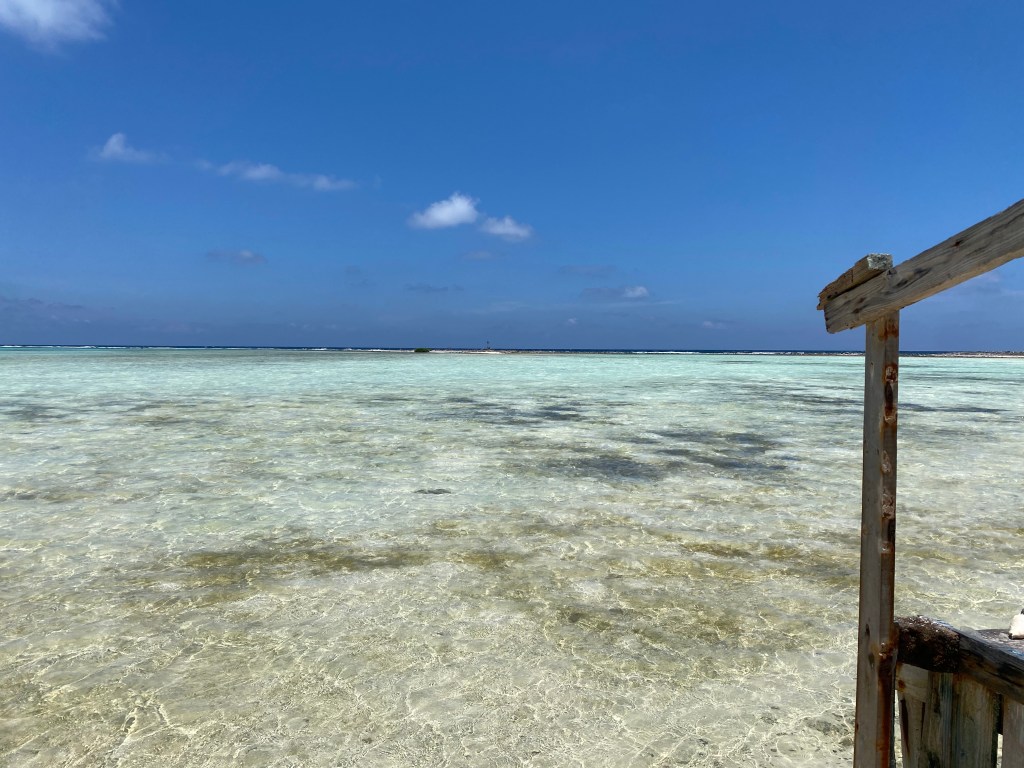
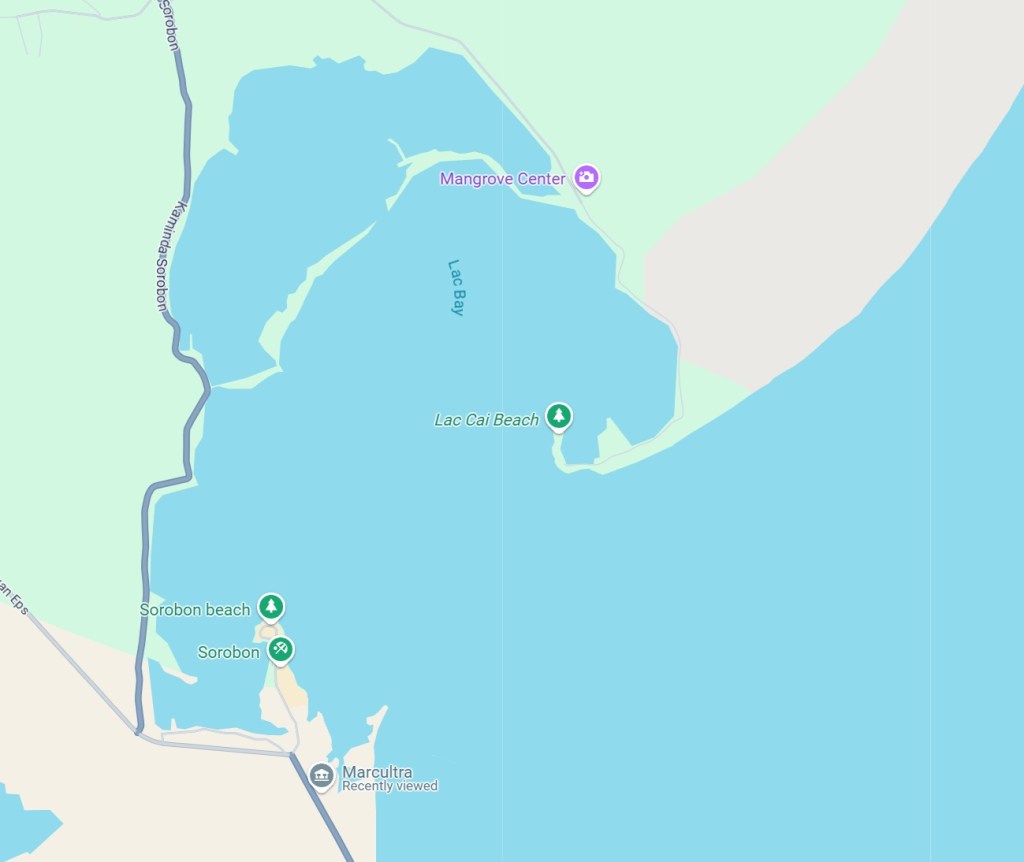
Not all of it, of course. Sorobon is a place with shacks, shops, picnic tables, and windsurfing rentals. Most windsurfers stay in the bay north and central to Sorobon. But if you swing around to the southern part of the bay, it gets incredibly shallow, too shallow even for windsurfing. This is all sandy, with tufts of seagrass anchoring it, so the surface is very uneven. Depending on the tide, it is about 4 to 8 inches deep over much of that expanse.

You can see the bay is wide open to the ocean, at least on the map. In reality, there seems to be a sort of ridge going north from the southern entrance to the bay. In the photograph, you can see waves in the top, hinting at the rocky ridge. Both times I went to Cai, I did a walk-shuffle across that wide sandy expanse, perhaps 200 yards, until it got deep enough to snorkel, about 4-5 feet.

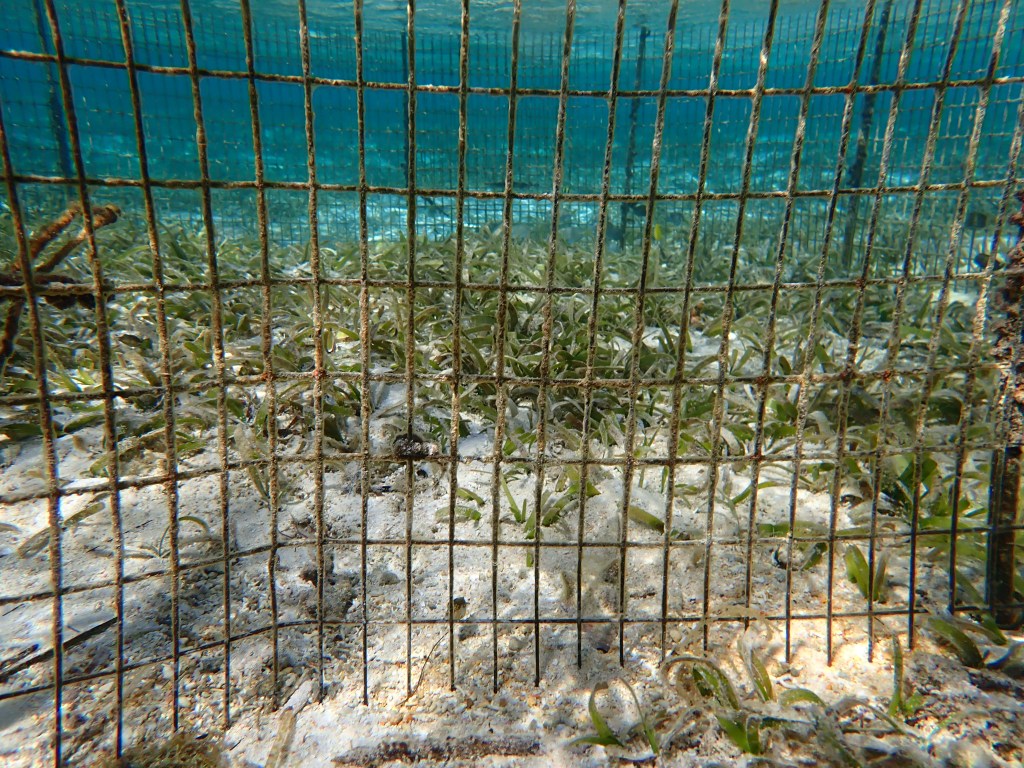
The fish cage is the first sign I’m reaching snorkel depths.

It seems pretty disappointing at first, easily as desolate under water as it is on the surface.

mustard corals along the bottom of Lac Cai

The mustards were doing pretty well, along with a few rods and sponges, but everything else was struggling.

But the real fun here is the shallow water and the juvenile fish. I am guessing that Lac Cai serves as a nursery for many species, giving protection from the big ocean outside the bay.

adorable little juvie tang peeking at me
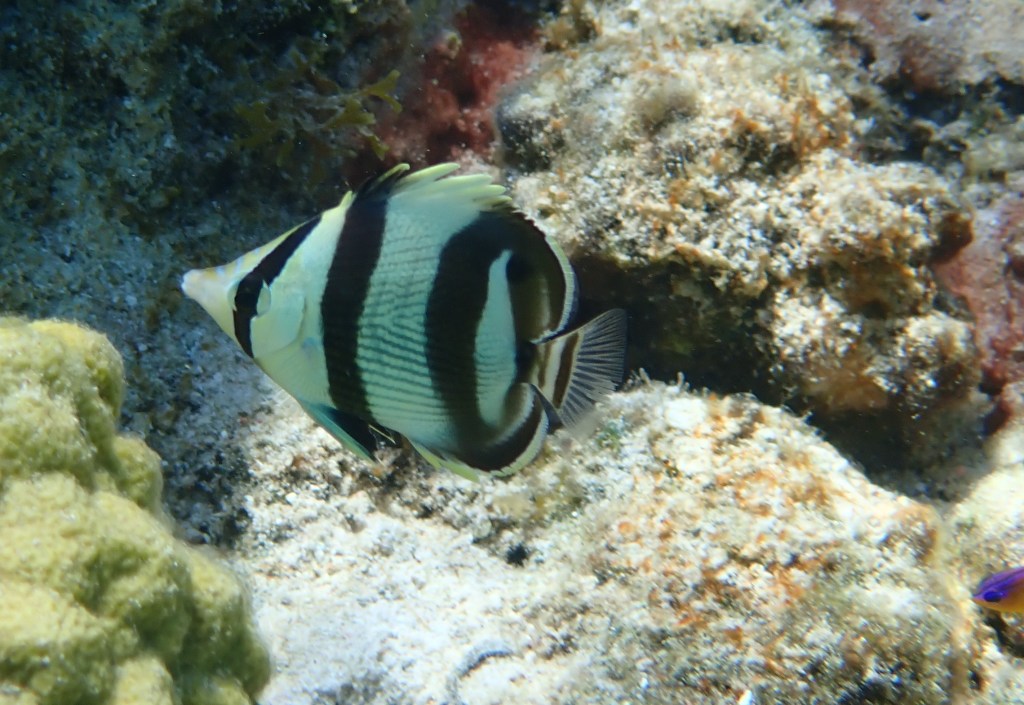
juvie banded butterfly
blue tang, yellowhead wrasse, goby, juvie puddingwife

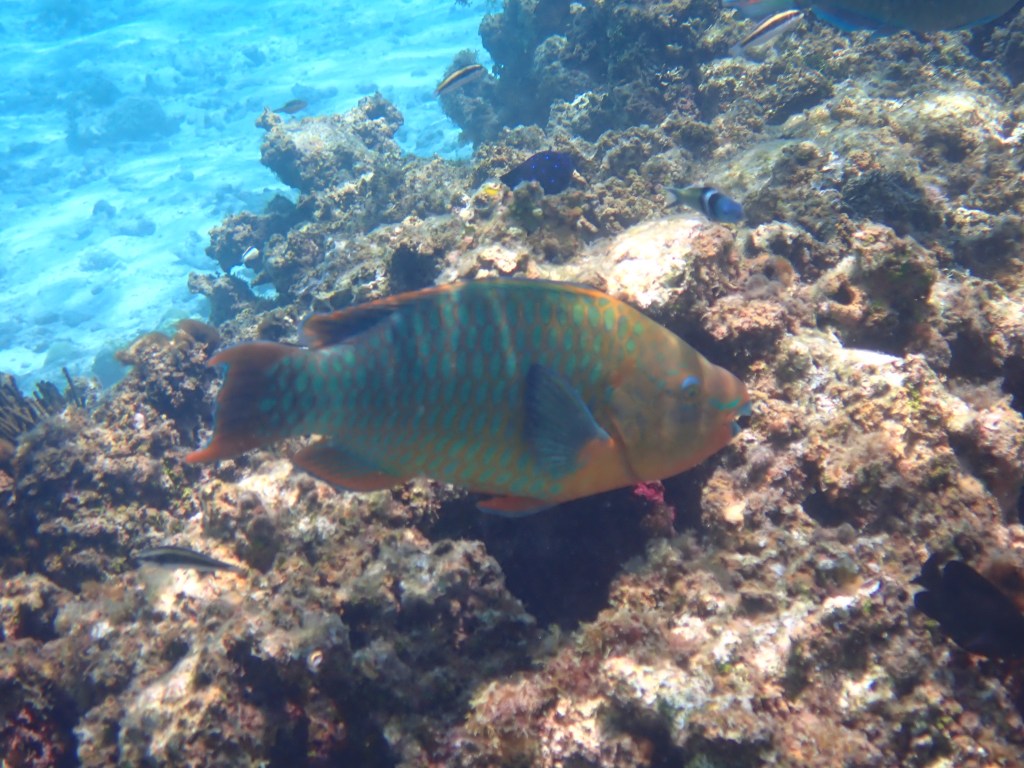
This was the first place I saw a rainbow parrot, and got so lucky, I found a small school of four.

rainbow parrot scraping at a depressingly dead reef

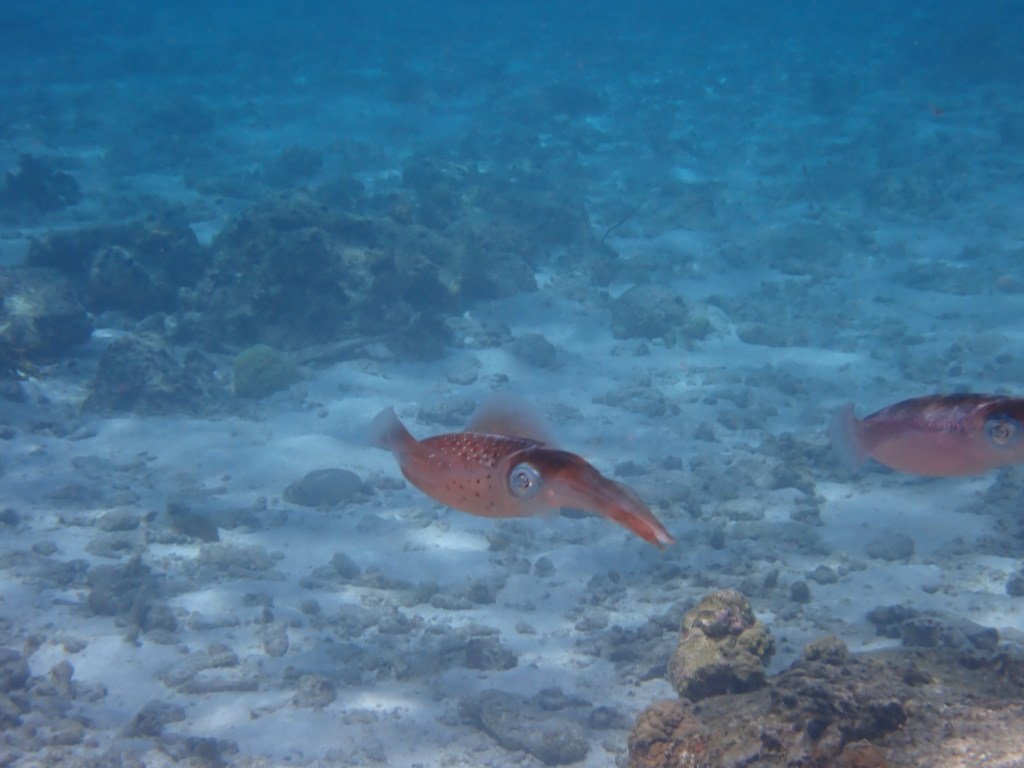
I was also lucky enough to snap my first photograph of Caribbean reef squid. I’ve seen them before, but I have found them to be both shy and fast.

The value of shallow water is getting great views. Swimming slowly by I happened upon this scorpionfish. For me, the key to finding these guys is their overall shape and the very cool pattern around their eyes. Like barracudas, this is another fish I keep a respectful distance.

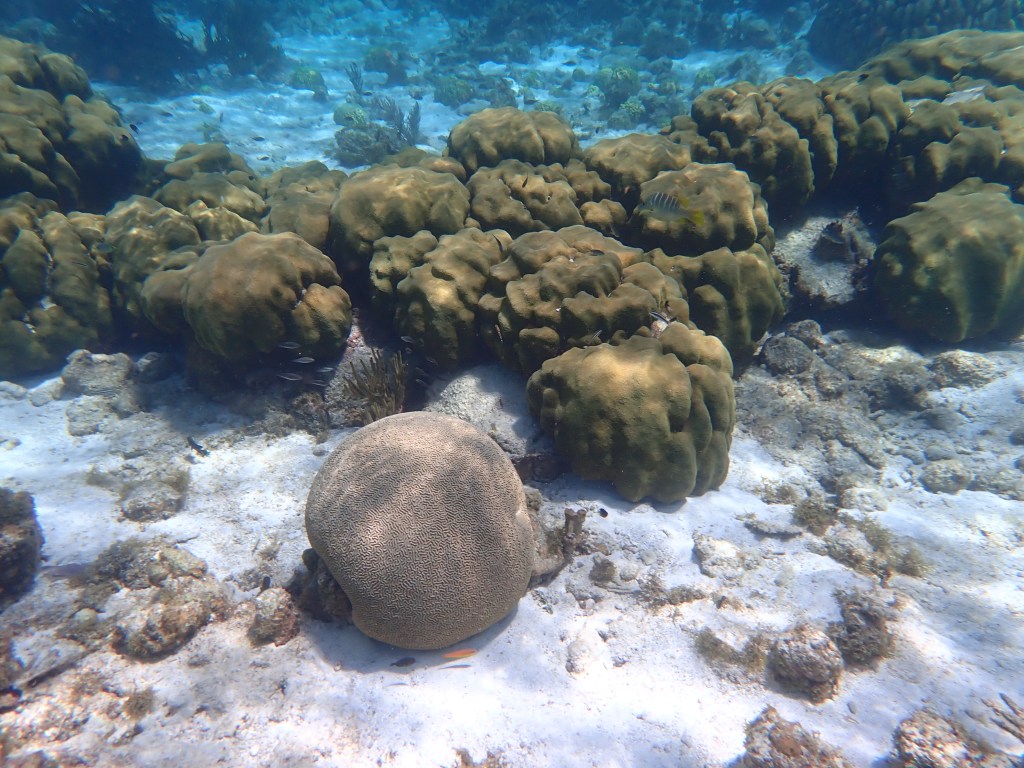
I kept swimming to the north and ran into Lac Cai’s giant boulder corals. This was remarkable, and heartbreaking. I wish I could have seen it three years ago. These were all 2-3 feet across and looked so healthy from the front.

There were some staghorn coral in rough shape, but they acted as shelters for fish. This one appeared relatively healthy.

I found some large fish in the area and got a couple of great shots.

And then, as I was making my way through the rows of boulders, I saw it.

Holy guacamole, I squealed. What a reward!

Bonaire 2023. Andrea I and II

I will be forever grateful to Nicole and Galen at Tropicalsnorkeling.com for putting together detailed snorkel guides. I used their ebook on Bonaire to help me narrow down the 86 official dive and snorkel sites. Andrea I and II were on my priority list, and ended up being so much fun, and so beautiful, that I returned here a number of times on multiple trips.

This is me in the light blue water on the left! You can see limestone and dead reef at shore edge. The darker blue near shore is the coral and rock shelf, then there’s a sandy area, showing light blue, and then the deep dark blue.

Andrea has a very long iron shore (thus the division into Andrea I and II), with a narrow band of finely ground stone/sand slightly inland from the iron shore. It also has a thick patch of bushes behind the sandy area, hiding numerous expensive villas and maintaining the illusion of a quiet public beach.

There are a couple of yellow markers showing you the best spots to enter the water for minimal coral damage (the sea urchins don’t listen to this, though, so still be careful).

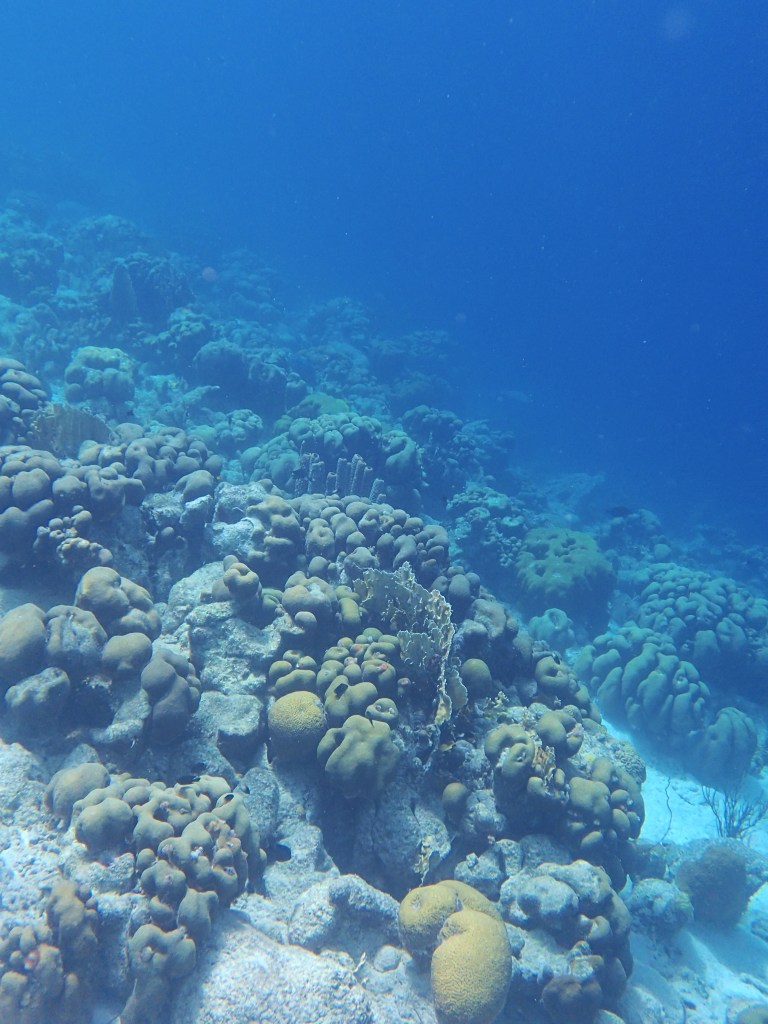
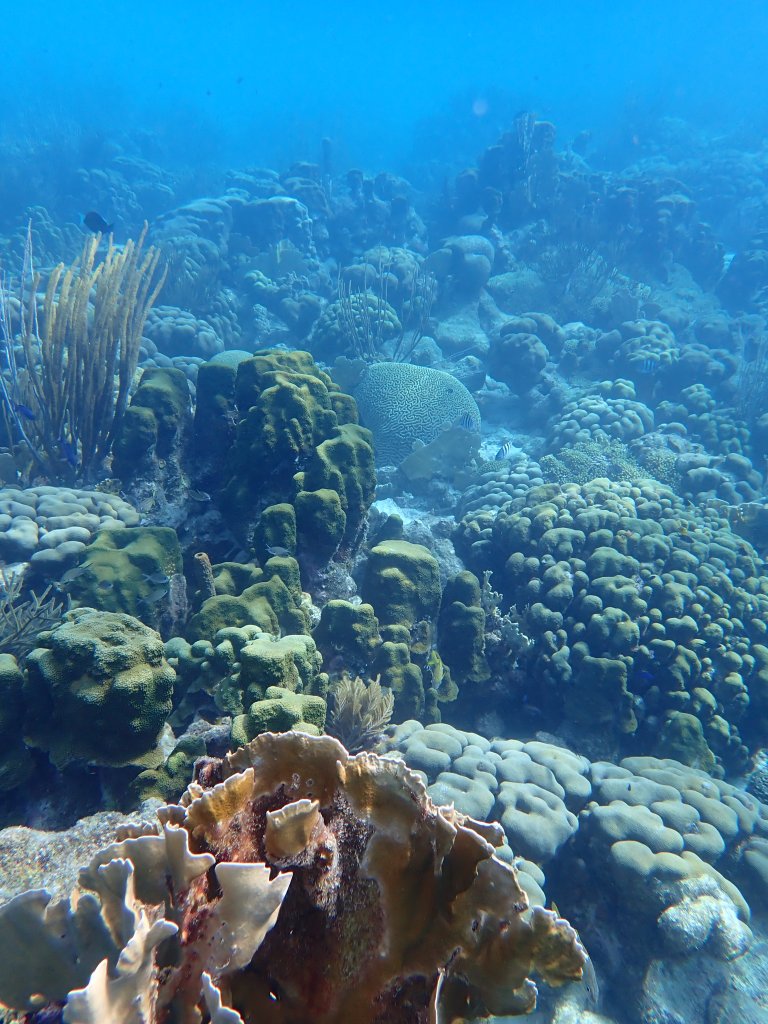
Snorkeling was amazing. There were many hard corals, some soft corals, and a wide variety of fishes. There’s a large shelf near shore filled with corals, then patch reefs in a mid-ground, about 8-10 feet deep, then a field of plumes and boulders as you hit the slope and diver depths.

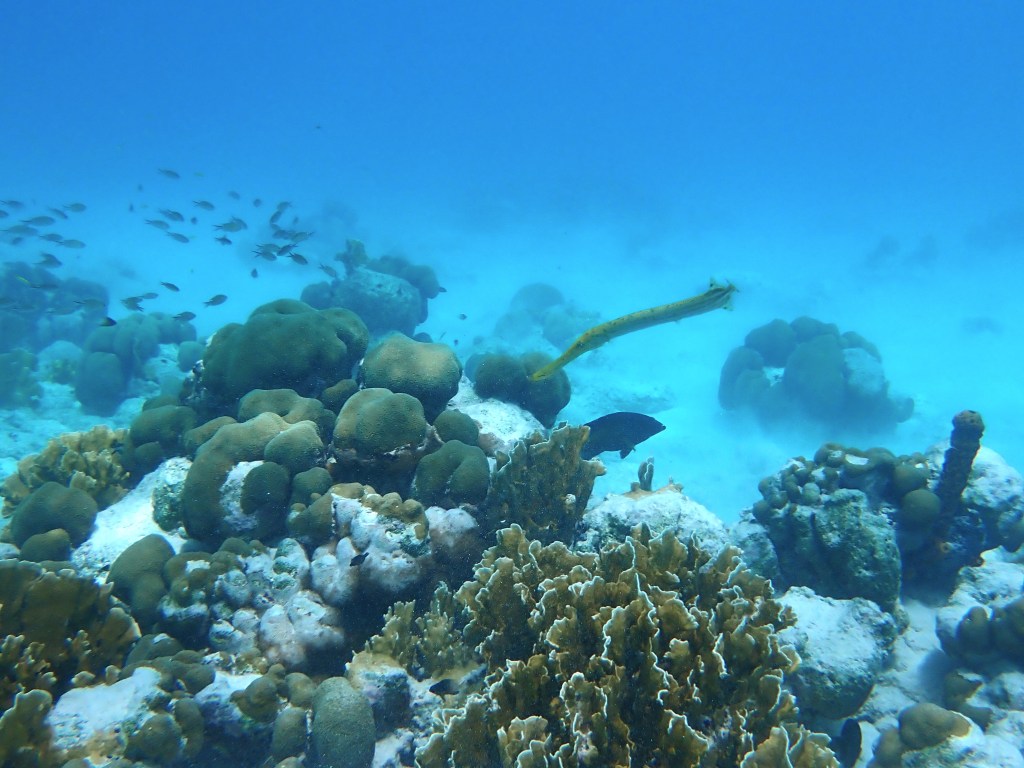
Here you can see the edge of the shore shelf reef and start of the patch reefs, filled with healthy boulder coral (the round greenish ones), slightly stressed but plentiful fire corals, a trumpet fish and grouper, a school of chromis (far left), a tall sponge (bottom right).

A patch reef with a trumpet fish, a four-eye butterfly (bottom right), a grouper (bottom left), boulder coral, a brain coral and a sponge.

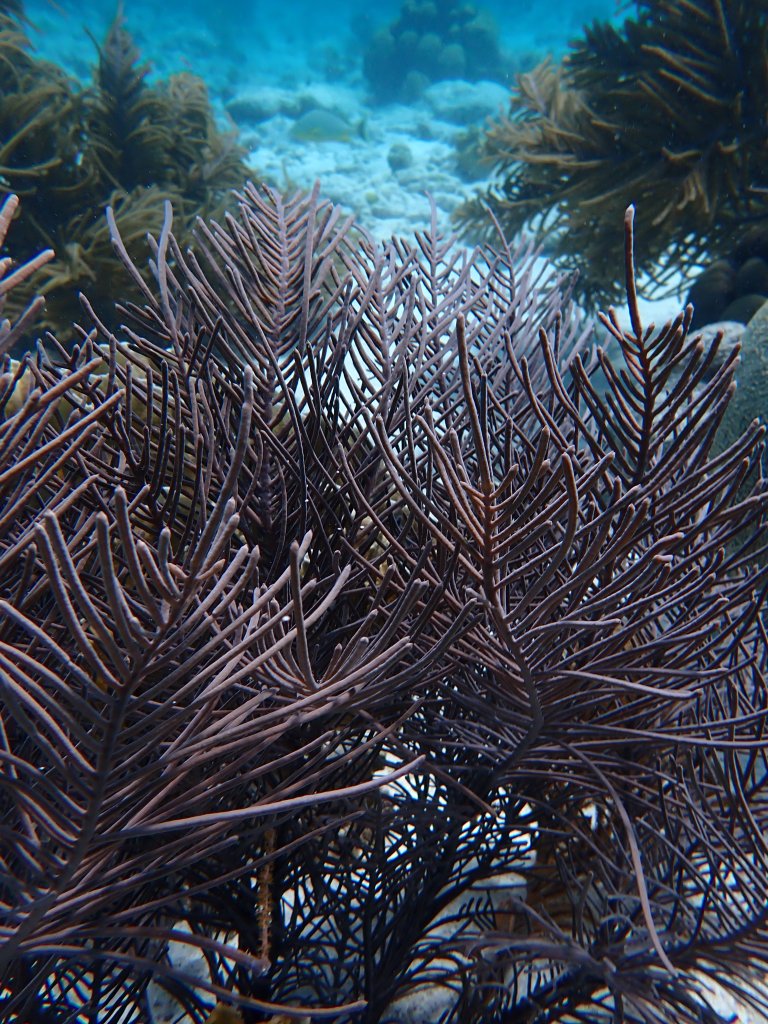
Purple bipinnate sea plumes with likely Atlantic sea plumes behind, with a hardly visible Caesar grunt in the background.

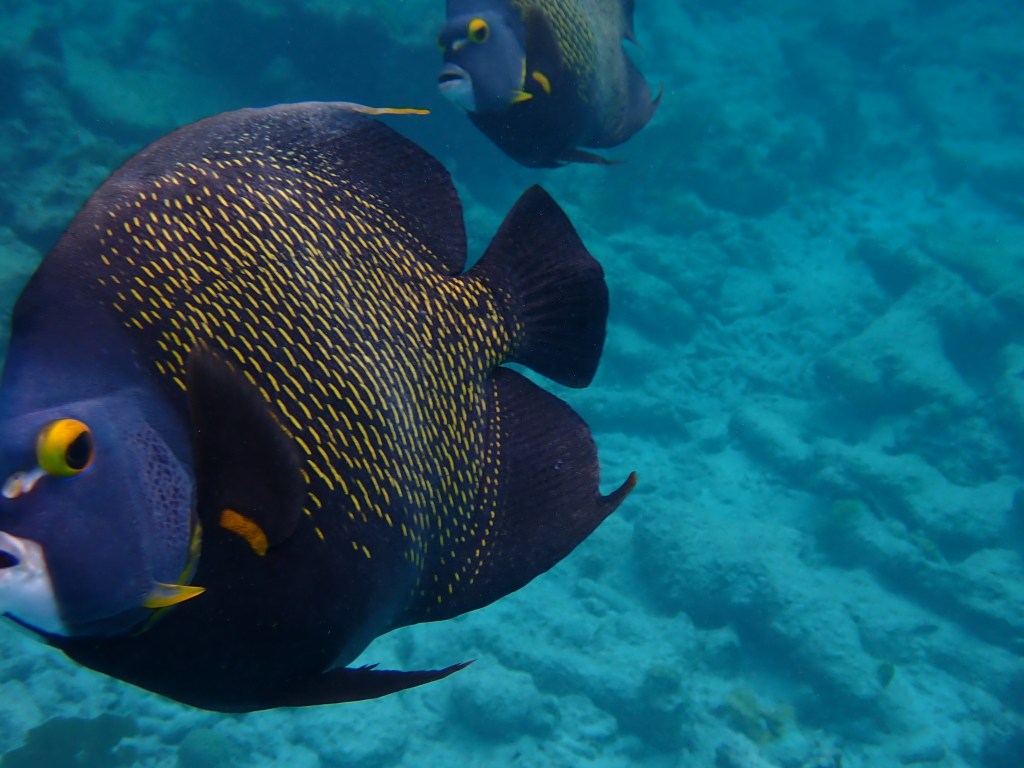
There was an area by Andrea that had extremely friendly fishes. I was guessing someone was feeding them because they had zero fear. I actually think I saw the same angelfish pair the next couple of years, and have dubbed them ‘Bob and Helen,’ because they seem to be a self appointed welcoming committee.

Bob the angelfish stopped by on 80% of my snorkels at Andrea I for the next two years. He usually has Helen in tow, but she tends to hang back a bit.

Filefish tend to be shy, so it was an utter surprise to have this scrawled filefish come so close. That’s when I started to wonder about feeding.

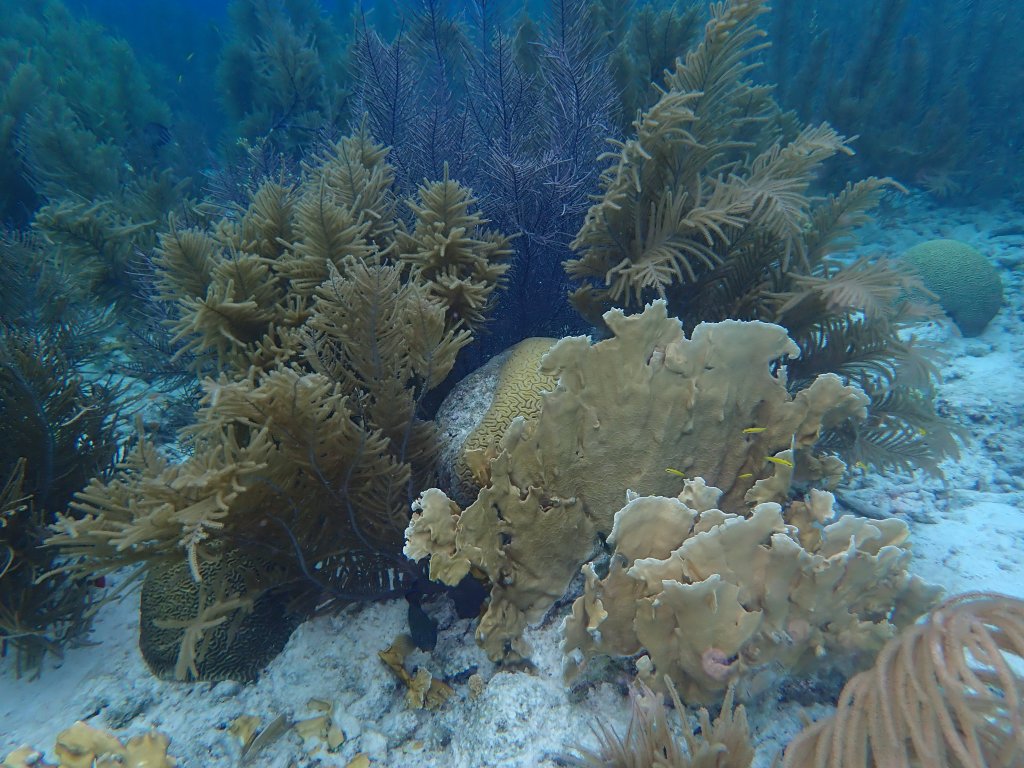
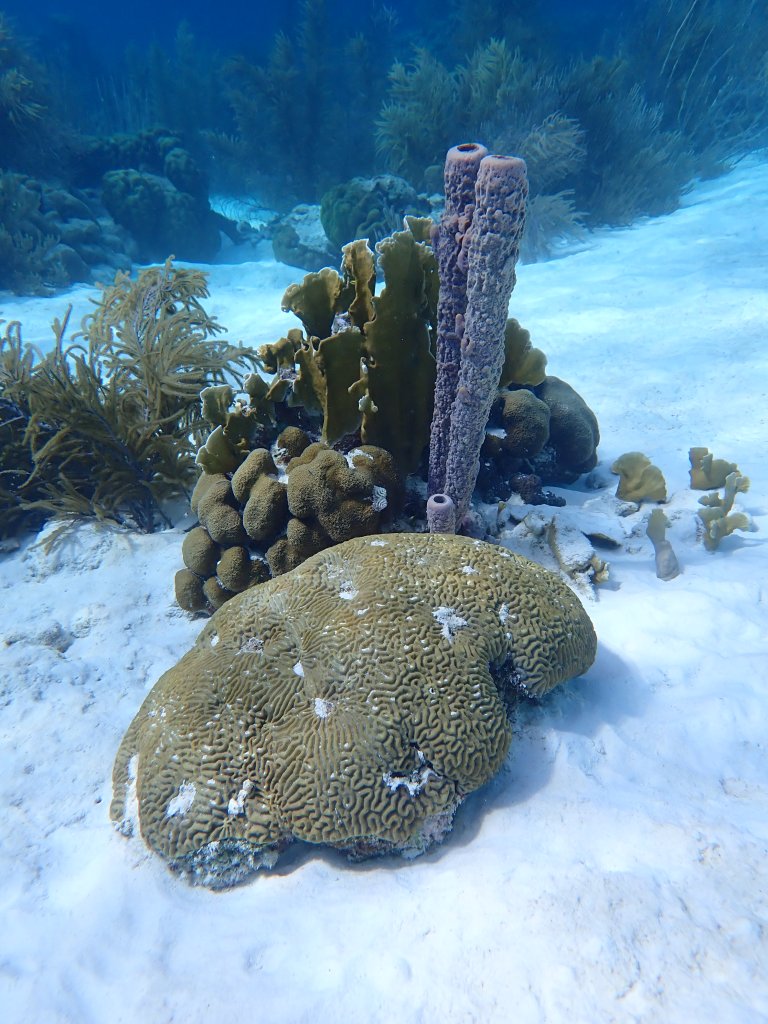
Andrea had some great corals! Here’s a giant brain coral with some fire and boulder corals alongside.

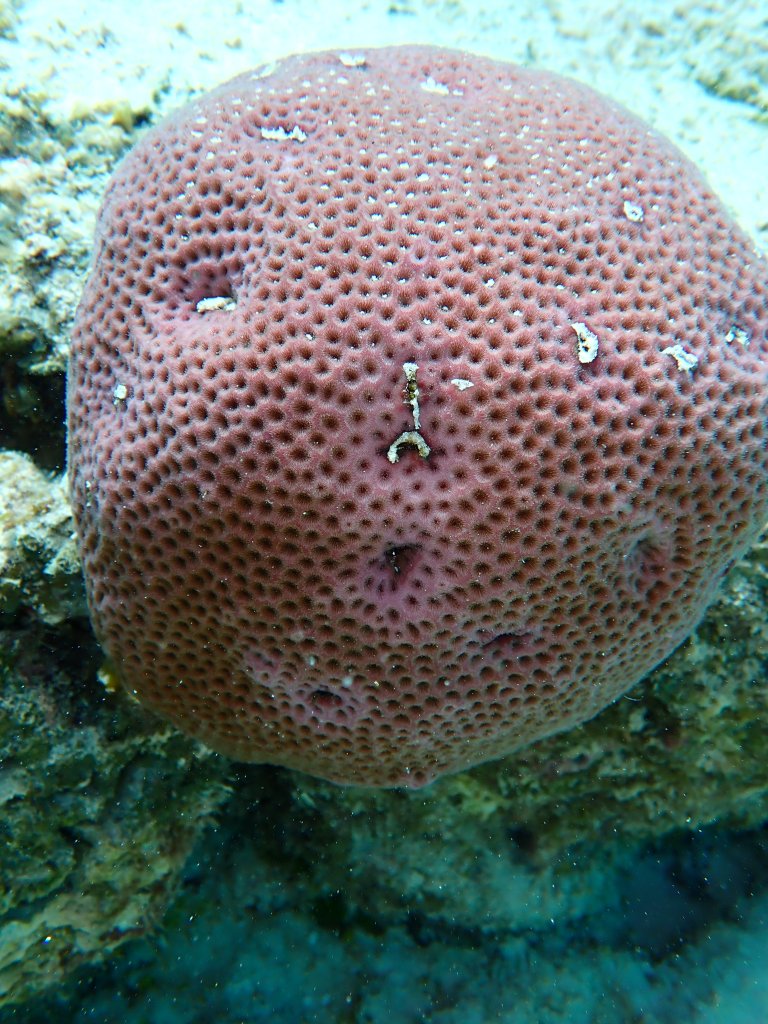
A beautiful, large pink starlet coral

Pillar coral. Endangered.

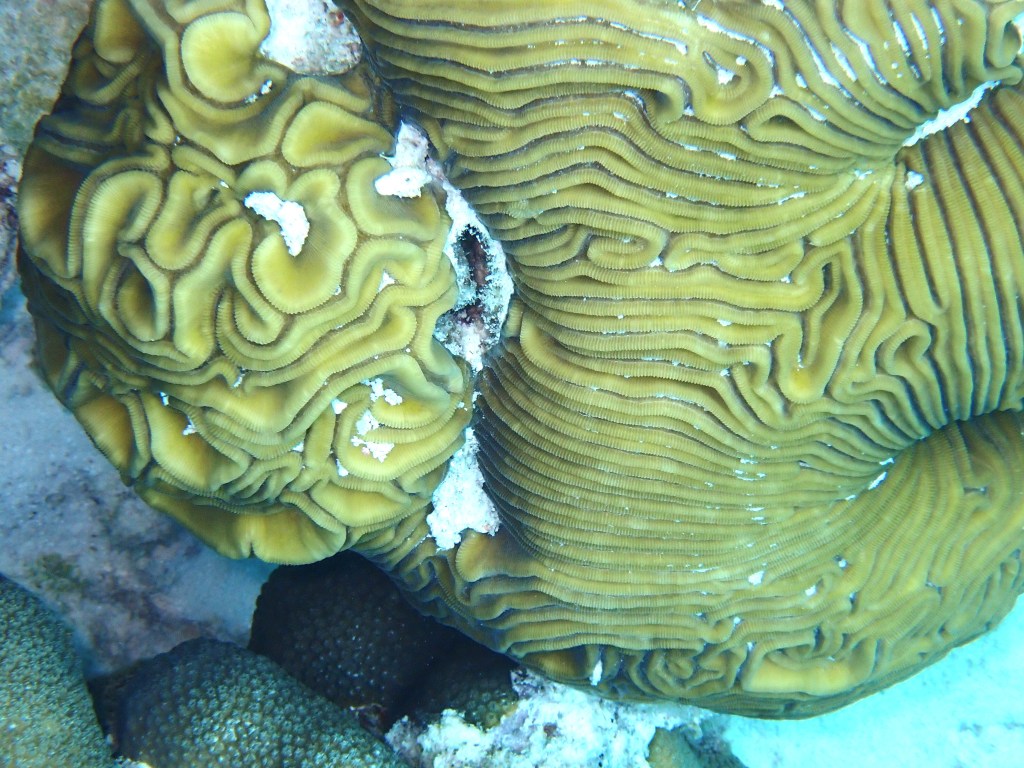
Some weirdo brain coral with star coral at the bottom. I am guessing that wave action might have affected growth pattern, but it might have been a virus or mutation.

Orange cup coral. Never very plentiful, you can see small patches like this that look like innie belly buttons. They open up at night and look like tiny anenomes.

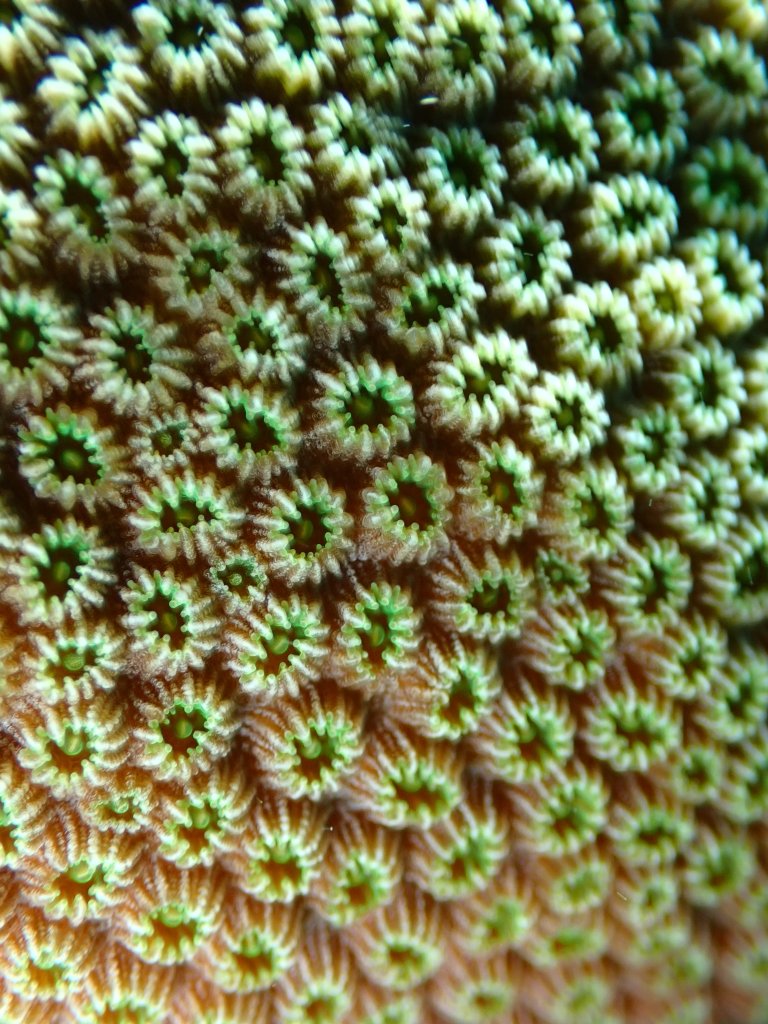
It also gave me a chance to work on my macro photography. WordPress isn’t being kind to my high-definition star coral, but you should get the idea.

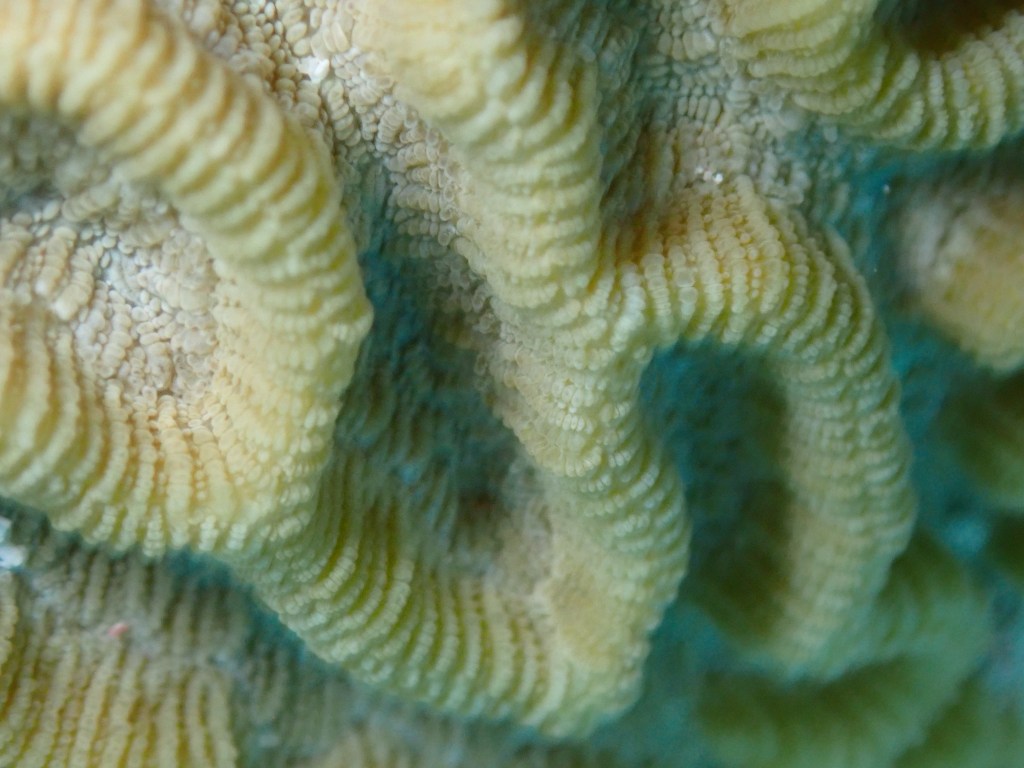
Brain coral detail.

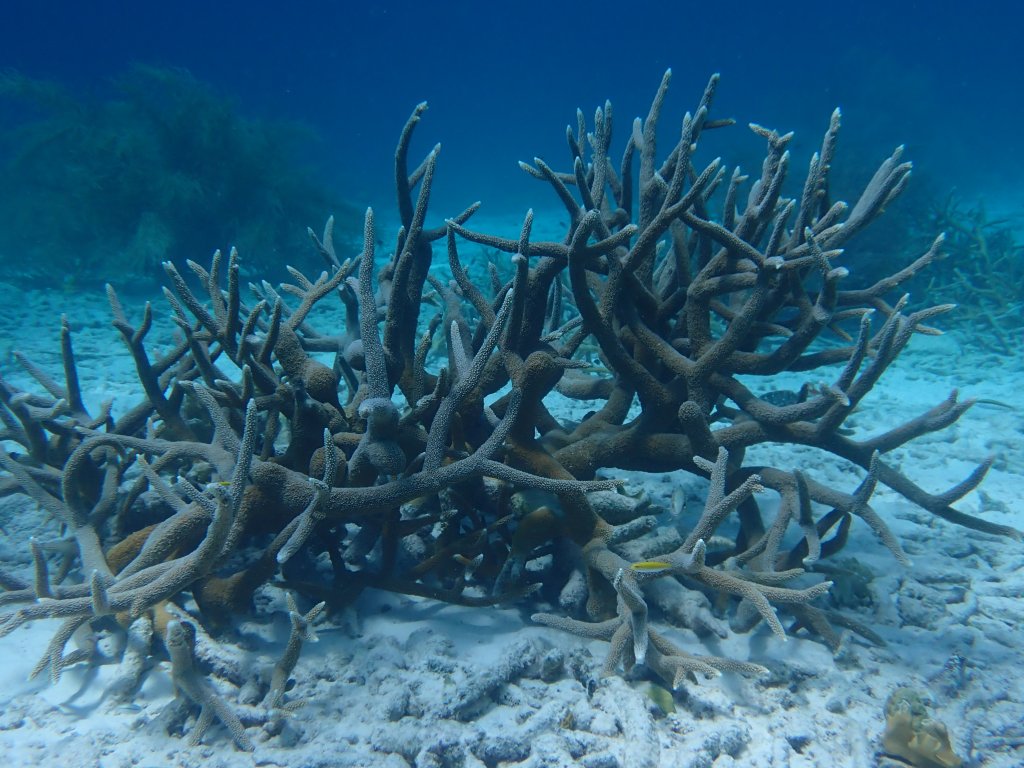
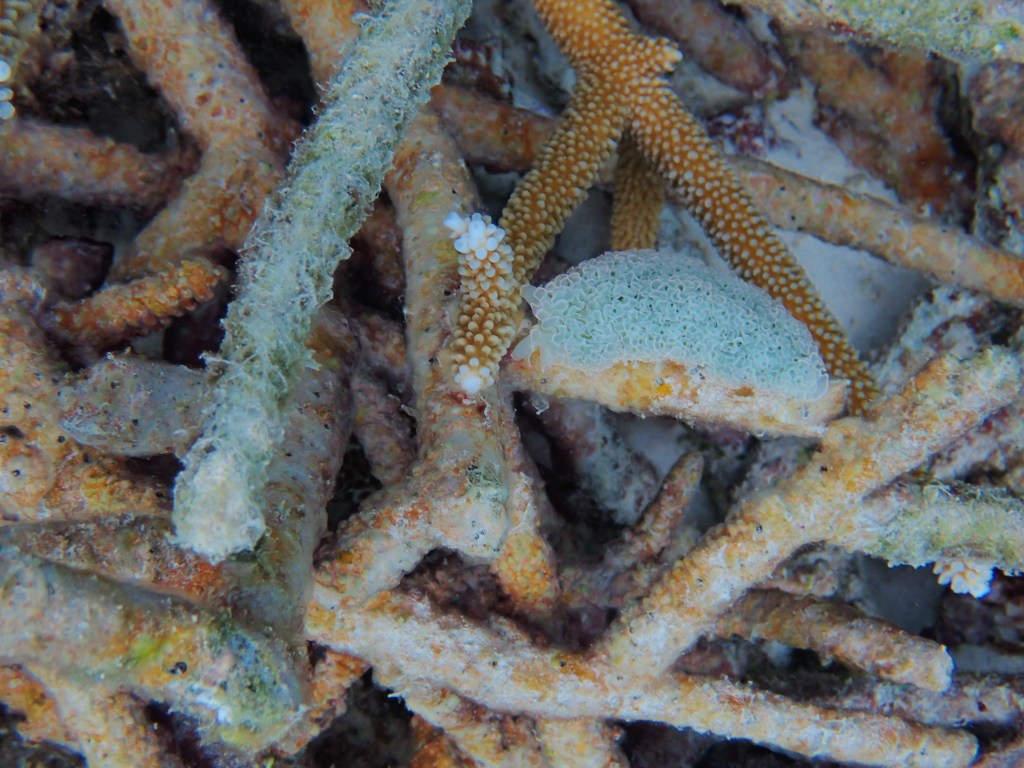
Staghorn coral. Staghorn used to play a pivotal reef-building role around Bonaire, but legend says heavy storms and hurricanes (although we don’t normally think of Bonaire in the hurricane belt) resulted in significant mortality that has never recovered. So it was kind of thrill to see some healthy-ish patches in 10-12 feet deep water.

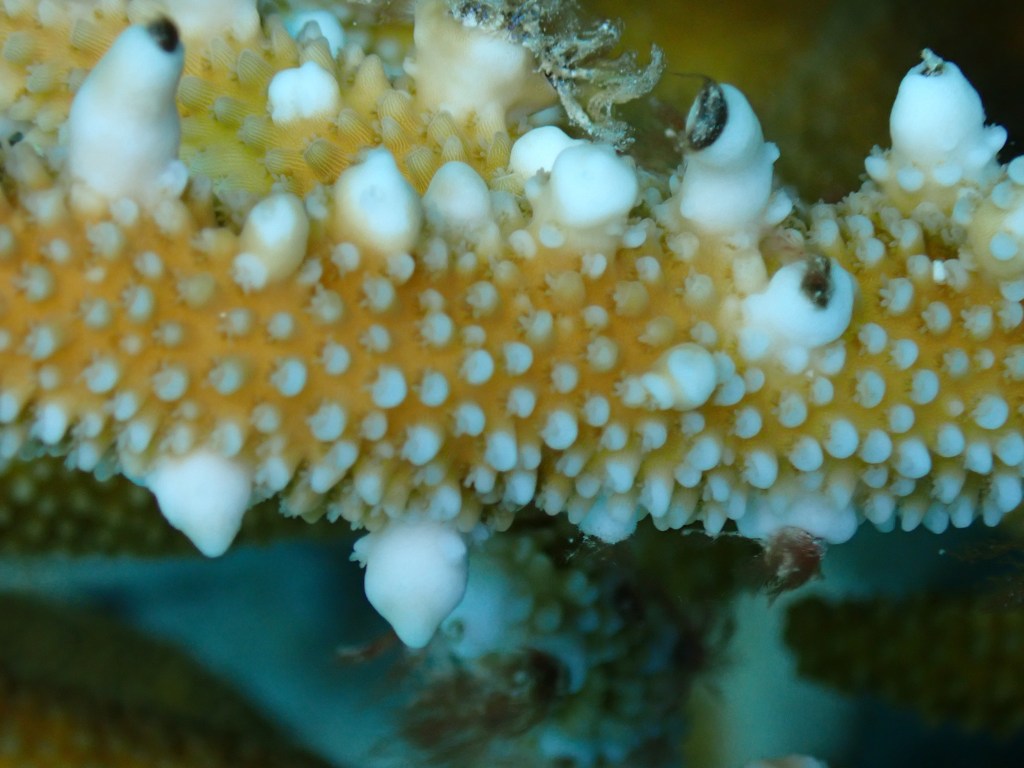
Patches meant I could get close without touching other coral, since there was empty sea floor around me. Much easier for photography when I don’t have to worry about bumping into coral! You can see tiny little polyps extended on the white nodules.

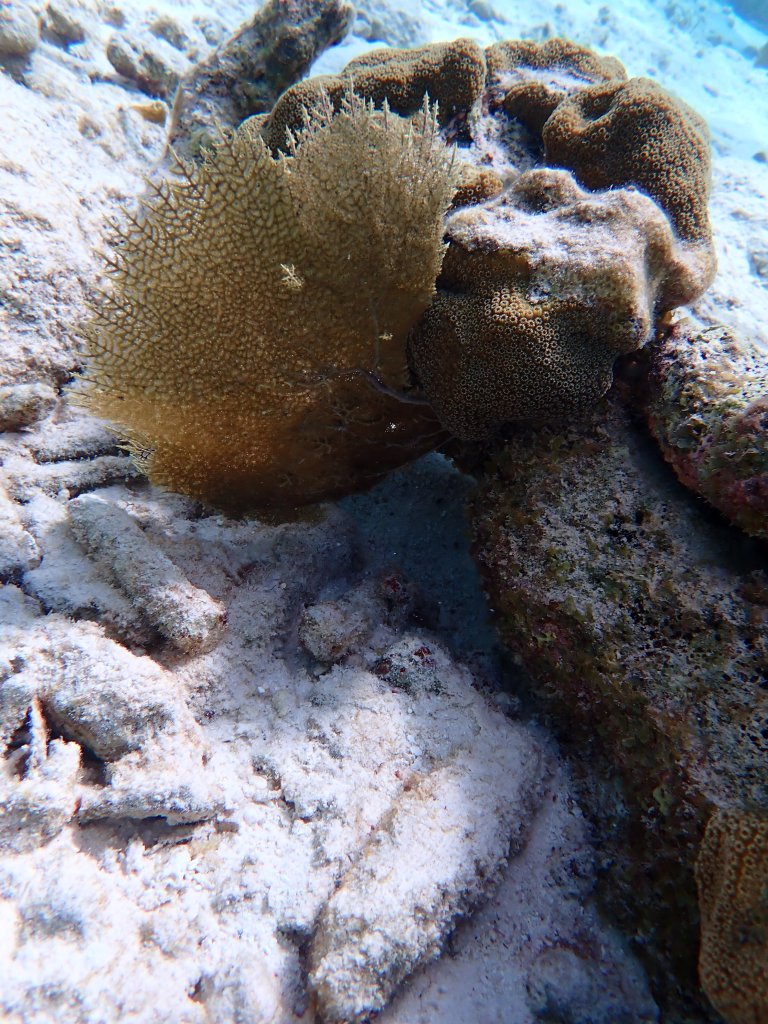
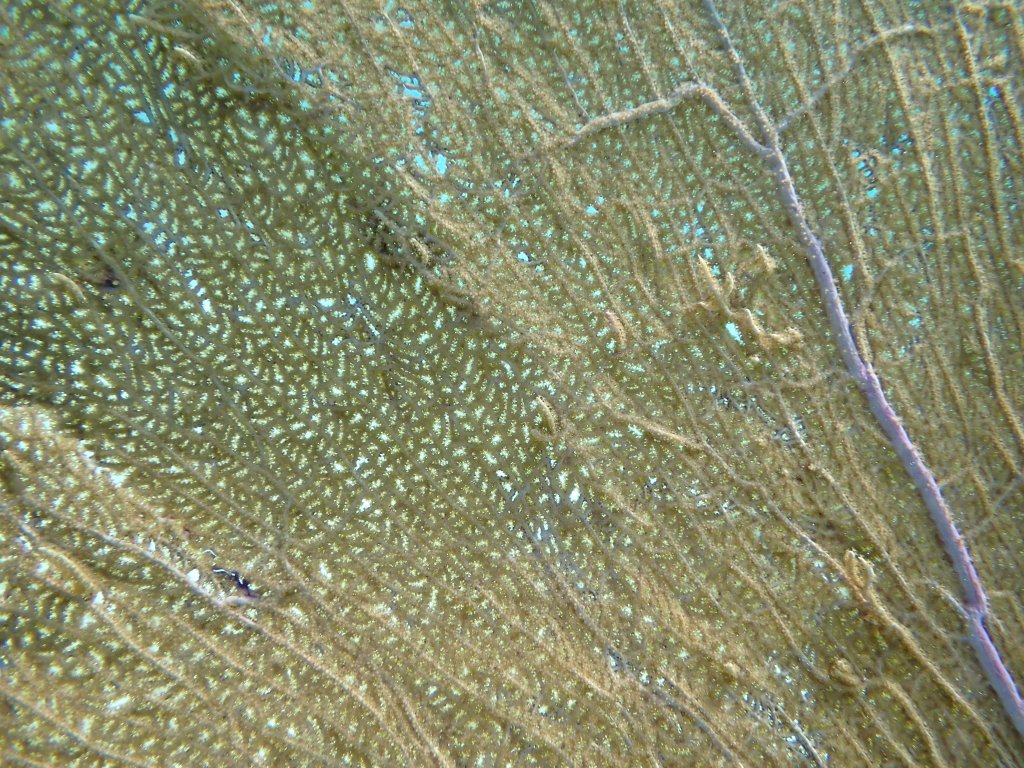
Here’s a sea fan next to a diseased star coral. Sea fans are a type of soft coral in the Gorgonian genus. They are communal coral polyps arranged in flat groups, each contributing to secreting gorgonian proteins to build the internal structure they all live on. Some Gorgonians use calcium in their structure, so like all coral species, ocean acidification is a serious threat (further interesting detail at Santa Barbara Museum of Natural History).

Detail of the fan

A cool bell sponge! Sponges are cool, and confusing to identify. They come in so many shapes. One of the earliest multicellular animals, they have a few specialized cells for feeding, reproducing and structural support. Water flows through many pores and canals to allow it to trap food (find more info at wikipedia). I have learned that identification is tricky even for professionals, and in some cases, requires lab equipment to accurately identify. Still, a few are obvious, like this bell sponge.

And there were some fish! The three stooges giving me the side-eye (just kidding, blue tangs).

I followed a honeycomb cowfish and got to watch it change colors as it moved from plumes to corals to sea bottom. Pretty clear where it gets the honeycomb name. You can just see the tiny horns above its eye.

Soapfish aren’t the smartest fish in the tank, and apparently assume that if they can’t see you, you can’t see them. Here’s one in some fire coral. I thought it was hilarious.

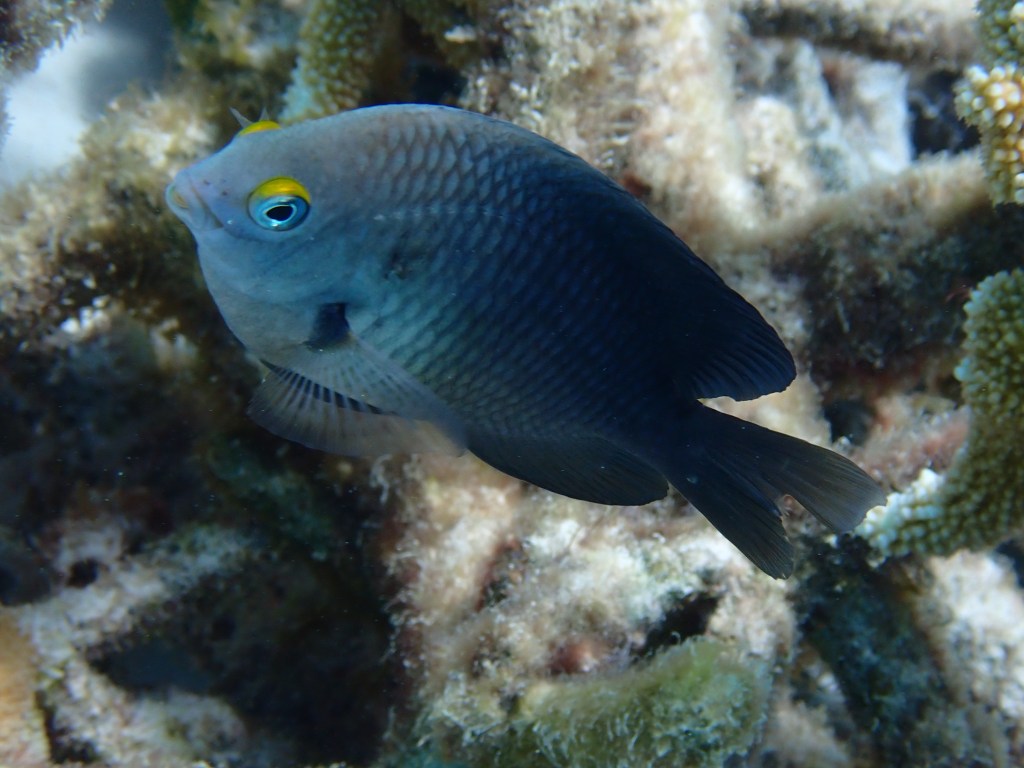
There were a LOT of damselfish. We won’t even talk about how many shots it took to catch this one in some staghorn coral. Damselfish are highly territorial, particularly when they are guarding eggs, and will harass other fish/ animals/ humans. Some of them are known for grooming tiny patches of algae ‘farms’ and will protect those as well.

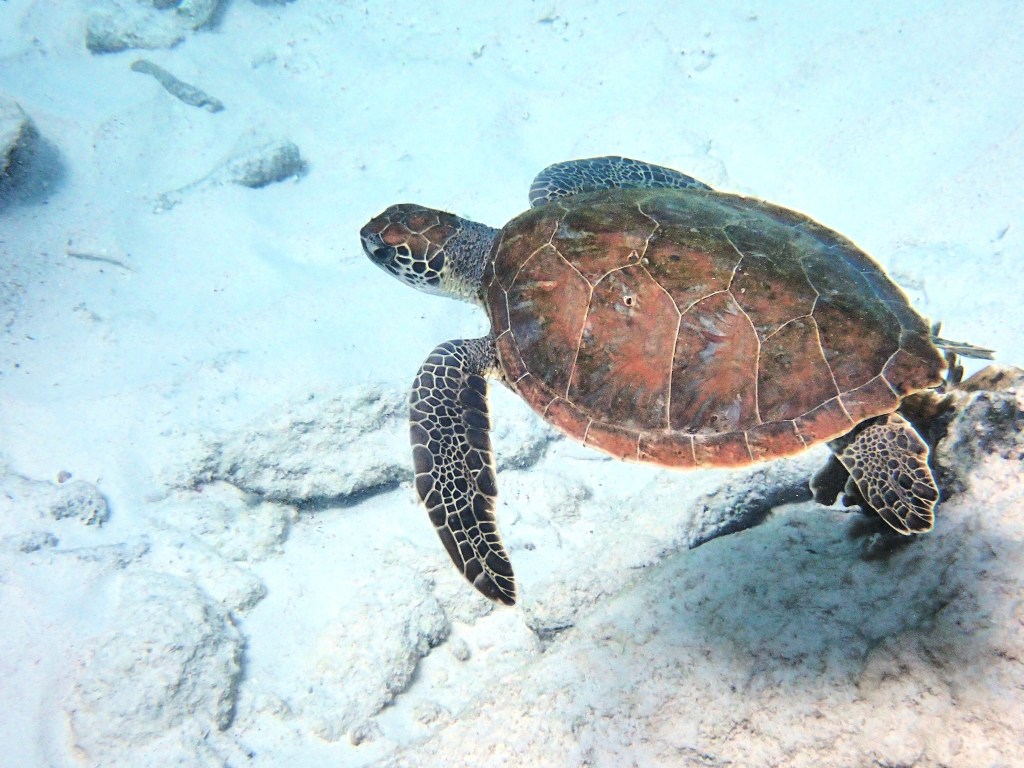
Oh, and everyone’s favorite, it seems. A turtle! I think they are definitely cool, but as someone who has had pet turtles in the past, I’ll also note they aren’t the sharpest tool in the drawer. They mainly eat, sleep, and breathe so watching them is an exercise in Zen meditation. I also saw so many in Maui that I got used to them. Still, they have such interesting shell patterns.

Bonaire 2023. 1000 Steps

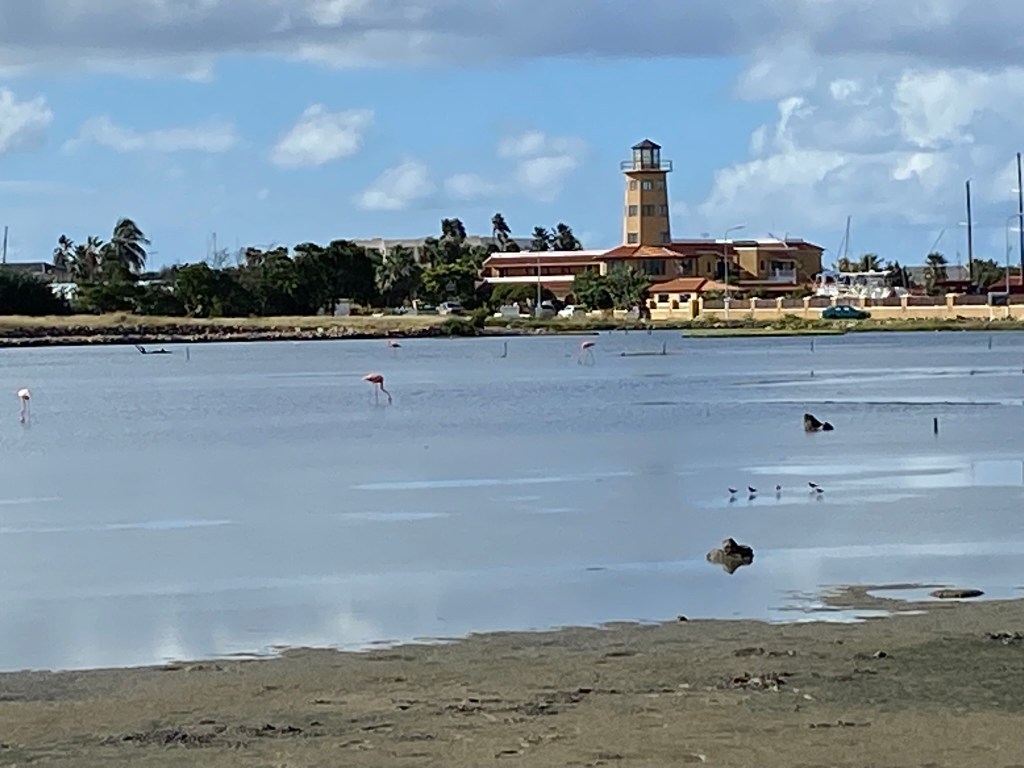
My first time on Bonaire, I decided to hire a local guide. I had some ideas where to go, but what I wanted was someone who knew the ocean landscape: currents, depths, wildlife, and maybe even biology. Our first stop was a water retention pond in town known for flamingos. The marina is across the street here. It’s hard to get close, because there are mud flats leading up to the water area.

When you ask people where to go in Bonaire, they will almost universally recommend 1000 Steps. There aren’t really 1000 steps; the story goes that it just feels like it after a long dive and when carrying scuba gear. Lucky for me, it was only a bag of snorkel gear. Beautiful-Bonaire has a picture that captures the access.

Because it is so recommended and has a sandy apron making water entrance easy, it is extremely crowded. Below are people starting to park along the road on the approach, as the small parking area is easily overwhelmed.

You can also see how delightfully narrow that road is. Technically, it is two way, but past this point it becomes one-way, committing the driver to a long route through Rincon and around the eastern side of the island back to Kralendijik.

I enjoyed our snorkel, but it was too deep for me to really love it (picture below is ranging from 15-20 feet or so). Still, it was amazing in the diversity and the size of corals (note this is 2023). Boulder corals (big green ones), huge brain corals (center picture), sea fans (in front of brain coral), a Gorgonian (tall, left side and branched, front corner), stovepipe sponges and fire coral all show a wide diversity. Some have a lovely deep color, others look a little too light; perhaps signs of recovery after heat stress the prior summer.

This was before I discovered weights and freediving, and had to rely on my own skills to keep me at depth. Below is a nice patch of diversity, about 12 feet or so.

However, even doing duck diving, I still managed to find a cute little lettuce nudibranch on some dead staghorn coral. You can see the healthy stuff with the nobbies above it.

This is also where I saw my first schools of blue chromis, a gorgeous little fish that prefers deeper waters.

It was also my first glimpse of an extensive staghorn field. I am told that there used to be acres of staghorn until a hurricane/weather event in the mid 2010s broke much of it up. These coral patches act the same way a grove of trees between farm fields do–they offer protection from predators and a concentration of sea life that allows for easier feeding, along with potential nesting sites, as many fish eggs need something to attach to.

But this was only the first dive stop. On to Cliff!

Bonaire 2024. Salt Pier

My first time snorkeling Salt Pier was amazing! I’ll be honest; I was prepared to be underwhelmed, mostly because anyplace that everyone always recommends can be crowded. Since it is a pier, I was also skeptical of the depth problem when snorkeling. One of the earlier times I was in Bonaire, the ship was in, so I didn’t get to try it out on the days I had planned. This is a real issue, for obvious reasons.

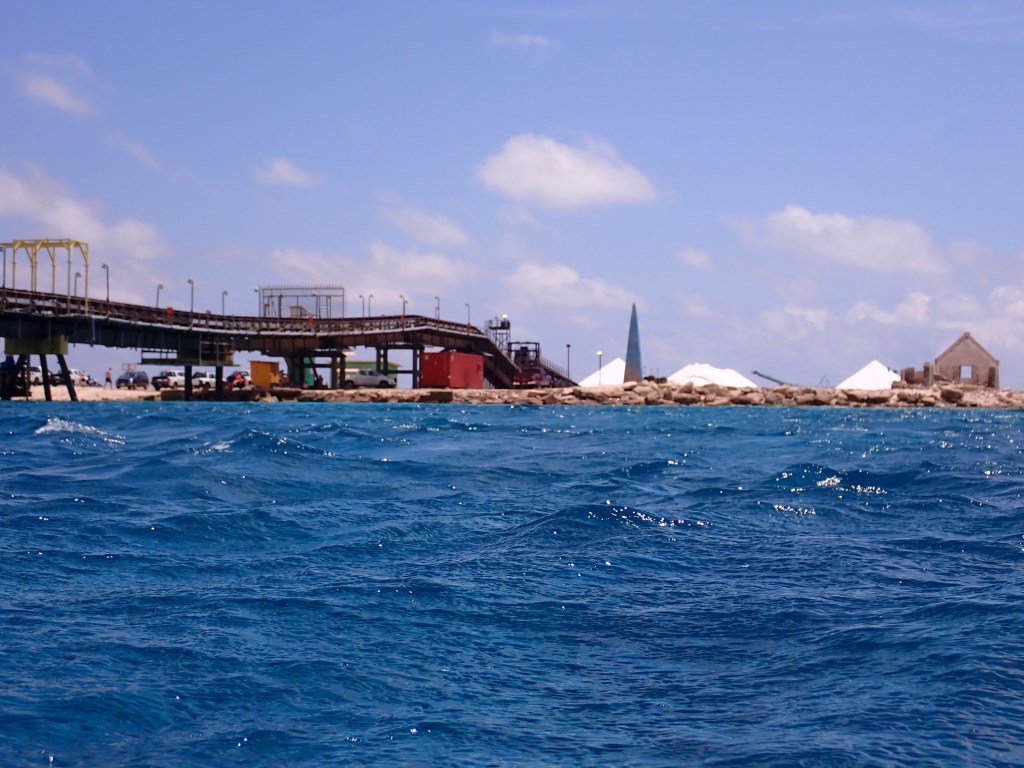
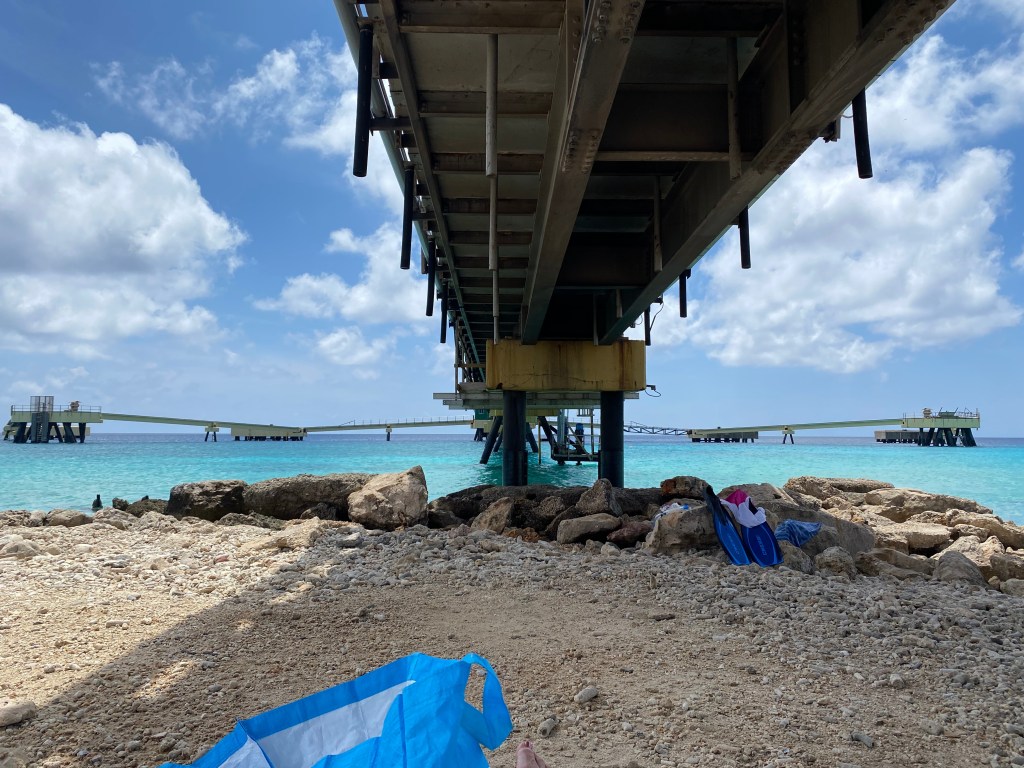
Salt Pier entrance area from a snorkeling perspective. The salt piles are actually across the street and quite far away. The line of trucks are vehicles from divers.

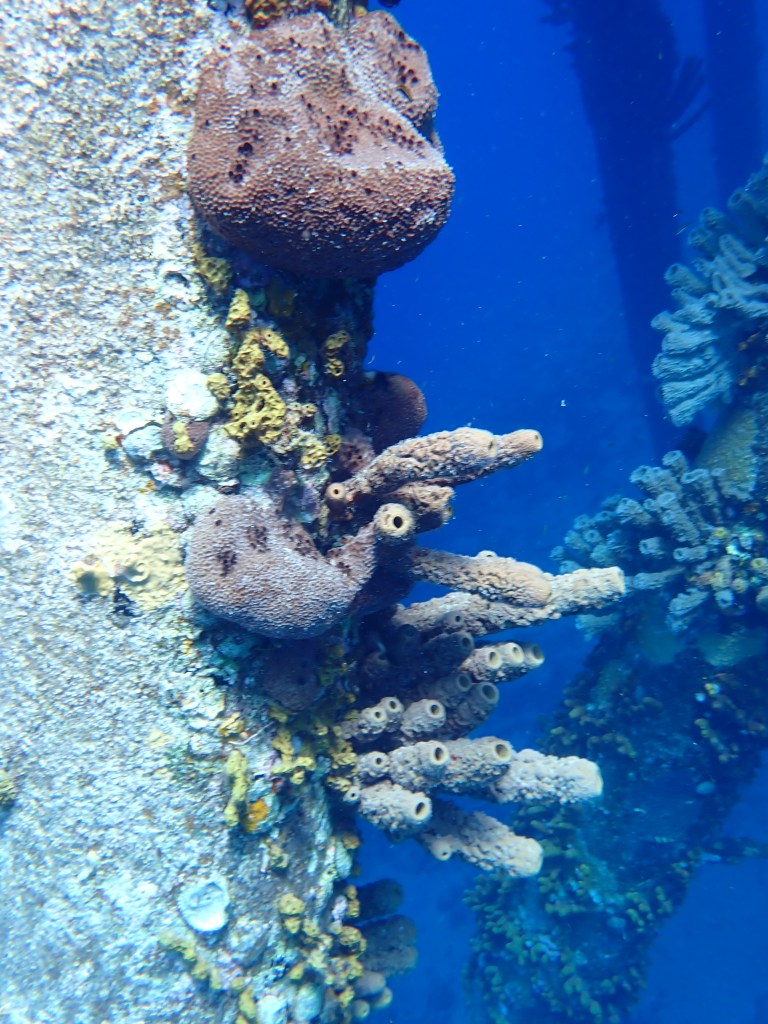
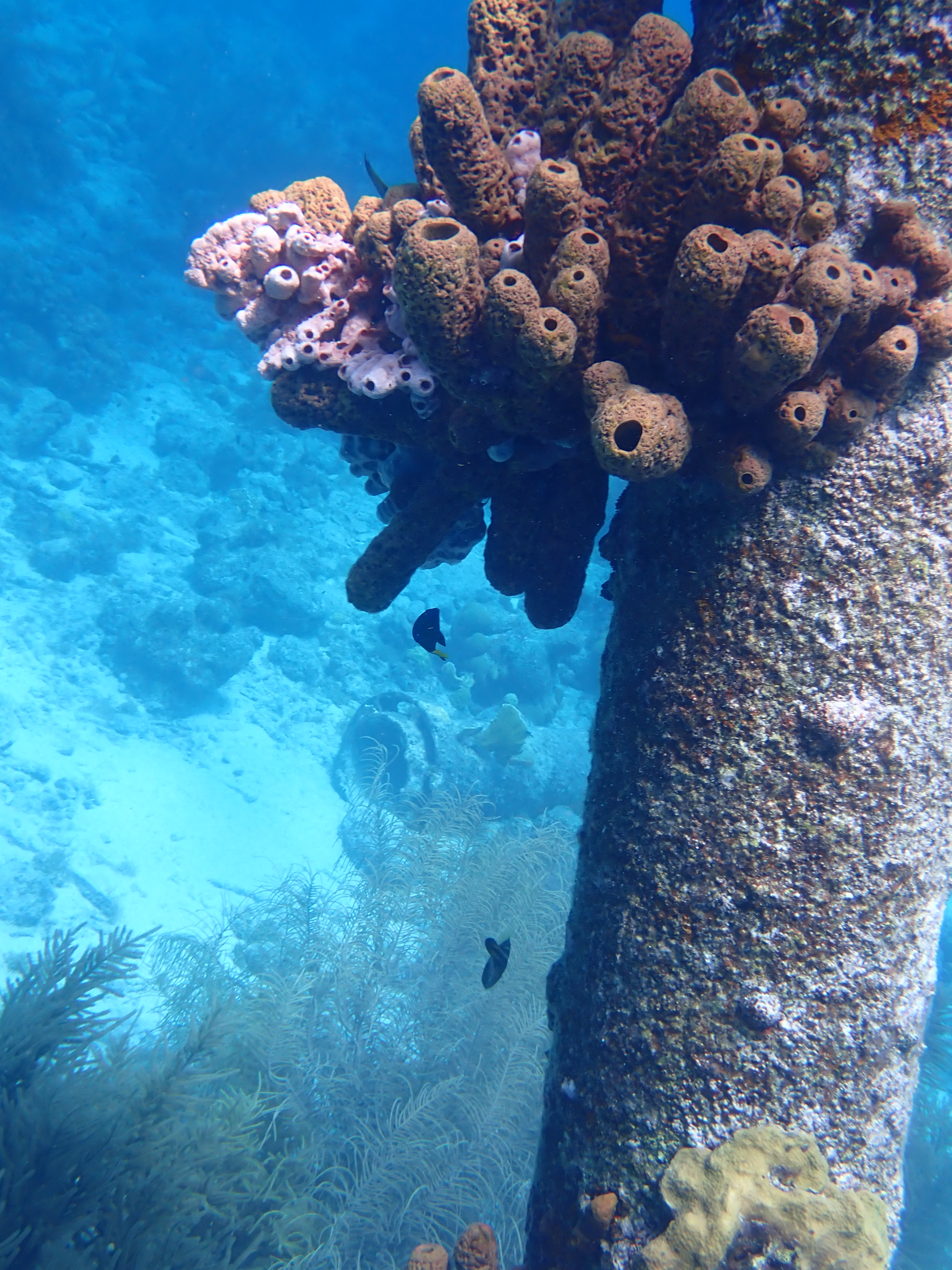
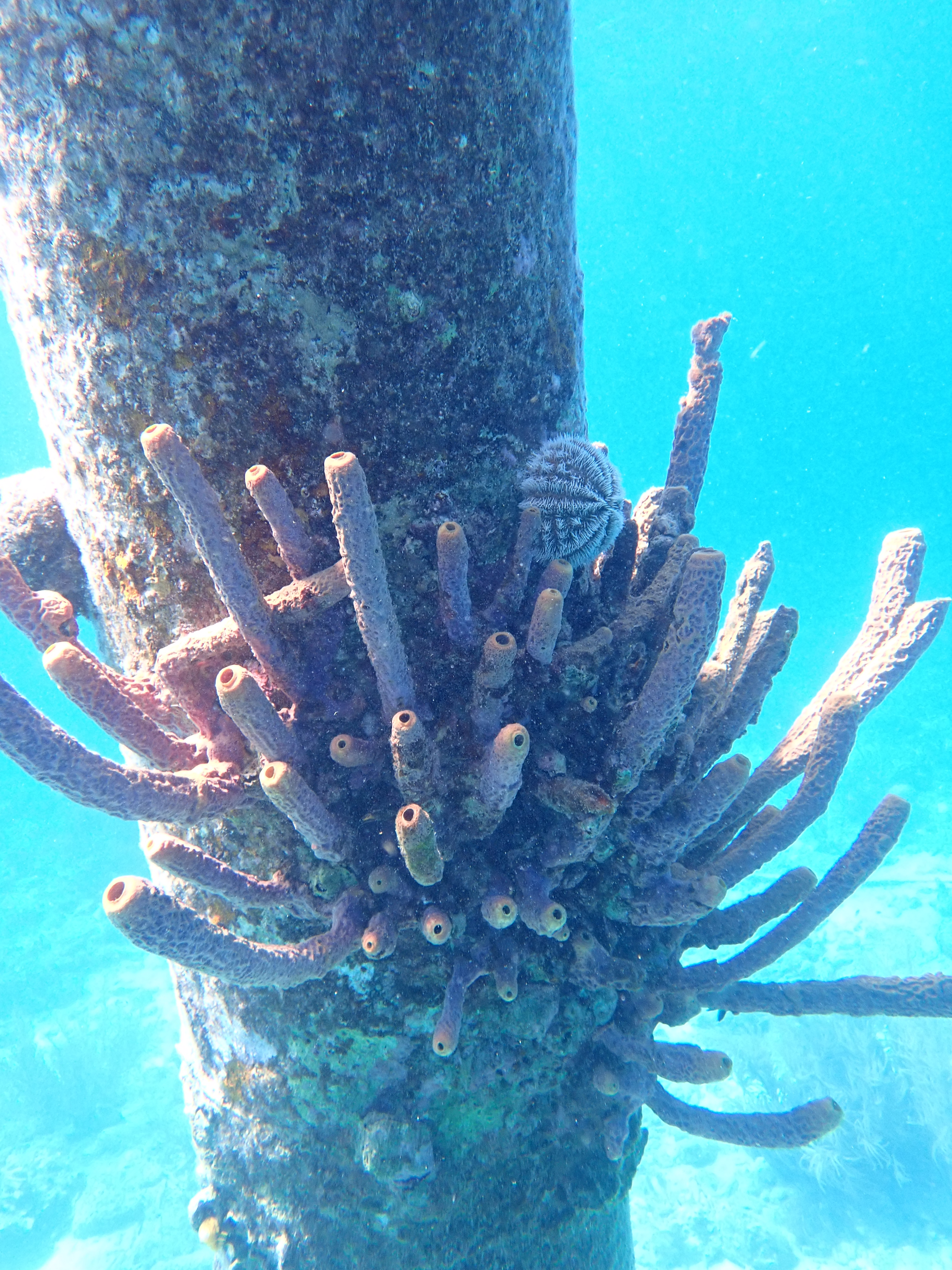
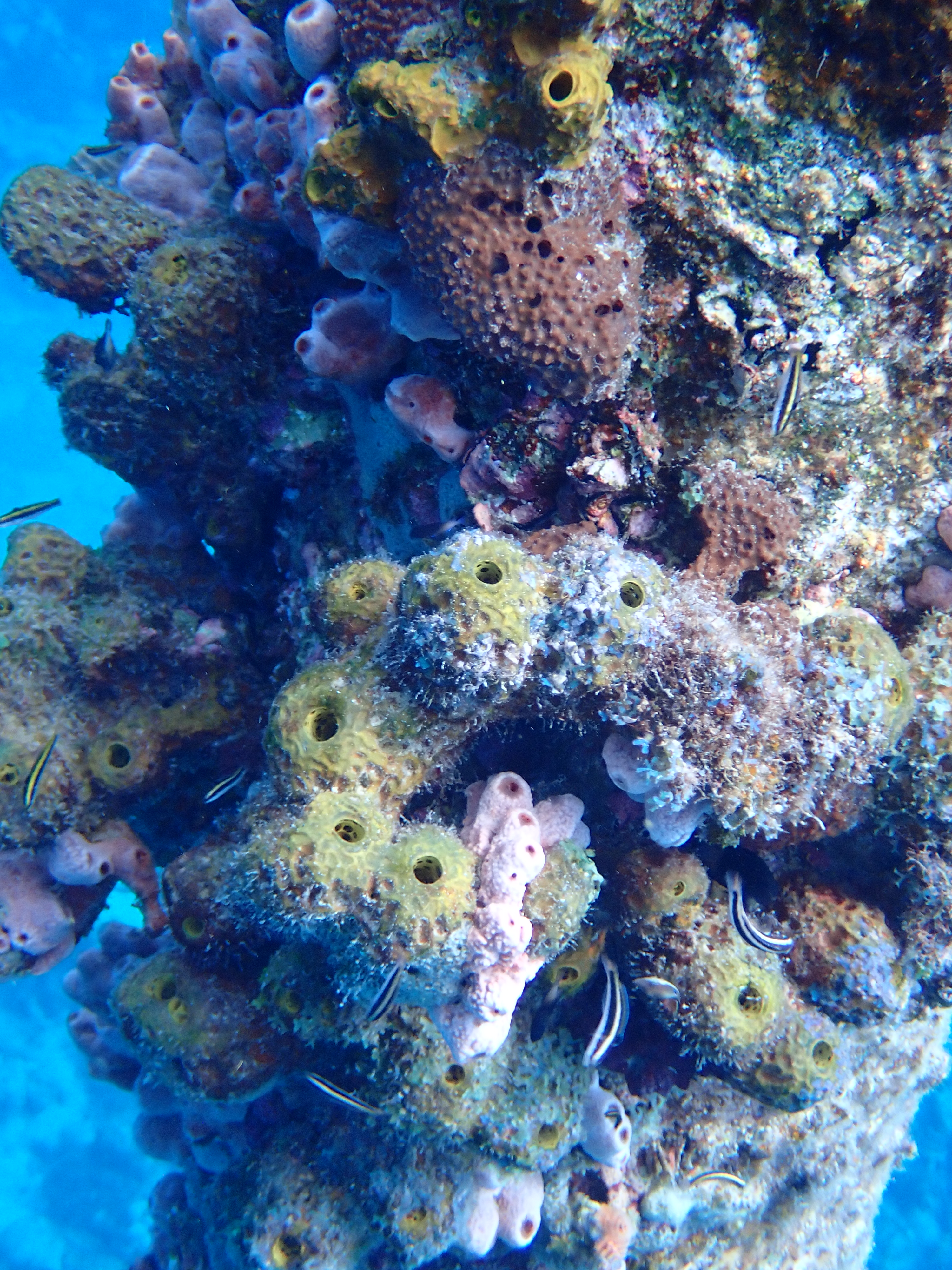
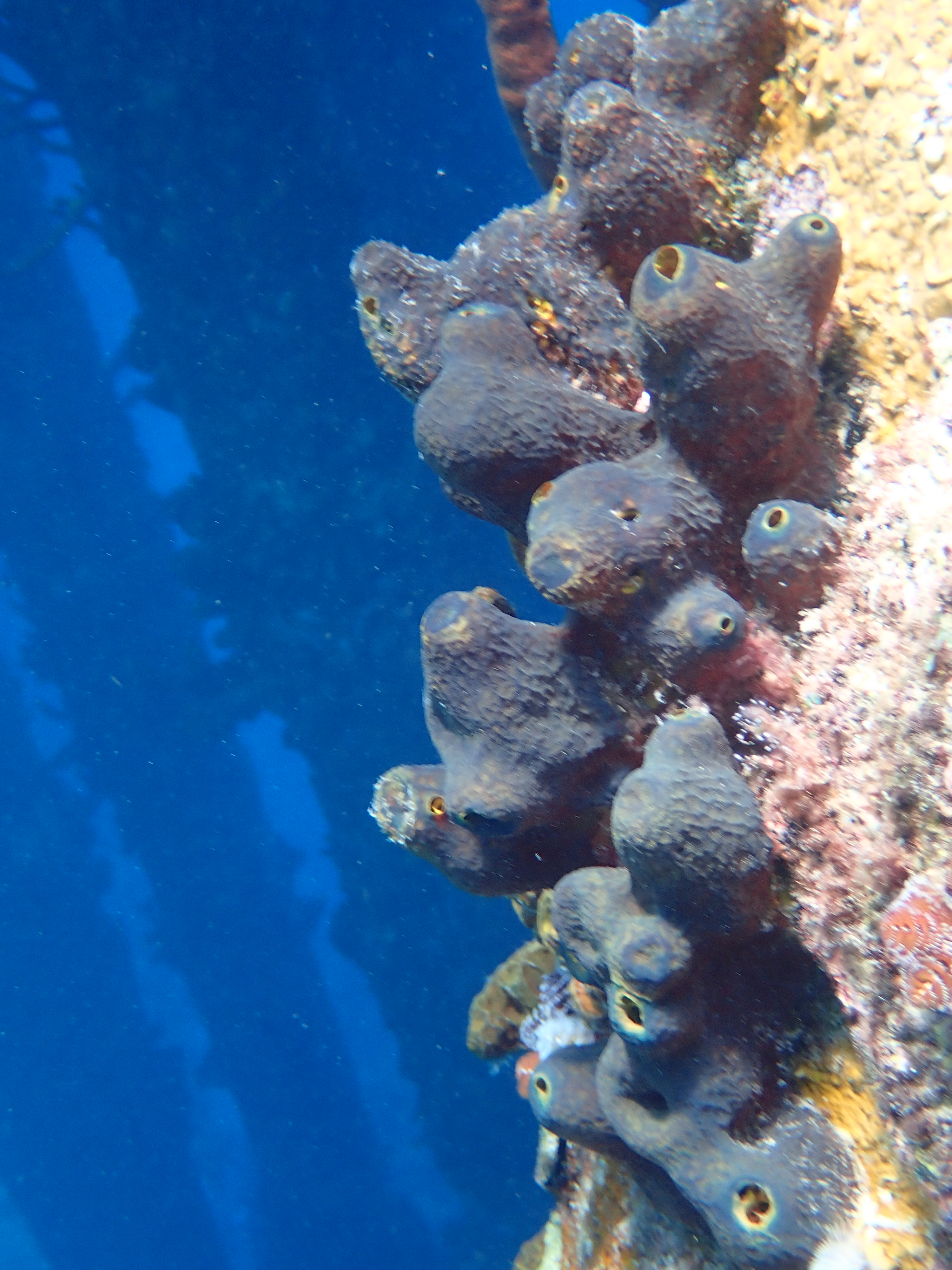
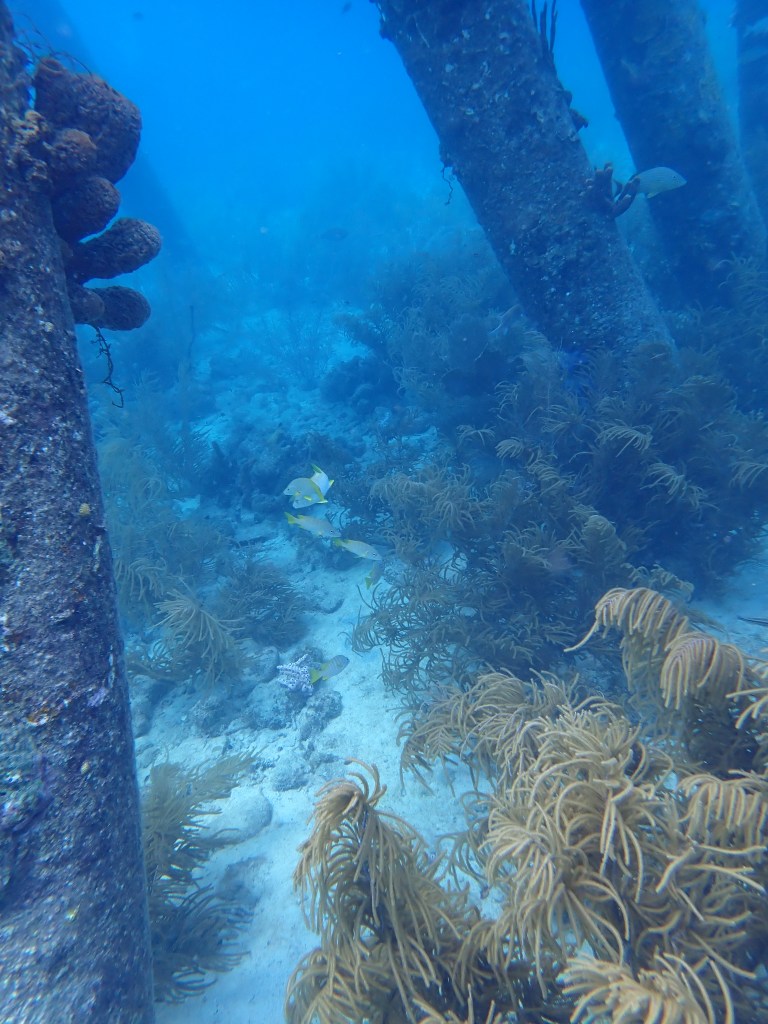
Frankly, I had such beautiful luck at other sites, I wasn’t motivated to keep trying. (You can check Bonaire.portcall.com to see list of ships and locations, or you can just ask in a Facebook group). But now I know! What is ah-maz-ing about Salt Pier are the pilings, the variety of sponges on them that are so uncommon at snorkel depths, particularly.

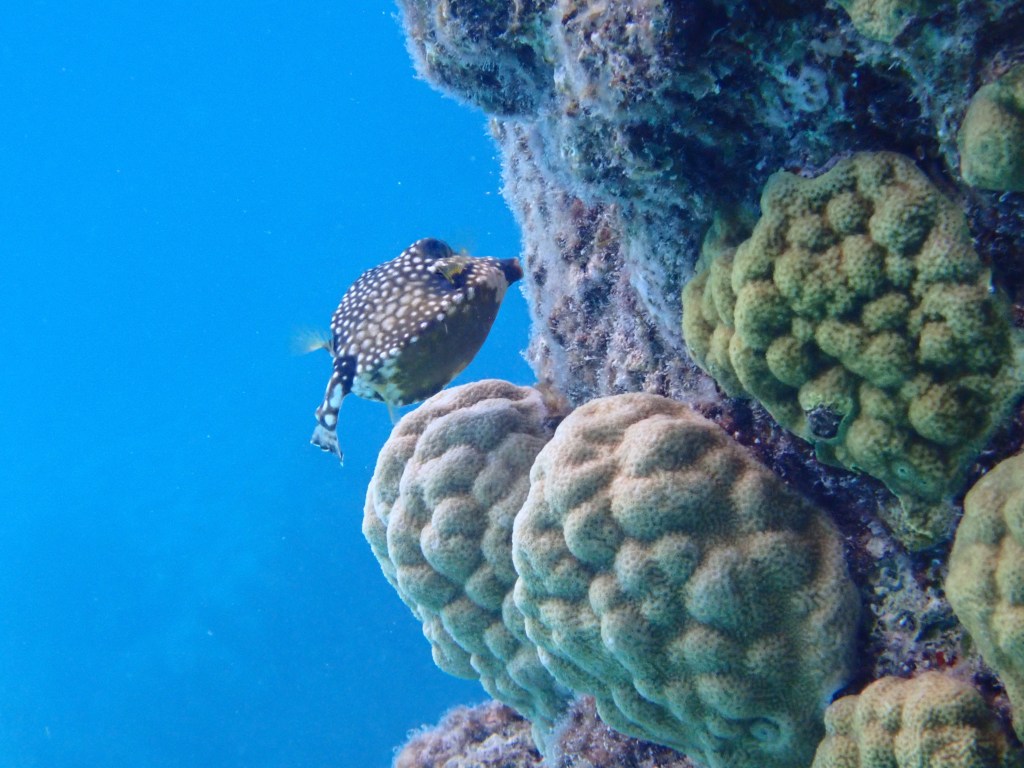
Well, to be honest, you can tell from the blue that I was free diving for the first picture. So maybe not snorkel depths for everyone. I caught this little smooth trunkfish on the way up a piling in shallower water. Notice how some of the mustard coral looks a more washed-out. That’s bleaching.

One of the other fun things about Salt Pier are the schools of chromis and sergeants in the deeper water that make me feel like I am in an aquarium. There are often larger schools of grunts and snappers in the deeper water under the pilings, along with the occasional barracuda. I think I’ve seen one every visit to the pier, but I tend to be respectful and give them a wide berth. My pictures of the big schools are too blue, but here’s a clear group of snappers that broke away from the school, a grunt up by the pilings, and some nice sea plumes at the bases.

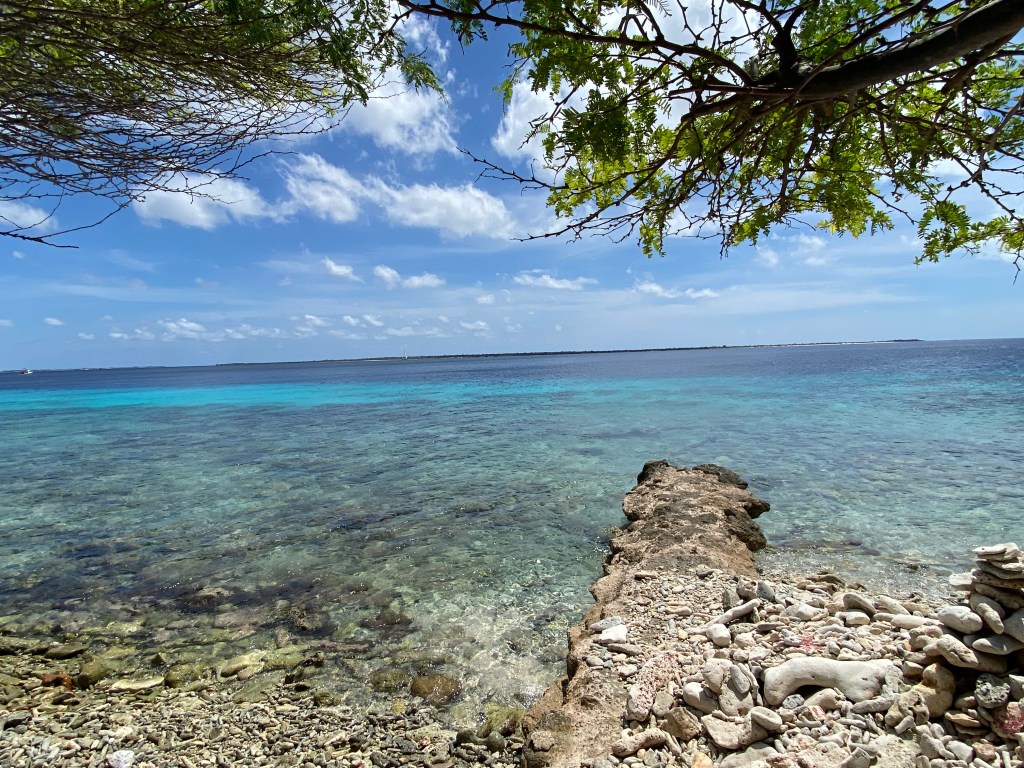
People always wonder about the beaches. Like most of Bonaire, the area here is largely what is known as ‘iron shore,’ or a crumbled/rocky mix of dead, broken coral and limestone. In a few places, there is some sand (or rather, pulverized coral and limestone), but not much. There’s an area in the shade to sit–believe me, this is underrated in this windswept area–if you like the industrial feel.

Bonaire, Sept. 2024–it’s hot!

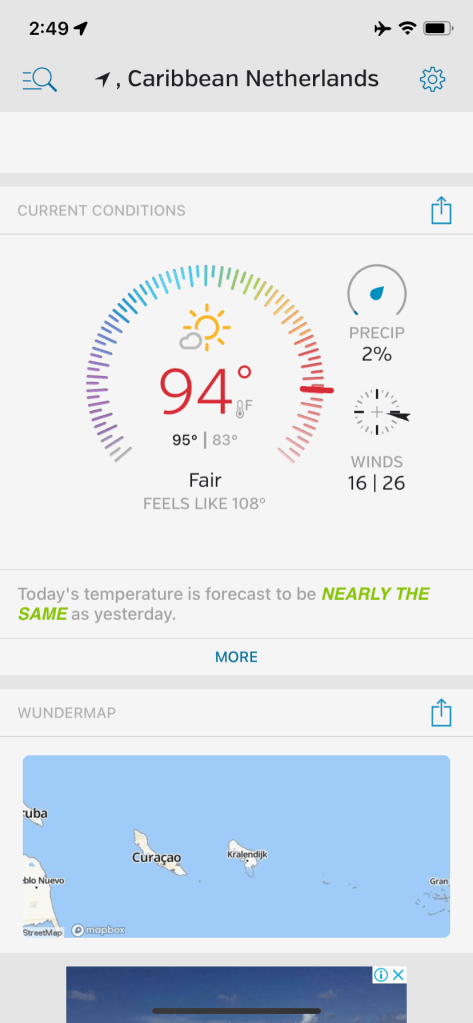
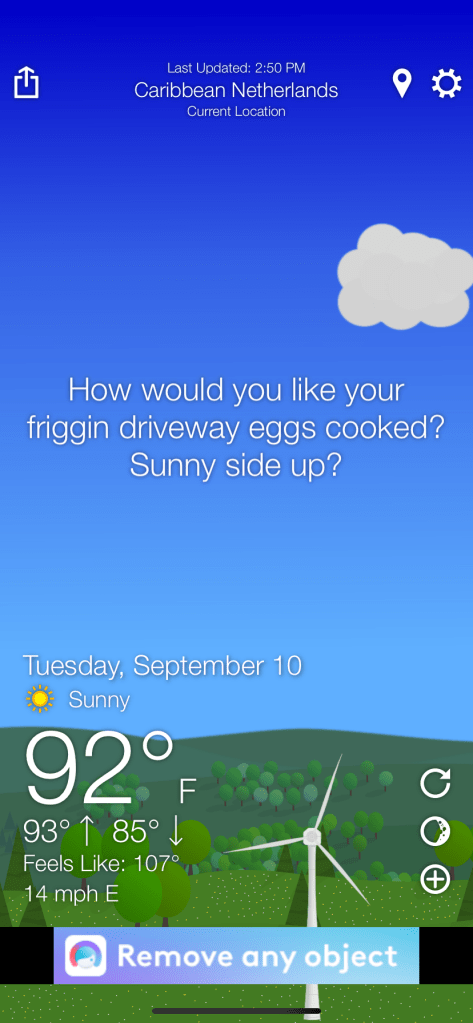
Ah, Bonaire! Back for September, and wow, was it hot. I’m from the midwest, so while we have summer heat and humidity, it isn’t often in double digits, and almost never for a week straight.

This was my first time in Bonaire regularly using the airco! Airco, for those used to central or window air conditioning, is mounted on the upper wall of the bedroom and usually used to cool a room for sleeping. The rest of the dwelling is usually open and uncooled, at least in less-Americanized places. I actually love this arrangement, and when I’m on the islands in winter, I rarely use it and rely on the ocean breezes through windows and open doors. But September was a whole ‘nother kettle of fish. I used it every night, and by the end of the trip, even used it for an afternoon siesta.

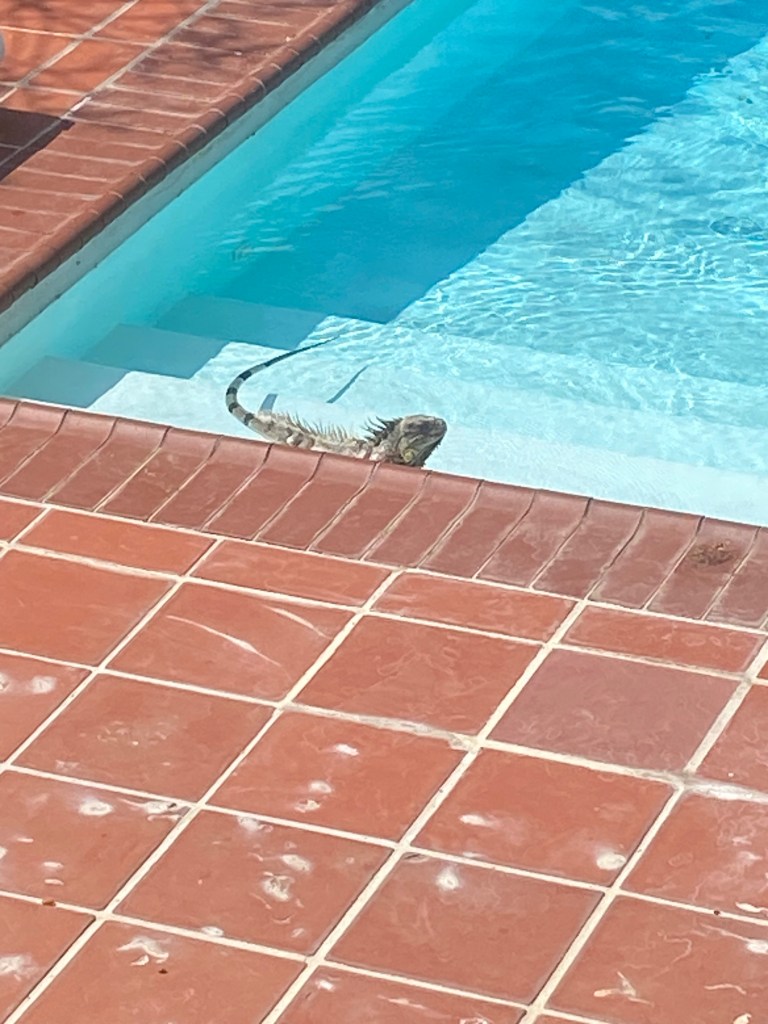
Our pool wasn’t cooled (this is a thing!) so while wet, it often did not feel very cooling. The iguanas loved it, though.

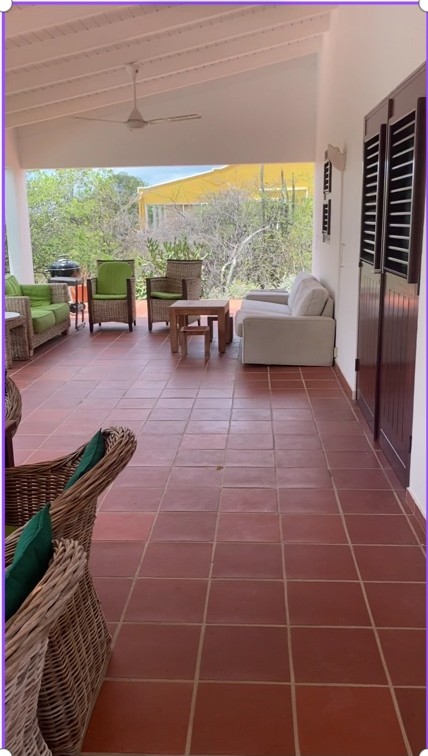
I believe in working with the climate, so I look for places I can stay with wide-open verandas and ceiling fans.

There are scattered, brief showers, but mostly just a lot of sun, so it is nice to have a porch that is always shady.

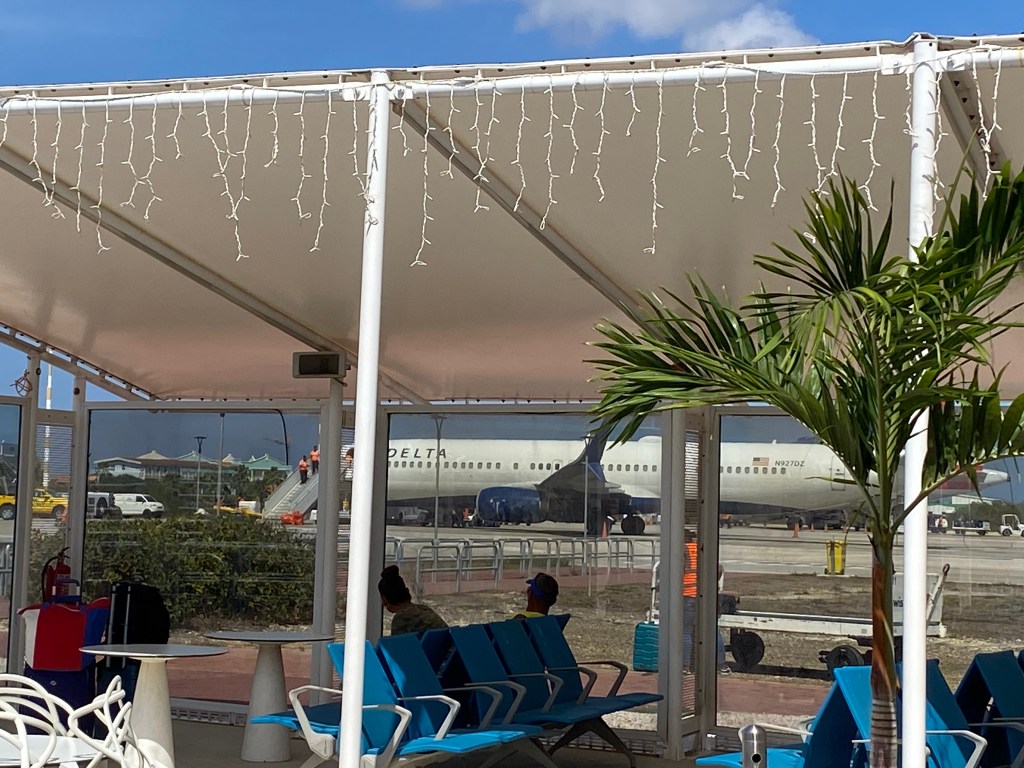
Even the airport does verandas.

Bonaire Feb. 2025. Something Special

Something Special is a dive site that is, indeed, something special. It can seem unremarkable to a snorkeler, except for two things: shallow patch reefs and a wall from surface to 25 ft depth. In 2023, I was excited to examine all the nooks and crannies. Unfortunately, in the time since, many of the larger corals had died off both in the patch reefs and on the wall.

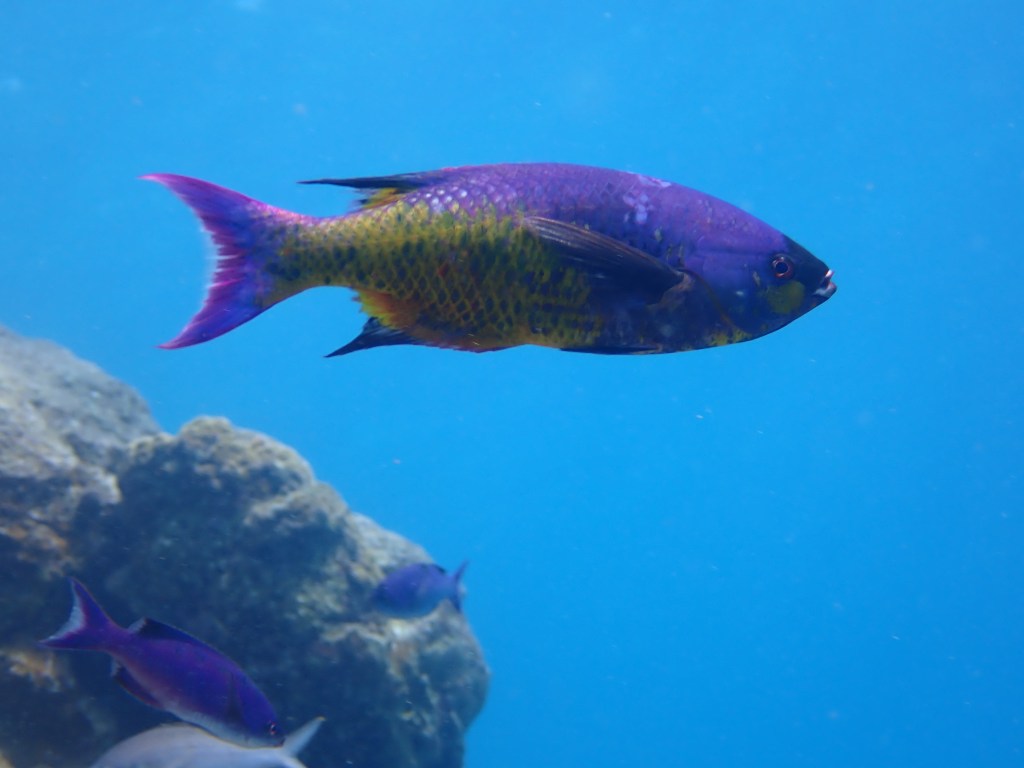
On the upside, I found a new-to-me species, the Creole wrasse hanging out at the wall in a school of blue chromis.

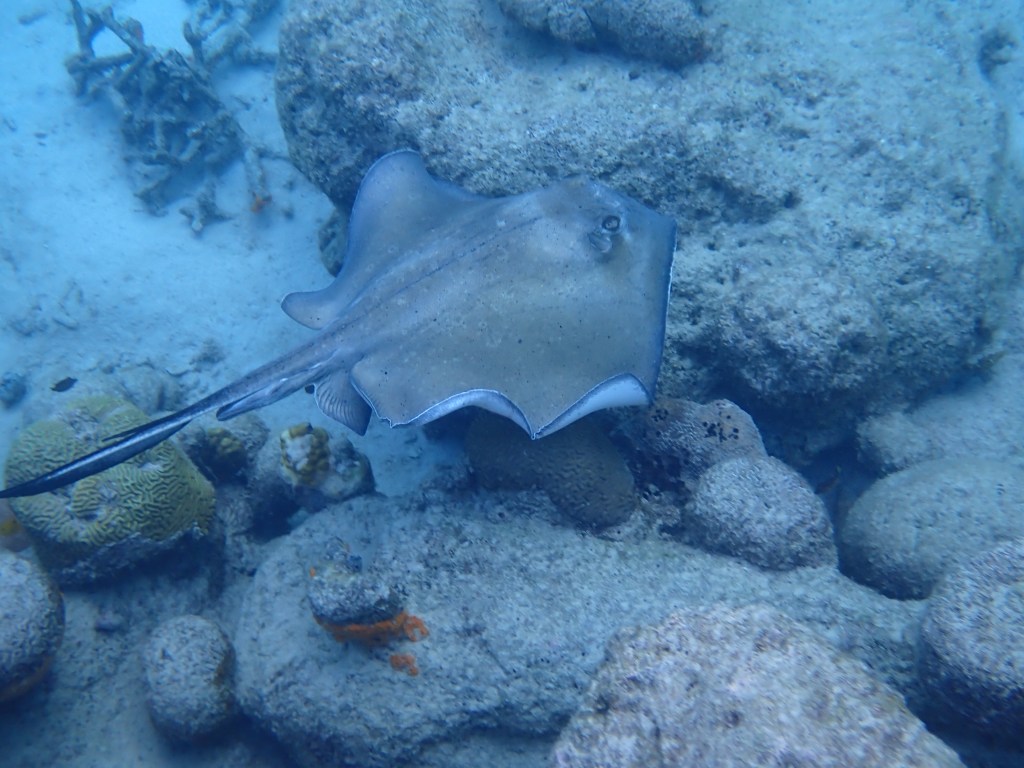
I also found my first Southern stingray on Bonaire. Very cool! Note how the bottom corals are mostly dead, although the one on the bottom left is trying to survive, along with a tiny enrusting of an orange sponge.

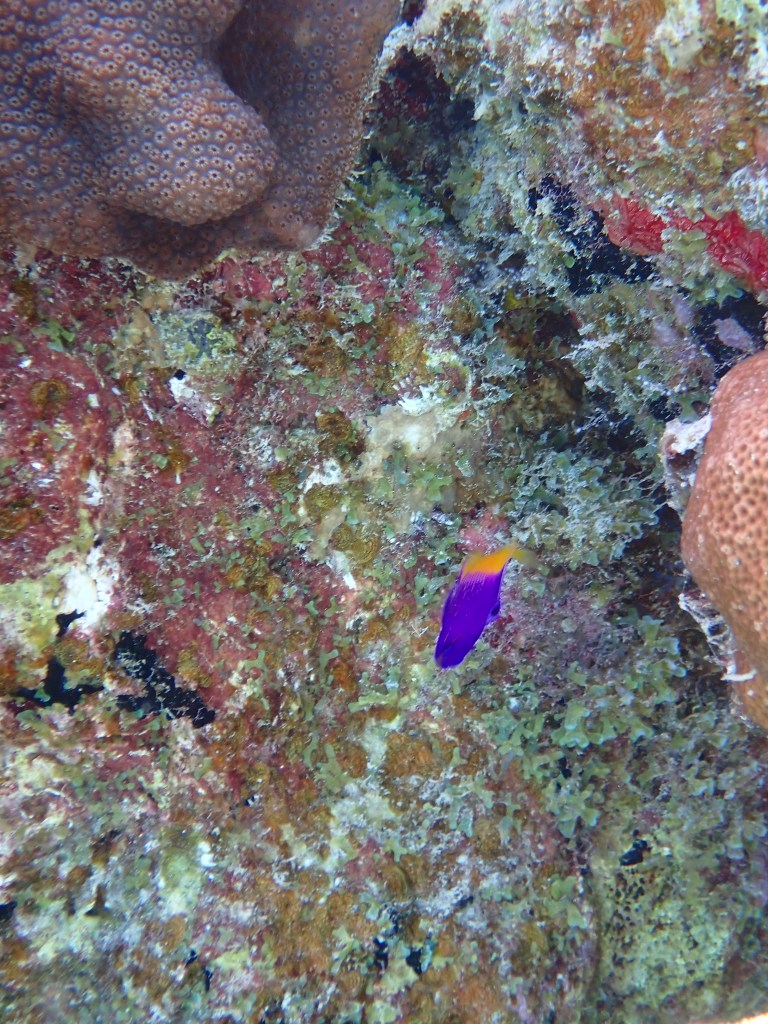
Last time I was there, I saw a pair of fairy basslets, a shy little fish that prefers deep water. I was pleased to find a pair still there. Notice the healthy (ish) coral in the upper left and lower right, but the rest of the algae-covered wall. Basslets are elusive and always look like they are blurry to me, but if you zoom in, you’ll see it isn’t the camera 😀

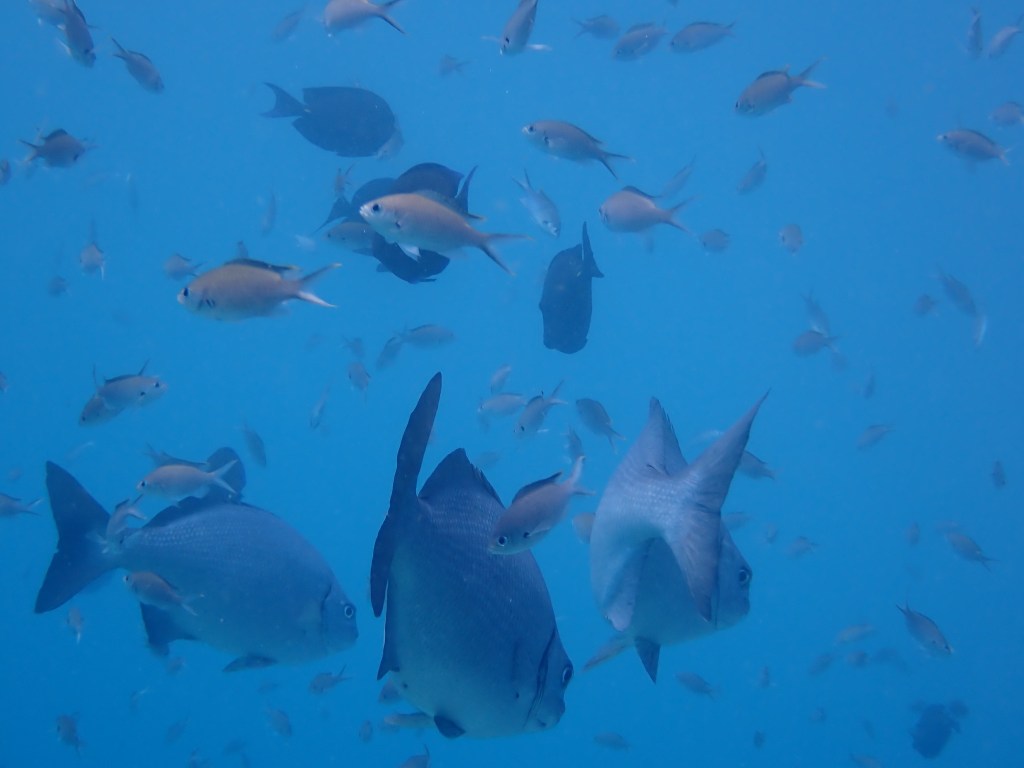
There was also a giant school of fish at the bottom of the wall, which made free diving something like being in an aquarium. One of the few times I wished I was in SCUBA gear.

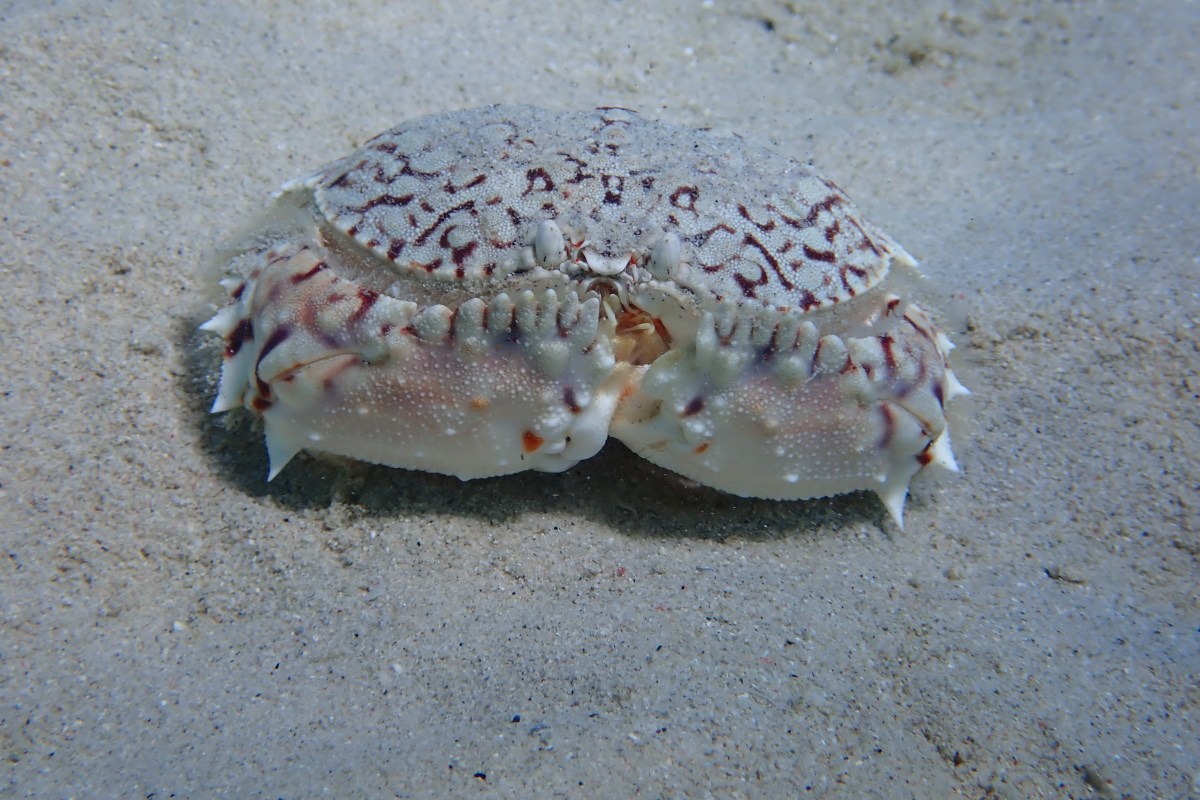
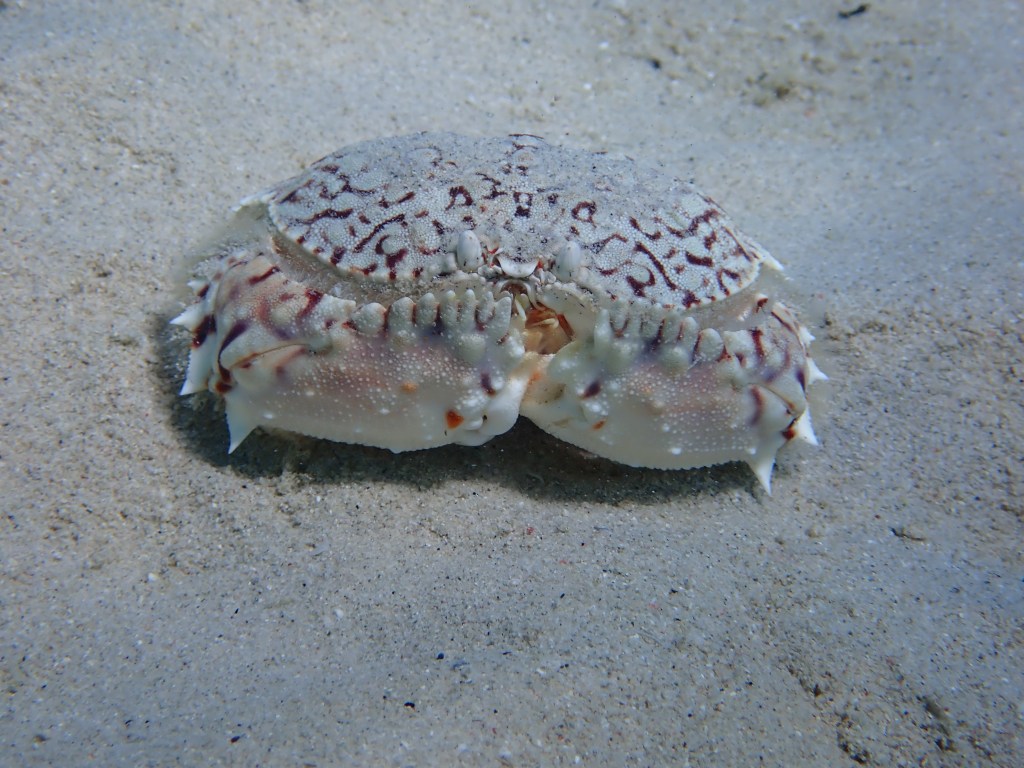
The shallow sandy areas also had some unexpected pleasures. I found another new-to-me species, the box crab! I think it is pretty obvious how it gets it’s name.

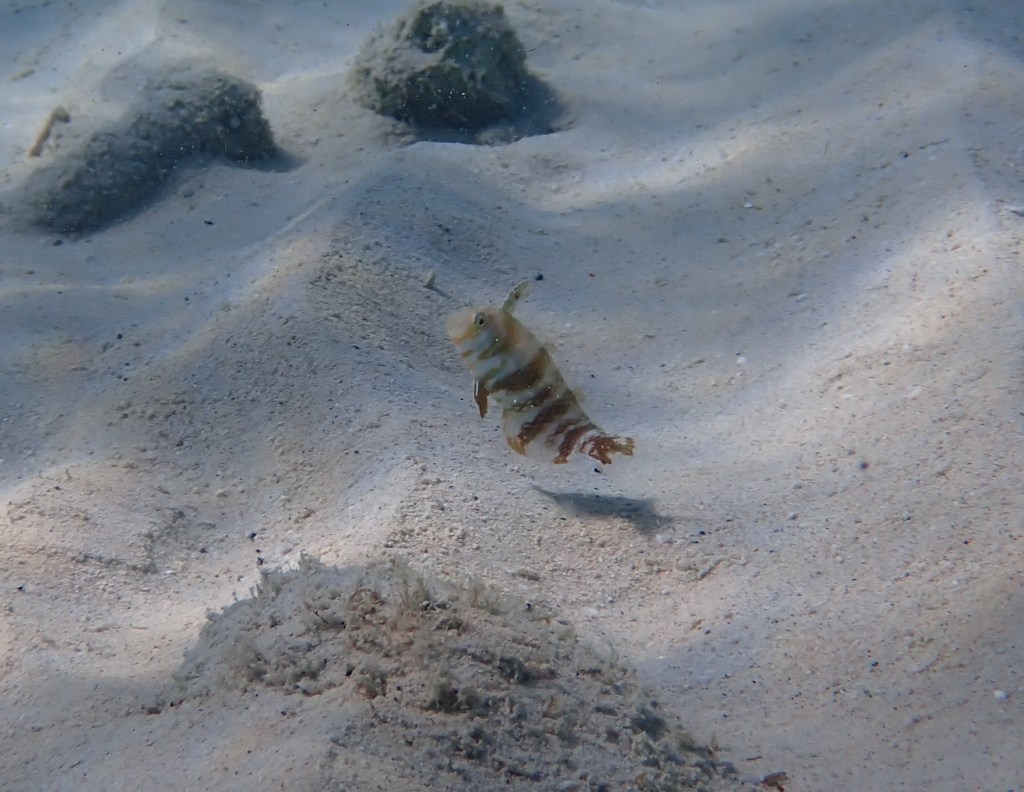
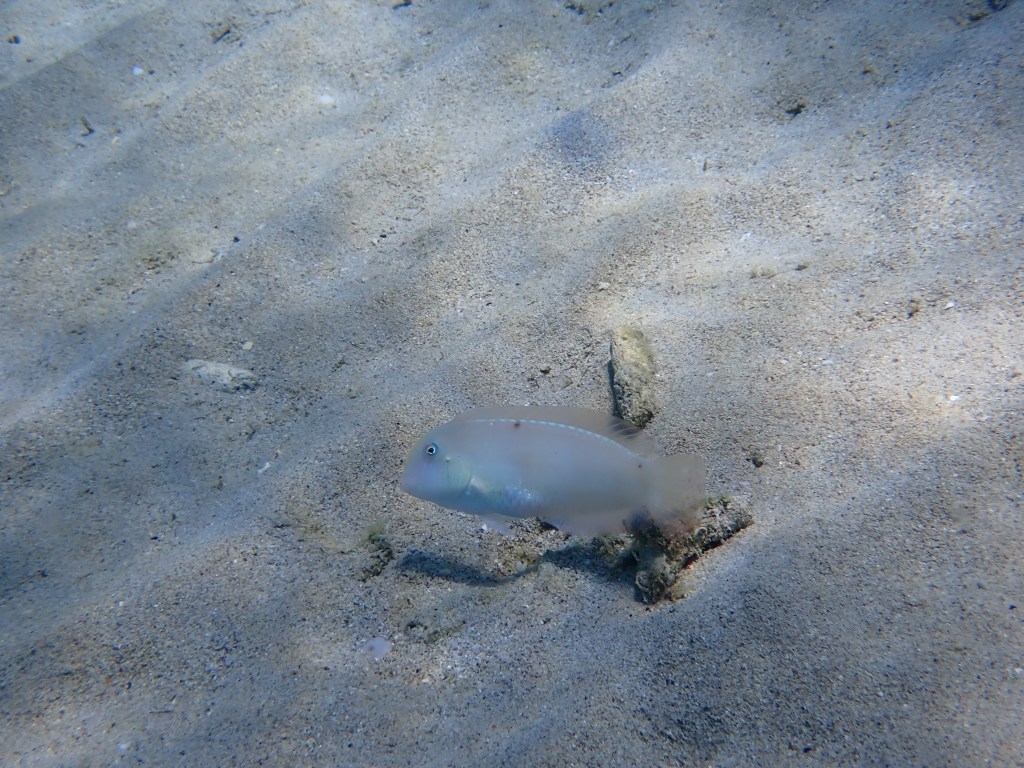
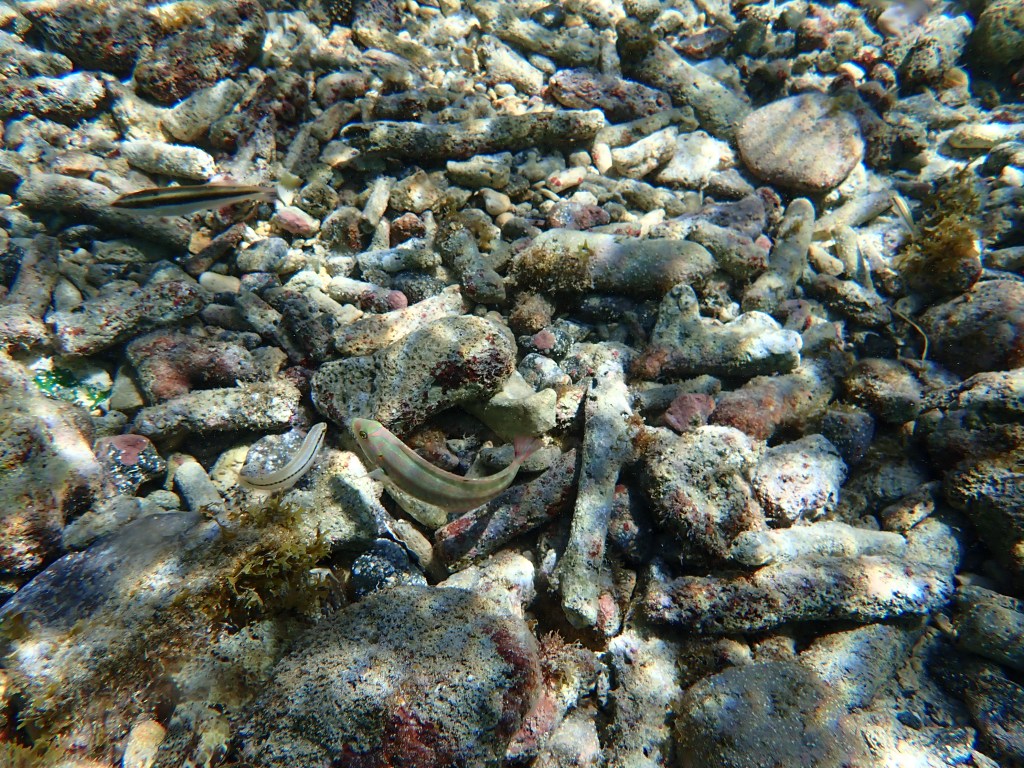
And remember that pearly razorfish from Fisher’s Pier? I found a juvenile! Which is one of the crazy things about identifying fish–many change patterns and colors through their life–not once, but multiple times.

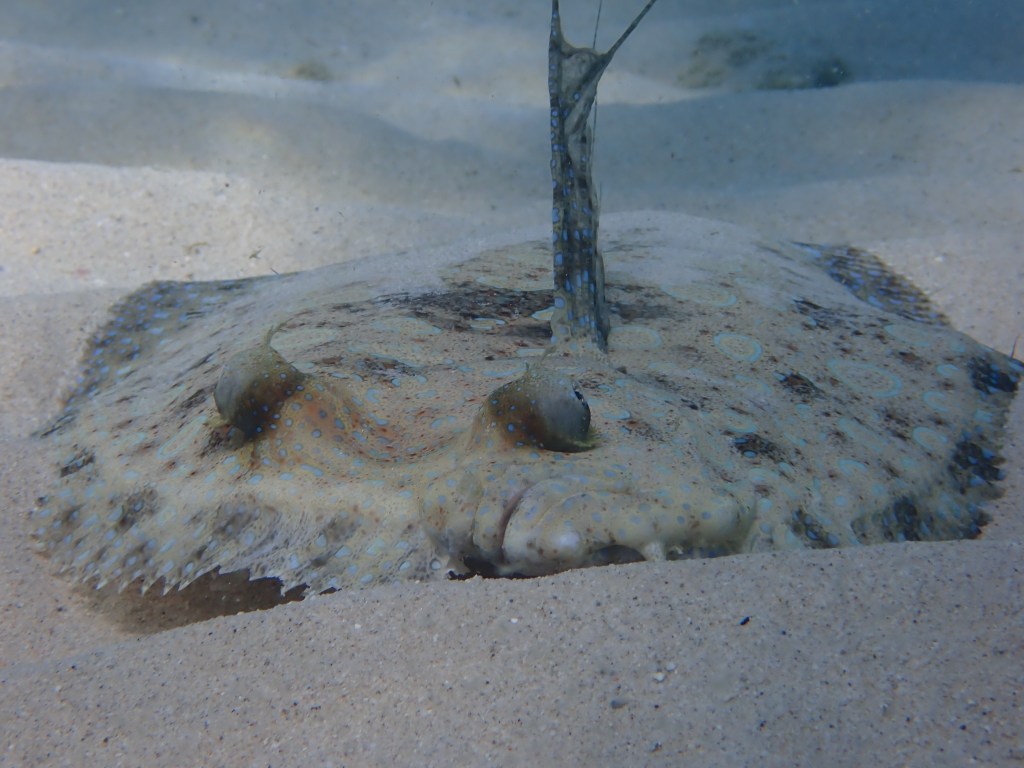
I was so distracted by this little guy that I almost missed the R-rated show behind me–two peacock flounders signaling they wanted to mate. I shot a couple pictures then backed off to let them get on with it.

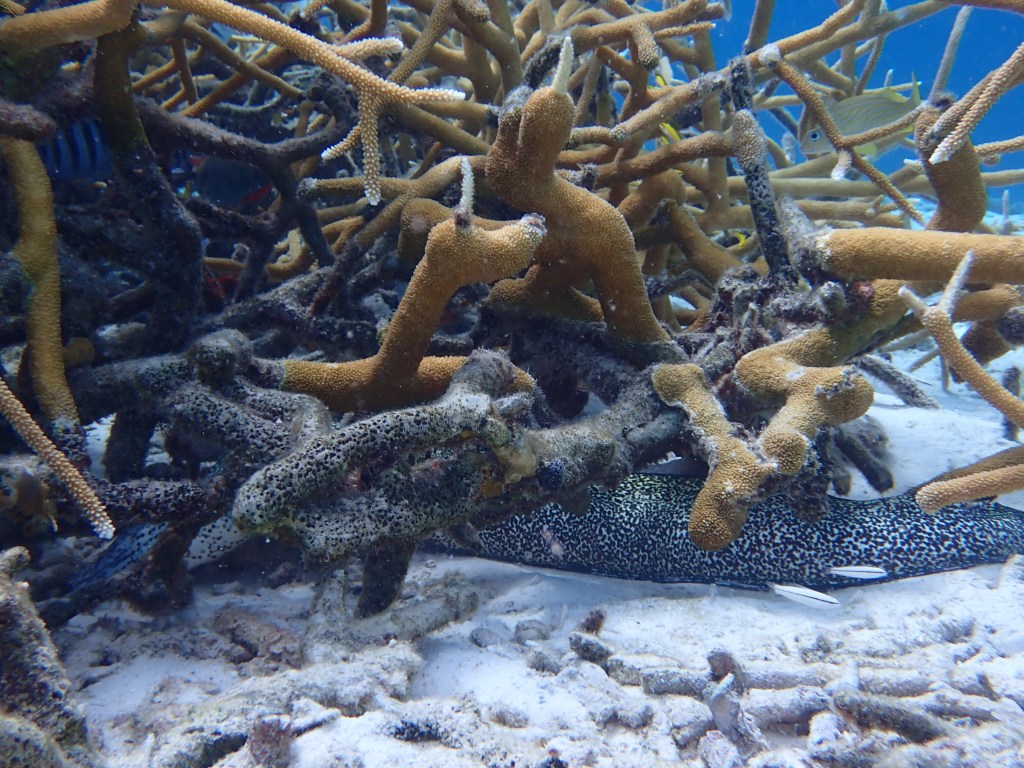
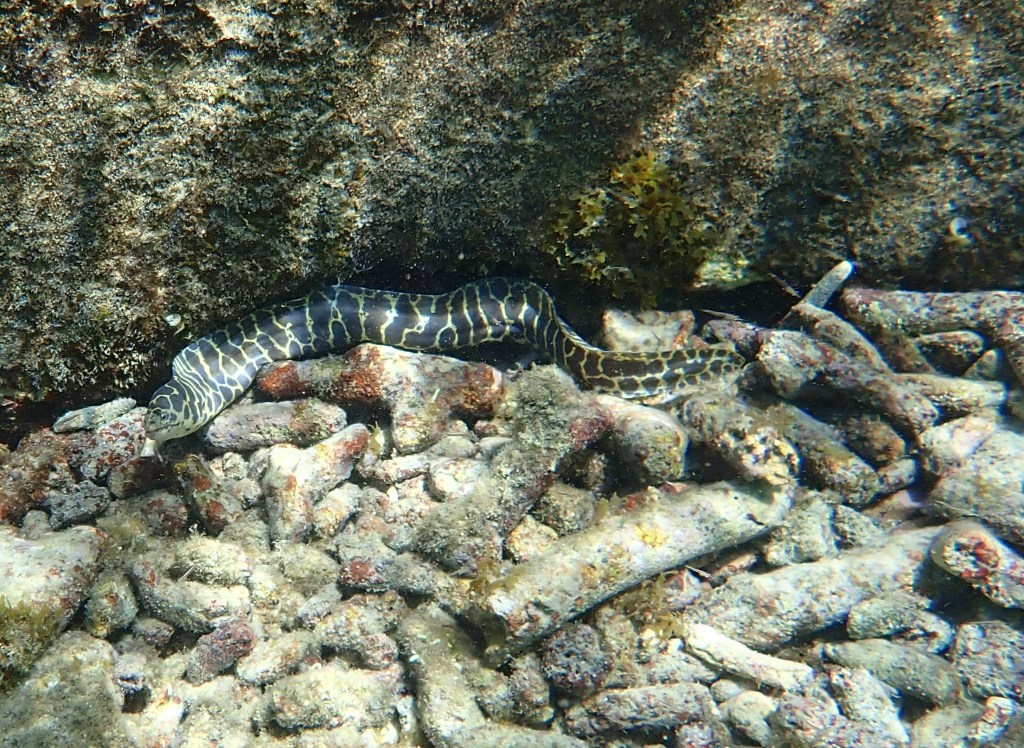
About 50-75 yards out from shore, the bottom starts sloping down. REEF Renewal has another group of coral trees in the area. I also saw my biggest eel yet, in a staghorn patch about 15 ft down next to a REEF tree. The pictures fail to give a view of just how thick it was, because I was too nervous to look for the head. You see that grunt in the top right corner looking at me? Those are about 6-8 inches.

Interestingly, my camera battery died shortly after I discovered the eel, leading me to discover just how important photography is to me. I glumly swam back to shore, dried off, drove to my apartment and collected the spare, then returned to the site. Luckily, the eel hadn’t moved, and hopefully, lesson learned. However, casual theft is an occasional thing, so I hadn’t wanted to take my spare. Good thing the island is so small.

Still, I don’t know that I would recommend it to the average snorkeler that doesn’t have interest in looking around a lot of sand. The depths near the shore are safe but sandy with iffy visibility, while getting to the wall requires a swim. Call it an intermediate to advanced snorkel site.

Bonaire Feb. 2025. Fishermen’s Pier and Te Amo

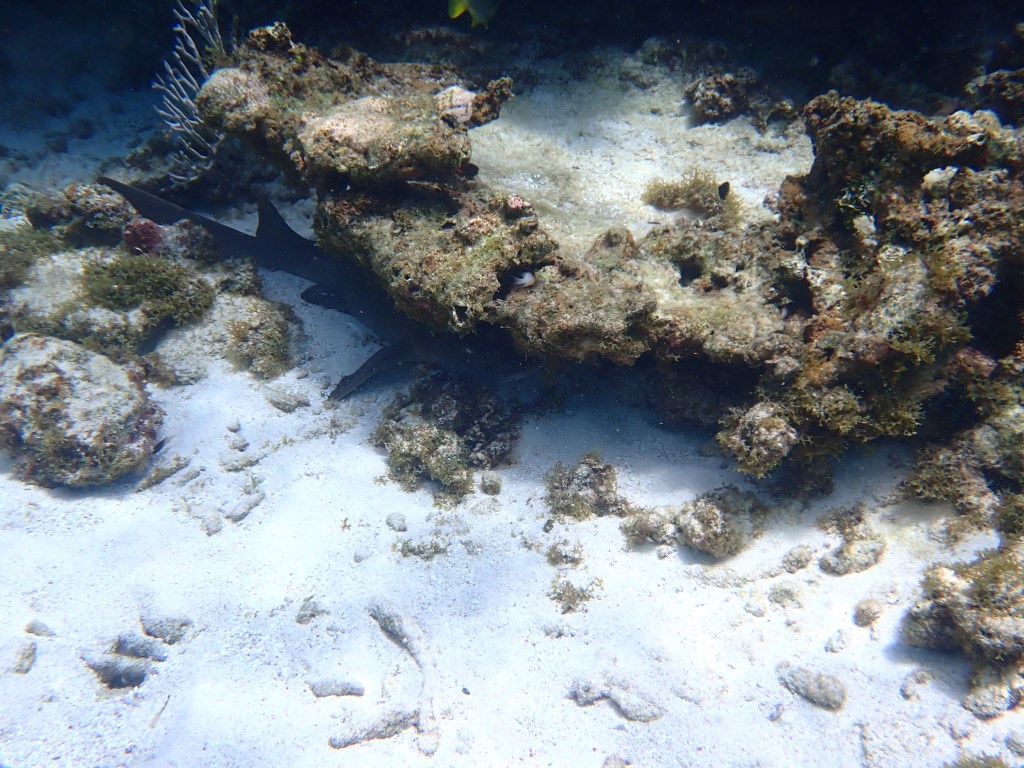
After the (mis)adventures of Salt Pier, I thought I’d give a shot at another favorite, Lac Cai. When I was there last fall, I was lucky enough to see a nurse shark! I made an attempt to go around the north part of the lake along Kaminda Road to get to Lac Cai Beach and wow, my poor little rental car could not handle the road. I’ve seen logging roads in better condition! So I turned around and headed south. I stopped at Barends Elshout as it looked like it may be a good launch spot, but after observing the large numbers of windsurfers spread out over the cai, I reconsidered and headed back to town. I spent the afternoon alongside the promenade, trying to improve some of my photo quality.

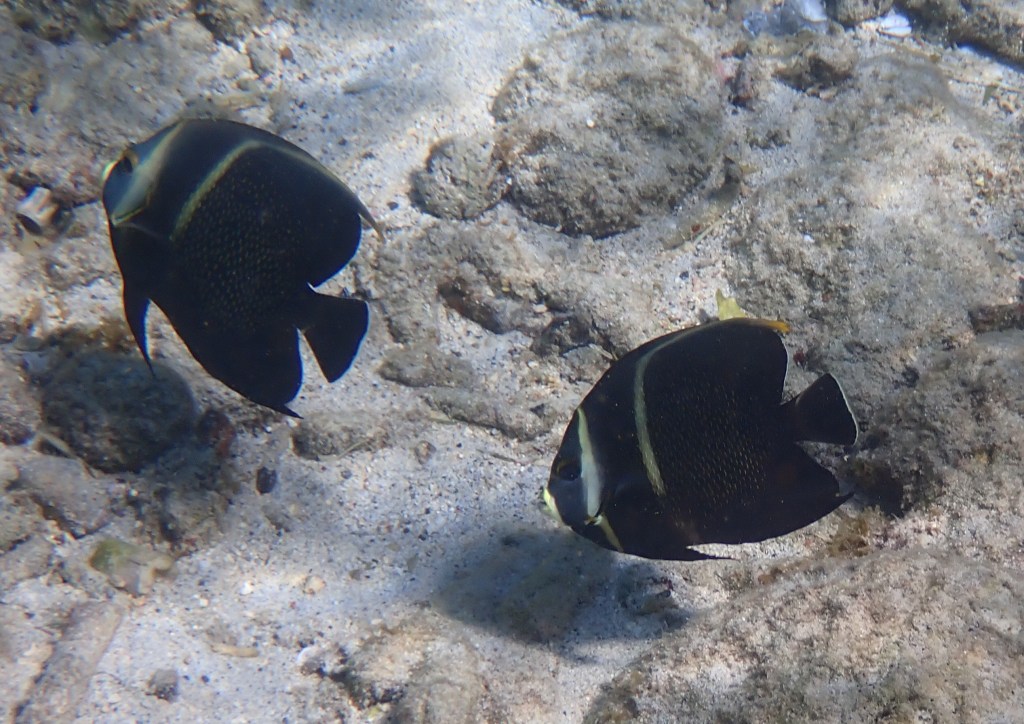
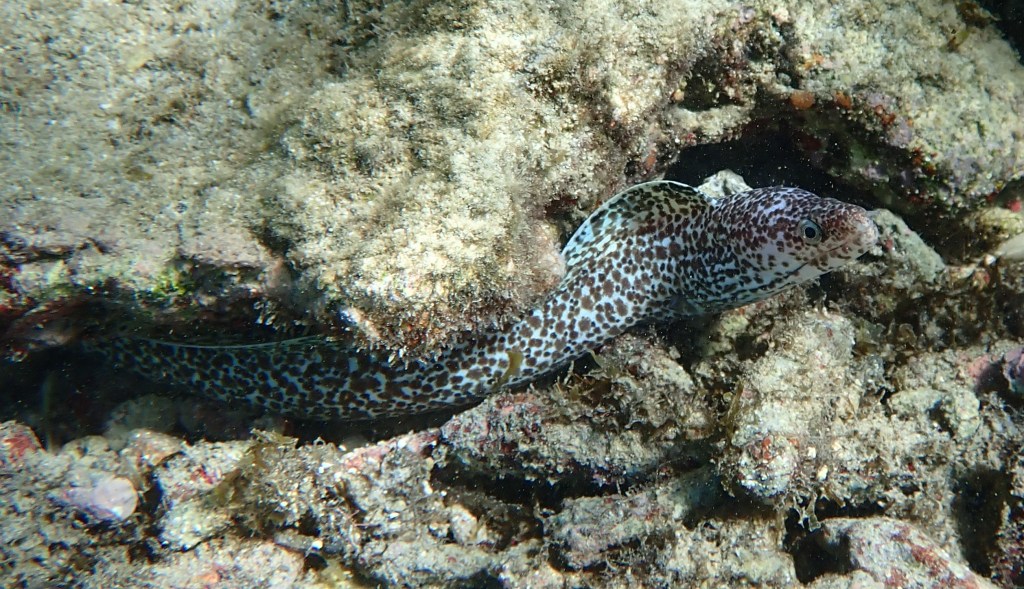
I got some great shots of bigger fish, including my first-ever pearly razorfish, a pair of transitioning French angels, a nice chain moray eel, a trumpetfish ineffectively concealing itself, and a chain moray eel.

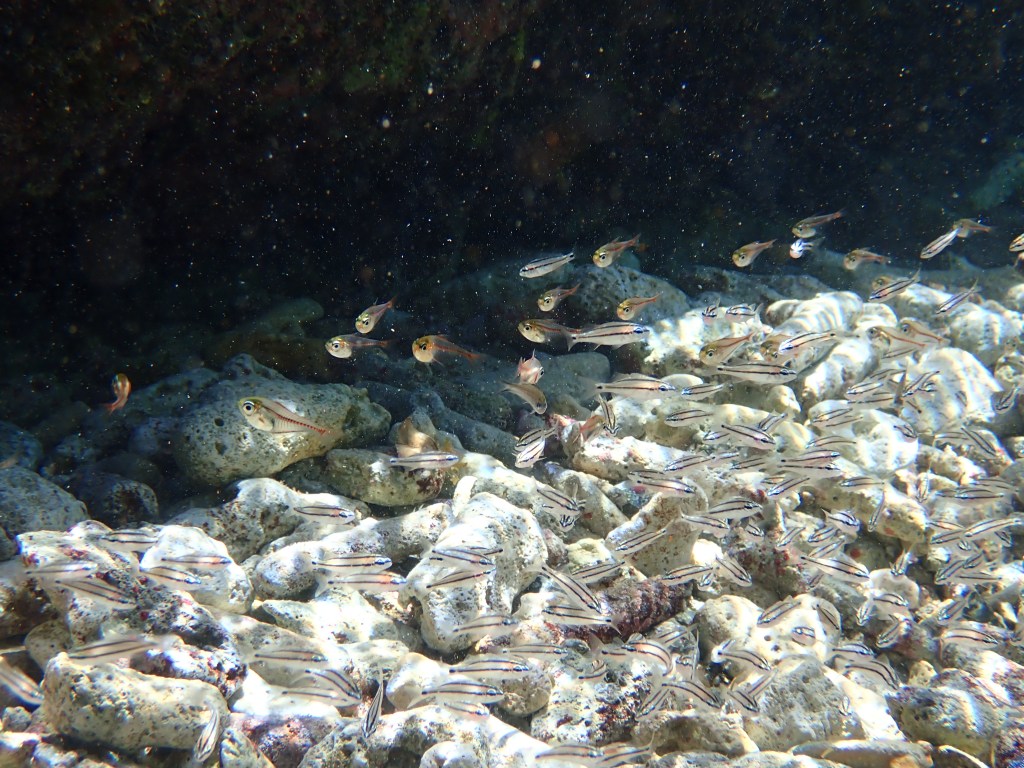
Some amazing shots of copper-colored sharpnose, a small goby with another fish inside, a tube worm family, and some juvenile glass sweepers in the surge, which excited me to no end.

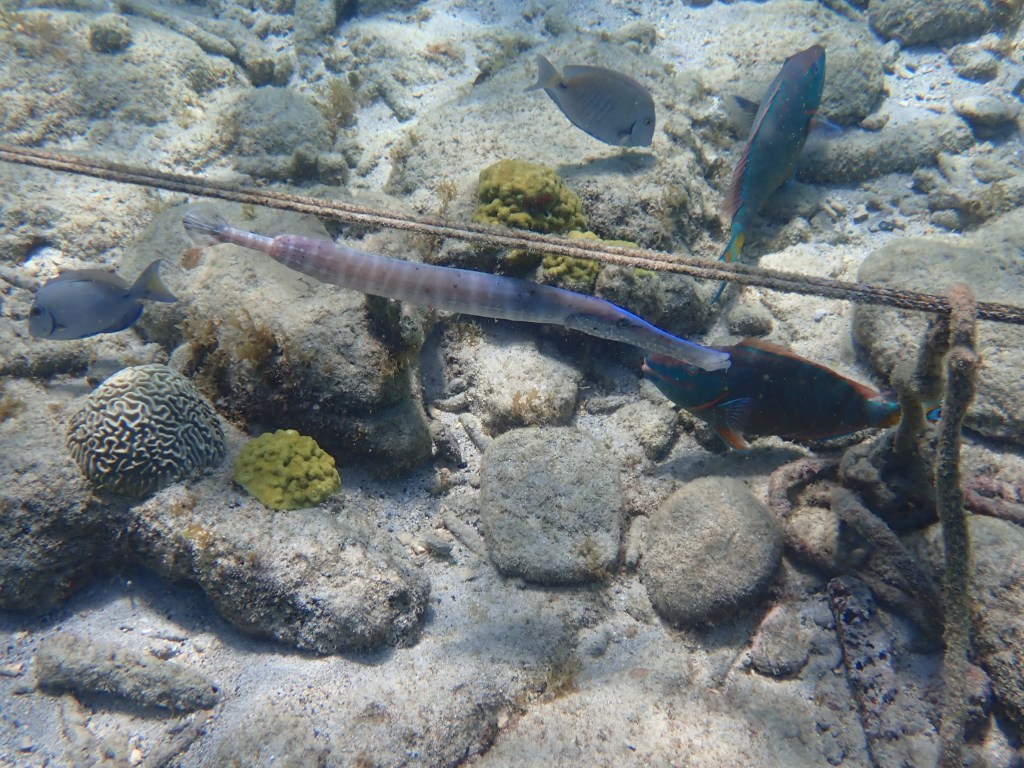
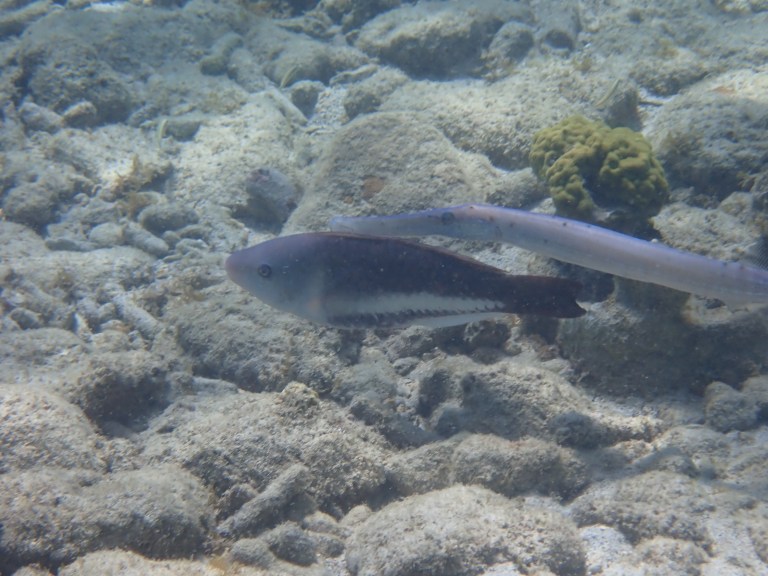
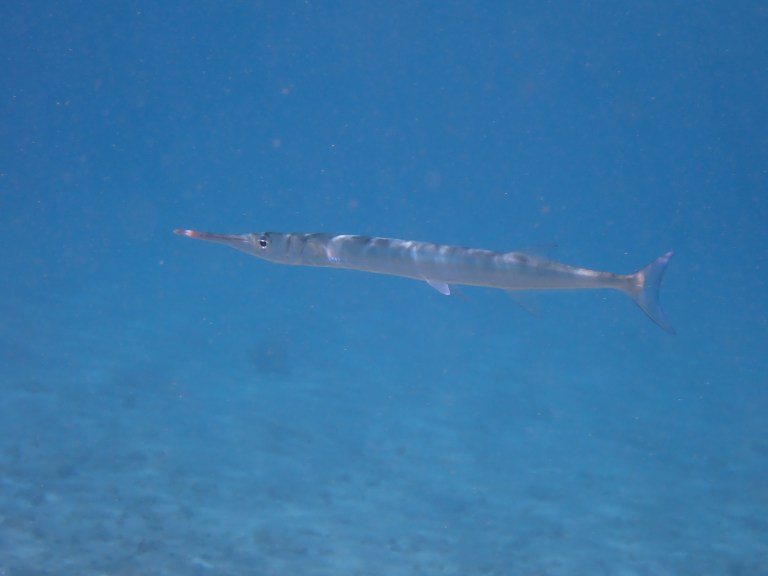
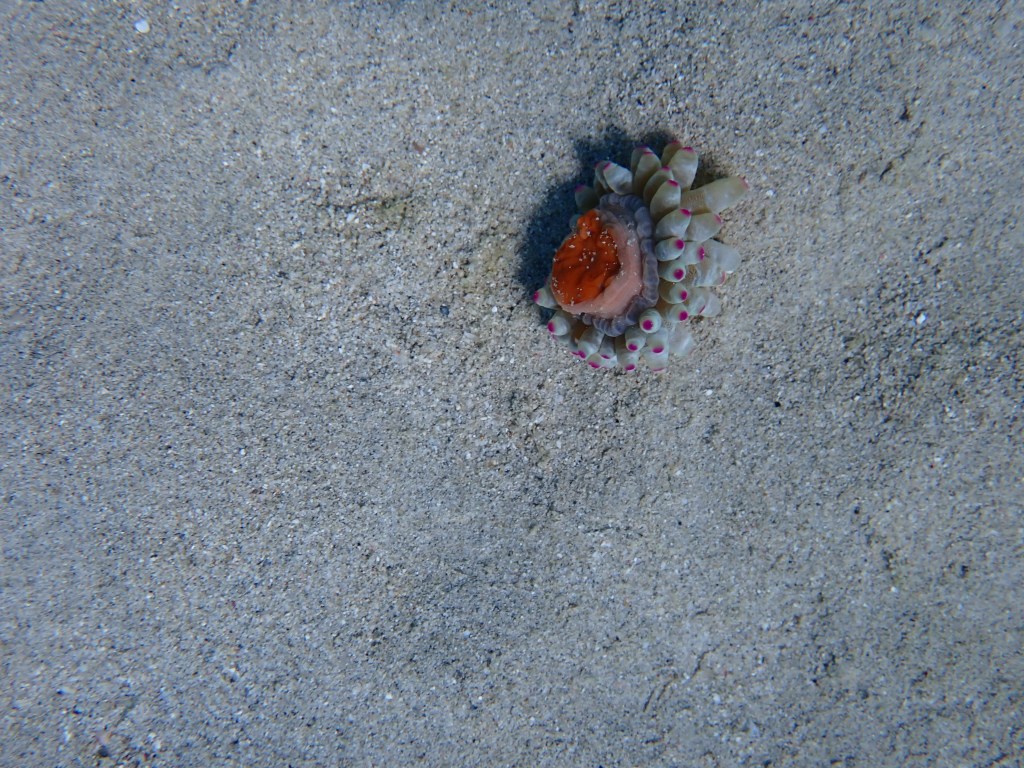
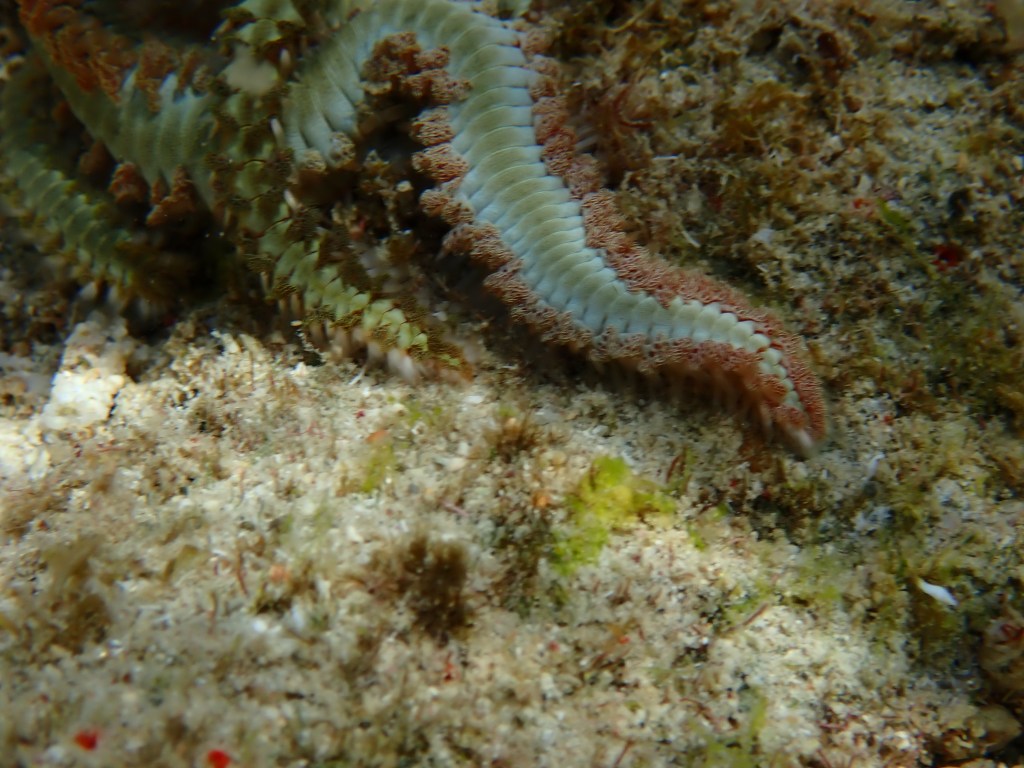
And some curious behaviors, like a trumpet stalking a parrotfish, a needlefish stalking me, a rambling anemone, and one of the most disgusting things I’ve seen, a mass of fireworms wrapped around some fish scraps.

I hadn’t checked out Te Amo yet, so I stopped and had lunch at Stoked Food truck which is conveniently right next to the beach. Warning: the parking lot for Stoked/Te Amo has the worst surfacing I’ve ever seen, so as soon as you pull in, slow down to a crawl. Te Amo is all sandy, so visibility was significantly worse than at the pier, especially as the wind gusts were increasing.

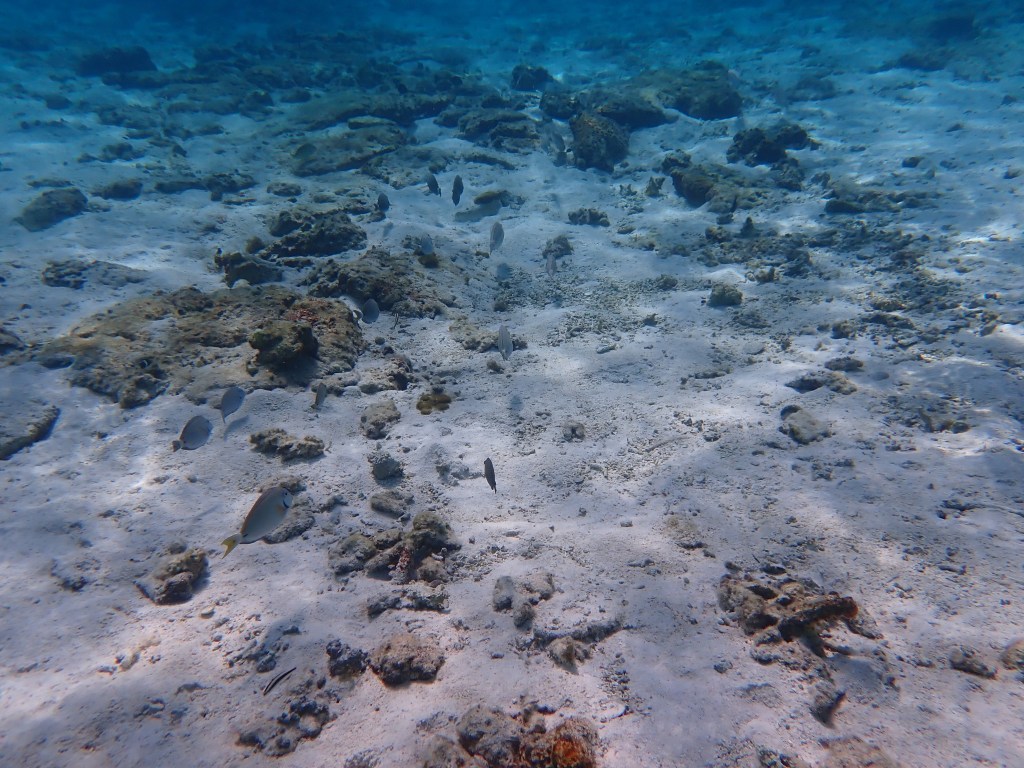
Te Amo is a beautiful sandy beach, the kind you think of when you think tropical beaches. There is a reef parallel to the shore that is in awful shape. Most of the coral is dead, but there are a few live patches.

However, there are still a wide variety of fish hanging out and hunting for crustaceans, I suppose.

Beyond the reef wall is a downslope to the deep, so it can be interesting to go along there and note some deeper-water fish.

I did also get a hilarious picture of a redlip blenny who looks like he’s posing for a dog show.

Bonaire 2025. Salt Pier

I’ve been lucky when abroad to find other snorkelers. This visit, I met someone from the Netherlands who suggested Salt Pier, where the Cargill Salt ships dock to be loaded up with salt from the saltwater flats. If a ship is docked or due, they will close the area around the pier for the day. In general, Salt Pier is quite deep and basically open ocean, which means that when it is windy, you will feel it. When I went, I think the wind was 19-20 mph with gusts, so besides the choppy swim, the clarity was significantly reduced for photography.

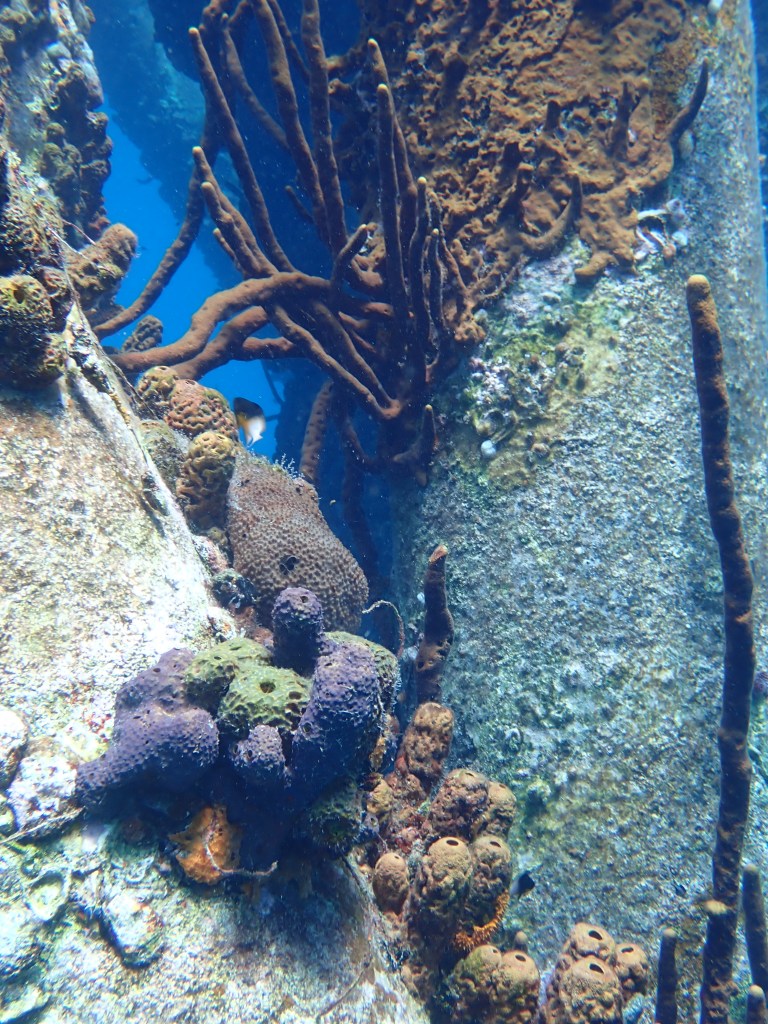
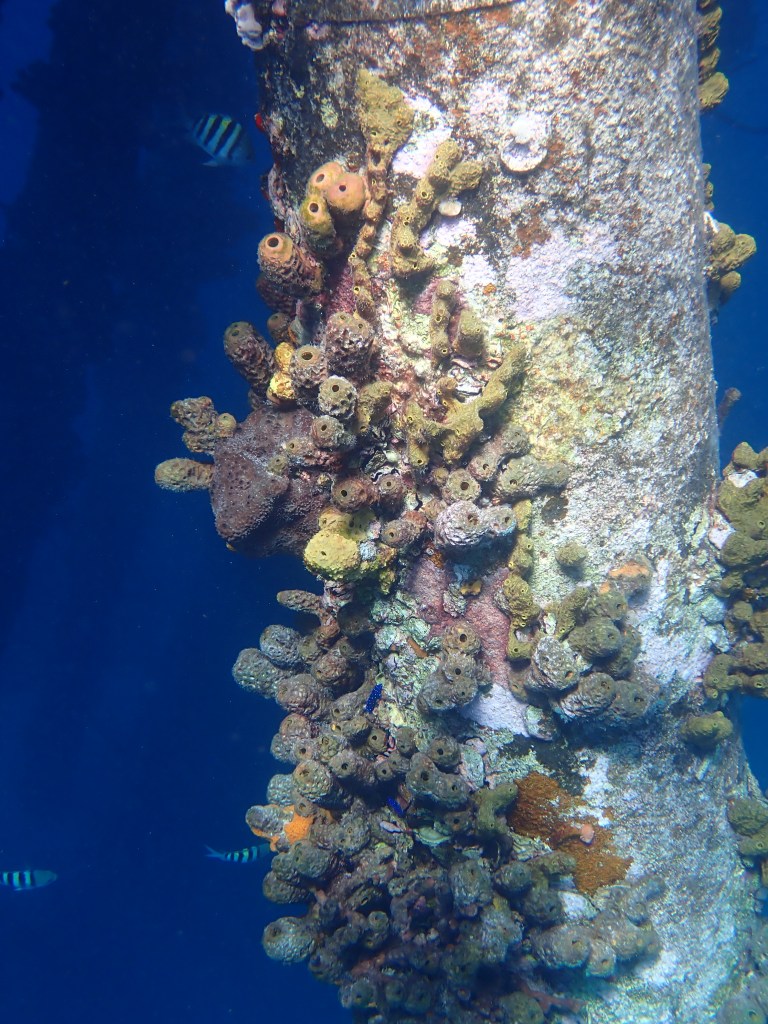
I absolutely love the area around the pier pilings, the ghostly shapes in the depths and the wildly colorful sponges on the close pilings. Salt Pier is often mentioned as a place to see turtles, but I had never seen mentioned the marvelously diverse amount of sponges growing on the giant pilings.

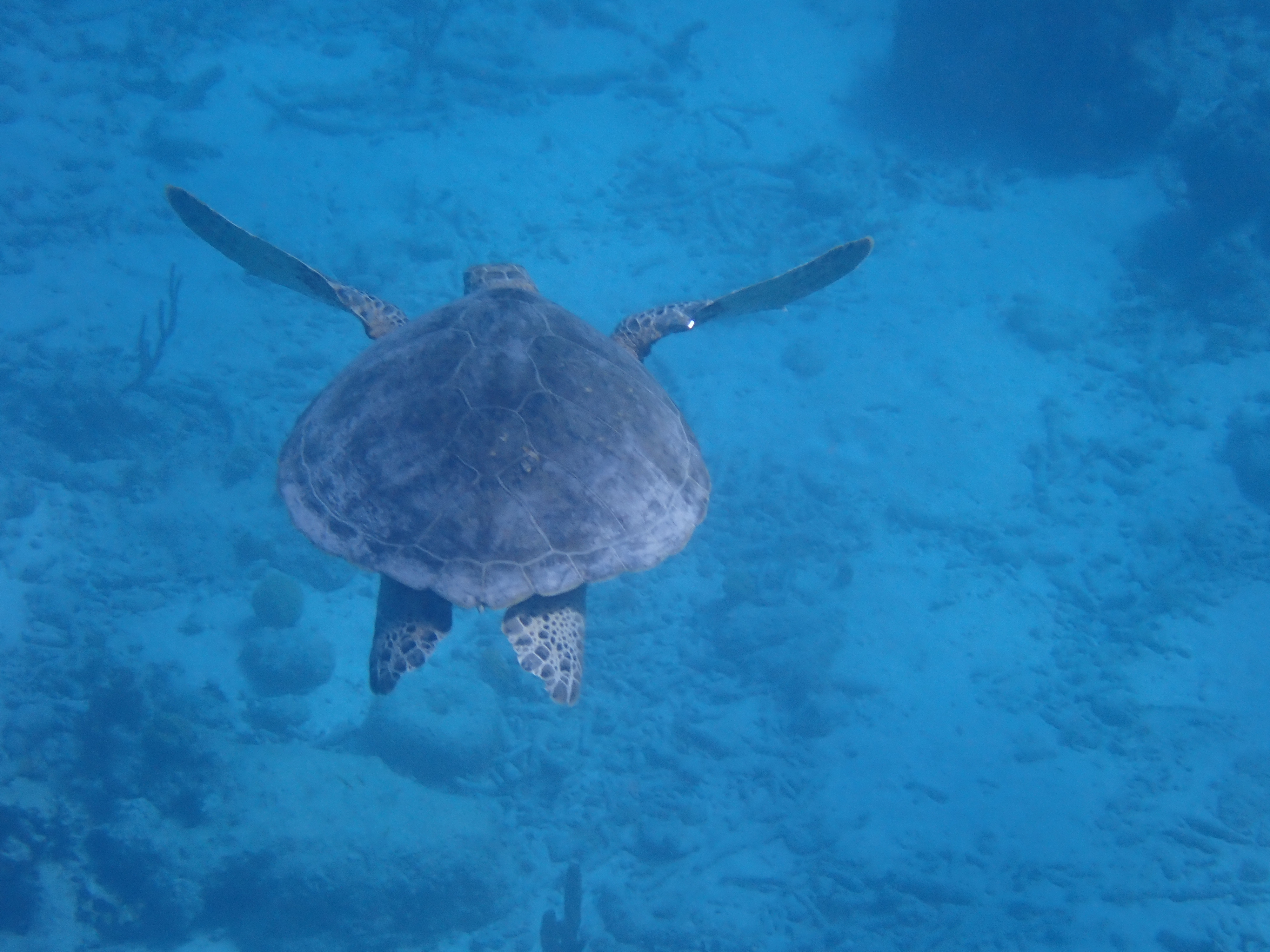
It is an area known for turtles, interestingly. I’m not sure what draws them there over other places. I saw a very small one as well as a larger tagged one on this run.

Also because of the deeper water, I usually see a barracuda as well as larger schools of larger fish, sheltering under the pilings. This picture isn’t great, but you can see the barracuda swimming through. Though numerous sources suggest a snorkeler has nothing to fear, unless wearing shiny bits of metal, I try to keep a respectful distance.

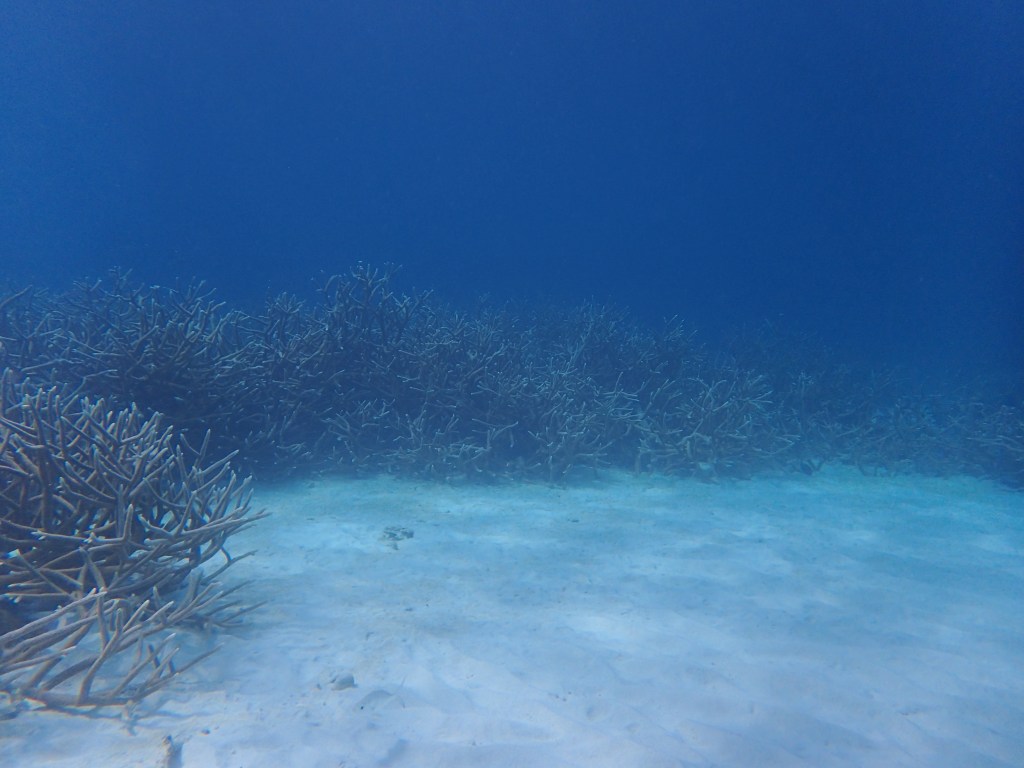
Unfortunately, most of the shallow areas have experienced a lot of coral die off. To the right of the pier is an area that used to be covered with staghorn coral. I was happy to see there was some surviving, but as you can tell, it is struggling.

Salt Pier also has a LOT of divers. My friend and I had fun playing in their bubbles as they swam underneath us at the pilings.

Getting out was a challenge, as waves had picked up. I got shoved into the limestone boulders, and was extremely glad of my full-body rashguard from Waterlust. Only my hands and feet got scraped. That was probably the worst scrape-up I’ve ever had.