
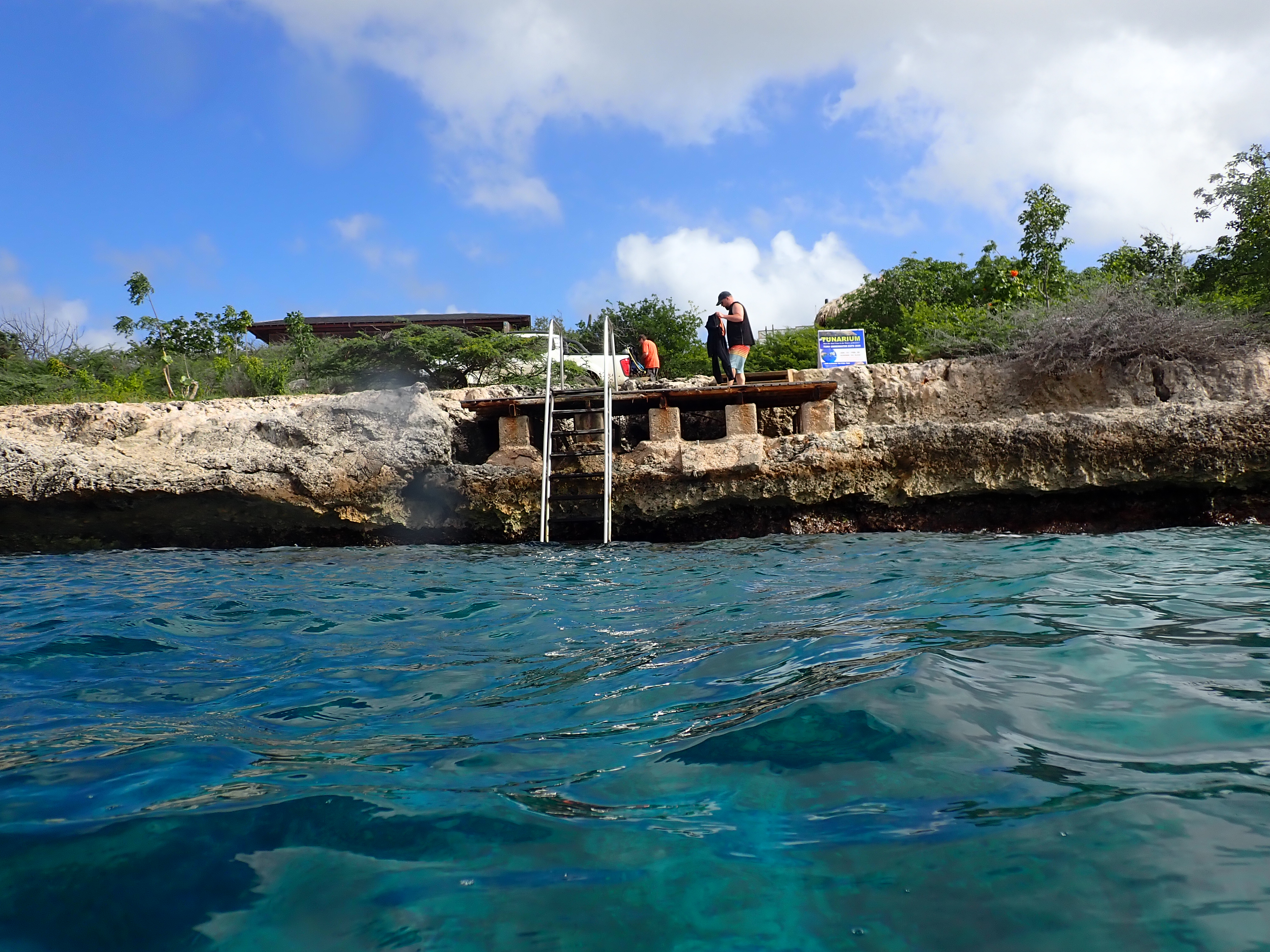
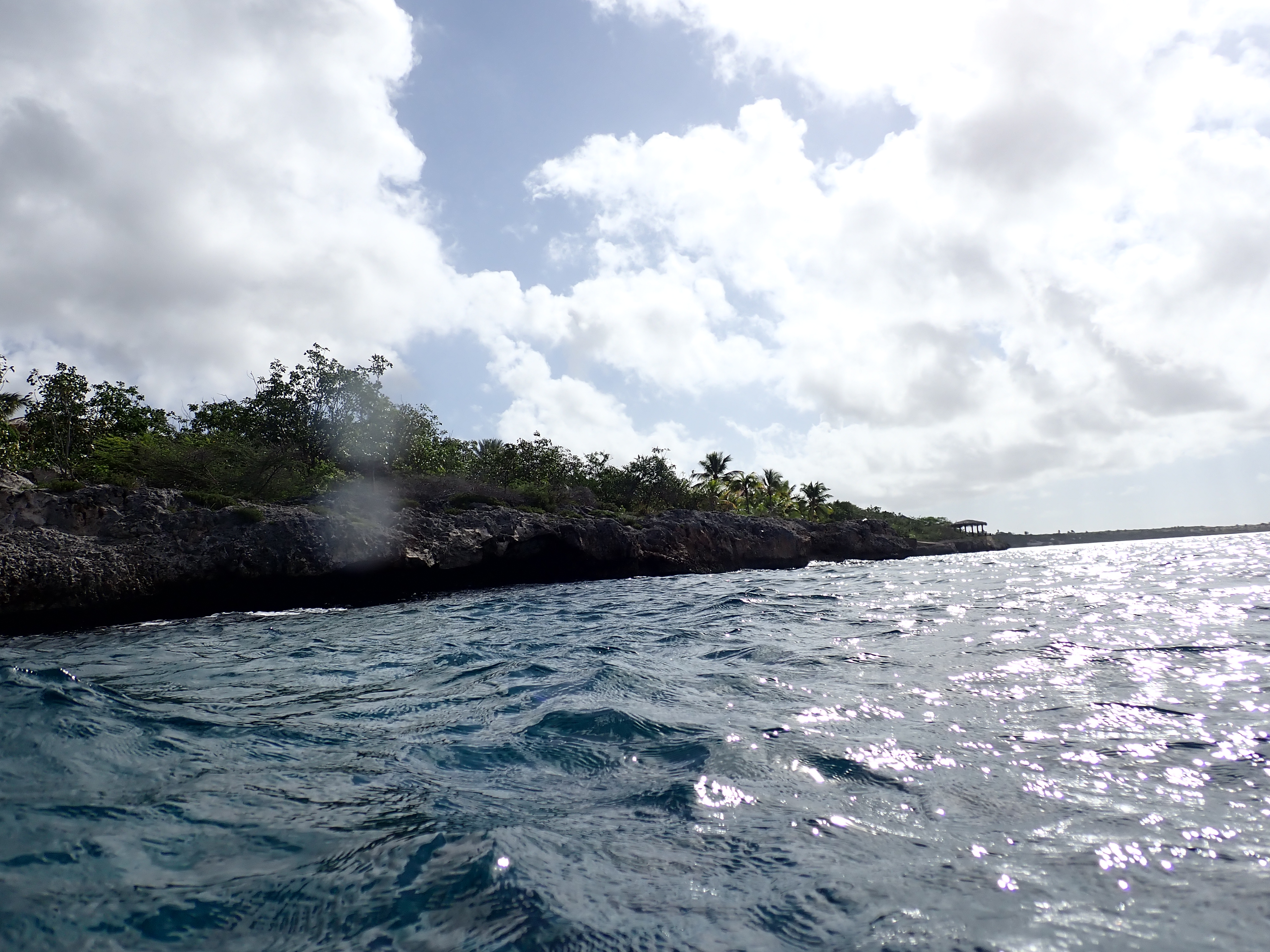
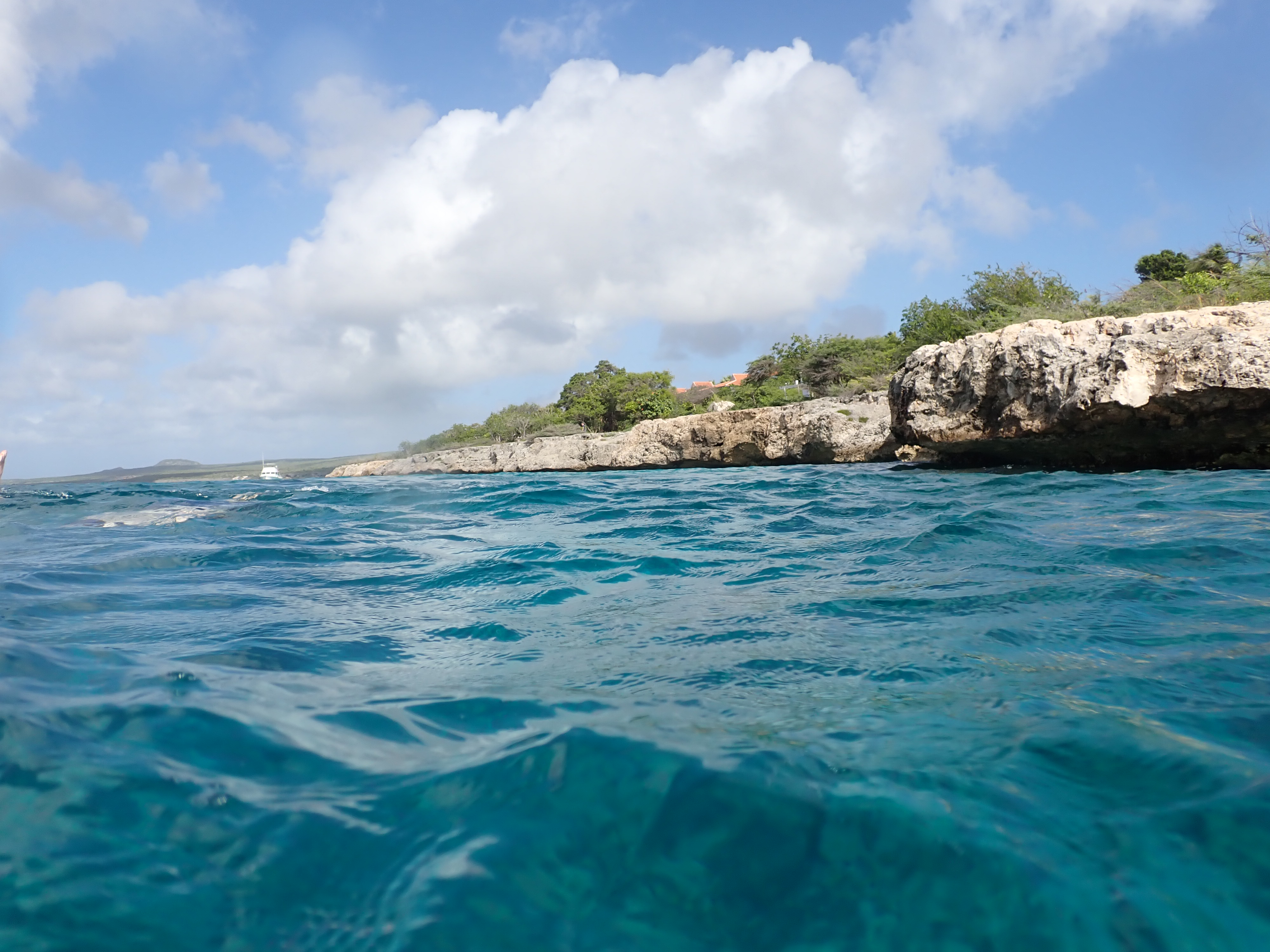
A week-long, solo adventure in January. I stayed north of the main town, a few minutes walk from Oil Slick dive site. Unfortunately, it was quite windy, 18-21 mph the week I was there. A lot of the dive sites are unprotected from winds, including Oil Slick. It is about 8-10 feet deep right off the platform, so you have to be comfortable with a ladder and with putting on gear while treading water.
One of the main reasons I wanted to scout around Oil Slick is that I donated money to Reef Renewal Bonaire create a coral tree. In the past year, Reef Renewal has been growing the organization and exponentially increasing their efforts to outplant coral through in-ocean propagation. In the old days, they created floating ‘trees’ often made of PVC. Most trees focused on staghorn coral, a type that is friendly to this propagation and is often decimated by storm events. I don’t think I found my tree, but you can see what they look like. It looks like RRB is giving brain or maze corals a try.

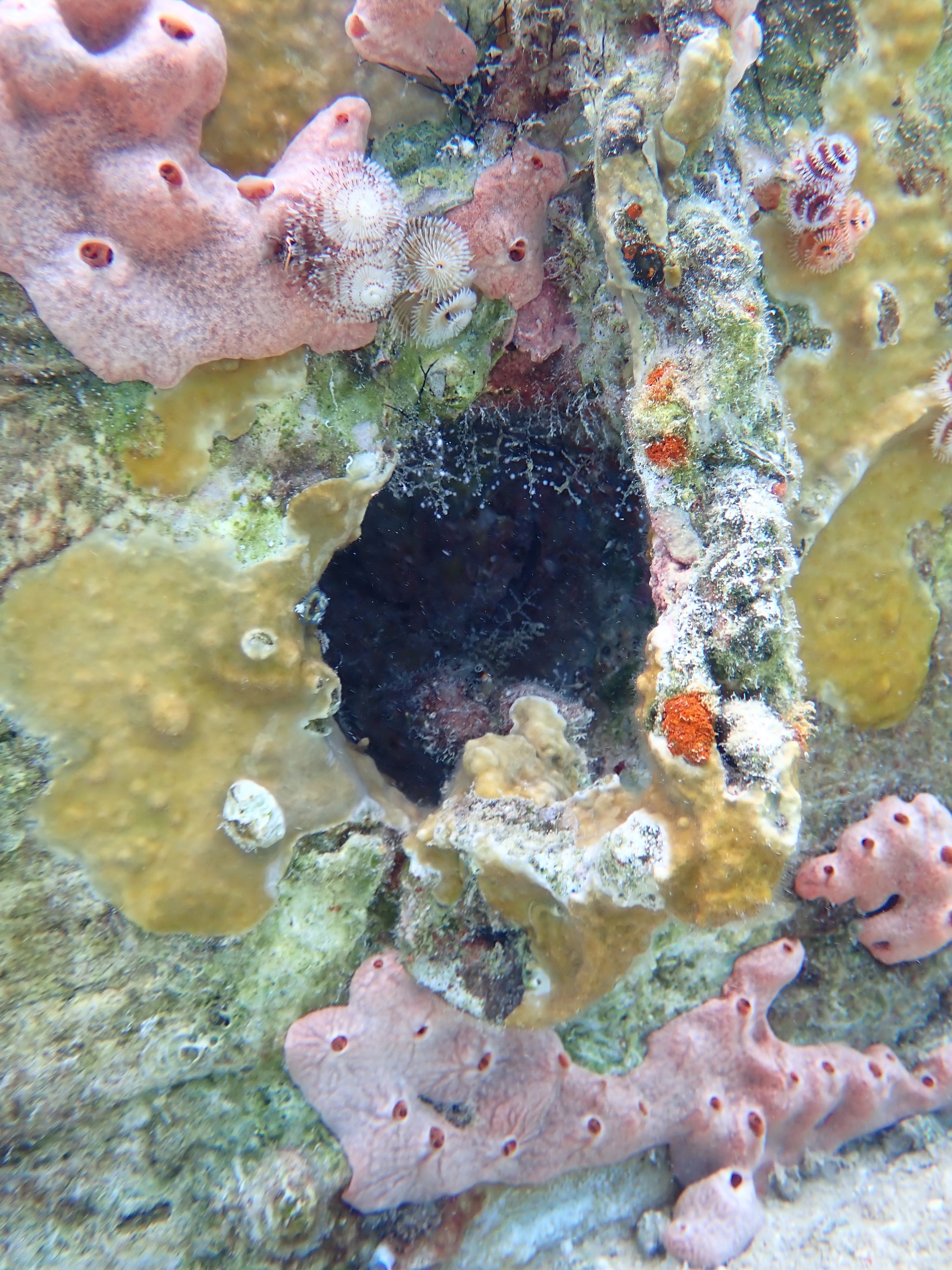
Oil Slick is really too deep for enjoyable snorkeling, but had a lovely bottom with large boulder corals and giant sea plumes. In many of the pictures you can see how the coral is struggling with disease, no longer a uniform color. Due to the wave action, there’s lots of particles blown up in the water even though there is relatively little exposed sandy bottom.
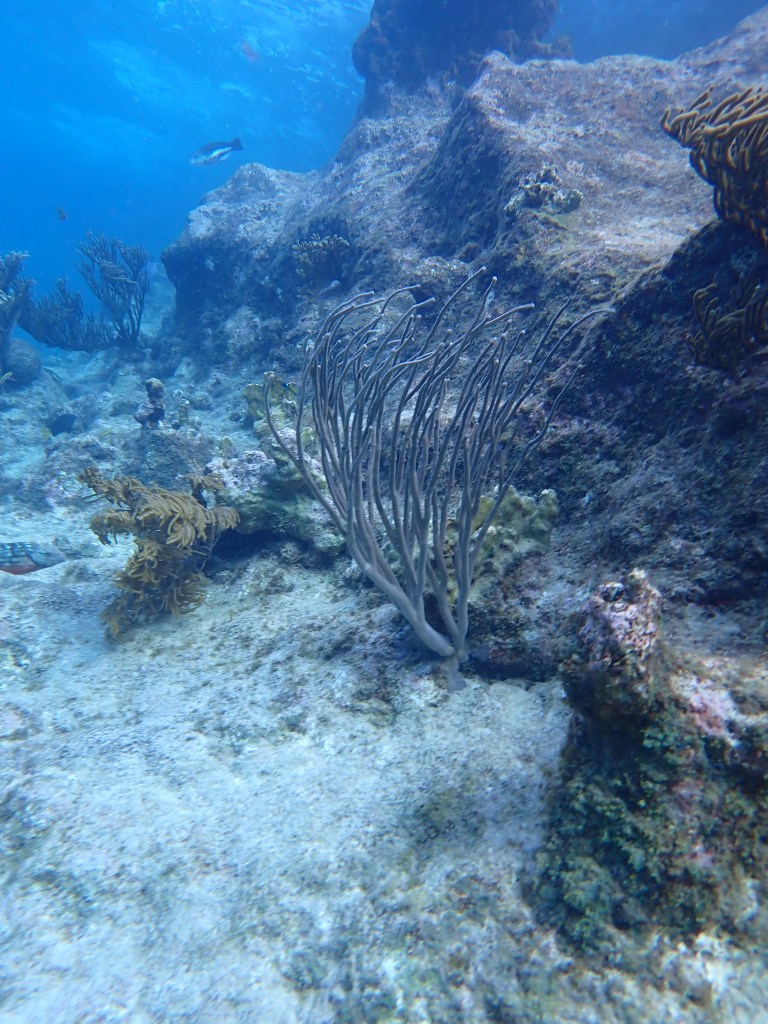
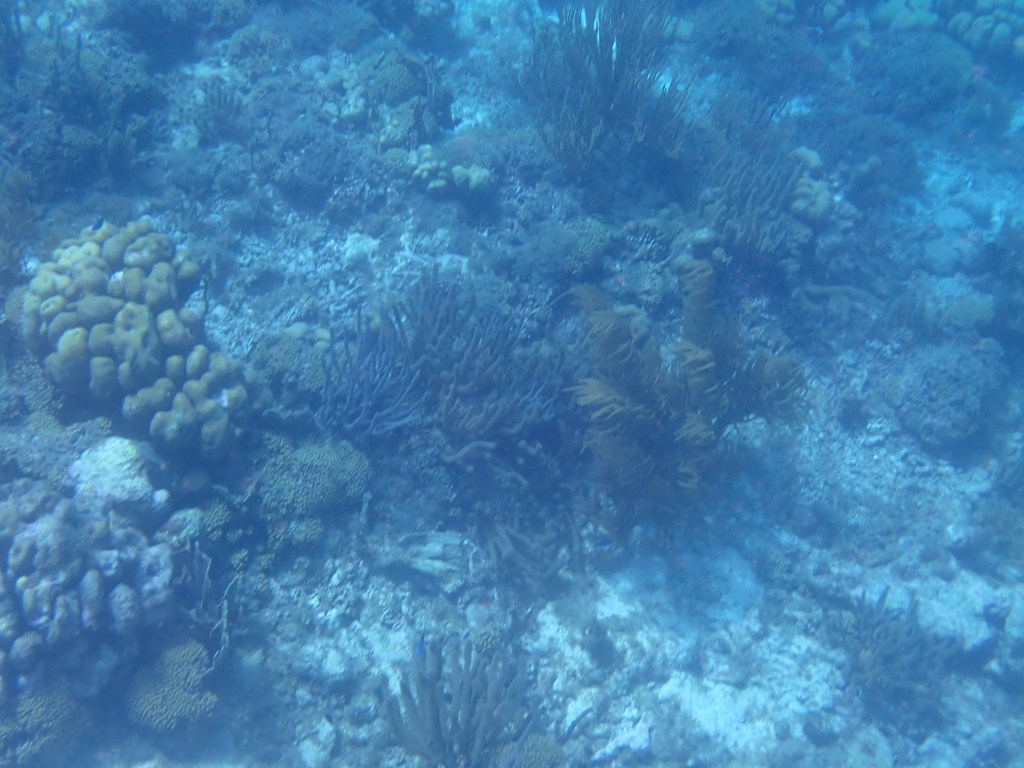
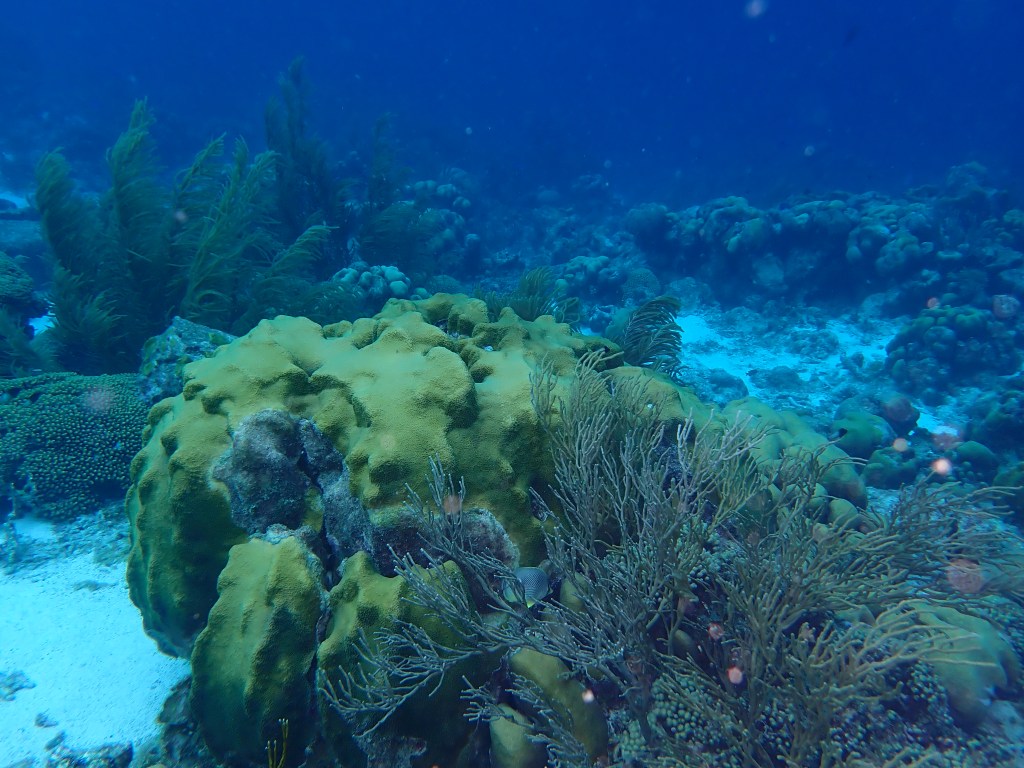
First stop for me is always Andrea I, historically one of my favorite areas to snorkel on Bonaire. Unfortunately, Stony Coral disease has continued to make inroads on the larger boulders and to my surprise, the fire coral as well. When I first arrived on Bonaire, I was surprised by how much fire coral there was. On my last visit, it seemed to be remaining healthy, but on this one, I saw definite die-off along with bleaching heat-stress. I think there is significantly more algae growth. It still has a lot of parrotfish and damselfish which love to eat algae. Sea urchins also seem to be making a comeback, which is probably good as they are algae eaters as well.
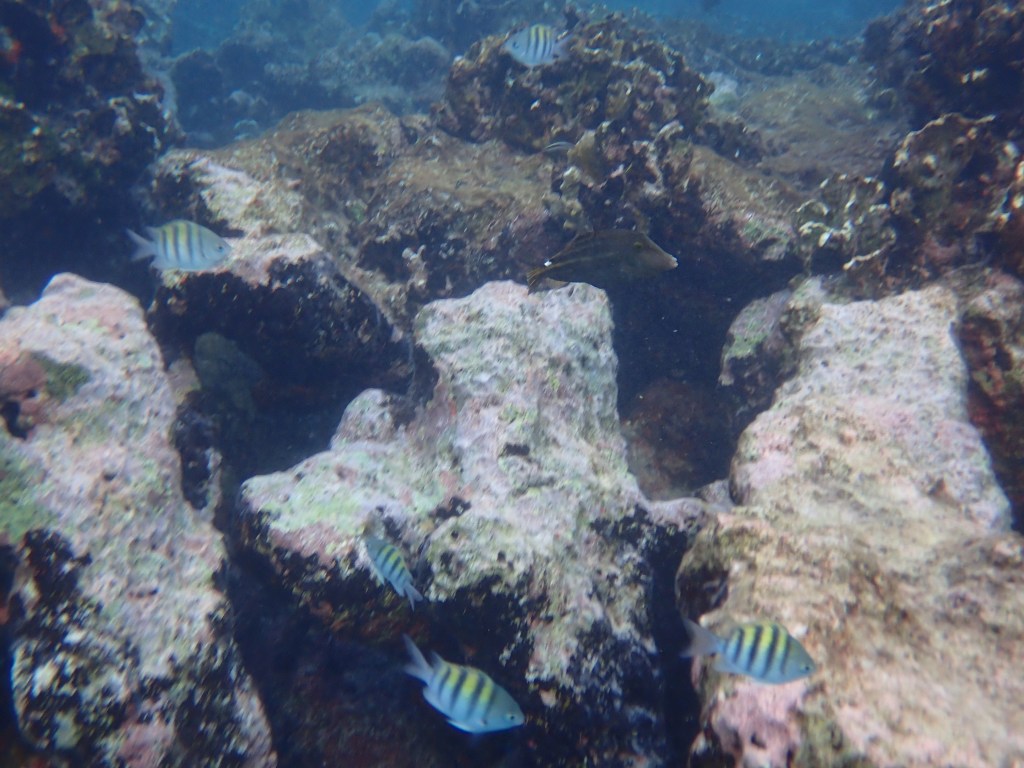
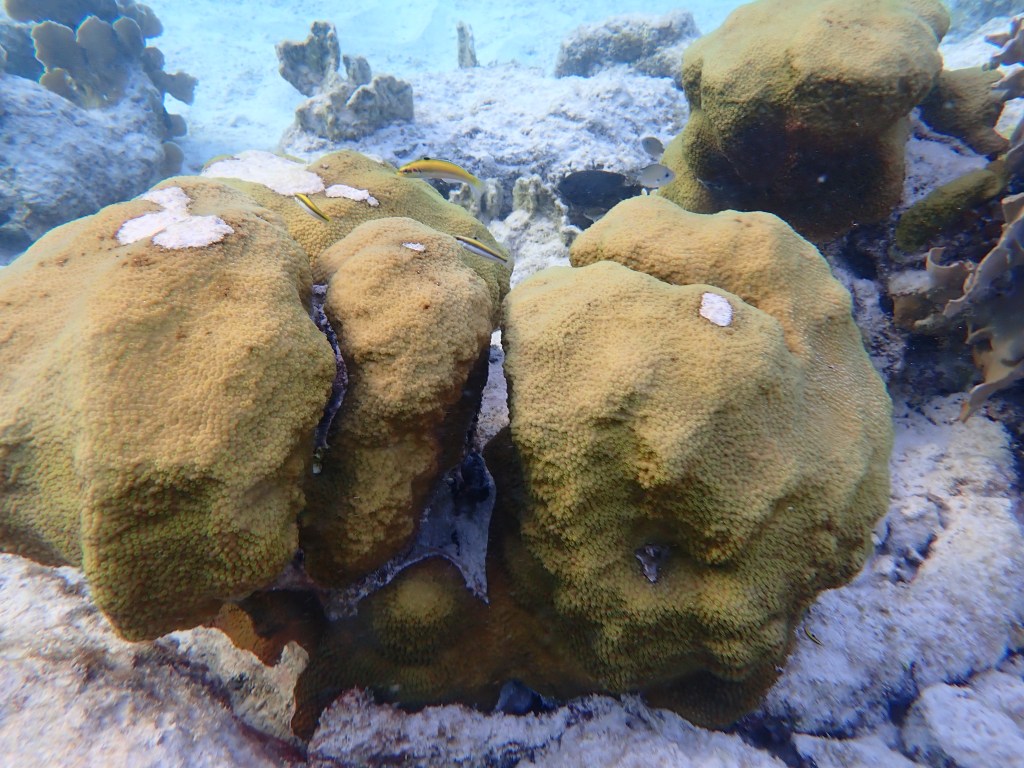
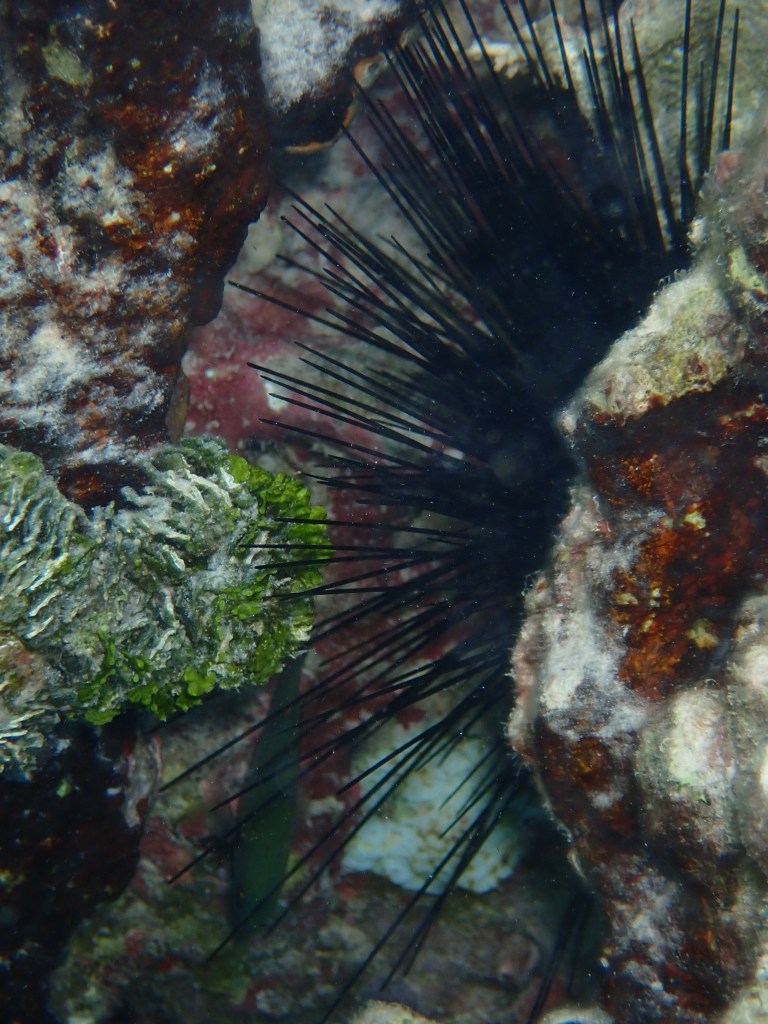
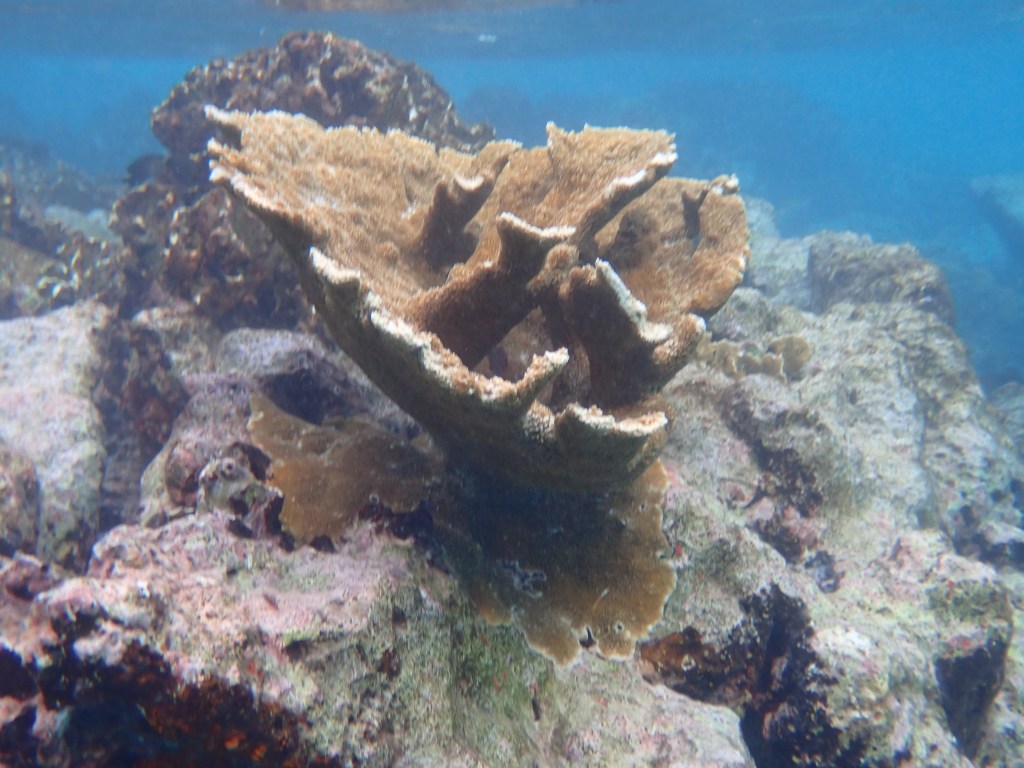
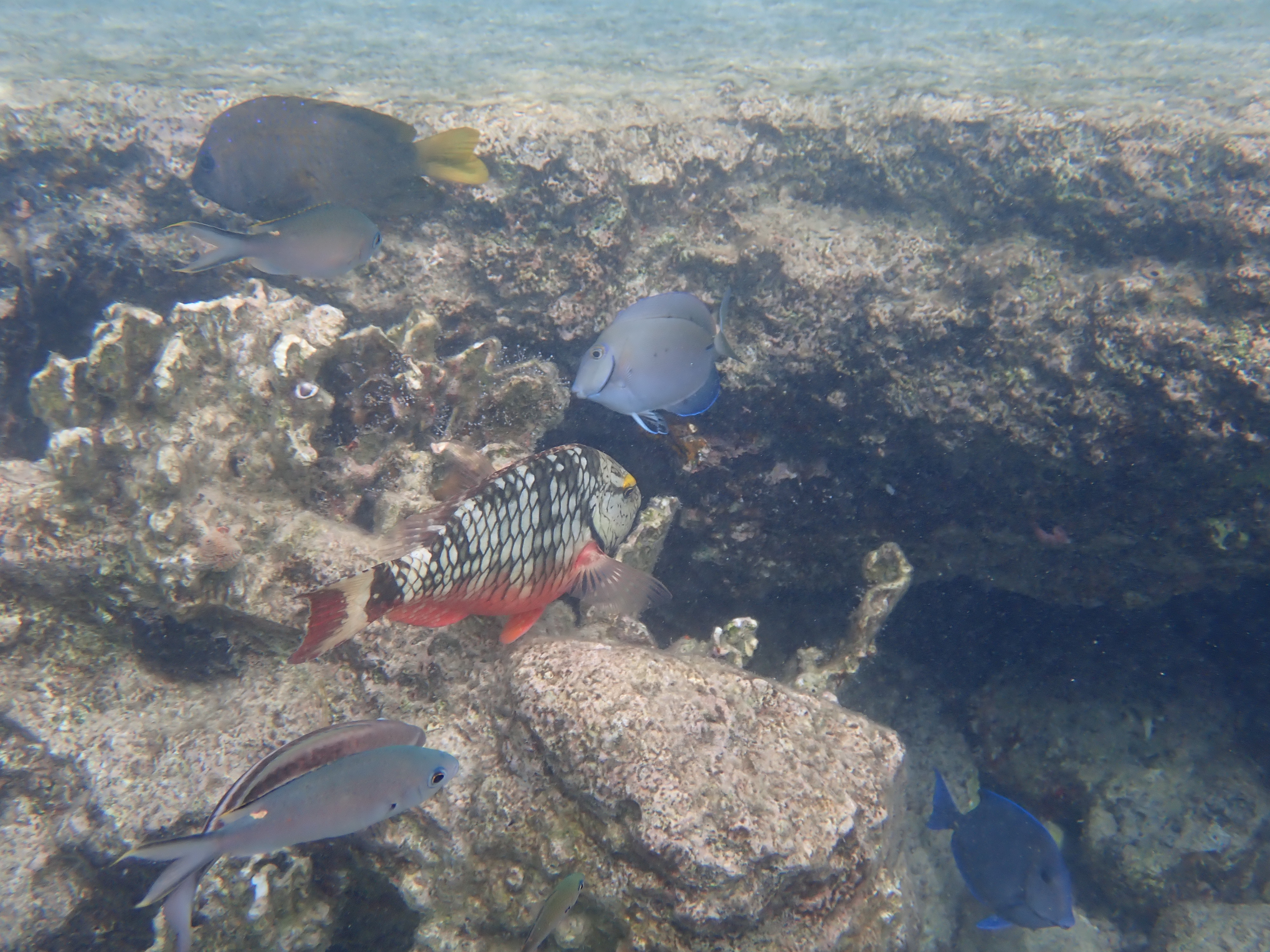
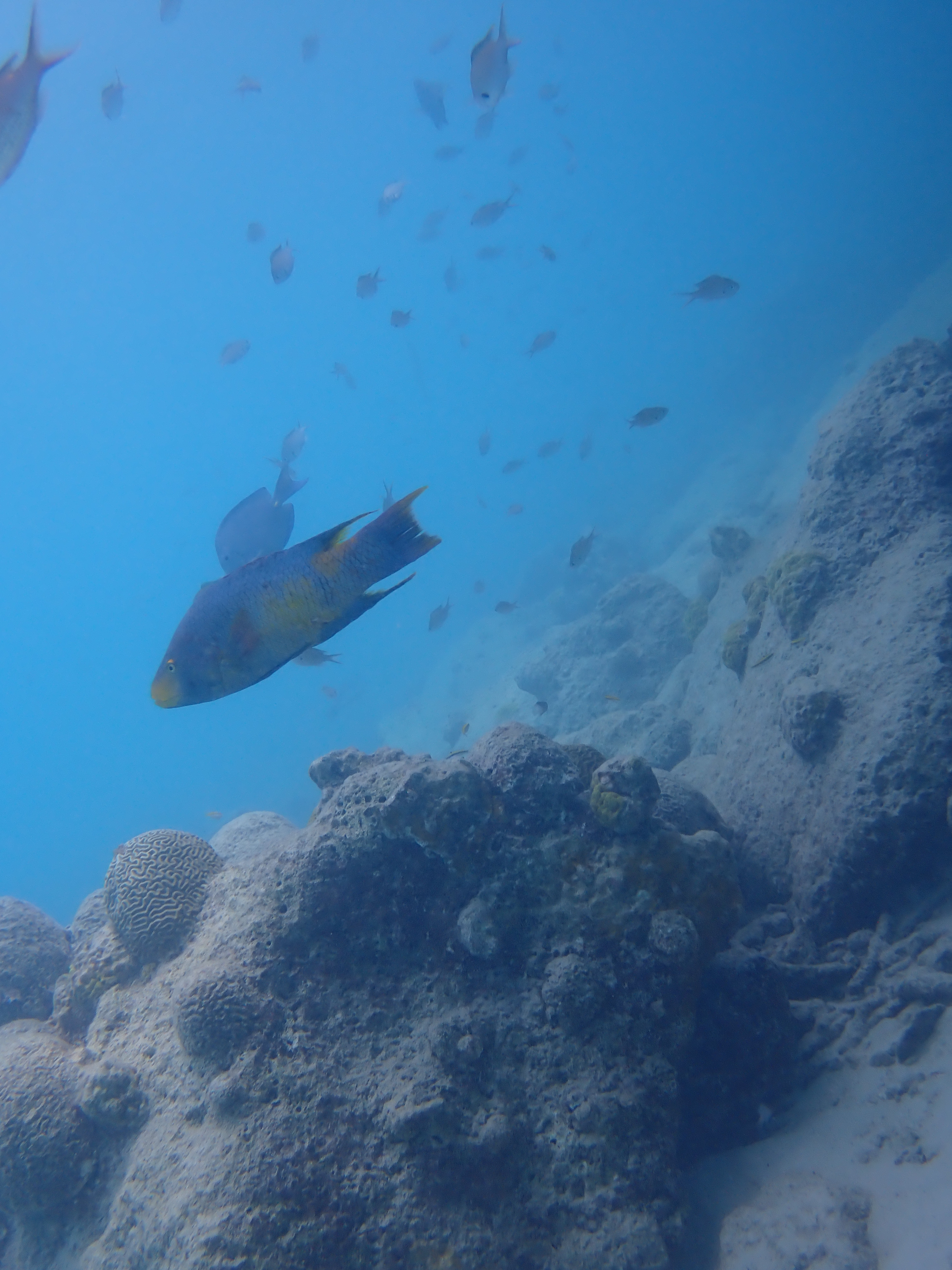
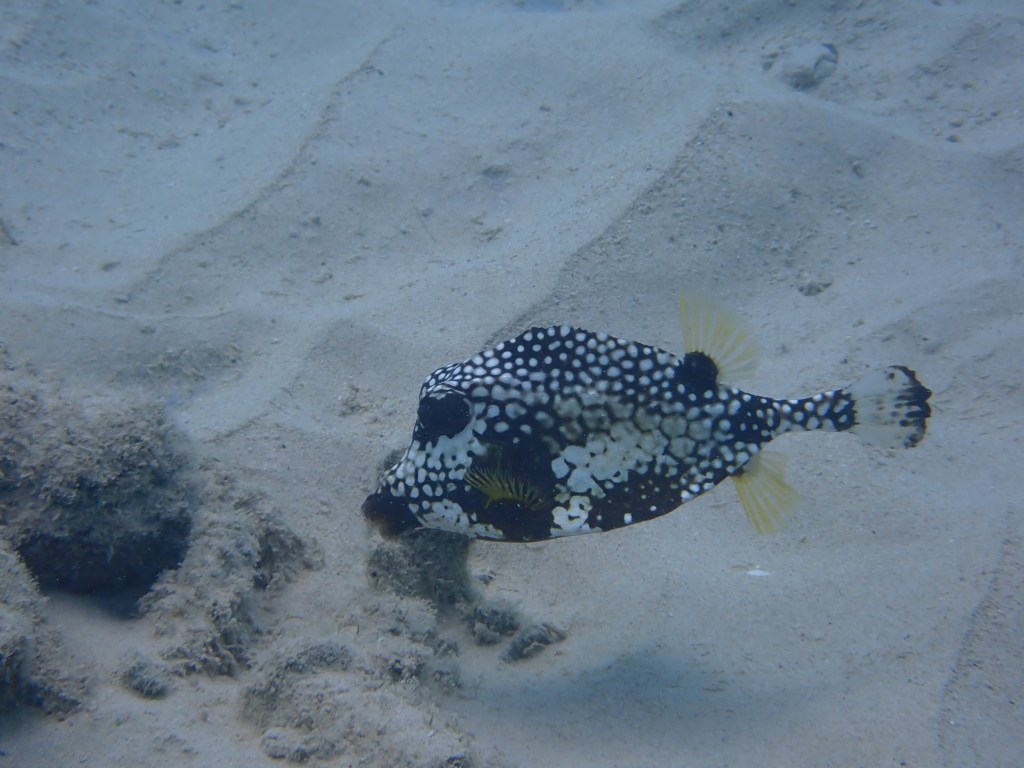
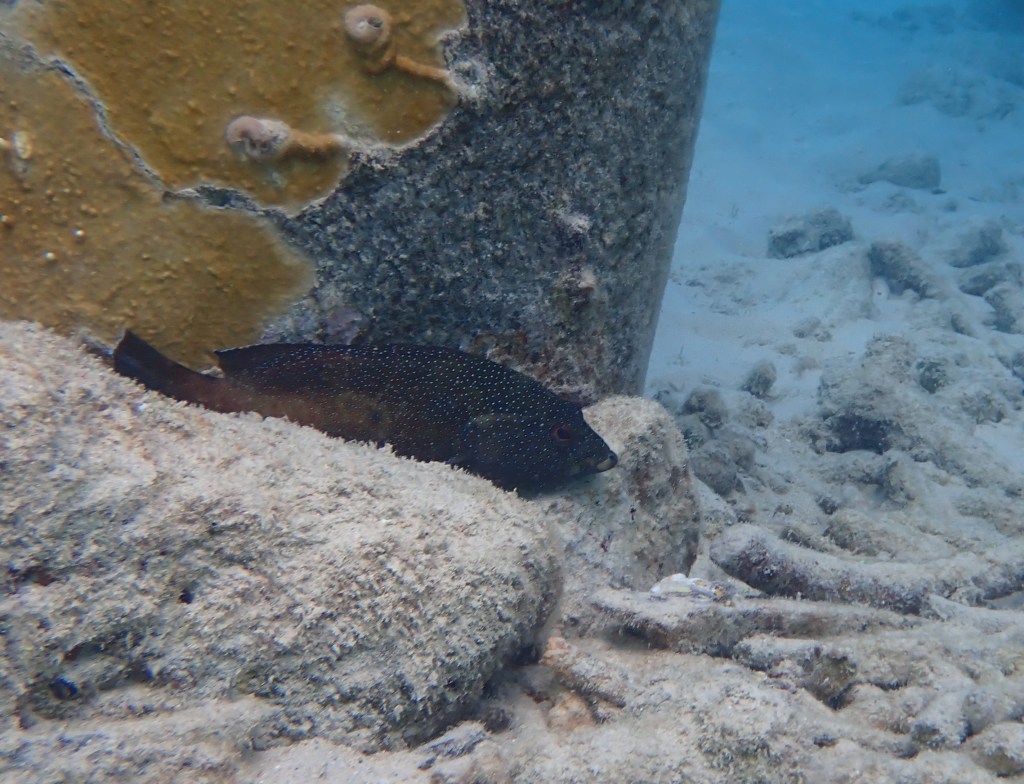
There was decent fish diversity, with a number of different parrotfish–yellowtail, redtail, Queen, princess, and rainbow–damsels, a few spotted trunkfish and orange spotted filefish, lots of tangs, sergeants, grunts, and goatfish, a few yellowfin mojarra and bar jacks, and even a pair of banded butterflies, a Bermuda chub and a scorpionfish.
The next day I stopped into town and my now-favorite dive shop, Private Divers Bonaire, and picked up some weights. They are incredibly easy to deal with and rely on a delightfully old-fashioned honor system. Weights help me freedive. More on that in a separate post, but hopefully you’ll notice improvement in photos. I certainly did.
Since I was in town, I went to Isidel Beach Park, a new park with a disability ramp into the water to check it out. I think the area in front used to be called Bari Reef, which also extends to the front of Chogogo Beach Resort. Chogogo is a monstrous money-making resort that did not do just stewardship towards beach construction. They trucked in tons of sand for a sandy beach, and promptly lost it to the first storm that went through. The water quality shows here, with poor visibility in photos with any distance. However, there’s an artificial reef to the left of the walking ramp that attracts a nice variety of fish. I’ve noticed structures of any sort provide a basis for corals, sponges and algae to cling to, which in turn attracts more fish.
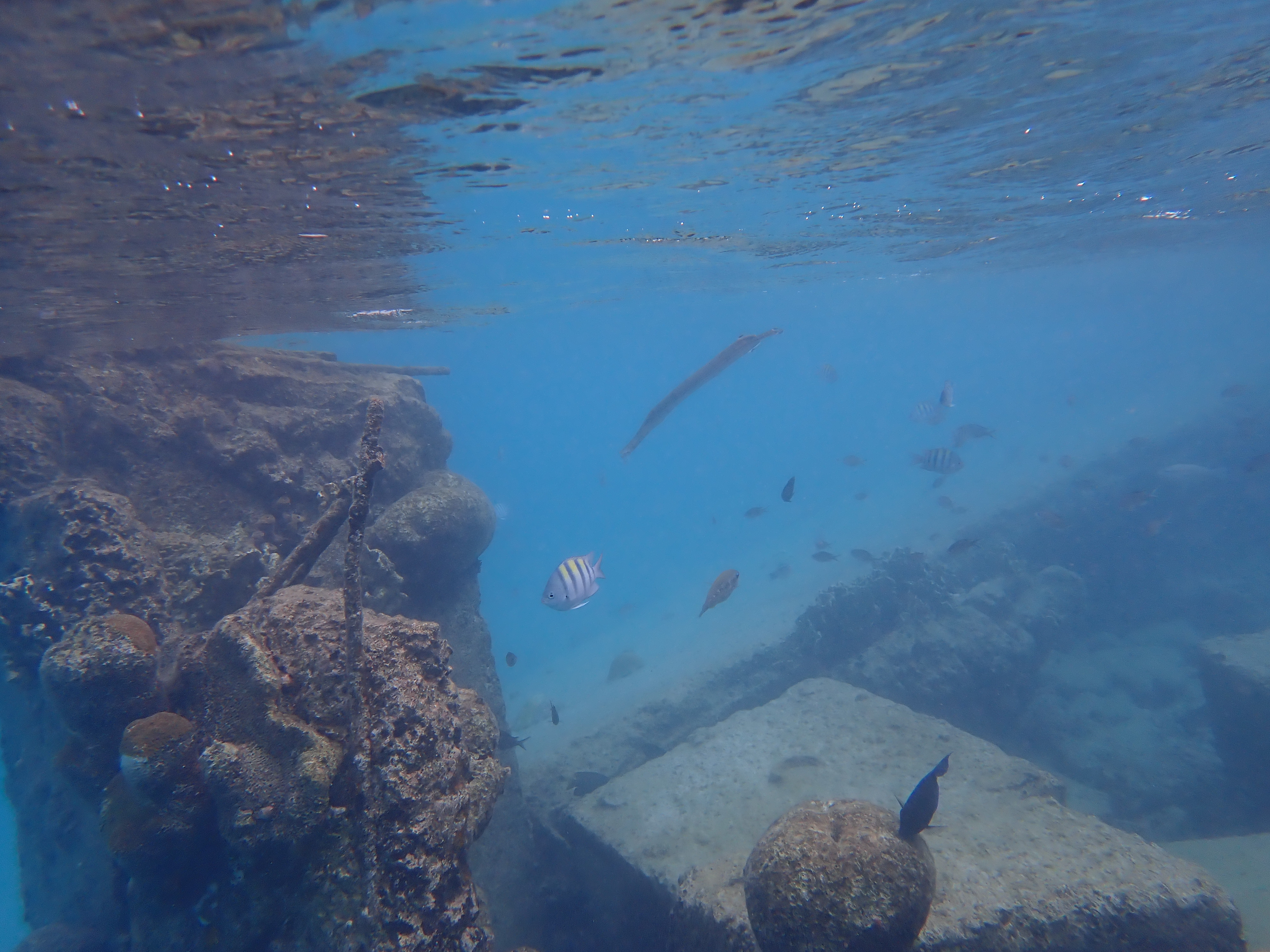
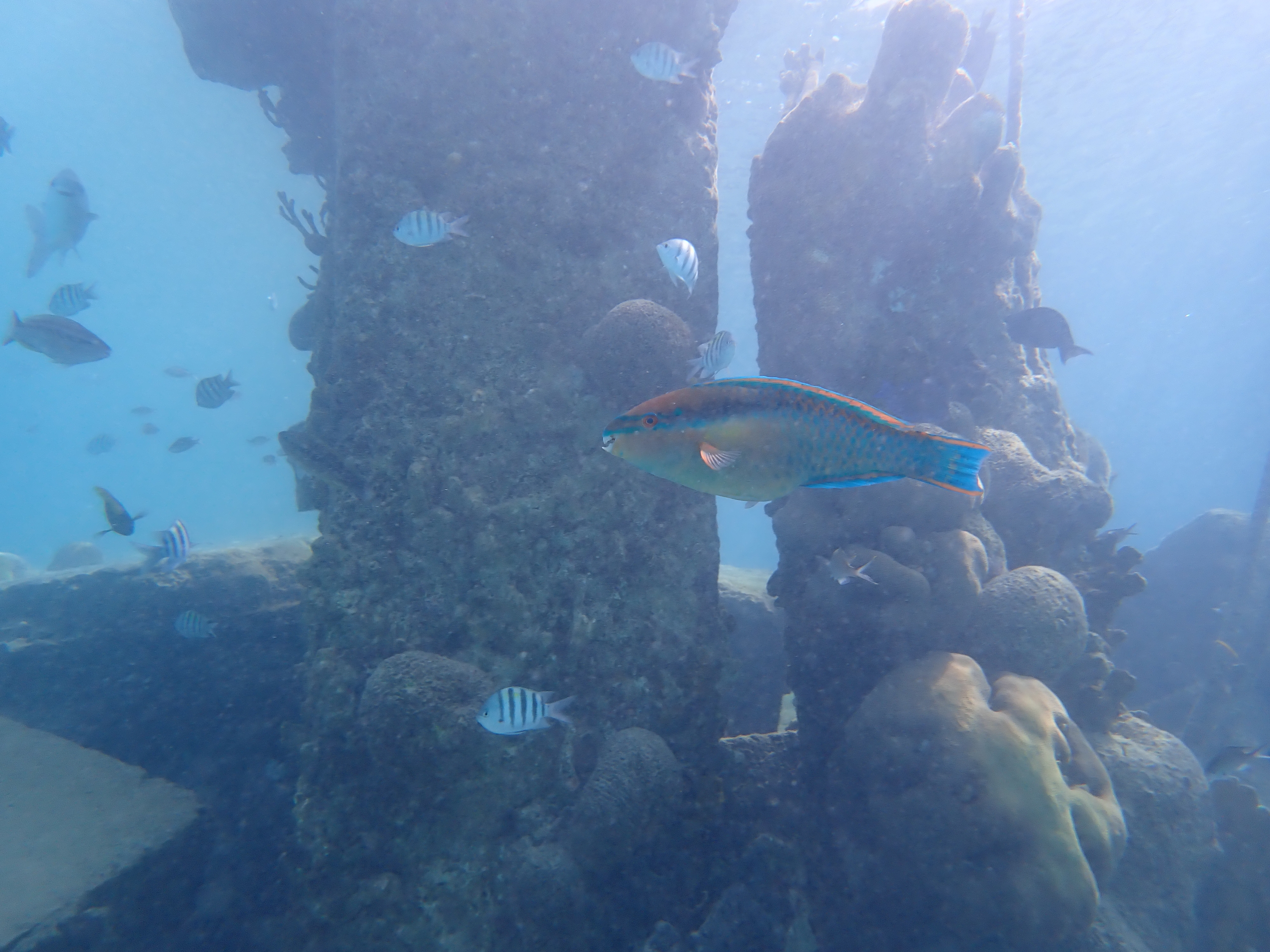
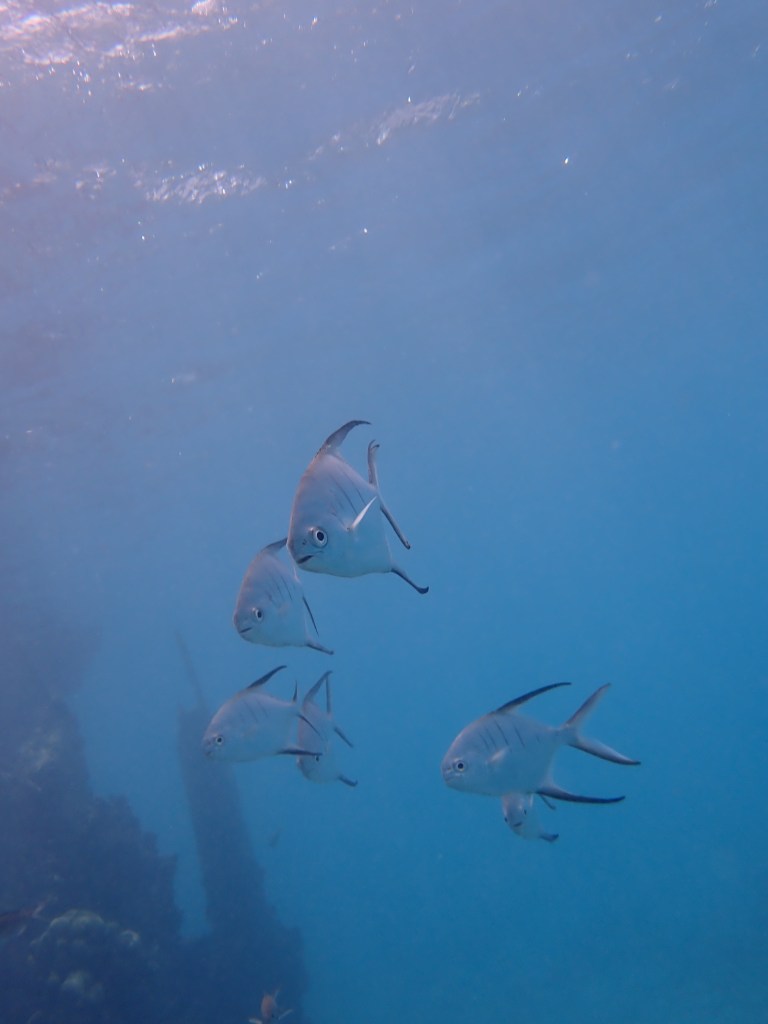
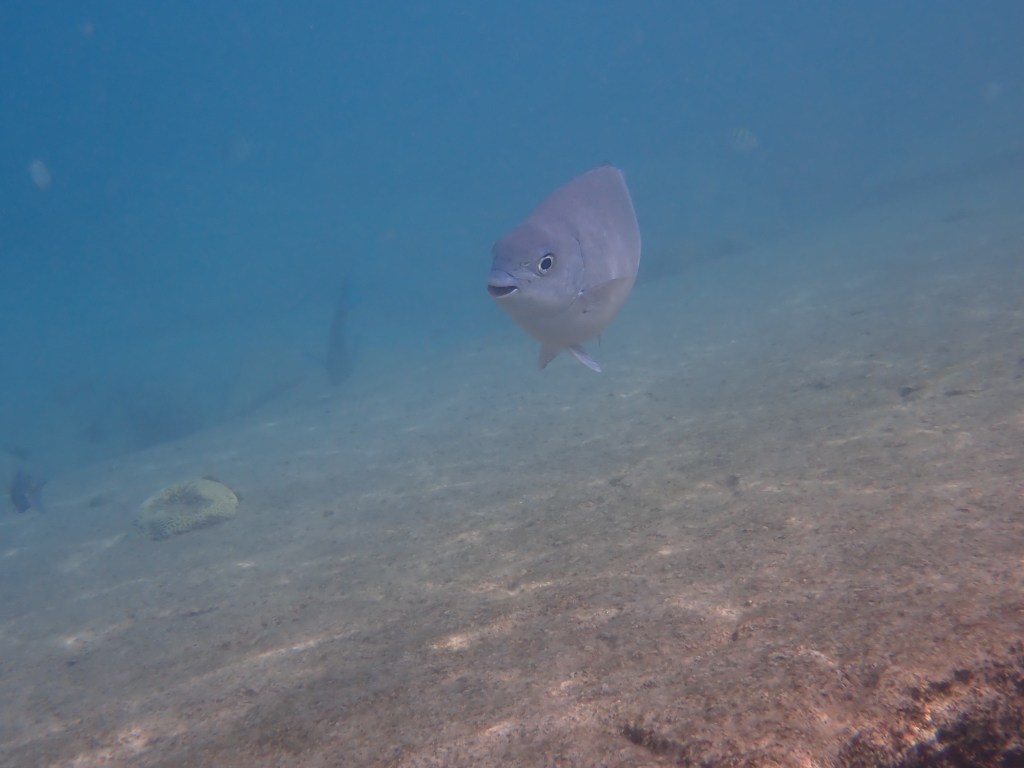
Actually, I found the fish hilarious. They were definitely accustomed to snorkelers, and acted more curious than frighted. I acquired a school of palometas that seemed confused by me being below them.
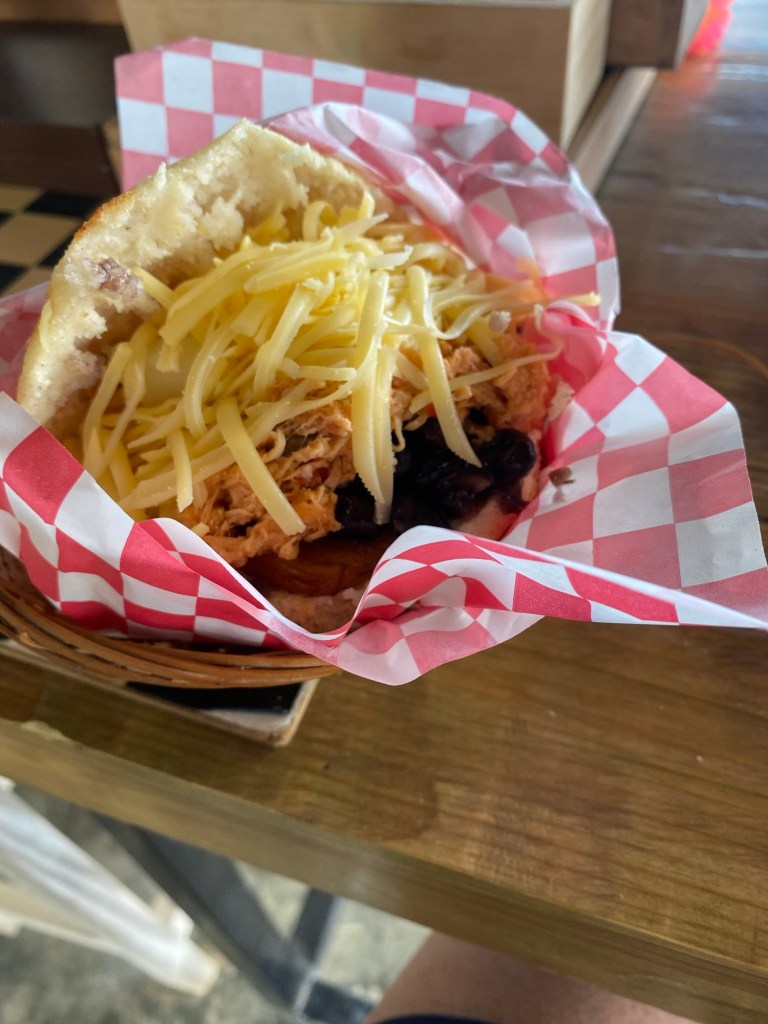
A very filling lunch at Yanni’s Arrepas, a popular and inexpensive spot,
 Snorkeling Adventures