Bonaire 2024. Lac Cai

Lac Cai. Beautifully desolate.
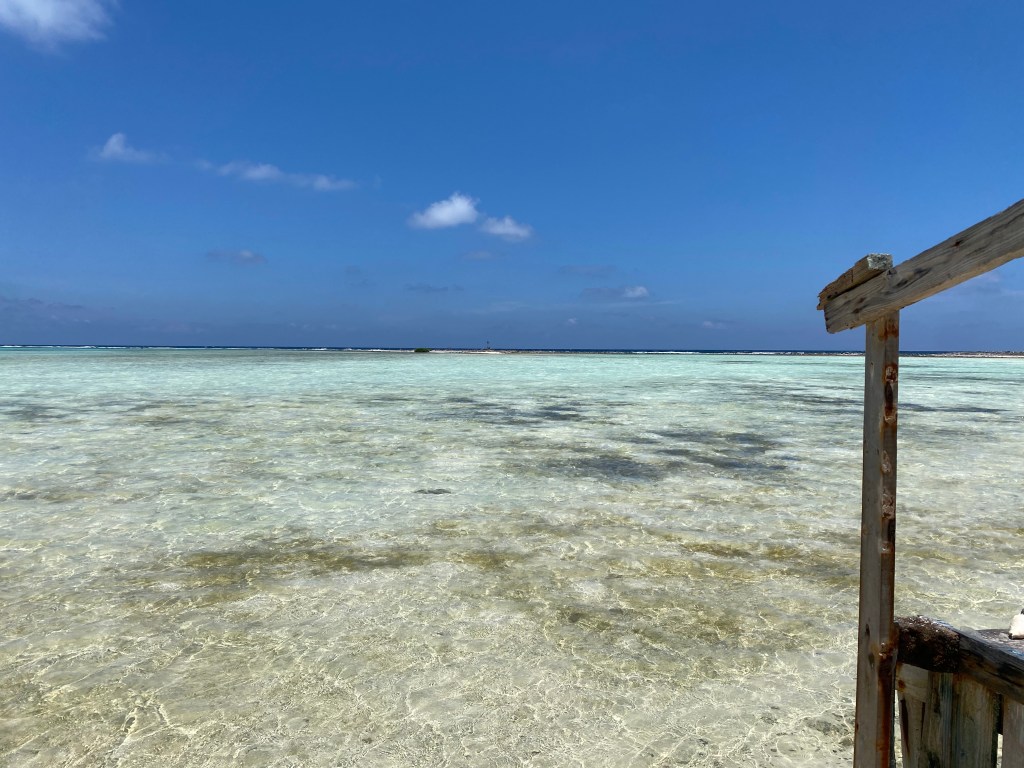
Not all of it, of course. Sorobon is a place with shacks, shops, picnic tables, and windsurfing rentals. Most windsurfers stay in the bay north and central to Sorobon. But if you swing around to the southern part of the bay, it gets incredibly shallow, too shallow even for windsurfing. This is all sandy, with tufts of seagrass anchoring it, so the surface is very uneven. Depending on the tide, it is about 4 to 8 inches deep over much of that expanse.
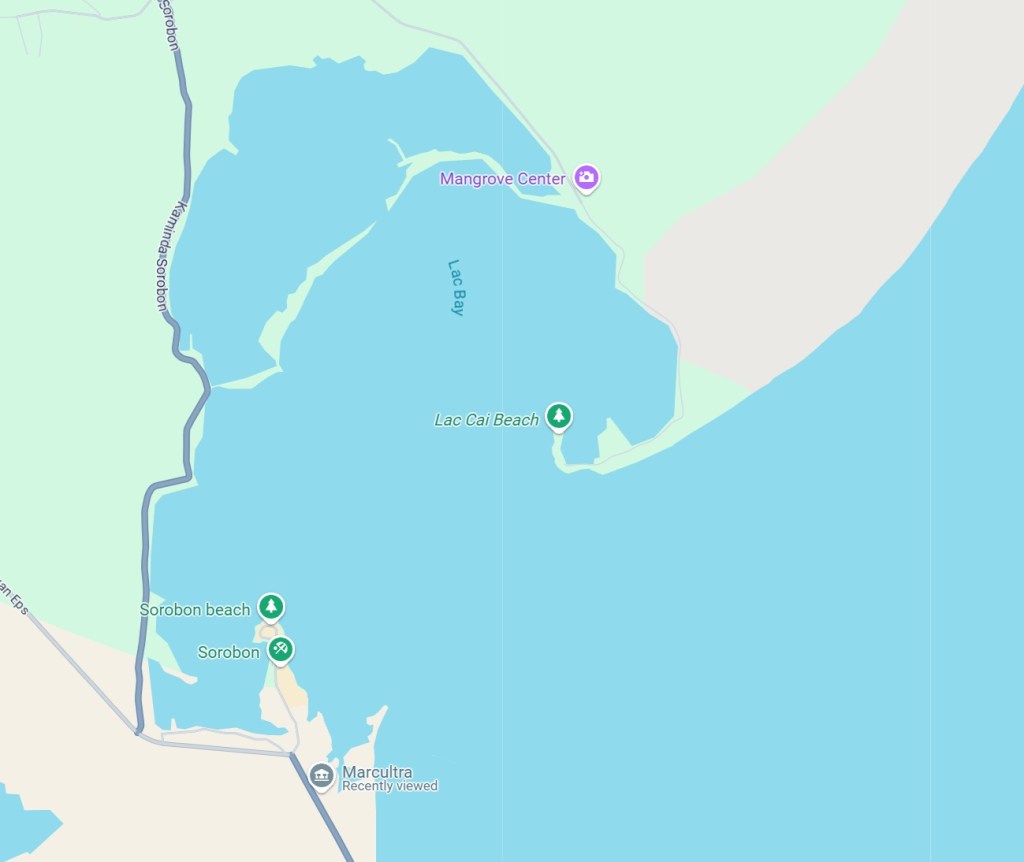
You can see the bay is wide open to the ocean, at least on the map. In reality, there seems to be a sort of ridge going north from the southern entrance to the bay. In the photograph, you can see waves in the top, hinting at the rocky ridge. Both times I went to Cai, I did a walk-shuffle across that wide sandy expanse, perhaps 200 yards, until it got deep enough to snorkel, about 4-5 feet.
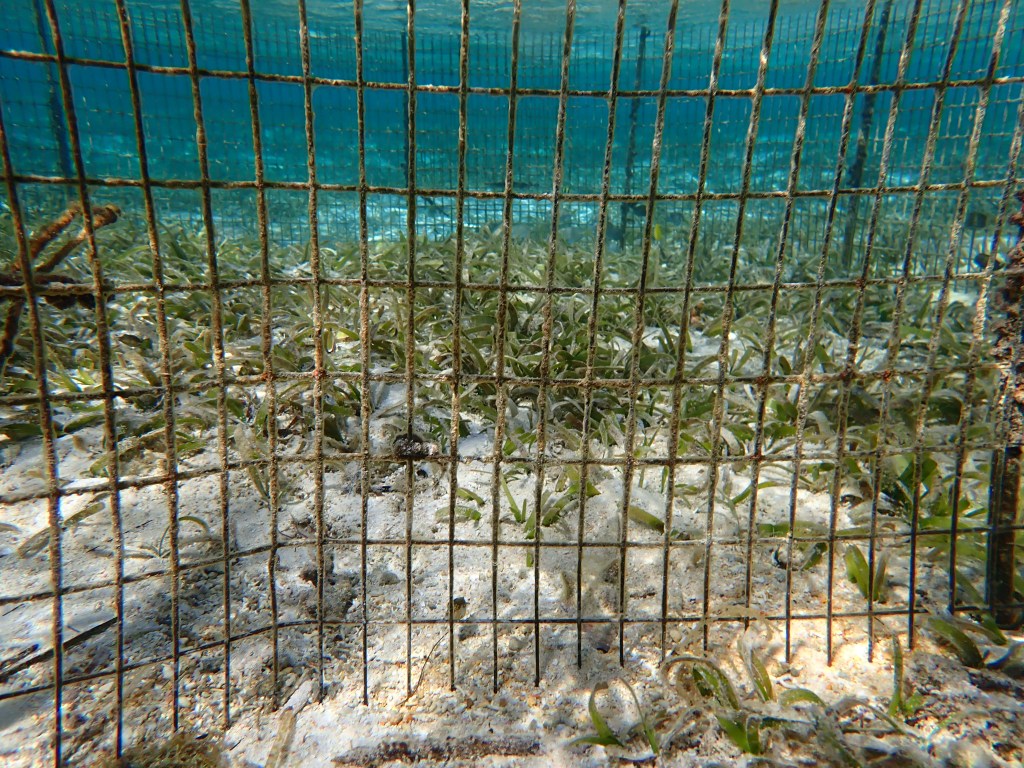
The fish cage is the first sign I’m reaching snorkel depths.
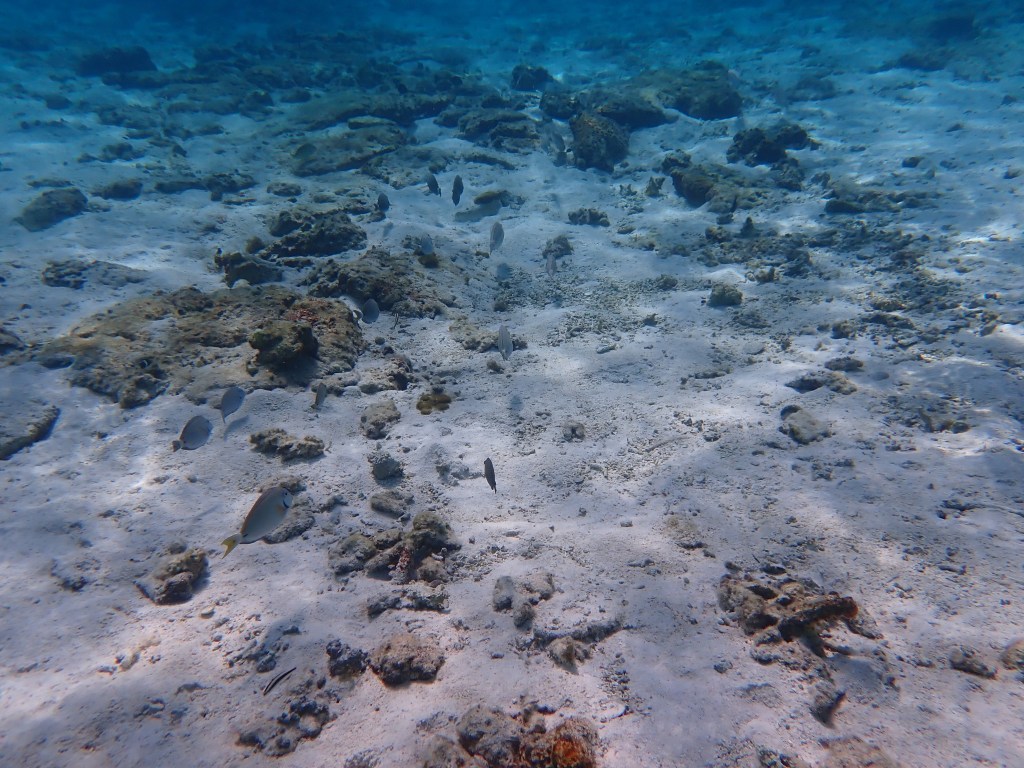
It seems pretty disappointing at first, easily as desolate under water as it is on the surface.

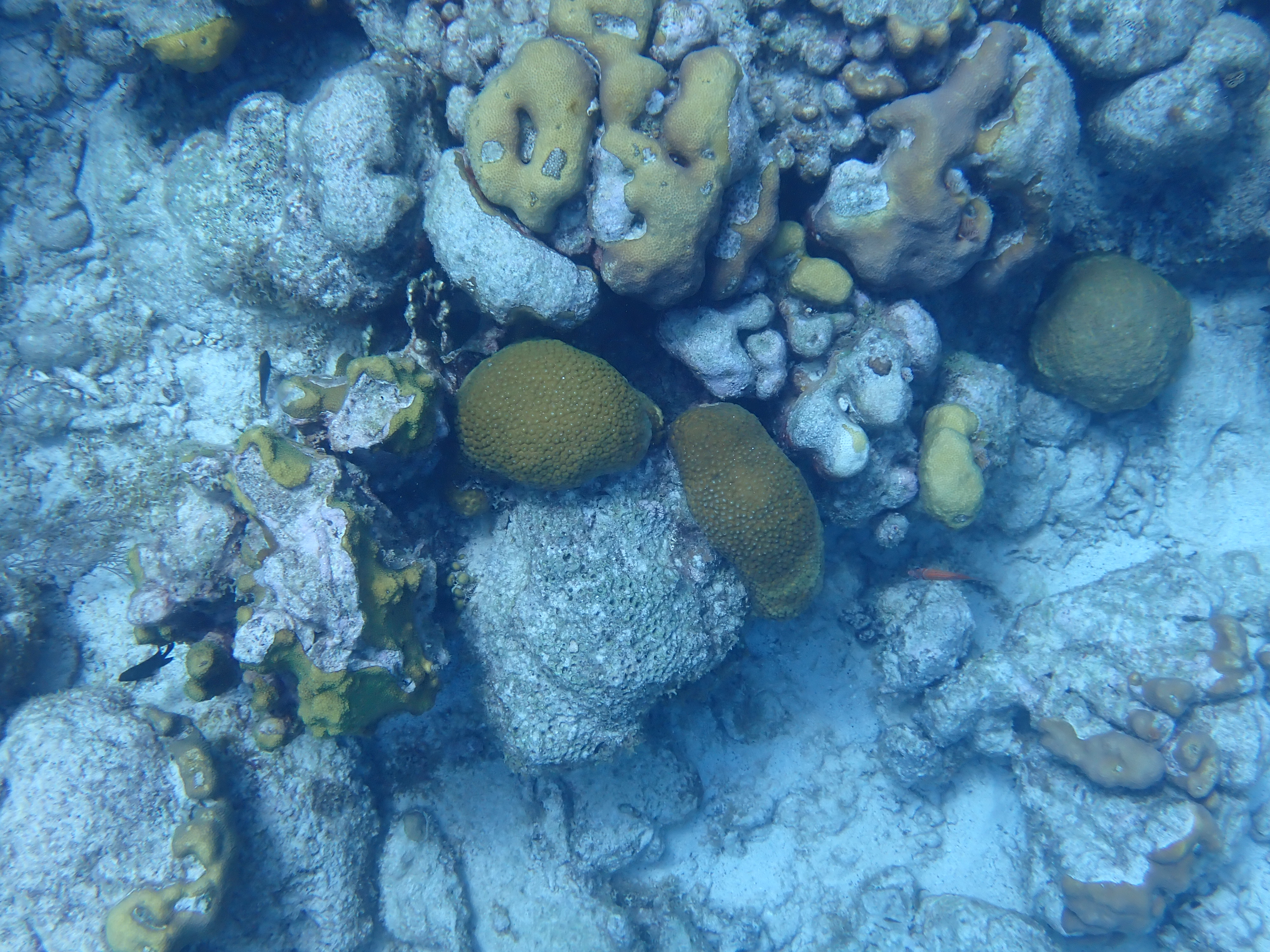
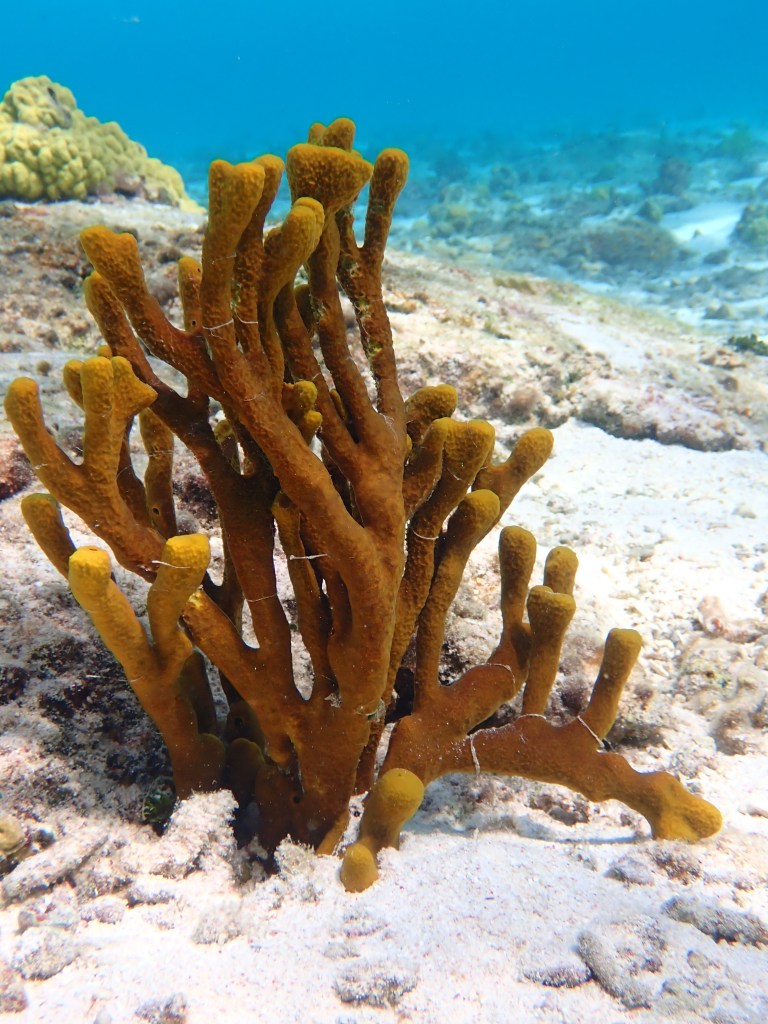
mustard corals along the bottom of Lac Cai

The mustards were doing pretty well, along with a few rods and sponges, but everything else was struggling.
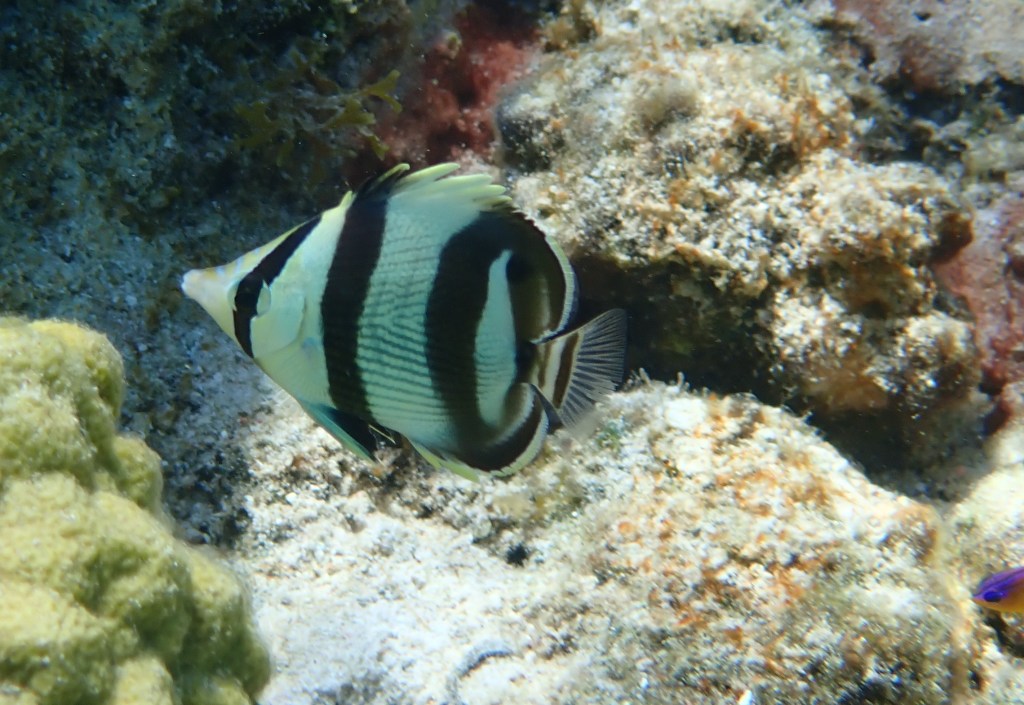
But the real fun here is the shallow water and the juvenile fish. I am guessing that Lac Cai serves as a nursery for many species, giving protection from the big ocean outside the bay.
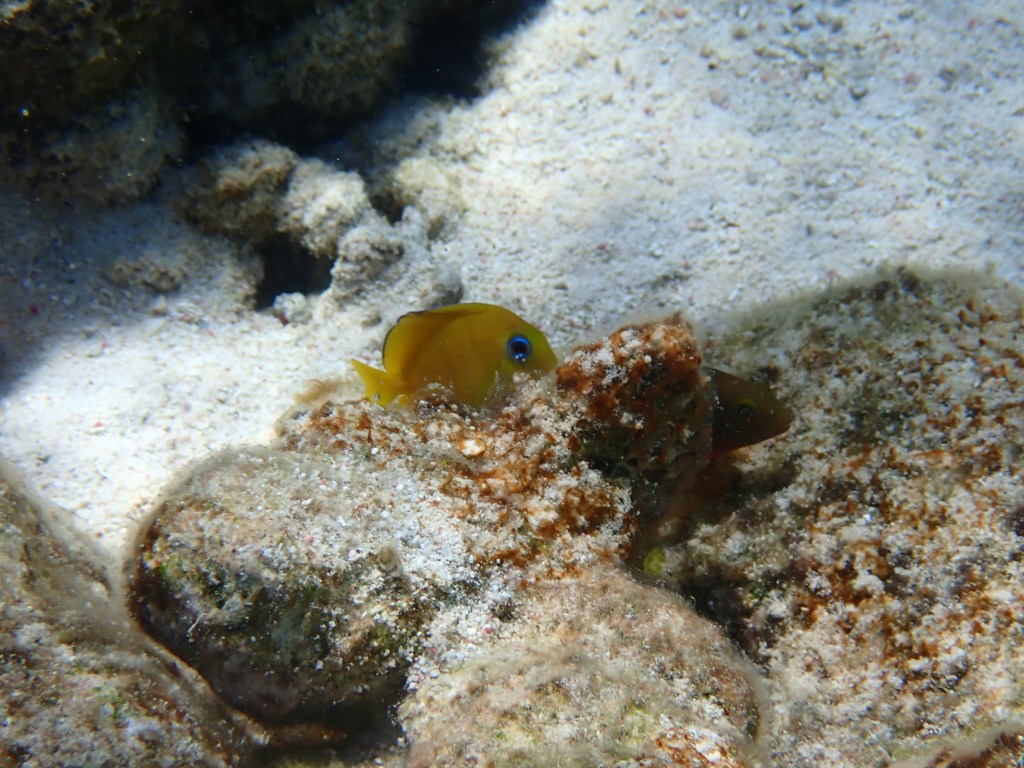
adorable little juvie tang peeking at me
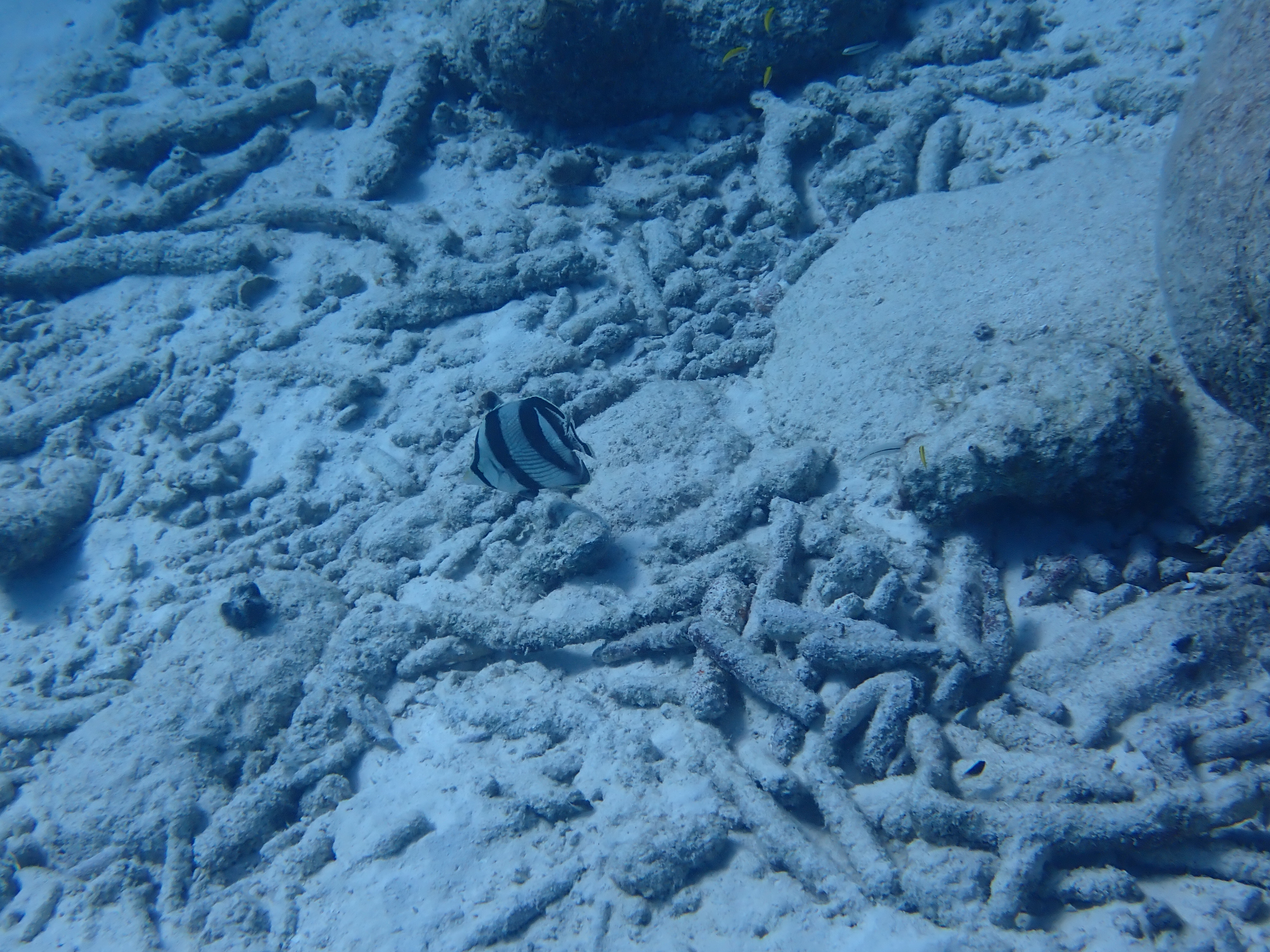
juvie banded butterfly
blue tang, yellowhead wrasse, goby, juvie puddingwife

This was the first place I saw a rainbow parrot, and got so lucky, I found a small school of four.
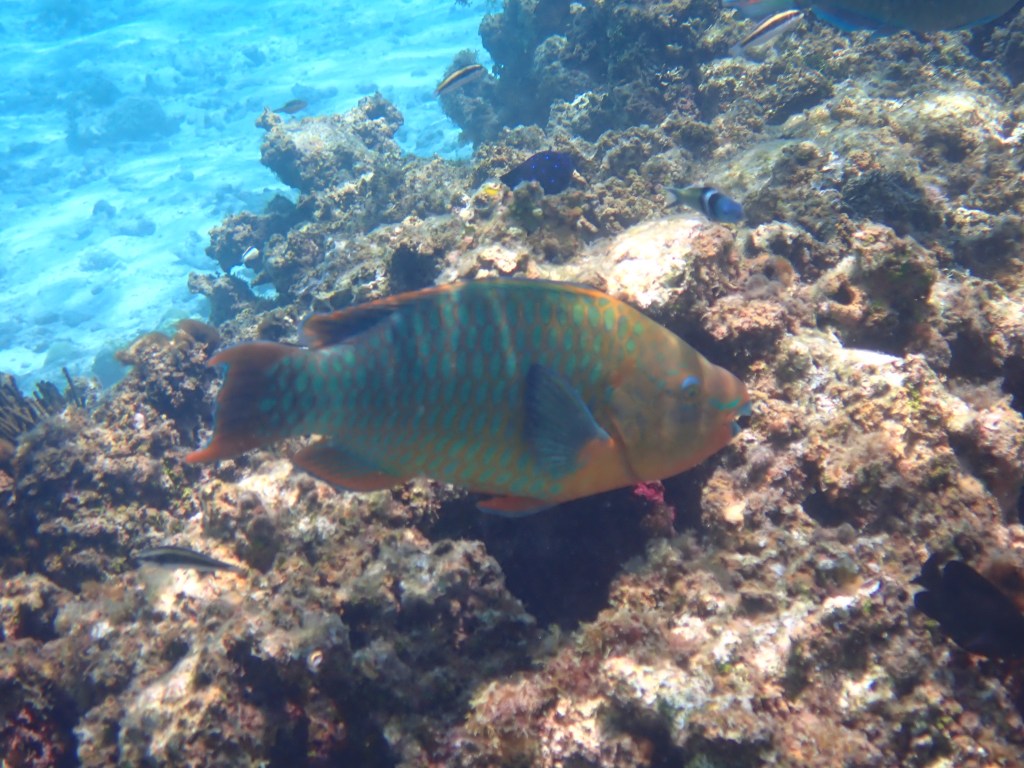
rainbow parrot scraping at a depressingly dead reef

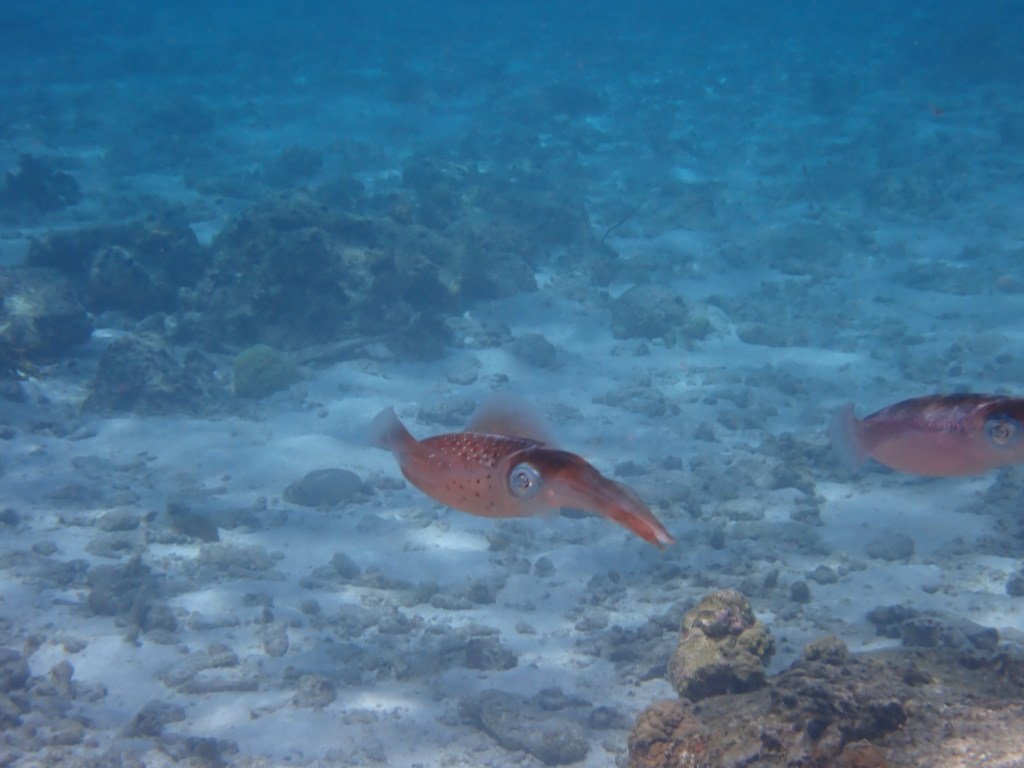
I was also lucky enough to snap my first photograph of Caribbean reef squid. I’ve seen them before, but I have found them to be both shy and fast.
The value of shallow water is getting great views. Swimming slowly by I happened upon this scorpionfish. For me, the key to finding these guys is their overall shape and the very cool pattern around their eyes. Like barracudas, this is another fish I keep a respectful distance.

I kept swimming to the north and ran into Lac Cai’s giant boulder corals. This was remarkable, and heartbreaking. I wish I could have seen it three years ago. These were all 2-3 feet across and looked so healthy from the front.
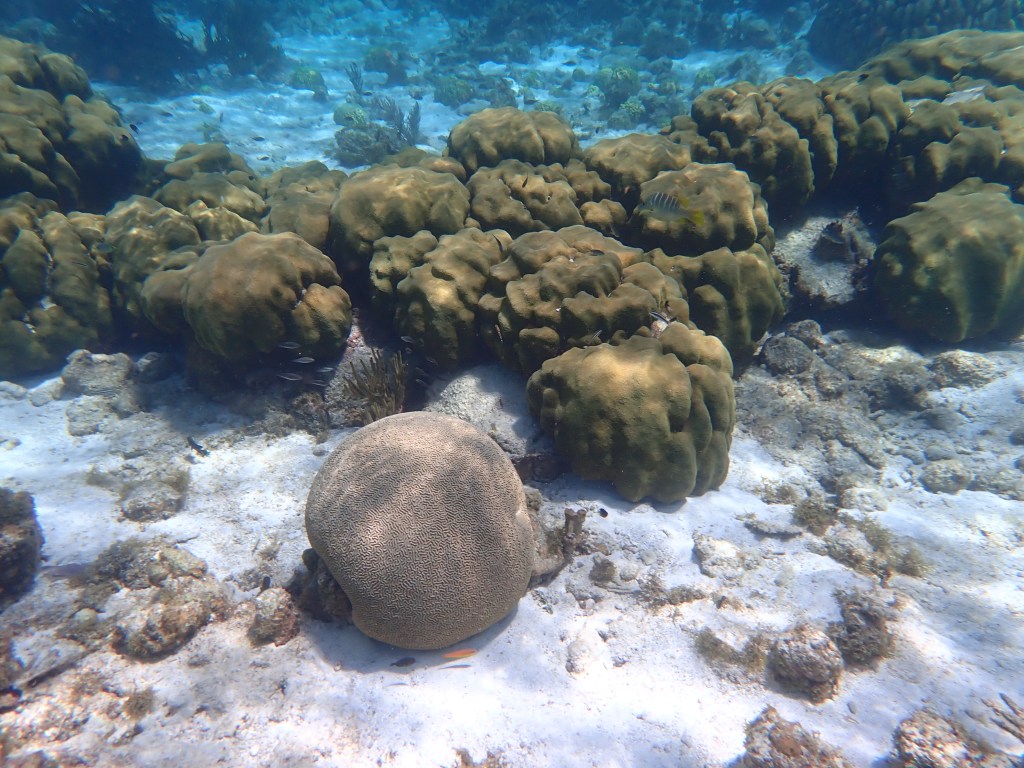
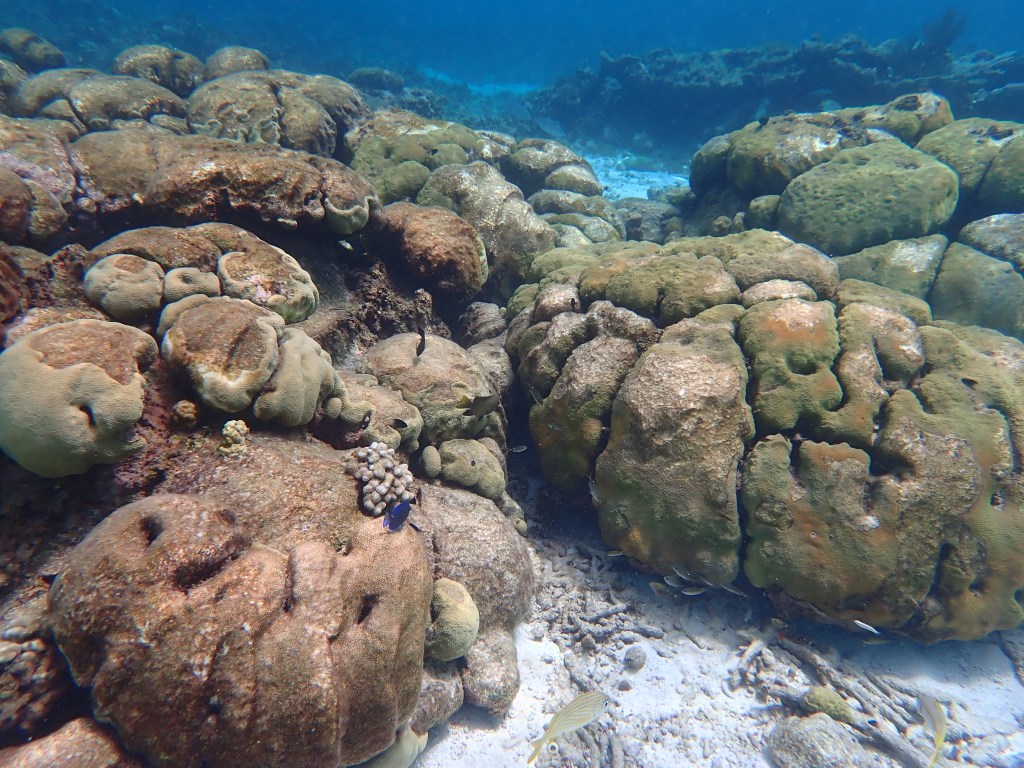
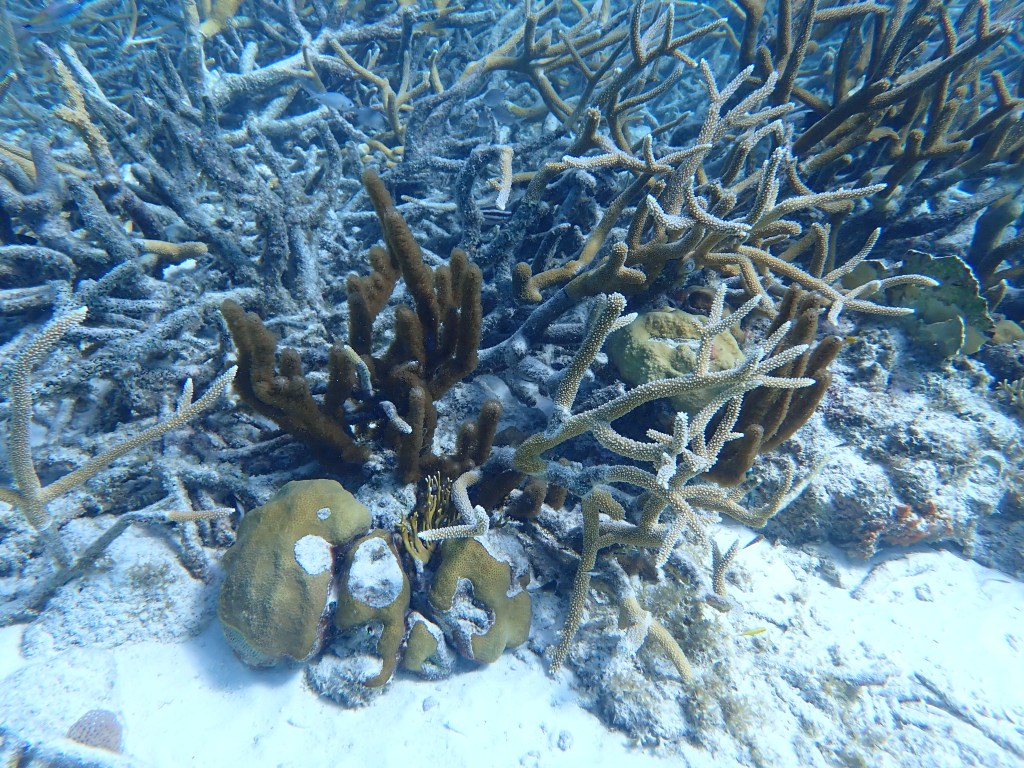
There were some staghorn coral in rough shape, but they acted as shelters for fish. This one appeared relatively healthy.
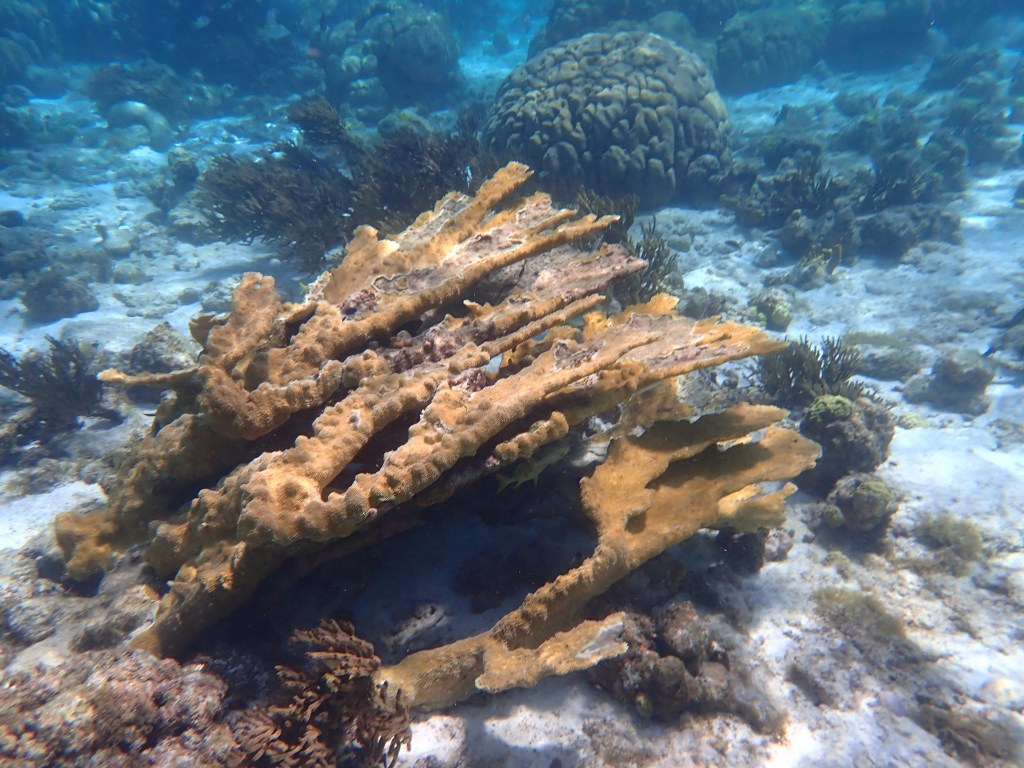
I found some large fish in the area and got a couple of great shots.

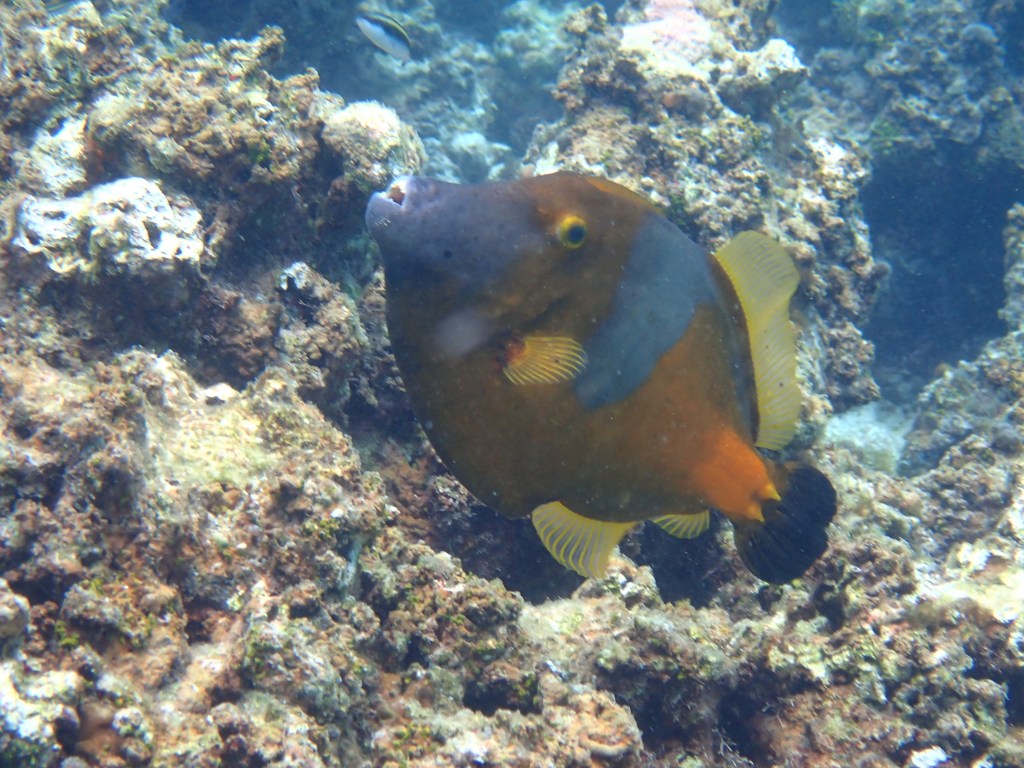
And then, as I was making my way through the rows of boulders, I saw it.
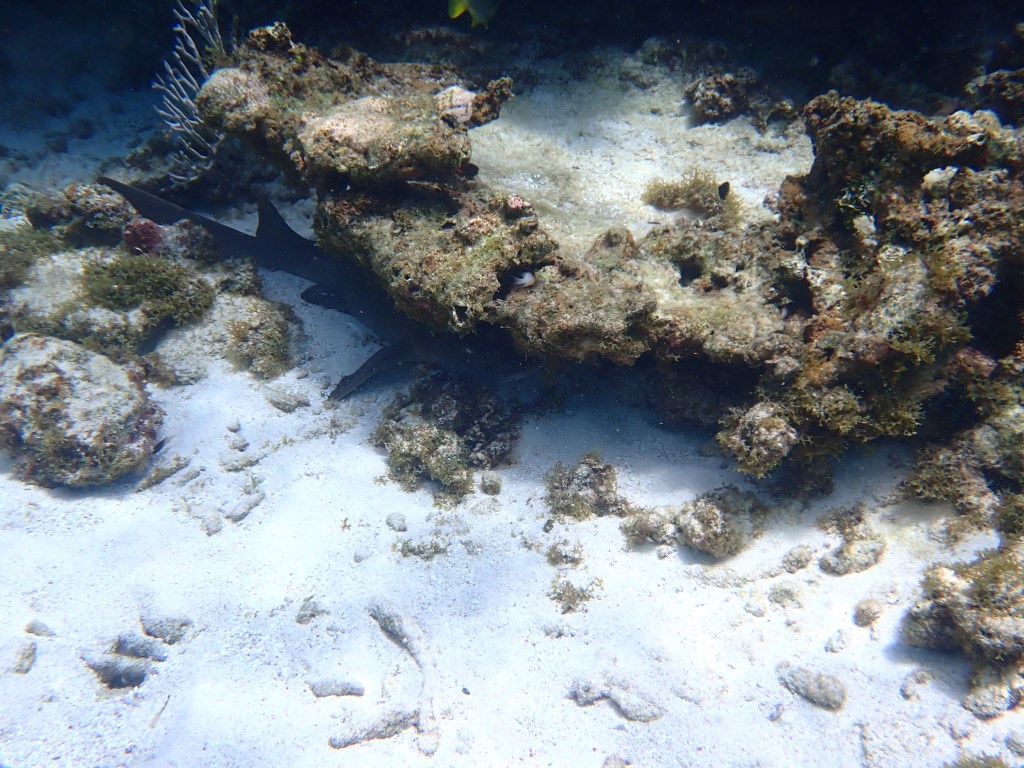
Holy guacamole, I squealed. What a reward!

Bonaire 2024. Salt Pier

My first time snorkeling Salt Pier was amazing! I’ll be honest; I was prepared to be underwhelmed, mostly because anyplace that everyone always recommends can be crowded. Since it is a pier, I was also skeptical of the depth problem when snorkeling. One of the earlier times I was in Bonaire, the ship was in, so I didn’t get to try it out on the days I had planned. This is a real issue, for obvious reasons.

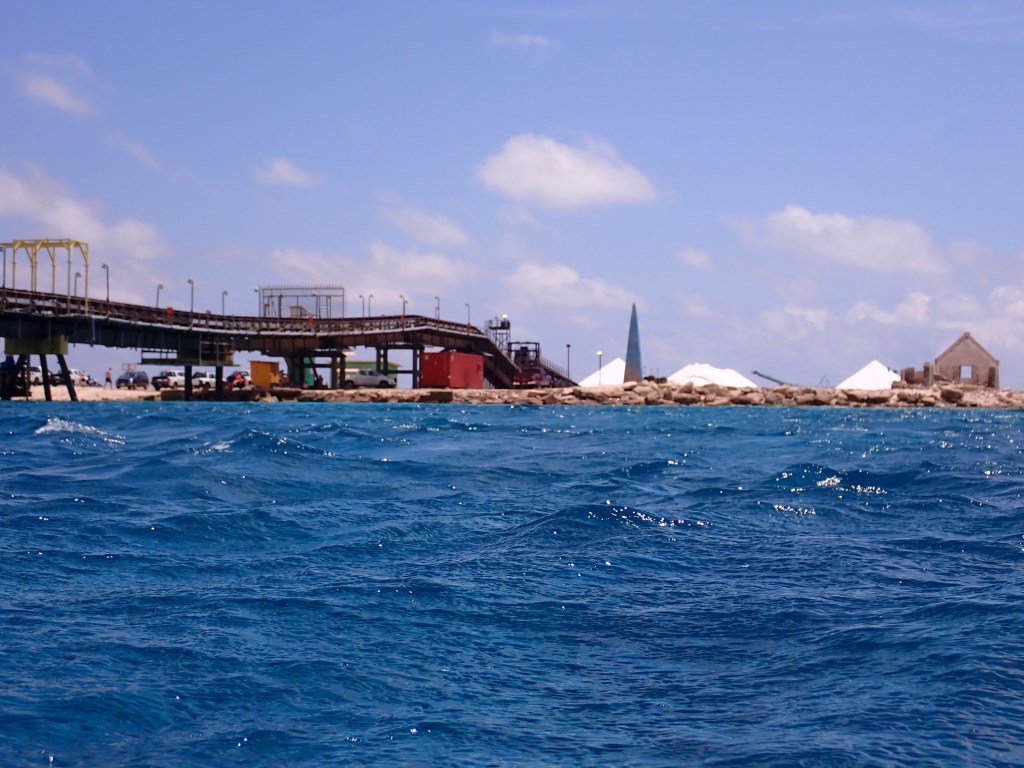
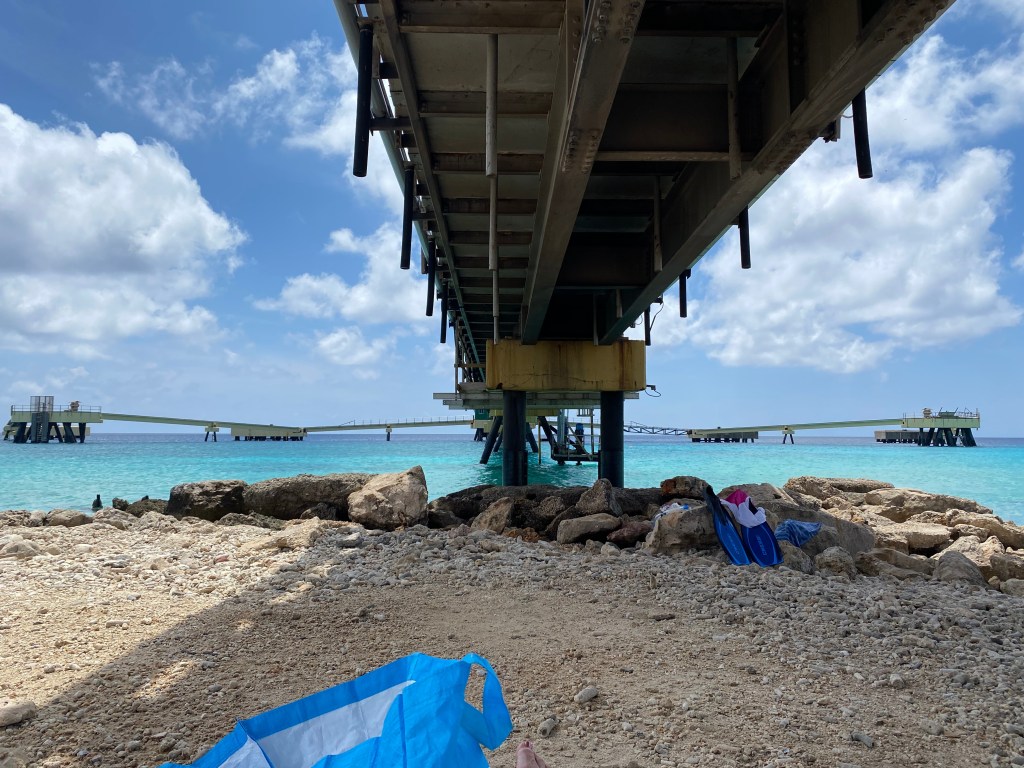
Salt Pier entrance area from a snorkeling perspective. The salt piles are actually across the street and quite far away. The line of trucks are vehicles from divers.

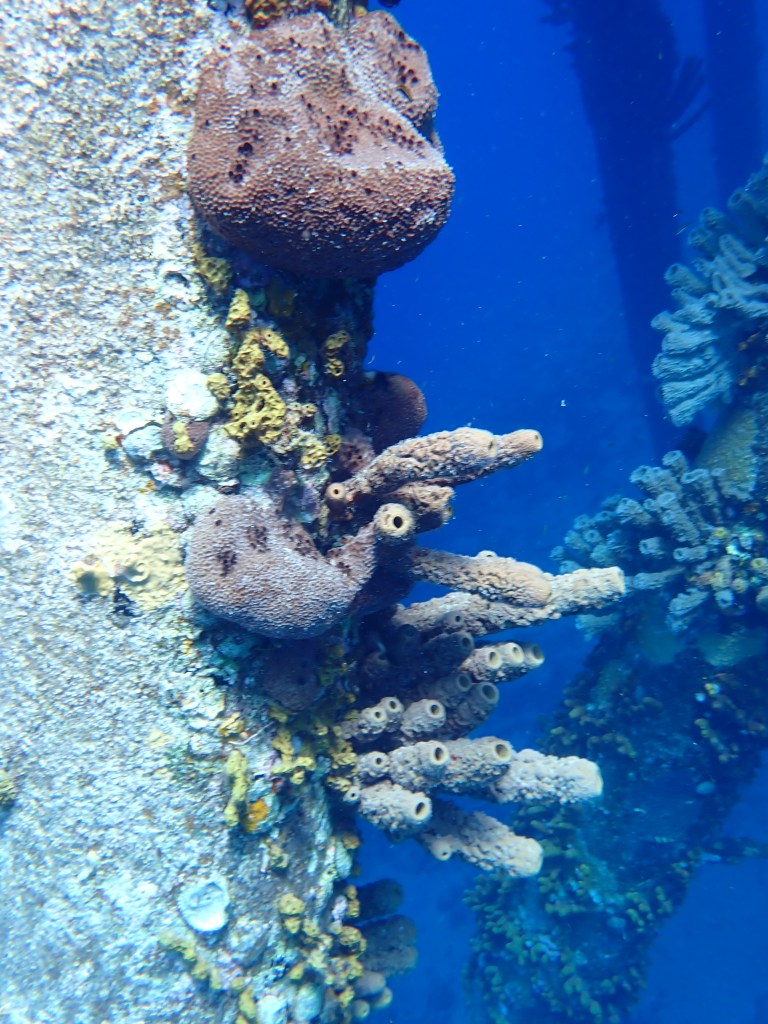
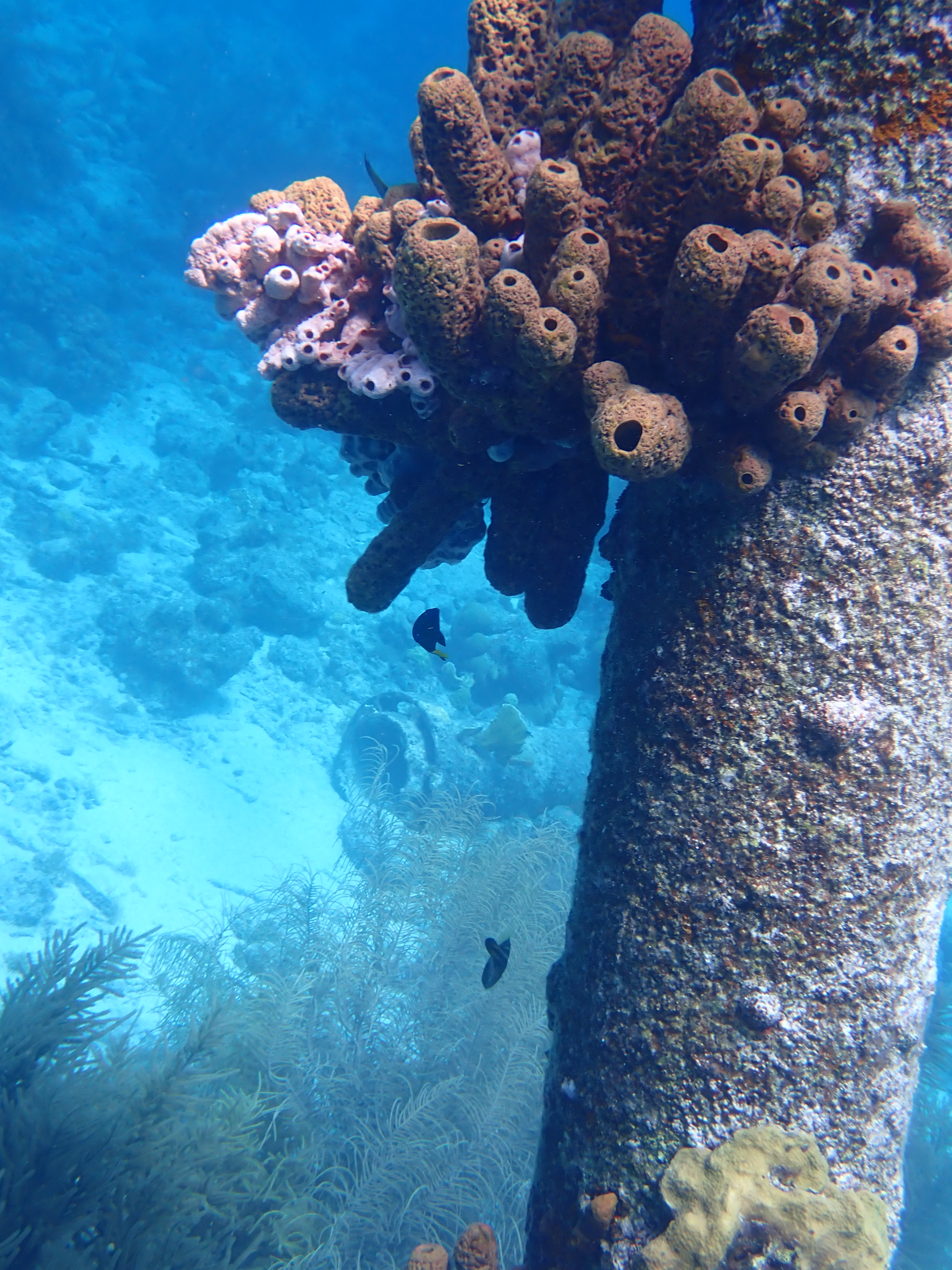
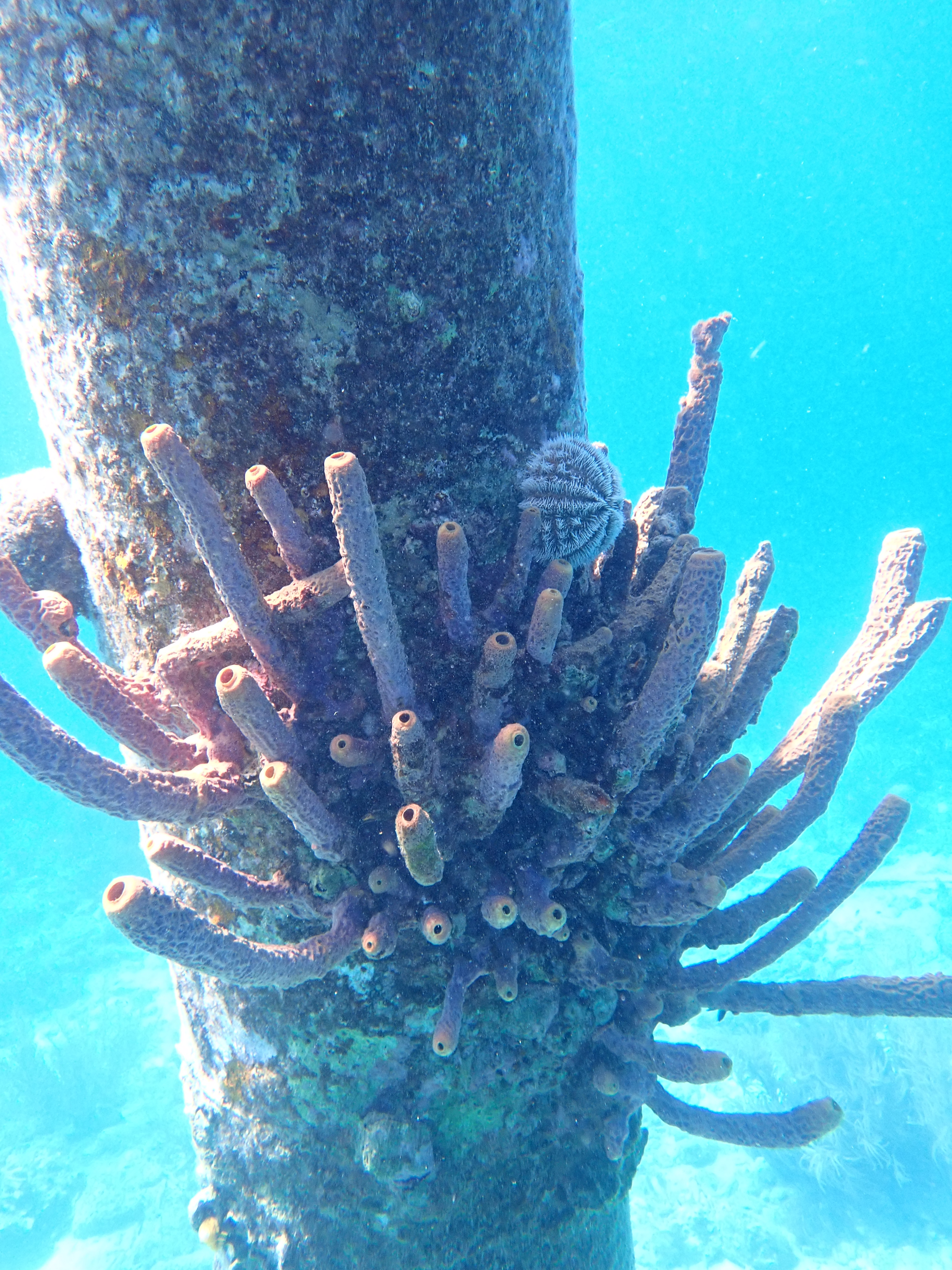
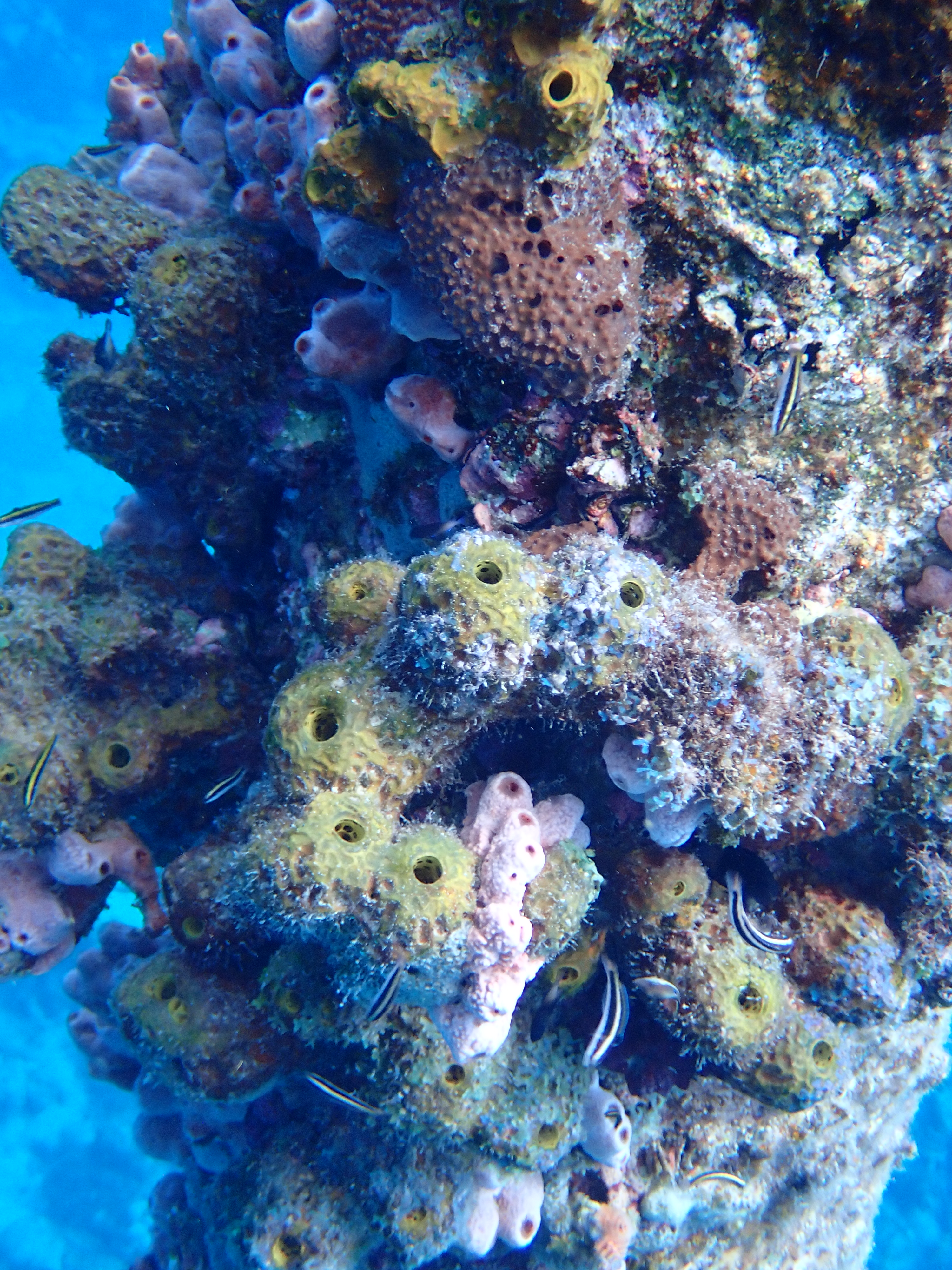
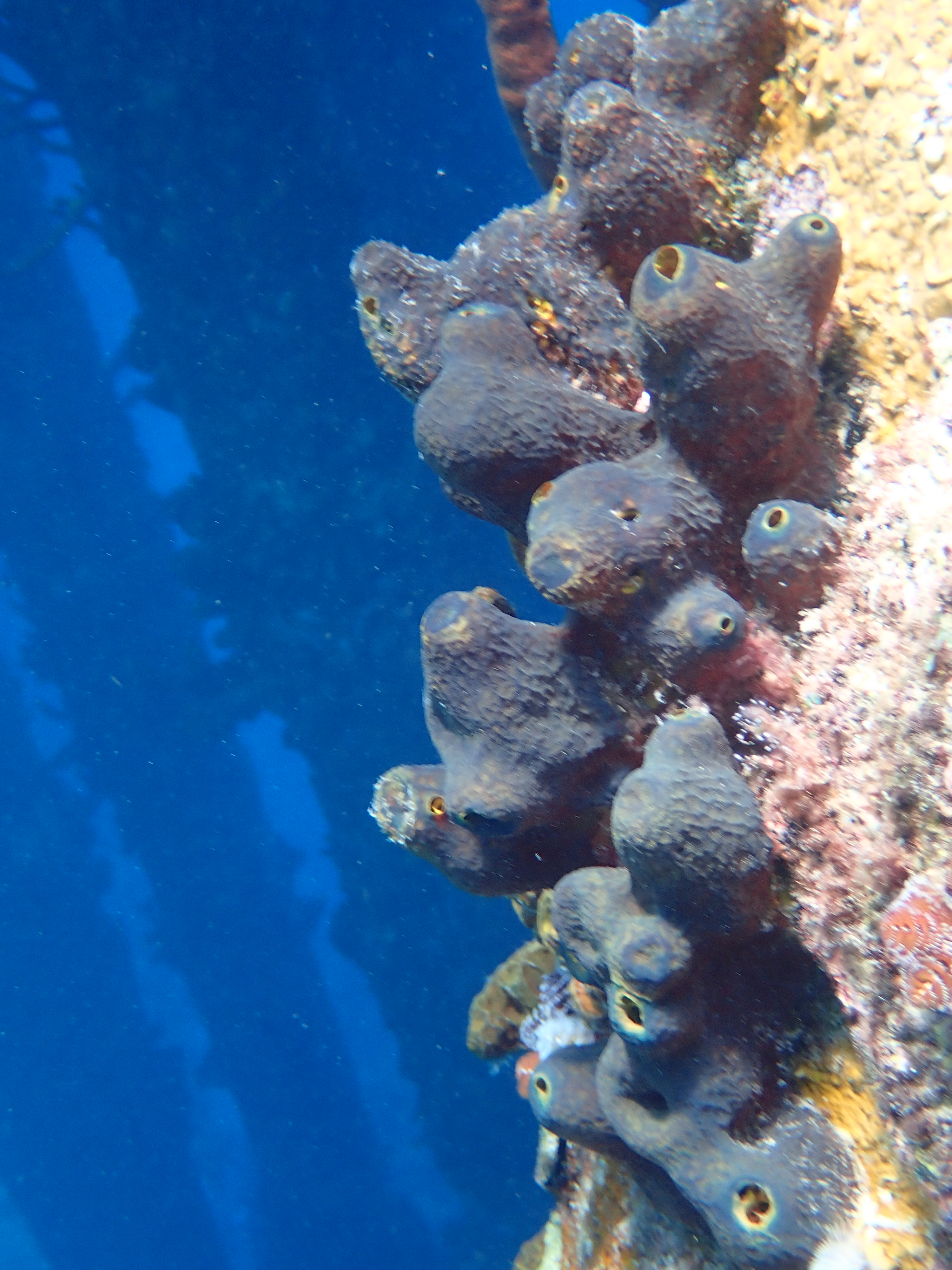
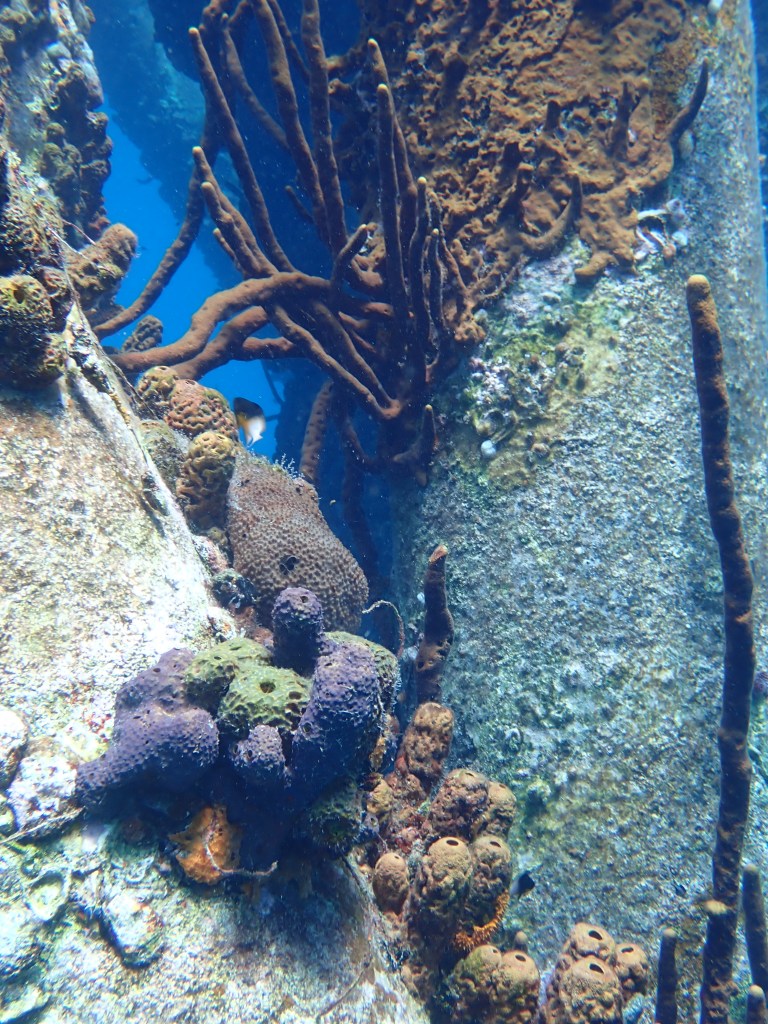
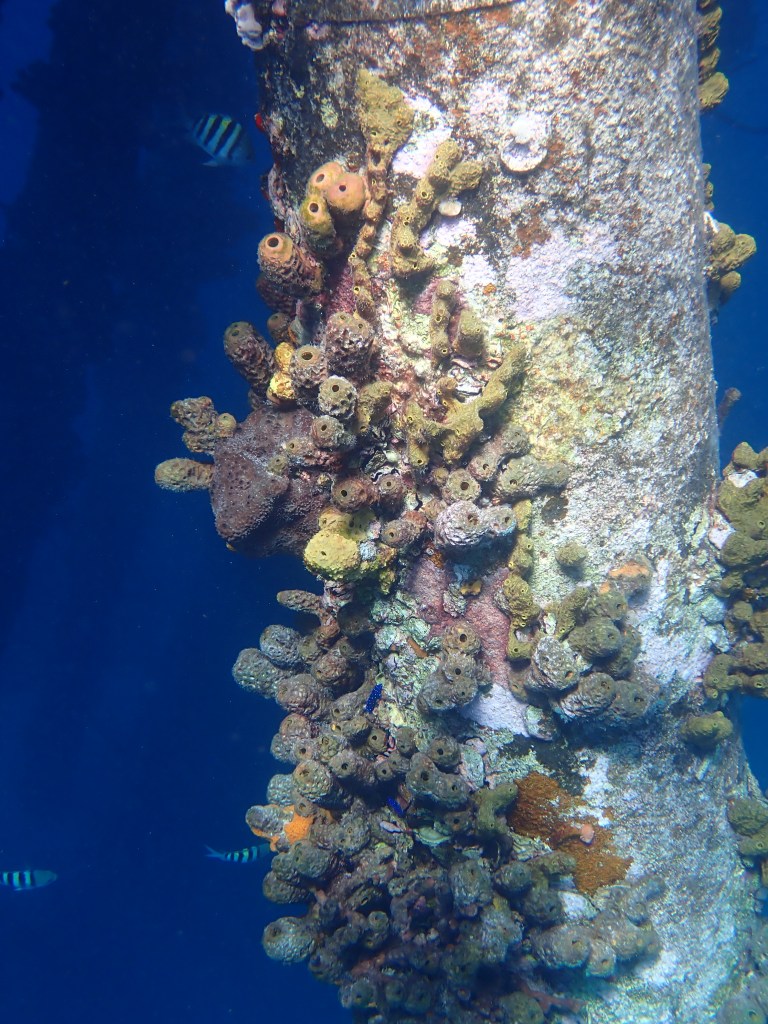
Frankly, I had such beautiful luck at other sites, I wasn’t motivated to keep trying. (You can check Bonaire.portcall.com to see list of ships and locations, or you can just ask in a Facebook group). But now I know! What is ah-maz-ing about Salt Pier are the pilings, the variety of sponges on them that are so uncommon at snorkel depths, particularly.

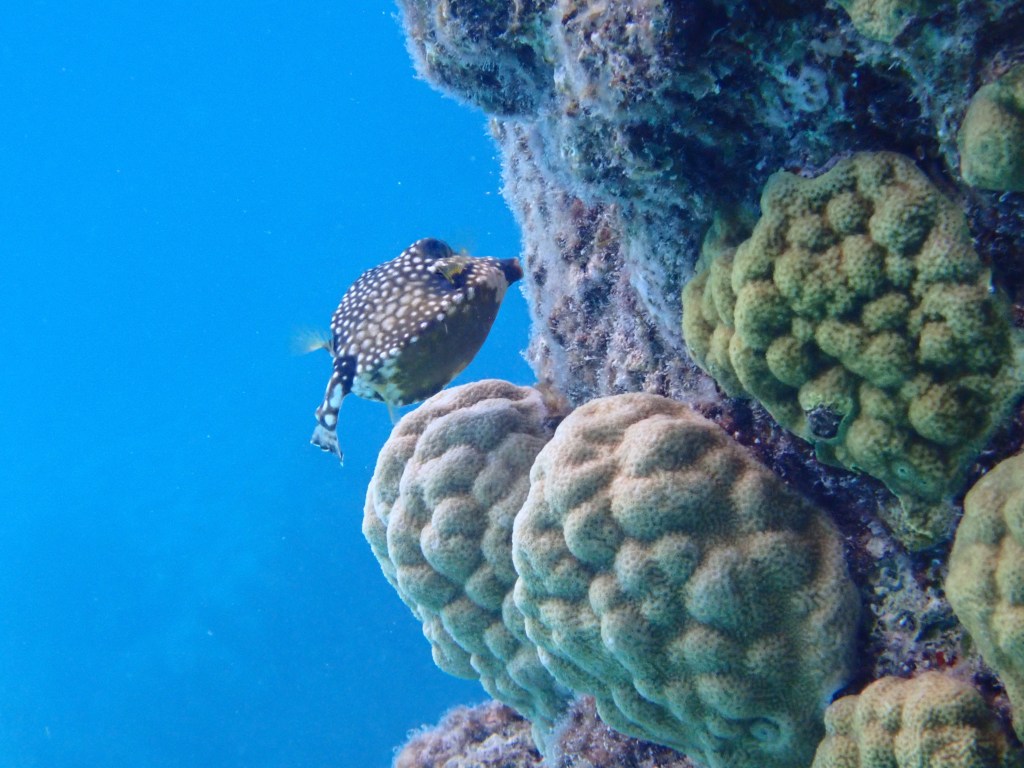
Well, to be honest, you can tell from the blue that I was free diving for the first picture. So maybe not snorkel depths for everyone. I caught this little smooth trunkfish on the way up a piling in shallower water. Notice how some of the mustard coral looks a more washed-out. That’s bleaching.

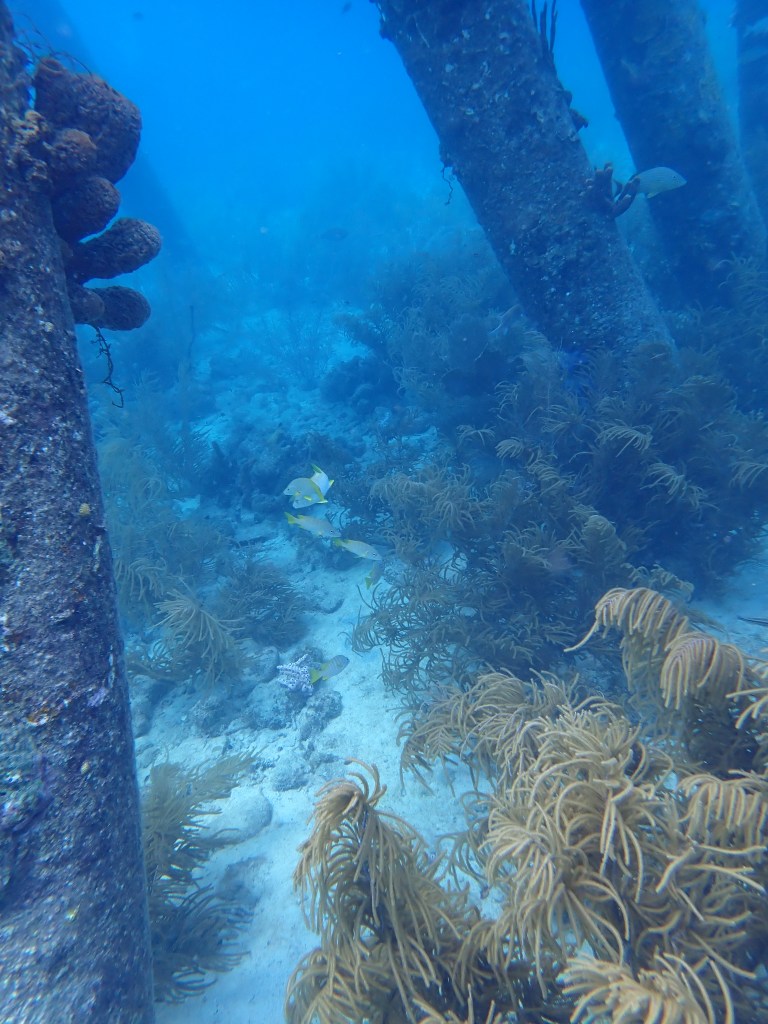
One of the other fun things about Salt Pier are the schools of chromis and sergeants in the deeper water that make me feel like I am in an aquarium. There are often larger schools of grunts and snappers in the deeper water under the pilings, along with the occasional barracuda. I think I’ve seen one every visit to the pier, but I tend to be respectful and give them a wide berth. My pictures of the big schools are too blue, but here’s a clear group of snappers that broke away from the school, a grunt up by the pilings, and some nice sea plumes at the bases.

People always wonder about the beaches. Like most of Bonaire, the area here is largely what is known as ‘iron shore,’ or a crumbled/rocky mix of dead, broken coral and limestone. In a few places, there is some sand (or rather, pulverized coral and limestone), but not much. There’s an area in the shade to sit–believe me, this is underrated in this windswept area–if you like the industrial feel.

Bonaire 2025. Salt Pier

I’ve been lucky when abroad to find other snorkelers. This visit, I met someone from the Netherlands who suggested Salt Pier, where the Cargill Salt ships dock to be loaded up with salt from the saltwater flats. If a ship is docked or due, they will close the area around the pier for the day. In general, Salt Pier is quite deep and basically open ocean, which means that when it is windy, you will feel it. When I went, I think the wind was 19-20 mph with gusts, so besides the choppy swim, the clarity was significantly reduced for photography.

I absolutely love the area around the pier pilings, the ghostly shapes in the depths and the wildly colorful sponges on the close pilings. Salt Pier is often mentioned as a place to see turtles, but I had never seen mentioned the marvelously diverse amount of sponges growing on the giant pilings.

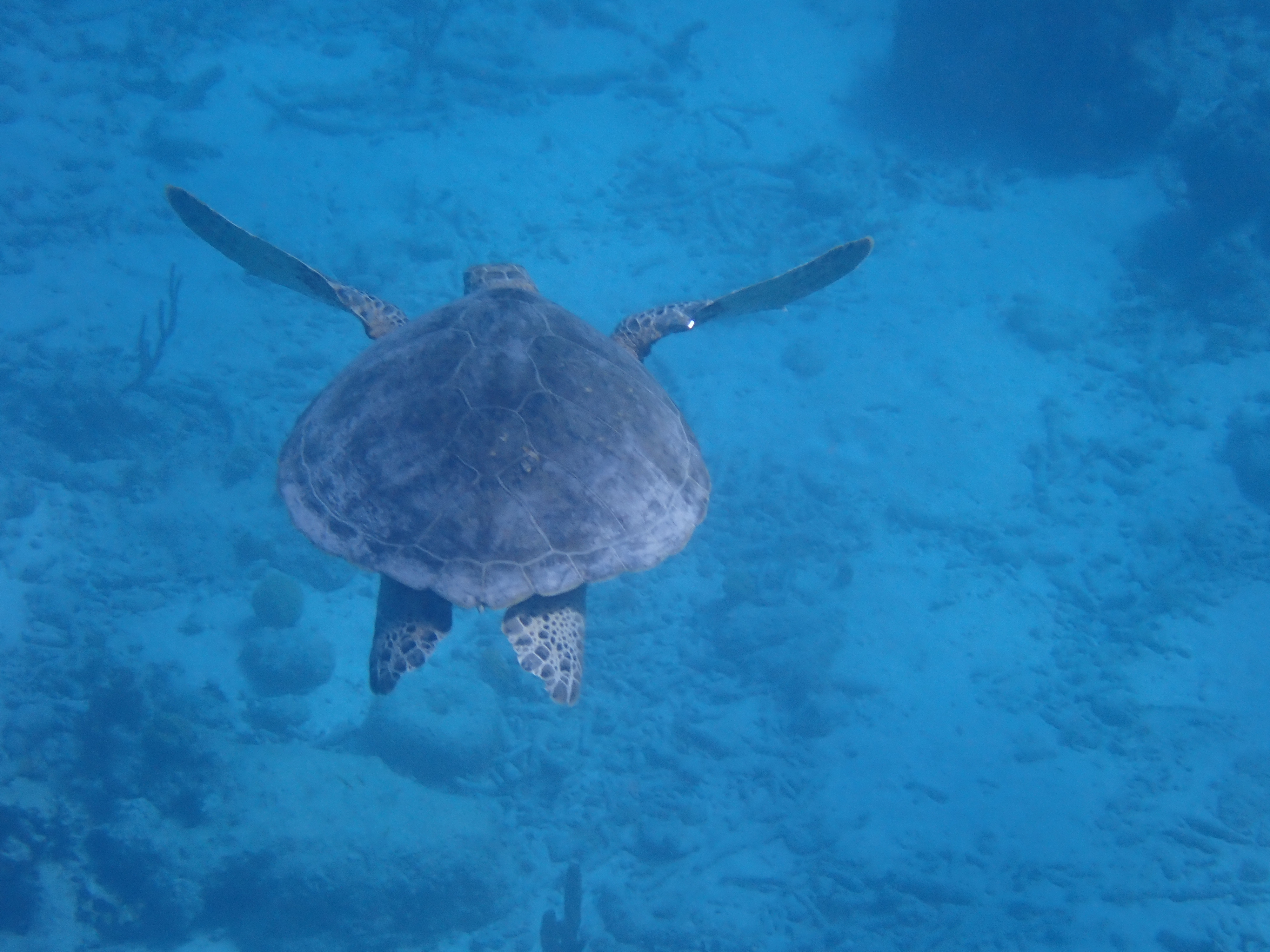
It is an area known for turtles, interestingly. I’m not sure what draws them there over other places. I saw a very small one as well as a larger tagged one on this run.

Also because of the deeper water, I usually see a barracuda as well as larger schools of larger fish, sheltering under the pilings. This picture isn’t great, but you can see the barracuda swimming through. Though numerous sources suggest a snorkeler has nothing to fear, unless wearing shiny bits of metal, I try to keep a respectful distance.

Unfortunately, most of the shallow areas have experienced a lot of coral die off. To the right of the pier is an area that used to be covered with staghorn coral. I was happy to see there was some surviving, but as you can tell, it is struggling.

Salt Pier also has a LOT of divers. My friend and I had fun playing in their bubbles as they swam underneath us at the pilings.

Getting out was a challenge, as waves had picked up. I got shoved into the limestone boulders, and was extremely glad of my full-body rashguard from Waterlust. Only my hands and feet got scraped. That was probably the worst scrape-up I’ve ever had.